WHA Group Announces 5 Key Missions Under Sustainability Framework with WHA Clean Water for Planet: Powering Industry, Sustaining Life Project
WHA Corporation Public Company Limited (WHA Group), a leader in the development and management of logistics, industrial estates, utilities and energy, digital solutions, and comprehensive mobility, reaffirms its vision of being a technology-driven and sustainable organization (Tech & Sustainable Company) through its ESG initiatives to support the transition to a low-carbon economy.
Ms. Jareeporn Jarukornsakul, Chairwoman of the Executive Board and CEO of WHA Corporation Public Company Limited stated, "WHA Group drives the organization while creating business opportunities and a better future. We do not wait passively for change but prepare to manage risks and seek opportunities from global trends, pioneering new paths to shape the future by integrating innovation, technology, and business principles that balance environmental, social, and governance (ESG) aspects in all dimensions to create an advanced and environmentally friendly industrial ecosystem while delivering sustainable value to society and all sectors."
With a commitment to sustainable development, WHA Group has set a carbon neutrality goal (Net Zero) by 2050, covering the reduction of greenhouse gas emissions both directly and indirectly (Scope 1, 2, and 3). The company also aims for a fully circular economy with a target of Circularity 100%, including 100% wastewater reuse, and is committed to creating a net positive impact on biodiversity to restore balance to ecosystems and build a sustainable future.

In 2025, WHA Group will reinforce the project “WHA Clean Water for Planet: Powering Industry, Sustaining Life,” which serves as a model for sustainable water management that connects industry, communities, and society. The project focuses not only on water supply and treatment but also on creating a "sustainable water ecosystem" that spans from industry to communities, expanding to other areas to ensure water resource security and support balanced economic growth amidst environmental challenges faced by industries worldwide, such as climate change, water scarcity, stricter regulations, and inefficient water resource use. This project aims to maximize water resource efficiency and make sustainable water management a core aspect of economic and social development in the current era.
Additionally, WHA Group has laid a strong foundation through a 5-year sustainability operational framework by defining five key missions as follows:
- Green Mobility: To support environmentally friendly transportation in a Built-to-Suit format tailored to customer needs, promoting sustainability in Thailand's logistics sector under the Mobilix brand. This includes EV Rental Services, On Premise & Public EV Charging Solutions, and Mobilix Software Solutions. By Q1 2025, Mobilix has already rented out over 330 electric vehicles, helping logistics operators access electric vehicles and save over 600 million baht in transportation costs, with a target of providing 20,000 electric vehicles by 2032, which will reduce greenhouse gas emissions by 280,000 tons CO₂e annually.
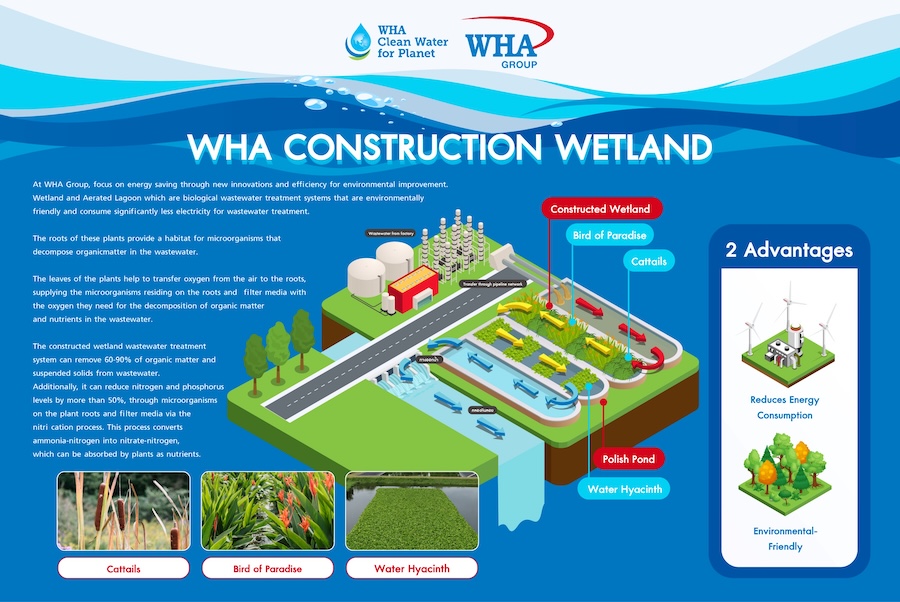
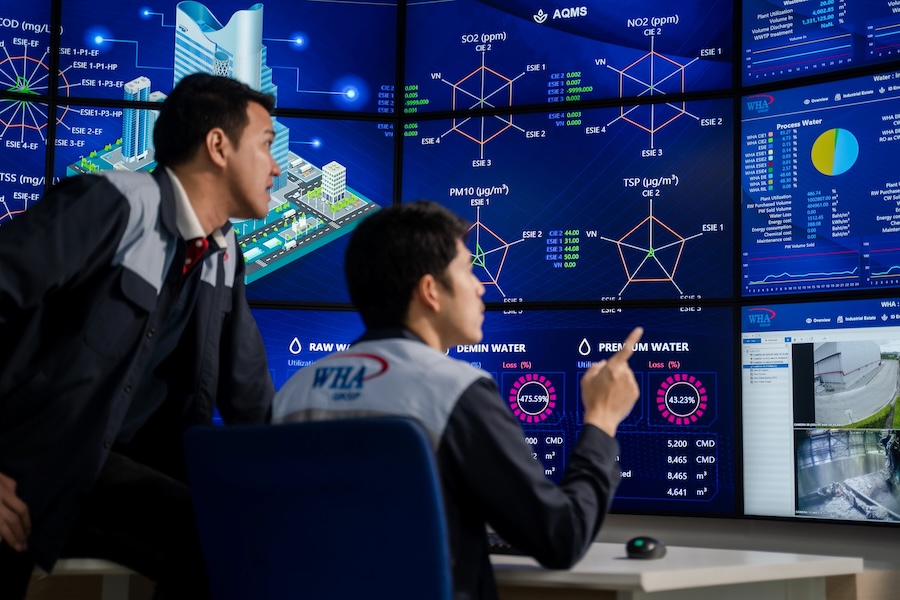
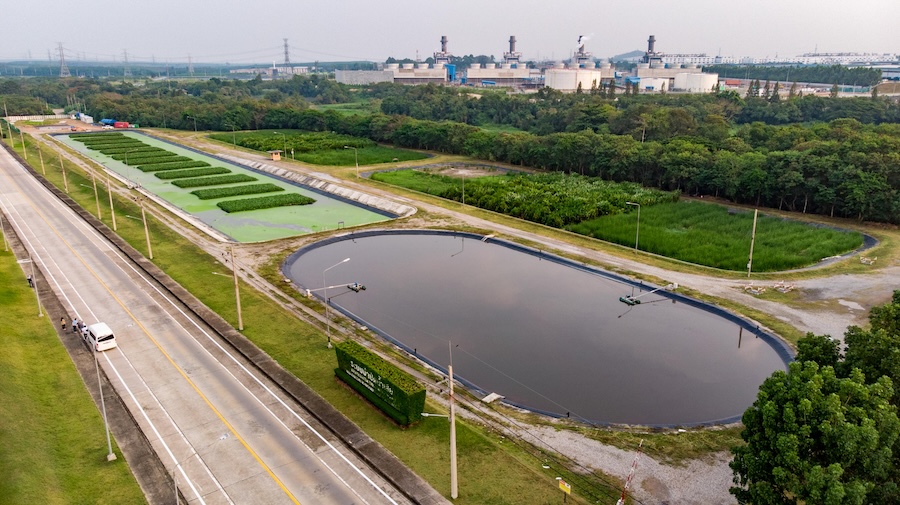
- Water Conservation Program: Creating a sustainable water ecosystem covering both industry and communities through the WHA: Clean Water for Planet project by managing water efficiently, from sourcing and developing raw water to mitigate water scarcity risks, producing and supplying various types of industrial water, wastewater treatment, and systems for reclaiming wastewater for high-quality industrial water. This helps reduce water usage from natural sources and minimize wastewater discharge into the environment. The project also includes smart water management using AI, IoT, SCADA, and Smart Meters to effectively control water management, reduce water loss, and decrease energy consumption. The goal is to manage a total of 173 million cubic meters of water by 2025 and reduce natural water usage by 25 million cubic meters annually by 2032, equivalent to the water usage of over 685,000 people. Concrete examples include the artificial wetland project in Wang Ton Not, Chanthaburi, which can treat up to 400 cubic meters of wastewater daily and accommodate future increases in wastewater volume up to 800 cubic meters per day, treating wastewater from the community using natural processes. The project also includes environmental education initiatives for students about the importance of water conservation, with 892 students trained in 8 schools around the industrial estate in 2024.
-
Decarbonization Solutions: Aiming to reduce greenhouse gas emissions from WHA Group's direct and indirect operations, including accelerating the installation of solar panels on rooftops, floating solar, and solar farms at water production facilities, wastewater treatment plants, reservoirs, office buildings, and parking lots, as well as installing Solar LED for street lighting within the industrial estate to increase the share of renewable energy and reduce dependence on fossil fuels. The goal is to add 1.6 megawatts of solar capacity in 2025, saving 6.2 million baht annually. The expansion of renewable energy business aims for a cumulative Private PPA contract of 657 megawatts in 2025 and 1,200 megawatts in 2032, which will reduce greenhouse gas emissions by 683,000 tons CO₂e, generate over 5.6 billion baht in annual revenue, and save customers 1.86 billion baht annually. Additionally, various energy-saving innovations are being implemented in warehouses, headquarters buildings, and utilities within the industrial estate to enhance energy efficiency and develop energy-saving solutions for customers. The goal is to convert over 33% of the company's operational vehicles from internal combustion engines (ICE) to electric vehicles (EV) by 2025 and continuously engage in reforestation activities in green areas of the industrial estate with various partners.
-
Green Construction: The group emphasizes developing buildings that minimize environmental impact and consider stakeholders at every stage from design, material selection, construction, to operation, integrating sustainability principles comprehensively under three key principles: using low-carbon and recycled materials, focusing on waste management, and designing for resilience, durability, and efficiency. A successful example is the WHA Mega Logistics Center warehouse in Theparak, Km. 21 (Building B), covering an area of 27,212 square meters, which has received LEED Gold certification version 4.1 BD+C through passive design techniques that reduce energy consumption, along with solar panel installation that reduces greenhouse gas emissions by up to 140,000 kilograms of carbon annually. Water-saving devices are expected to reduce tap water usage by over 50%, or approximately 358,000 liters annually. Additionally, low-carbon or recycled interior materials are used to promote circular economy concepts. WHA Tower is designed to be environmentally friendly, featuring open office spaces with a height of 2.9 meters and triple-glazed windows that block 70% of heat, helping save energy from air conditioning and allowing natural light into the building. The entire building is equipped with LED lights that save up to 50% energy. Furthermore, in developing new industrial estate projects, low-carbon materials are selected for construction, including hydraulic cement, which reduces carbon emissions by up to 30%, and Glass Fiber Reinforced Polymer instead of rebar, which reduces carbon emissions by up to 90%.
- Sustainable Waste Management (Waste Reduction by 3R): WHA implements the 3Rs policy, which includes Reduce, Reuse, Recycle, as a sustainable waste and resource management approach, focusing on efficient resource use to achieve the goal of zero waste to landfill through various successful projects, such as using leftover concrete to produce recycled paving blocks, reducing leftover concrete by 191 tons and producing 5,500 blocks. Other projects include converting sludge into soil fertilizer and recycling water filter cartridges into wheel stops and concrete curbs. The Chonburi Clean Energy (CCE) project, or industrial waste-to-energy plant, was able to eliminate 120,913 tons of waste in 2024 and convert it into 54,823 megawatt-hours of electricity. The WeCYCLE project follows the circular economy concept by focusing on waste separation within the company's operational areas for recycling and upcycling processes, which started in 2022, such as converting PET bottles into student bags, reducing plastic bottle waste by 68 tons, recycling used paper into educational materials, reducing paper waste by 176 tons, and converting used cooking oil into sustainable aviation fuel (SAF), reducing waste from used oil by 2 tons. All these projects have collectively helped reduce carbon emissions in the atmosphere by 378 tons CO₂e with participation from over 126 companies.
At the same time, WHA Group aims to enhance the quality of life and build strong relationships with stakeholders through social and community projects in four main areas: Education by providing scholarships and equipment to develop youth potential; Health and Quality of Life by improving community health, providing vaccines, and developing a Smart Traffic system to reduce accidents in the industrial estate; Environment through the Shine Brighter with WHA project to install solar rooftops in schools, the WeCYCLE project, tree planting initiatives, and the WHA Clean Water for Planet project; and Creating Career and Economic Opportunities through the WHA E-Job Pool project to increase employment opportunities and develop workforce potential to support industrial expansion, promoting local products through the WHA Sharing project.
“WHA Group is committed to creating, especially creating prosperity alongside sustainability, which has been in WHA's DNA since the beginning. We do not view this as a cost but as an investment for the future. All of this reflects the concept of ‘WHA: We Shape The Future’ that we uphold and strive to realize,” Jareeporn concluded.