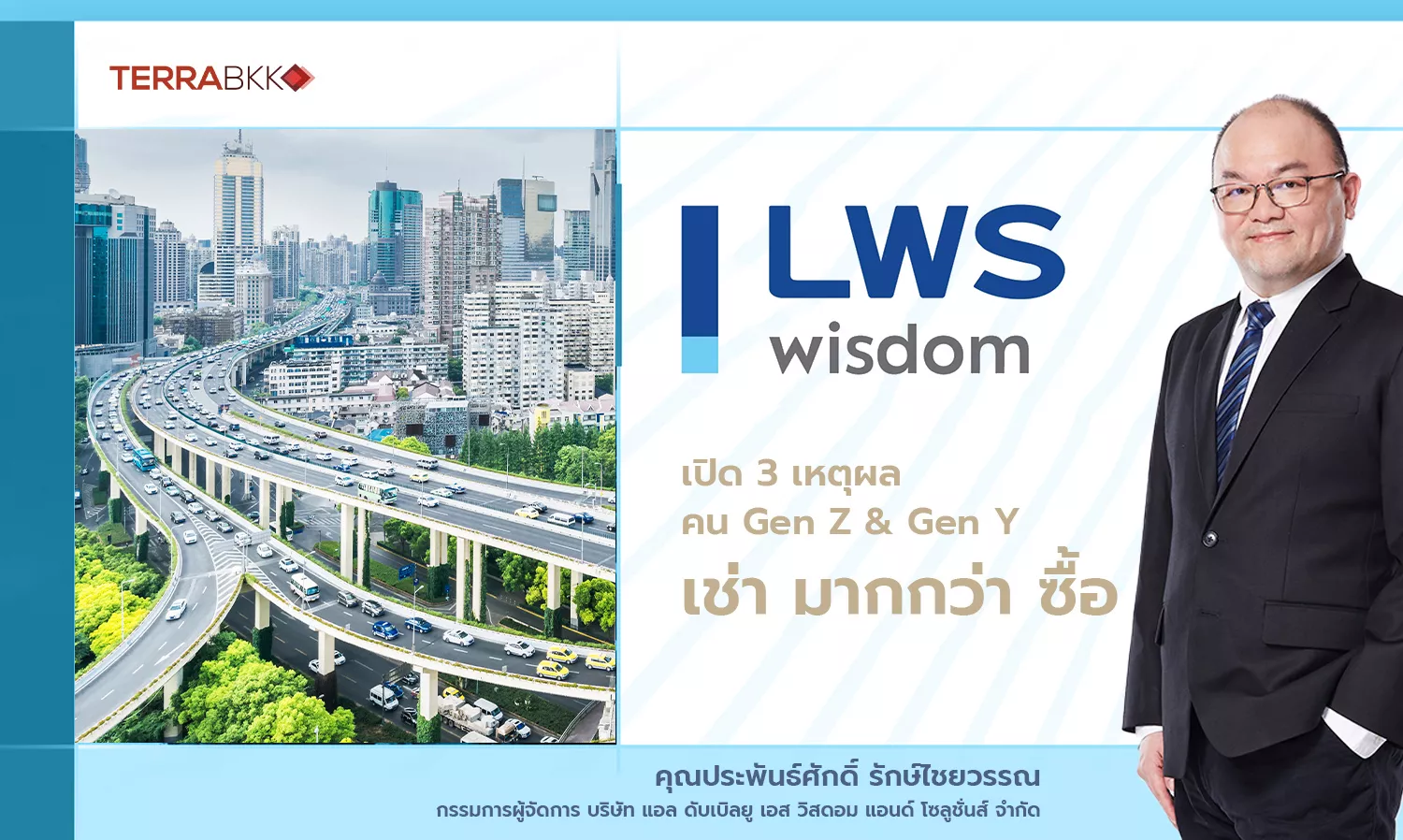
LWS Reveals 3 Reasons Why Gen Z & Gen Y Prefer Renting Over Buying
LWS has identified 3 reasons why Gen Z and Gen Y prioritize renting over buying homes, presenting an opportunity for investors to invest in rental properties with an average return on investment of 4 - 9% per year amidst the current volatile investment climate.

Mr. Prabhan Sak Raksaiwan, Managing Director of LWS Wisdom and Solutions Co., Ltd., a real estate research and development company under LP.N Development Public Company Limited, revealed the results of a survey on the housing purchasing behavior of Gen Z (ages 16 - 28) and Gen Y (ages 29 - 44) conducted at the end of 2024 with 670 respondents. The survey found that 66% of respondents showed a preference for "renting" their homes rather than buying.
This finding aligns with a recent study by SCB (EIC) indicating that younger generations, or First Jobbers, are opting to rent rather than buy, leading to a continuous decline in property ownership transfers in Bangkok and its vicinity. It is estimated that in 2024, property transfers in Bangkok and surrounding areas will decrease by about 10% compared to 2023, with a further expected decline of 1 - 3% in 2025.
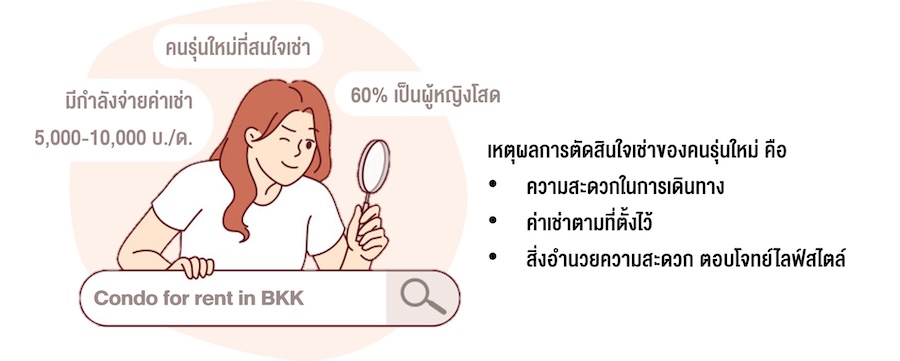
Mr. Prabhan stated that the study by LWS identified three key reasons why Gen Z and Gen Y are more interested in "renting" rather than "buying" homes:
1. Renting Offers Flexibility in Life
Young people, or First Jobbers, have a lifestyle that emphasizes mobility and the ability to change locations easily, whether for work or to find living spaces that are conveniently located. This lifestyle makes homeownership a long-term financial burden that does not align with their way of living.
The LWS survey found that 66% of young respondents are renters, with over 60% being single women who can afford an average monthly rent of 5,000 - 10,000 THB. Factors influencing their choice to rent include convenience of travel, reasonable rental prices, good environments, suitable communal areas, and parking for both cars and motorcycles.

2. Economic Uncertainty and Volatility in Thailand
The fluctuating economic situation affects long-term income generation capabilities, making it difficult for Gen Z and Gen Y individuals with uncertain incomes to take on long-term debt. Renting thus becomes a more suitable financial option for this group.
3. Investment and Future Planning
Current investment management behaviors among Gen Z and Gen Y are influenced by content creators or financial influencers, leading them to diversify their investments across various assets such as stocks, bonds, mutual funds, cryptocurrencies, and gold. This variety encourages them to save for investments rather than purchase homes that require significant capital and long-term debt.
“Invest to Rent” - An Opportunity for Investors
Given these behaviors, Mr. Prabhan noted that there is an opportunity for real estate developers to create housing projects that cater to the preferences of Gen Z and Gen Y, who are the primary consumers today and in the future. Examples include:
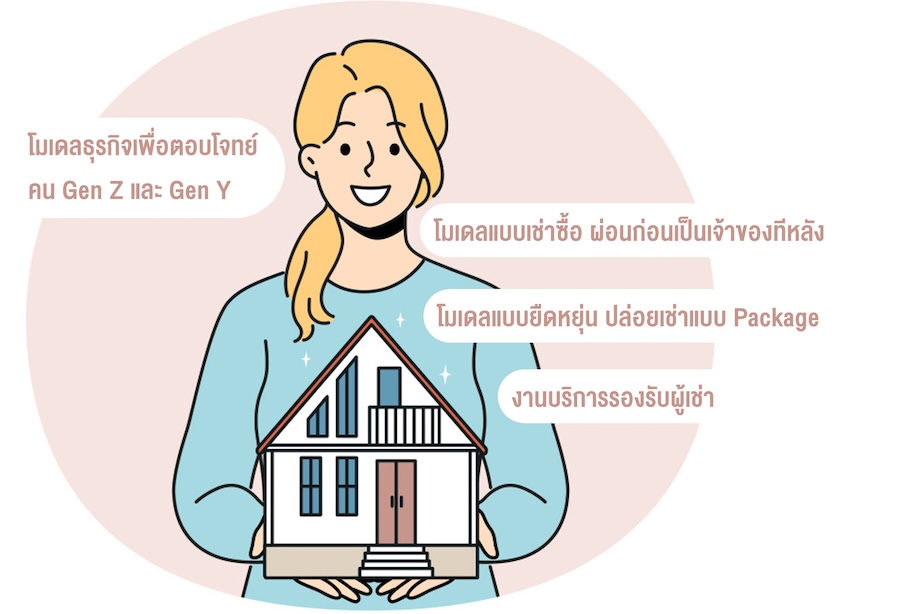
- A rent-to-own model where tenants can pay rent before eventually owning the property, suitable for First Jobbers or those with unstable incomes who do not want long-term debt.
- A flexible rental model offering various packages where tenants can choose condos in different locations and adjust their living arrangements throughout the lease term at a consistent monthly rental rate.
- Services for tenants both before and after moving in, such as moving assistance, cleaning, air conditioning maintenance, and repairs.
Additionally, developing models to sell condominiums to investors with guaranteed returns and tenant placement services can meet the needs of high-income individuals seeking investment opportunities that yield higher returns than savings accounts and carry lower risks than stocks or bonds.
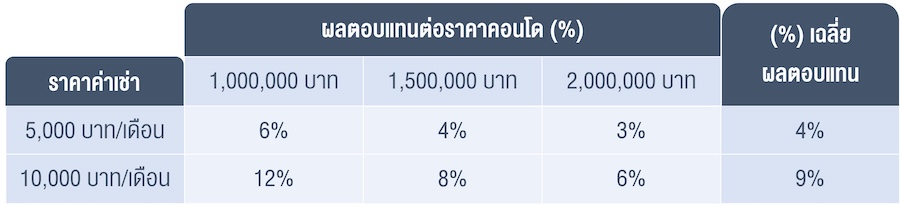
“I see the changing behaviors of the younger generation as an opportunity to develop business models in the real estate sector that can generate long-term income, as well as for investors looking to invest in businesses that provide guaranteed returns with low risk.
If we invest in a condominium worth 1 - 2 million THB and rent it out for 5,000 - 10,000 THB per month, we can achieve a return on investment of 4 - 9%, depending on the purchase cost and rental price, which is a higher return than current savings and carries less risk than stock investments,” Mr. Prabhan concluded.