
The Prosperity of India on the Global Culinary Path: Opportunities for the Thai Agriculture and Food Sector
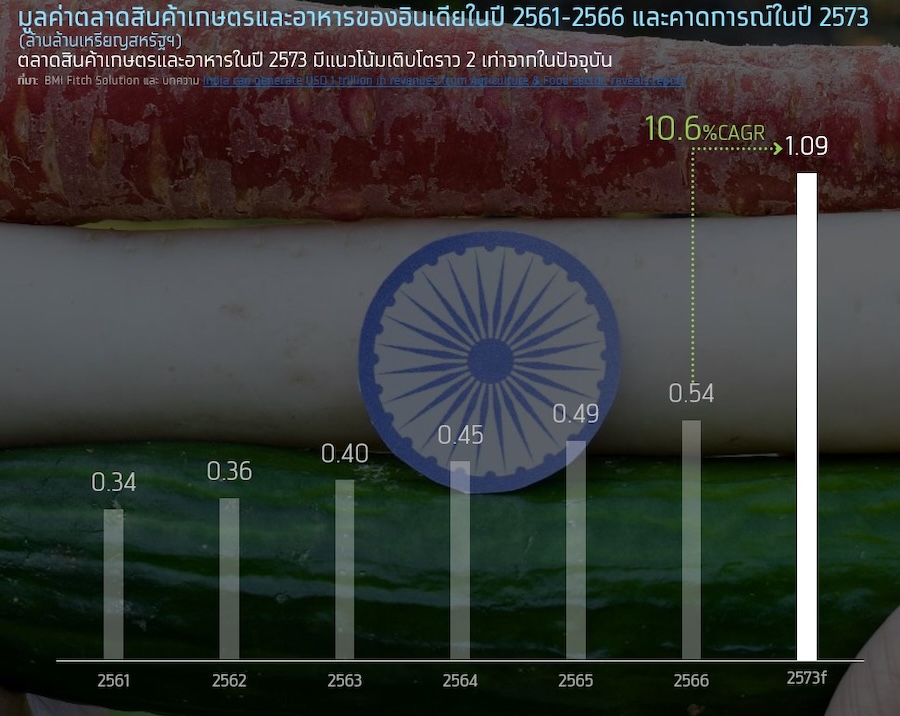
By the year 2030, India's agriculture and food industry is expected to reach around 1 trillion USD, growing at an average rate of 10.6% per year (2023-2030). The driving factors include:
1) The increase in population positively impacts agricultural labor.
2) The irrigation infrastructure conducive to cultivation and agricultural productivity.
3) The adoption of technology and innovation.
4) The Indian government's serious support policies for agriculture and food.
The growth of the agriculture and food industry in India will create opportunities for Thai entrepreneurs to invest in livestock businesses, as well as processed food and beverages. Additionally, there is potential to expand into products focused on sustainability and environmental friendliness, such as plant-based meat and eco-friendly rice products, to cater to the increasingly popular sustainable consumption trends in India.
Krungthai COMPASS recommends that Thai entrepreneurs study the regulations in the Indian market, especially the stringent food standards, while also building local trade partnerships. Furthermore, elevating to sustainable production is crucial, not only to meet the demands of health-conscious and environmentally aware consumers but also to align with global trade trends focused on sustainable development. Pramote Watthananuwat and Kritsanan Jindaewong from Krungthai COMPASS note that India is becoming one of the fastest-growing economies in the world, with its GDP projected to reach 7 trillion USD (approximately 250 trillion THB) by 2030. With a population of over 1.4 billion, the domestic consumption market is the second largest in the world, after China, positively impacting the growth of the agriculture and food sector, which accounts for about 15-20% of India's GDP each year. This sector is expected to continue growing due to India's potential as a leading producer and exporter of agricultural products. Therefore, this article will highlight the opportunities and challenges for Thai agriculture and food entrepreneurs arising from the growth of India's agriculture and food sector. But first, let's explore what makes India's agriculture and food sector interesting.
Understanding India's Agriculture and Food Industry
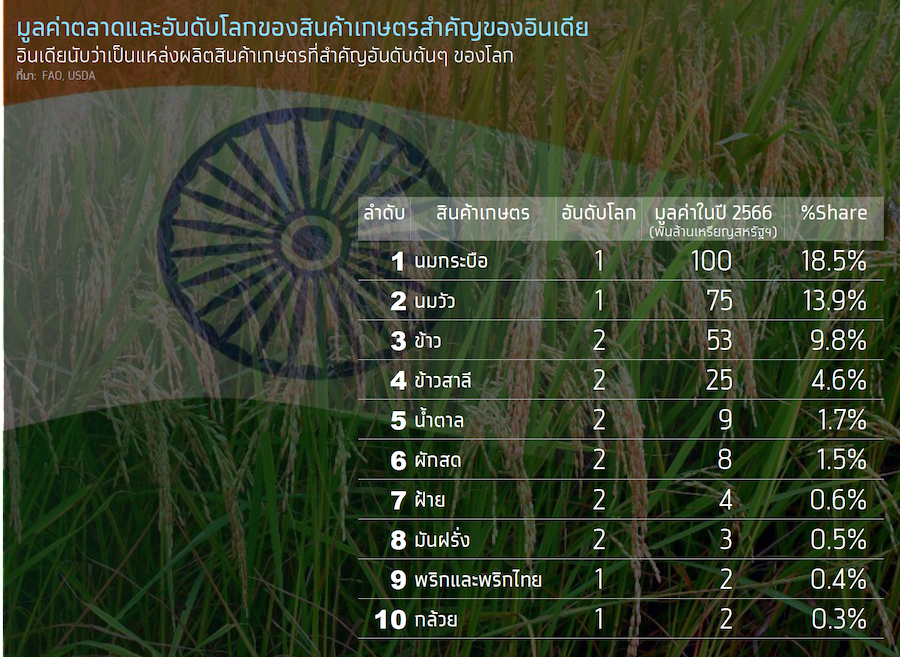
In the agriculture and food industry, which products are significant to India's economy? India is one of the countries with agricultural diversity and is a major producer of several globally important agricultural products, playing a crucial role in the production and export of various agricultural goods such as rice, milk, buffalo, corn, cotton, and spices. In 2023, the highest market value products included buffalo milk, valued at 100 billion USD, accounting for 18.5% of India's agriculture and food sector value, making India the world's top producer. Following this are cow milk and rice, valued at 75 billion and 53 billion USD, respectively, representing 13.9% and 9.8% of India's agriculture and food sector value, with India being the first and second largest producers globally, respectively. How much is the agriculture and food industry in India expected to grow? The industry is projected to reach around 1 trillion USD by 2030, with an average growth rate of 10.6% per year (2023-2030), supported by four key factors: 1) The increase in population positively impacts agricultural labor. 2) The trend of expanding agricultural cultivation areas due to improved infrastructure, particularly irrigation. 3) The adoption of technology and innovation will increase agricultural yield per acre in India. 4) The Indian government's serious support policies for agriculture and food will help the sector grow sustainably, as detailed below.
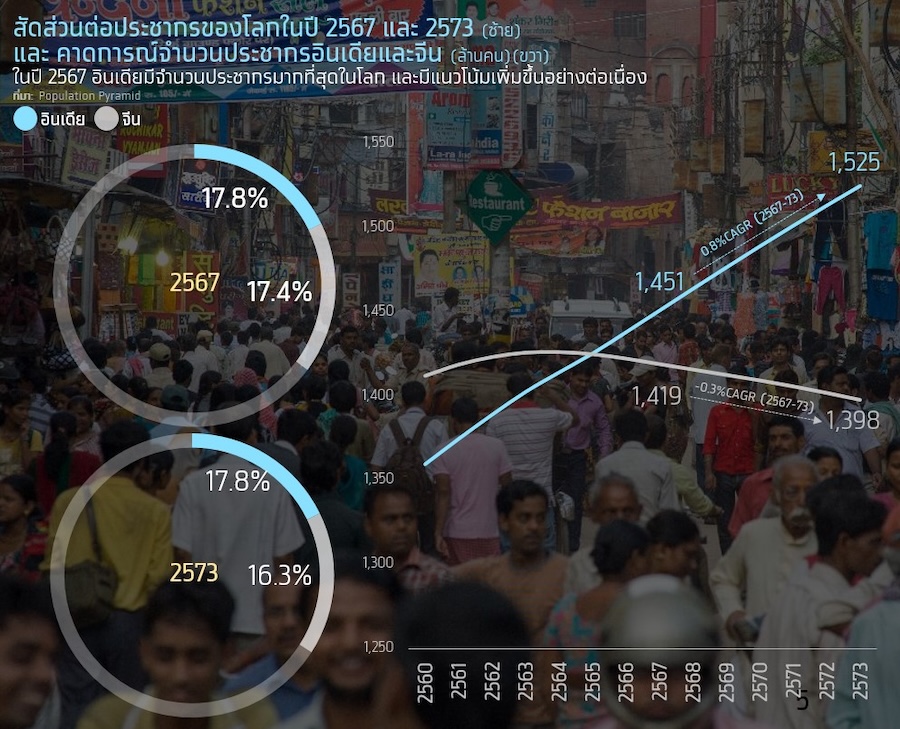
What factors contribute to the growth of India's agriculture and food industry? Firstly, the increase in population positively impacts agricultural labor in India. According to the Population Pyramid estimates, by 2024, India will lead the world with a population of 1.451 billion, accounting for 17.8% of the global population, surpassing China, which has a population of 1.419 billion. It is expected that by 2030, India's population will continue to grow to 1.525 billion, with an average growth rate of 0.8% per year (2024-2030), higher than China's population, which is projected to decrease to 1.398 billion, with an average decline of 0.3% per year (2024-2030).
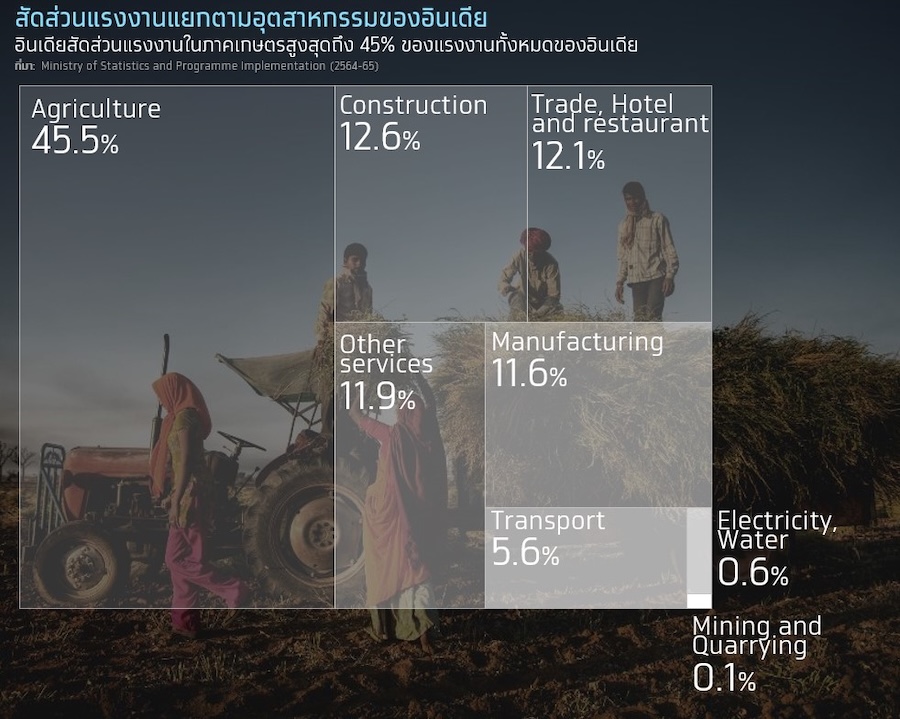
Moreover, the majority of India's population will be young working-age individuals, making up an average of 65% of the total population. It is estimated that over 45% of the total workforce in India will be in agriculture, which is the largest employment sector in India and a key driver of the country's food security. This aligns with World Bank data indicating that 70% of India's population lives in extreme poverty, limiting access to education, especially for those in remote areas, leading to a continued influx of working-age individuals into agriculture in the future.
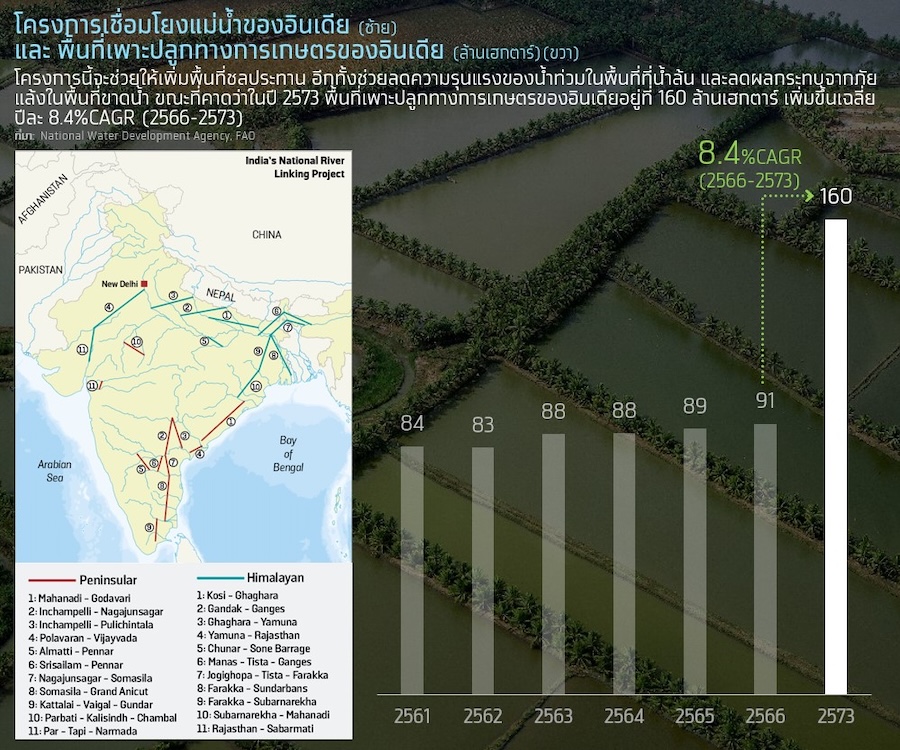
Secondly, developed infrastructure, particularly irrigation, facilitates cultivation and agricultural productivity in India. India has implemented the National River Linking Project, divided into the Peninsular Component covering northern and central agricultural areas and the Himalayan Component covering southern agricultural areas, aimed at linking the country's major rivers. Additionally, canals and irrigation systems have been constructed to manage water efficiently, reducing the risk of flooding and addressing water scarcity in agricultural areas. This allows for water storage during the rainy season and distribution to drought-affected areas, ensuring that in the future, India will have suitable agricultural land and sufficient water for agriculture. The FAO predicts that by 2030, India's agricultural land will cover 160 million hectares, increasing at an average rate of 8.4% per year (2023-2030).
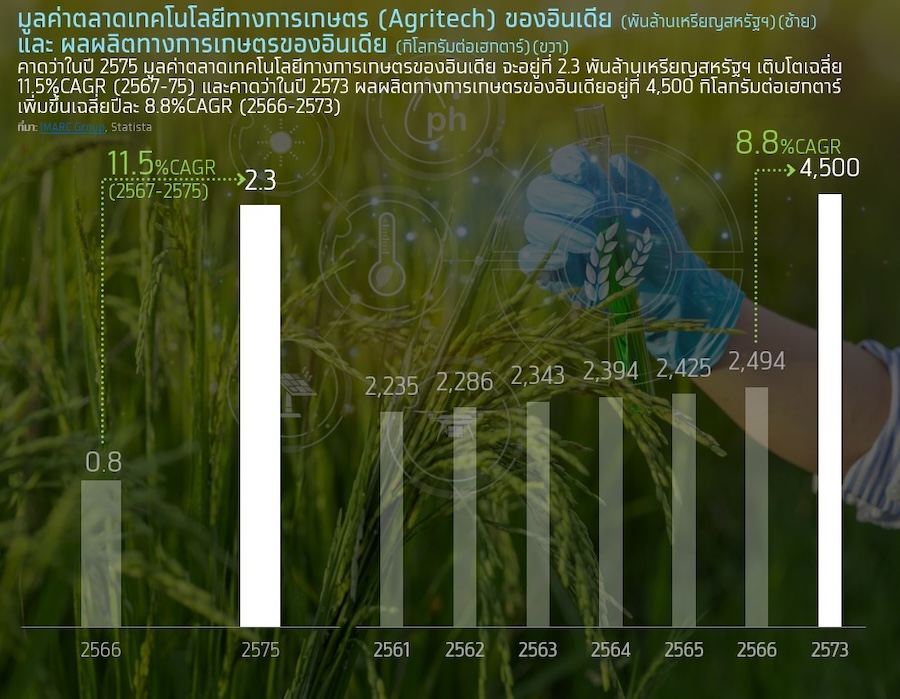
Thirdly, the adoption of technology and innovation will increase agricultural yield per acre in India. According to an IMARC Group report, by 2030, the market value of agricultural technology (Agritech) in India is expected to reach 2.3 billion USD, growing at an average rate of 11.5% per year (2024-2030). The collaboration between the Ministry of Agriculture and the Ministry of Electronics and IT in India has supported farmers in applying AI technology to improve agricultural processes throughout the supply chain, enhancing productivity and farmers' income sustainably. AI can analyze data from various sources, such as satellite imagery, to forecast weather and soil conditions, or IoT that helps detect diseases or nutrients in plants, enabling farmers to make real-time decisions, resulting in increased agricultural yield and reduced resource waste. According to Statista, by 2030, India's agricultural yield is expected to be 4,500 kilograms per hectare, increasing at an average rate of 8.8% per year (2023-2030).
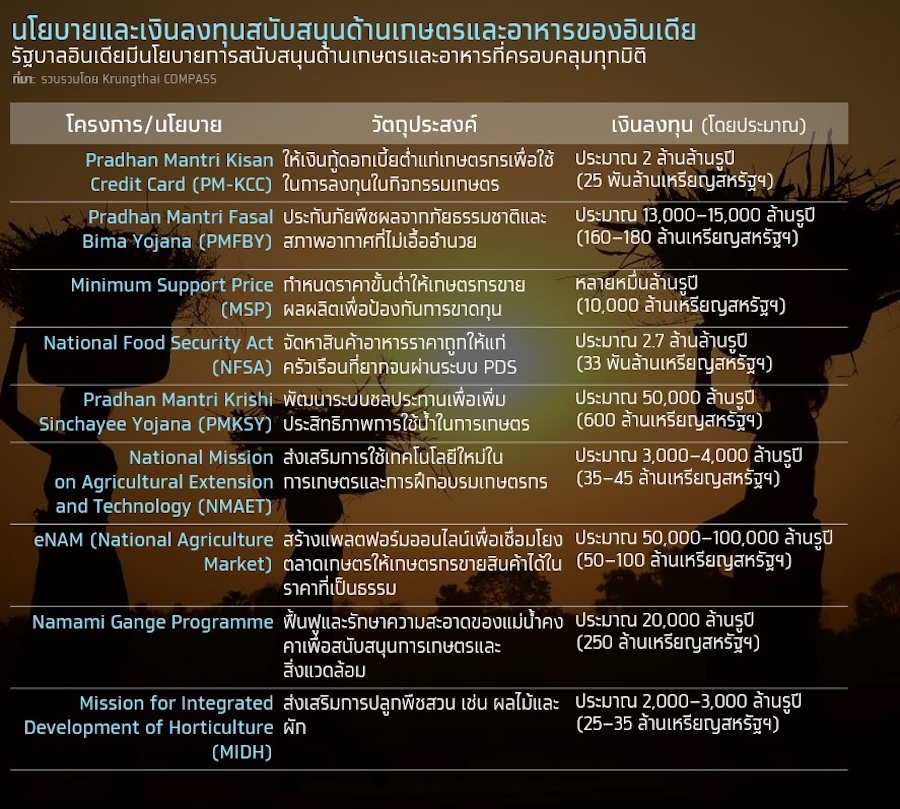
Fourthly, the Indian government's serious support policies for agriculture and food will significantly bolster the growth of the agriculture and food sector in India. The Indian government has comprehensive policies supporting agriculture and food, ranging from enhancing production efficiency, financial and credit support, risk insurance, to ensuring food security and environmental development. These policies promote the growth of the agricultural sector in India and help reduce rural poverty.
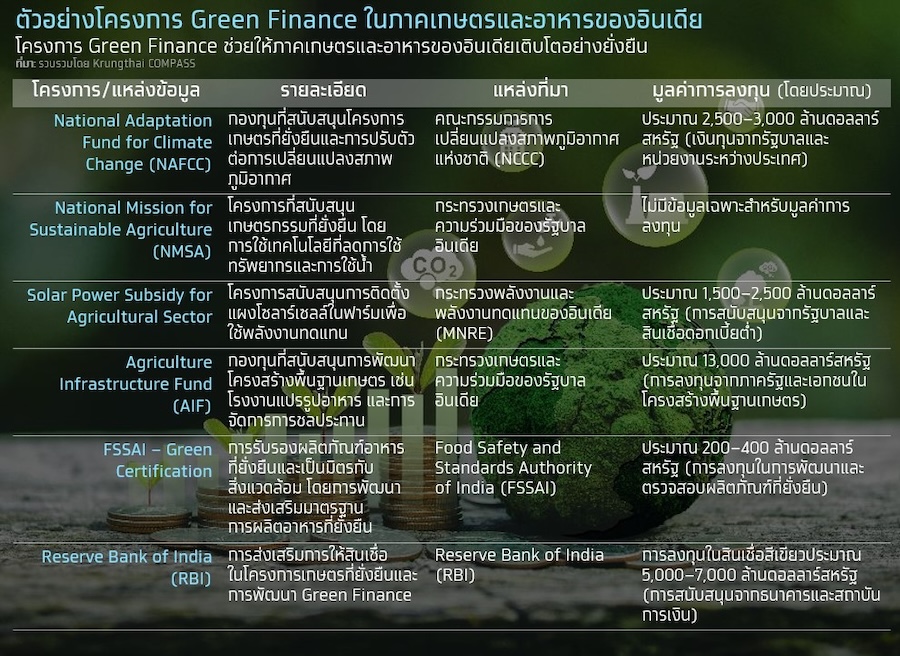
Additionally, the Indian government supports the growth of Green Finance in the agriculture and food sector, which is a crucial driver for developing sustainable and efficient agriculture, helping to reduce environmental impacts and promote long-term economic growth. Government support through various policies, along with private sector investments in environmentally friendly technologies, will play a vital role in the future development of the agriculture and food industry.
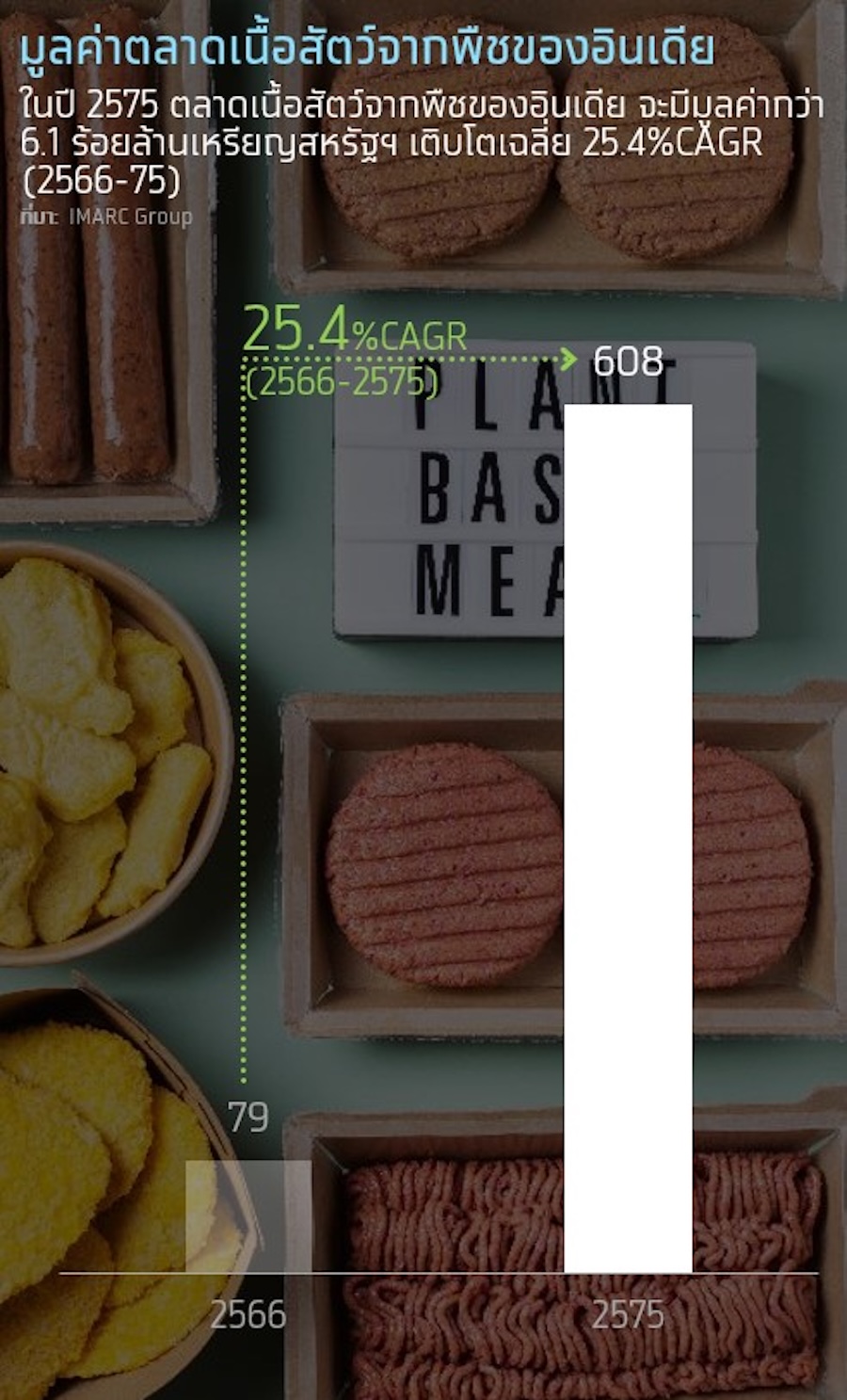
Opportunities for Thai entrepreneurs to engage with the growth of India's agriculture and food industry are significant. Thai entrepreneurs in the agriculture and food sector have opportunities to expand investments in various businesses, such as livestock farming, food processing, and beverages, in line with the growing population and investment promotion policies in India's agriculture and food industry. Thai entrepreneurs have the potential to be food producers, with some already investing in India, such as the Charoen Pokphand Group (CP Group), which has expanded its agriculture and food business in India, particularly in livestock farming, including animal feed production and poultry farming. They have also expanded their investment in India by establishing CP B&F India, focusing on food and beverage businesses. Thai Union Group Public Company Limited has partnered with Srinivasa Cystine Private Limited (SCPL) in India, focusing on sourcing high-quality food ingredients for the Indian market. Furthermore, the Indian government has implemented the Production Linked Incentive (PLI) program, allowing foreign direct investment in the food processing industry at 100% by 2025. The growing trend of sustainability in India is increasingly popular; a survey by GIZ indicates that over 82% of Indian consumers want to purchase sustainable food and rice, considering health and environmental factors. Additionally, 88% of Indian consumers are willing to pay 5-10% more for sustainably grown rice. India is also the country with the highest vegetarian population globally, and Indians prioritize animal welfare, leading many consumers to shift towards vegetarian diets and increasing demand for plant-based meat. According to the IMARC Group, by 2030, the plant-based meat market in India is expected to be valued at over 610 million USD, growing at an average rate of 25.4% per year (2023-2030). Moreover, the Indian government is attentive to environmental aspects in food product development, implementing policies to ban and reduce single-use plastic products, including bags, food packaging, plates, cups, cutlery, straws, and food wrap. This presents an opportunity for Thai agriculture and food entrepreneurs to expand into products that emphasize sustainability and address environmental concerns, such as eco-friendly food or rice products, as well as edible utensils made from agricultural produce that are biodegradable.
Implication: Krungthai COMPASS views the rapid growth of India's agriculture and food industry as an opportunity for foreign entrepreneurs, especially Thai entrepreneurs with expertise in agriculture and food, to expand into the Indian market. This is supported by several key factors, such as population growth positively impacting agricultural labor in India, the development of agricultural infrastructure, and the use of new technologies to enhance production efficiency and reduce production costs. For Thai entrepreneurs, entering the Indian market in agriculture and food is filled with opportunities, whether through expanding investments by large, experienced businesses that respond to the increasing demand in the Indian market, such as food and beverage businesses and food processing, as well as opportunities for SMEs that play a crucial role in the supply chain of larger enterprises, particularly in elevating production to sustainable sourcing. This will help Thai entrepreneurs access environmentally conscious customer segments and invest in Green Finance to support sustainable consumption trends in India. Entrepreneurs interested in this market should study the regulations in the Indian market, especially the stringent food standards, such as certification from The Food Safety and Standards Authority of India (FSSAI) and product quality control, while also building local trade partnerships or collaborating with local companies to reduce risks and increase market access opportunities. Additionally, attention should be given to the diverse food consumption demands and consumer culture in India, as well as elevating sustainable production, such as organic agricultural products, to meet the needs of health-conscious and environmentally aware consumers, aligning with global trade trends focused on sustainable development. However, on the other hand, the growth of India's agriculture and food industry may pose increased challenges to the overall export of Thai agricultural and food products that share the same export market as India. As India positions itself as a key player in the global agricultural and food export market, competition is likely to intensify, especially for important Thai agricultural products like rice, where India has a comparative advantage due to lower production costs. Therefore, Thai entrepreneurs should accelerate their adaptation to maintain competitiveness in the global market by focusing on product differentiation, such as targeting niche markets, while also fostering international cooperation in various forms, such as free trade agreements (FTAs), which can help open trade opportunities and reduce trade barriers.