Thai Businesses Move Forward to Restructure Towards a Green Economy, Aiming for Carbon Neutrality by 2050
Thai businesses are advancing their restructuring towards a green economy, aiming to achieve carbon neutrality by 2050, with an estimated investment of over 100 billion baht to manage and meet the set goals.
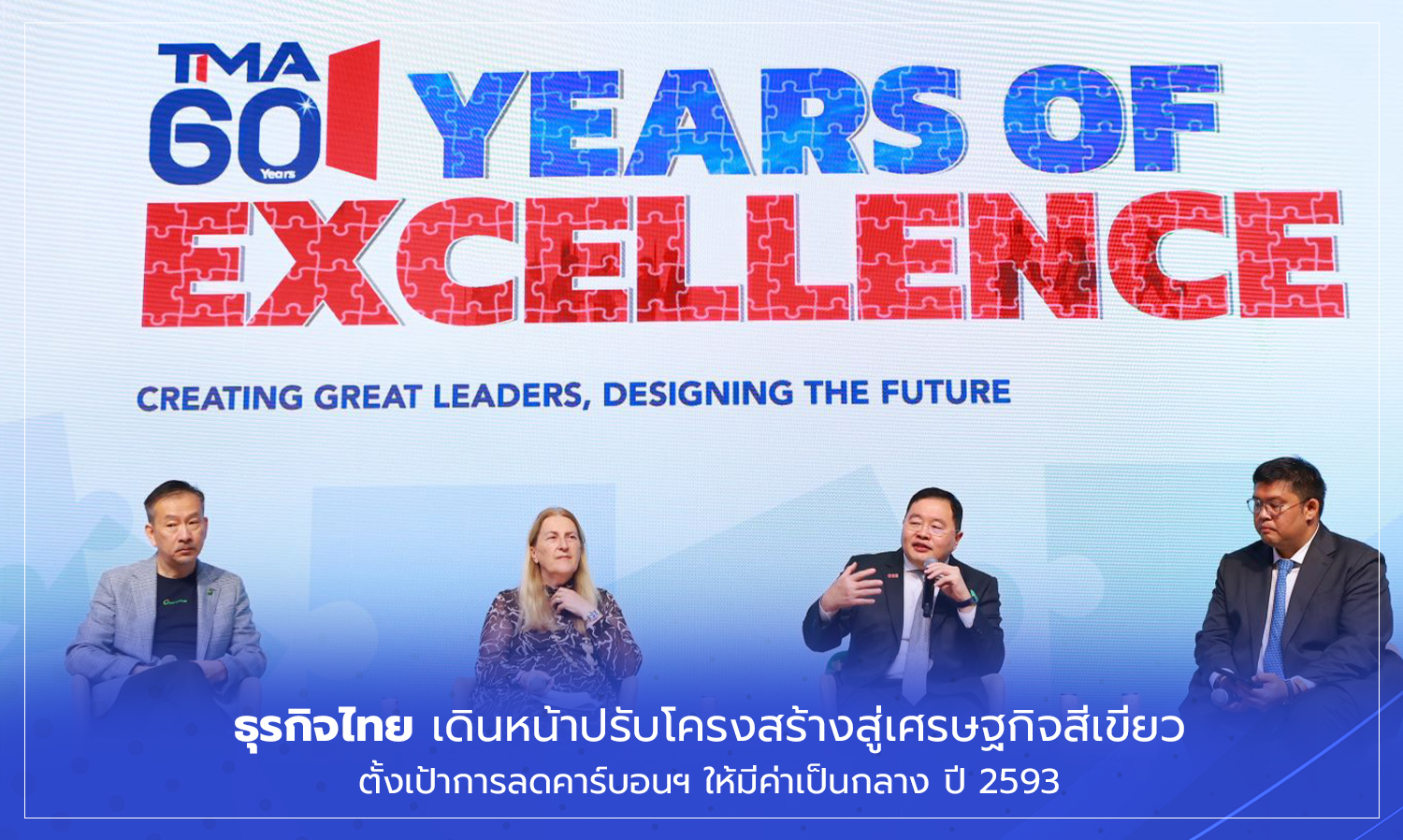
The Thailand Management Association (TMA) celebrated its 60th anniversary by organizing a seminar titled "60 YEARS OF EXCELLENCE," focusing on "The Future of Sustainability Growth." The Thai private sector is moving forward to restructure production by shifting from fossil fuels to alternative and renewable energy sources, as well as adjusting supply chain processes towards green business practices. The goal is to drive sustainable organizational growth while being environmentally friendly, aiming to reduce greenhouse gas emissions (CO2) in accordance with the Paris Agreement on climate change, which Thailand ratified in 2016. Thailand aims to reduce greenhouse gas emissions by 30-40% from business-as-usual levels by 2030, achieve carbon neutrality by 2050, and reach net-zero emissions by 2065.
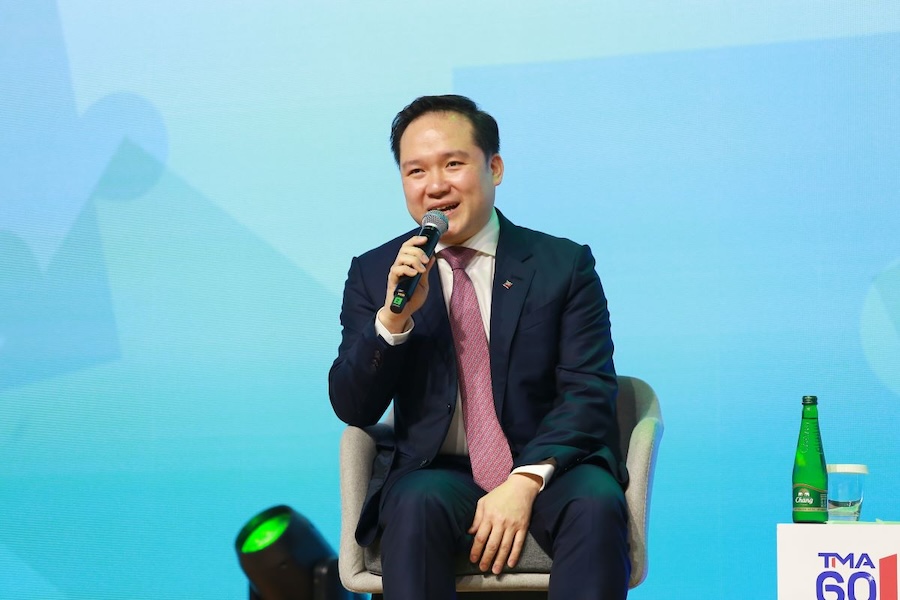
Mr. Panot Sirivadhanabhakdi, CEO of Frasers Property Limited, stated that the development of environmentally friendly real estate must acknowledge that the real estate sector is a significant contributor to greenhouse gas emissions, accounting for 60% of global emissions. Therefore, the approach to real estate development aimed at reducing greenhouse gases starts from the project development process and involves collaboration with partners and suppliers.
We have spent 2-3 years developing low-carbon construction materials to ensure that the One Bangkok project is developed with low greenhouse gas emissions. We utilize concrete powder in constructing multipurpose buildings, creating sustainable concrete structures through the application of technology, design, and construction methods.
“I believe that the real estate business can reduce greenhouse gas emissions in the long term if we collaborate from the upstream phase of construction materials to the design and construction concepts, and through to the building's operational phase,” Mr. Panot said.
Mr. Chaiwat Kovavisarach, CEO and Managing Director of Bangchak Corporation Public Company Limited, emphasized during the seminar "A Conversation on the Sustainable Future" that Bangchak Group prioritizes sustainability by continuously developing its management structure and has a clear strategy to drive the organization towards reducing greenhouse gas emissions as part of its ESG development framework.
“We initiated our greenhouse gas reduction plan in 2016 by auditing the organization’s greenhouse gas emissions to establish a baseline for calculating and designing reduction strategies. We have planned continuous greenhouse gas reductions over the past 10 years, investing over 60 billion baht to adjust our internal production processes and invest in alternative energy as part of our greenhouse gas reduction efforts, aiming for net-zero emissions by 2050,” Mr. Chaiwat stated.
Regarding key strategies for reducing greenhouse gas emissions, Mr. Chaiwat mentioned that Bangchak focuses on adjusting production processes and increasing the use of alternative energy. We are enhancing energy efficiency with a goal of achieving net-zero carbon emissions by 2065, in line with national targets, gradually reducing emissions by 100% over time. This process involves the use of technology and the development of the company's supply chain to collectively reduce greenhouse gas emissions.
The key to achieving these targets is to start with our people, making them aware of the importance of reducing greenhouse gas emissions in their daily lives and work processes, as well as investing in the development and transformation of production processes simultaneously.
“It is crucial that we view the adjustment of production processes not as a cost but as an investment that will yield returns in the future. Like investing in alternative energy, we see it as an investment that will provide returns, which is a sustainable investment, not merely an expense. Once we change our mindset about adjusting production processes to reduce greenhouse gas emissions as an investment that will yield long-term returns, it will transform the adjustment process from a burden into a pathway towards a future that is part of the green economy,” Mr. Chaiwat explained.
Mr. Thammasak Sethakorn, CEO of SCG, noted that SCG's businesses, including cement production, construction materials, petrochemicals, and packaging, are industries that emit significant greenhouse gases. Therefore, we must adapt and develop our production processes to be environmentally friendly and grow sustainably.
“What SCG is currently doing is adjusting our production processes, starting with energy use in our product manufacturing to gradually reduce greenhouse gas emissions. We aim for a 25% reduction to reach an intermediate level and ultimately zero emissions. Each step has a plan that each department collaborates on, including driving efforts with business partners and the supply chain to ensure systematic greenhouse gas reduction,” Mr. Thammasak stated.
In collaboration with business partners, the company is developing products together, such as the One Bangkok project, where we are collaborating with Frasers Property Limited to develop low-carbon cement for construction, along with various materials that have production processes that reduce greenhouse gas emissions.
Moving forward, SCG's products will be low-carbon in both construction materials and petrochemicals. In the petrochemical sector, we are focusing on developing BIO Plastic that can use carbon at half the level of conventional plastics. Although production costs are high initially, costs will decrease as production increases, aiming to increase low-carbon plastic from 10% to 30% eventually. The transformation of energy sources and production processes is key to reducing carbon in SCG's production processes, which is part of our journey towards becoming a sustainable organization that values ESG.
“Sustainable economy is about investment, not costs.”
H.E. Mrs. Helene Budliger Artieda, State Secretary for Economic Affairs, SECO, Switzerland, stated that the concept of sustainability and reducing greenhouse gas emissions is a collective effort. Switzerland places great importance on this, and driving the country and organizations towards sustainability is a process that must be pursued by both the public and private sectors.
“Laws alone cannot achieve sustainable development or reduce greenhouse gas emissions; we must ensure that the private sector and the public understand and are ready to participate in reducing greenhouse gas emissions together,” Mrs. Artieda said.
For Thailand, it is one of the countries that prioritize reducing greenhouse gas emissions and collaborates with Switzerland to develop strategies for climate change mitigation within the country, such as the cooperation in developing 2,000 E-Buses in Thailand, which helps reduce greenhouse gas emissions. Switzerland also has a fund to support greenhouse gas reduction that is ready to collaborate with Thailand and many other countries worldwide to encourage the adjustment of production processes and operations that contribute to reducing greenhouse gas emissions in each country, as greenhouse gas issues require collective action; no country can tackle this alone.
Mr. Hans-Paul Burkner, Managing Director and Global Chair Emeritus of Boston Consulting Group, stated at the seminar "The Economics of Sustainability" that sustainable economic development means developing an economy that prioritizes environmental issues. It is an investment that creates sustainable growth rates in the long term.
“We need to change the perspective that reducing greenhouse gas emissions and conducting business sustainably with consideration for the environment, society, and governance is not a cost but an investment that will drive organizations to achieve sustainable revenue and profit growth,” he said.
We do not need to make large investments for green businesses; we can choose appropriate options in our work processes and production to transition into green businesses, including adjusting production processes, selecting materials, changing energy sources, and using suitable technologies to generate appropriate revenue and profits,” Mr. Burkner added. Thailand has a good opportunity and several advantages in moving towards sustainability, with its geographical location standing out in Southeast Asia, a region that is expanding compared to Europe, while countries in other regions are facing difficulties, especially small businesses and SMEs, which have advantages and agility in transitioning to sustainability.
Both small and large companies must have a clear sustainability agenda and manage resources sustainably. They must seize opportunities and be aware of regulations. This is a great opportunity for Thailand to capitalize on the value of sustainability, helping to reduce costs, which we must define ourselves and create actionable plans. Every company has the same opportunity.