
Trends in the Thai Automotive Parts Industry
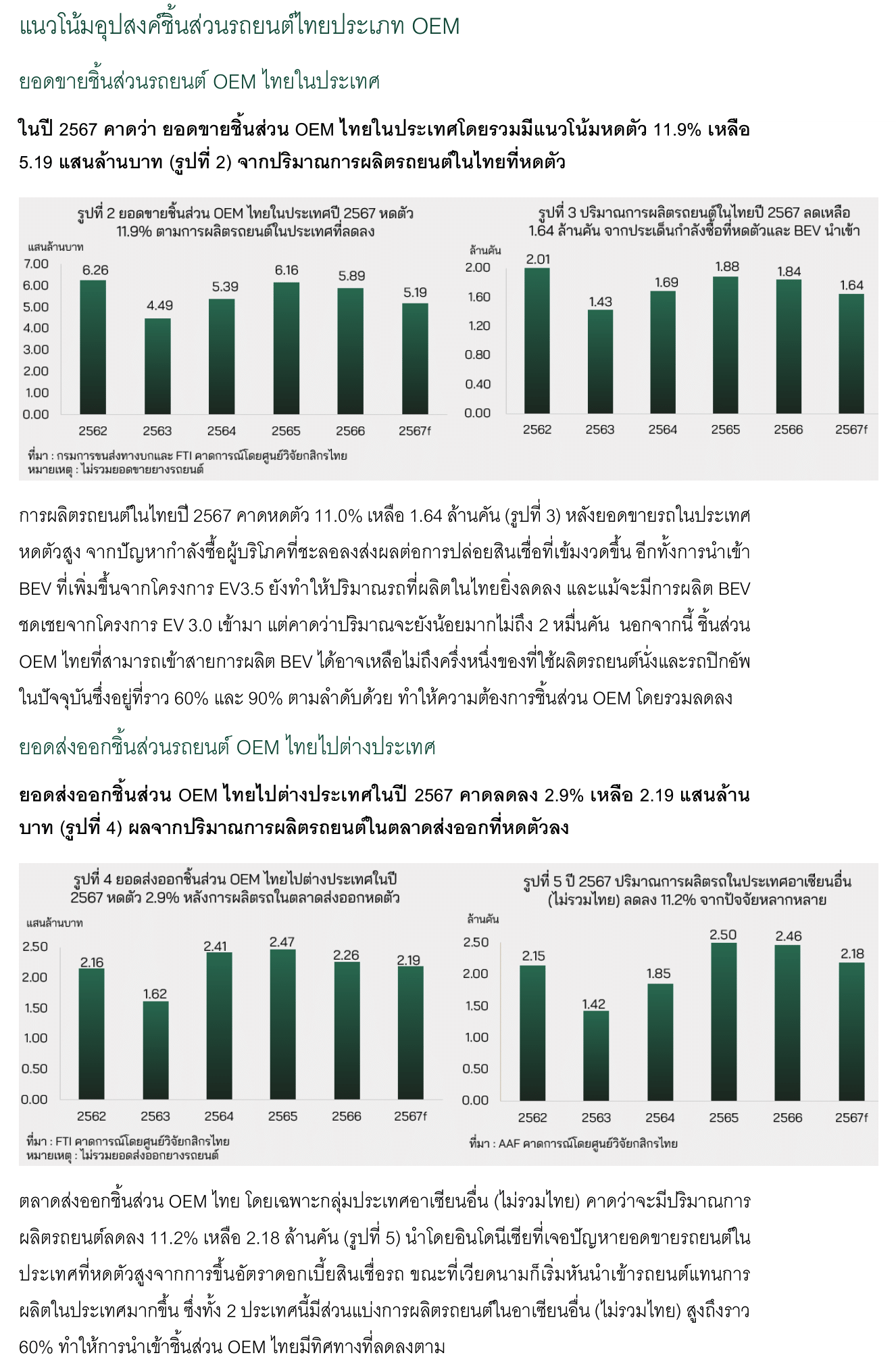
- The demand for OEM (Original Equipment Manufacturing) automotive parts, which are supplied to vehicle production lines, accounts for over three-quarters of automotive parts sales produced in Thailand. This segment is expected to contract in 2024, with domestic sales projected to decline by 11.9% and exports by 2.9%, following a significant decrease in automobile production both domestically and internationally.
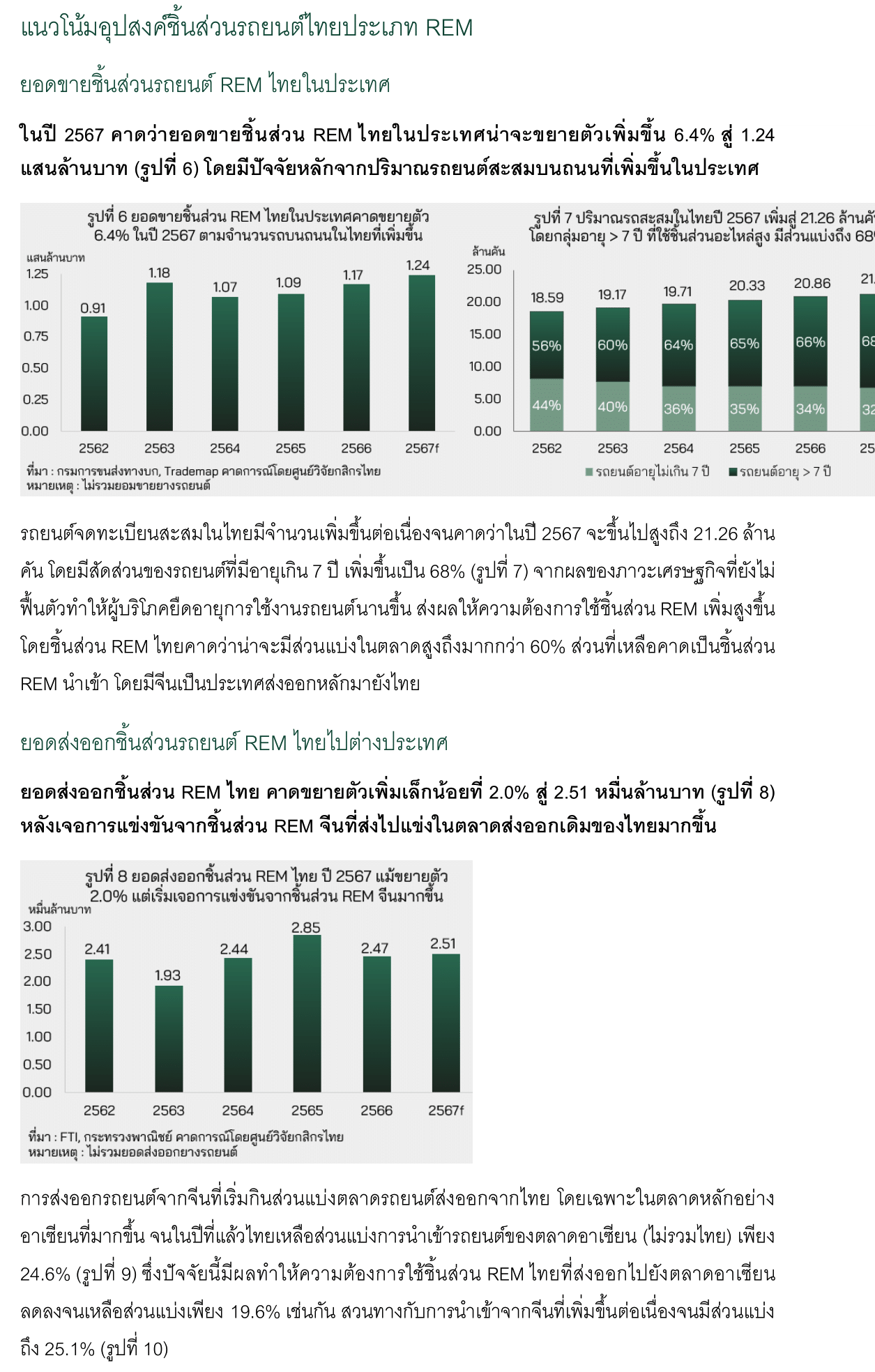
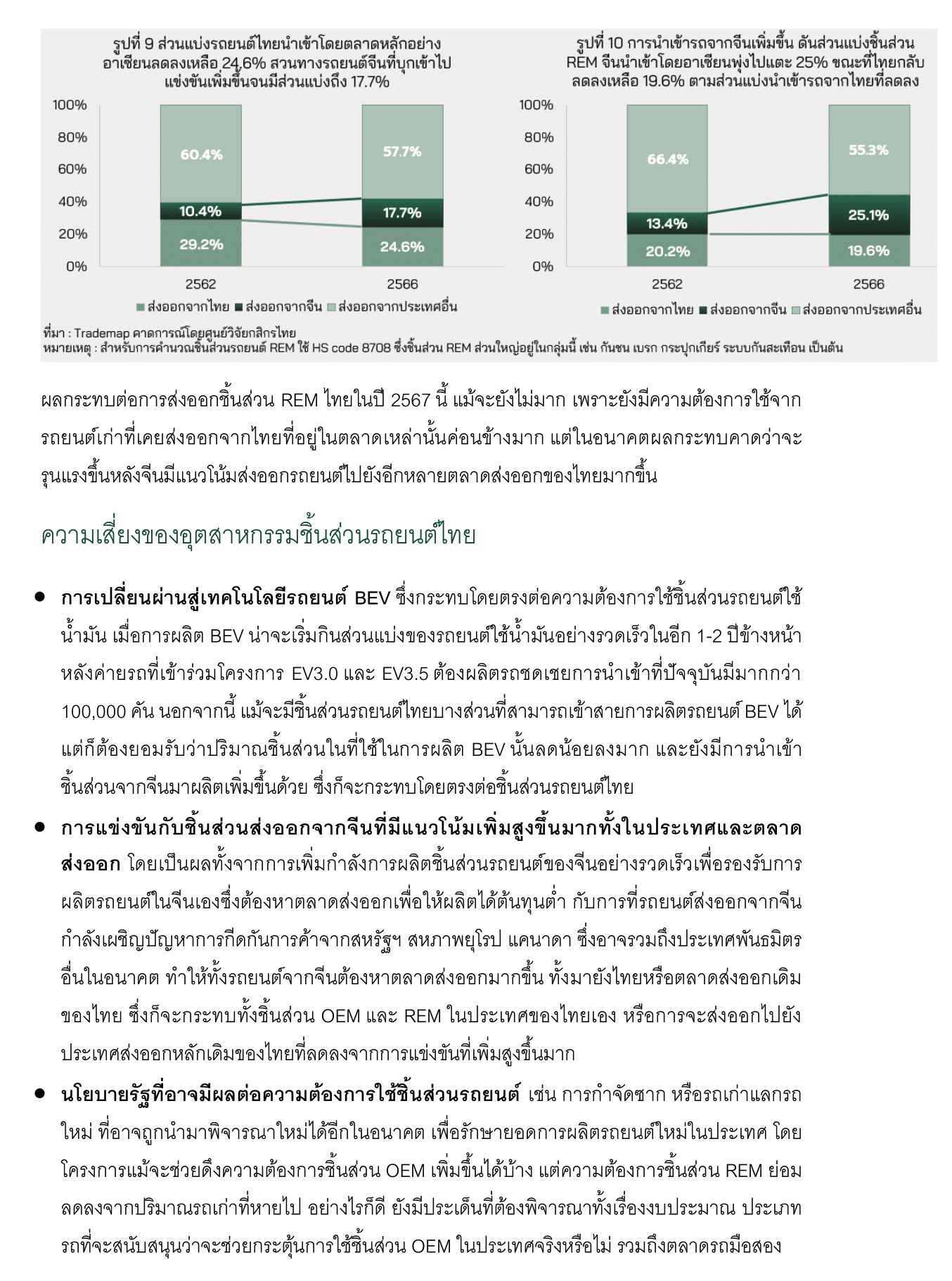
- The REM (Replacement Equipment Manufacturing) segment, which includes spare parts used for vehicle maintenance and represents one-quarter of automotive parts sales produced in Thailand, is expected to grow by 6.4% in 2024 for the domestic market, driven by an increase in registered vehicles. However, exports are anticipated to grow by less than 2.0% due to competition from Chinese parts.
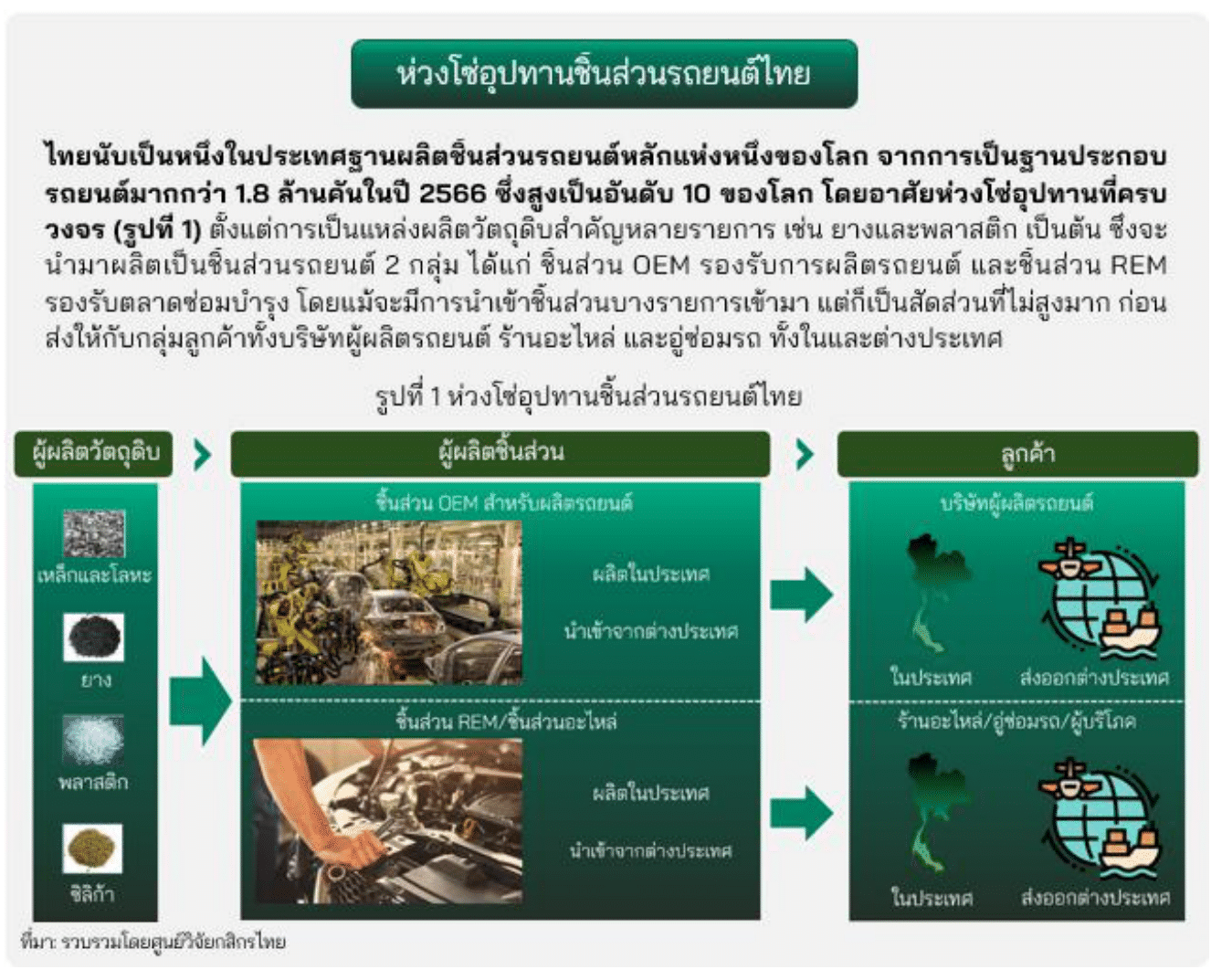
Thailand is recognized as one of the key automotive parts manufacturing bases in the world, assembling over 1.8 million vehicles in 2023, ranking 10th globally. This is supported by a comprehensive supply chain (see Figure 1), which includes the production of essential raw materials such as rubber and plastics. These materials are used to manufacture two types of automotive parts: OEM parts for vehicle production and REM parts for the maintenance market. Although some parts are imported, they constitute a relatively small proportion of the total, which are then supplied to various customers, including automotive manufacturers, spare parts retailers, and repair shops, both domestically and internationally.

Discussion
Follow breaking news Investment property articles on Facebook, click here.