KBank Private Banking and Lombard Odier Indicate Economic Shift as Interest Rates Peak, Recommend Investment Strategies for 2024 to Manage Volatility with a Focus on Diversification and Asset Risk Management
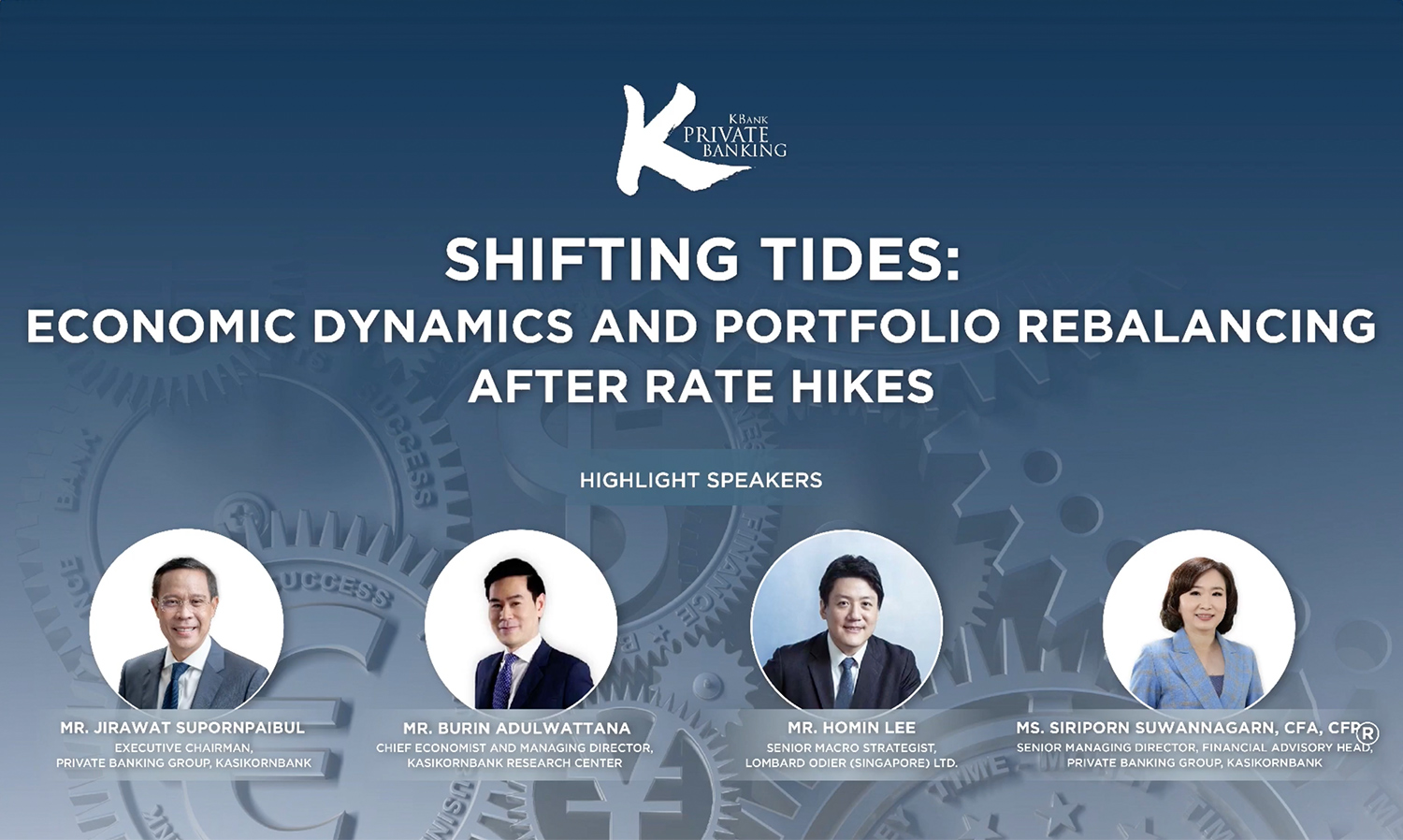
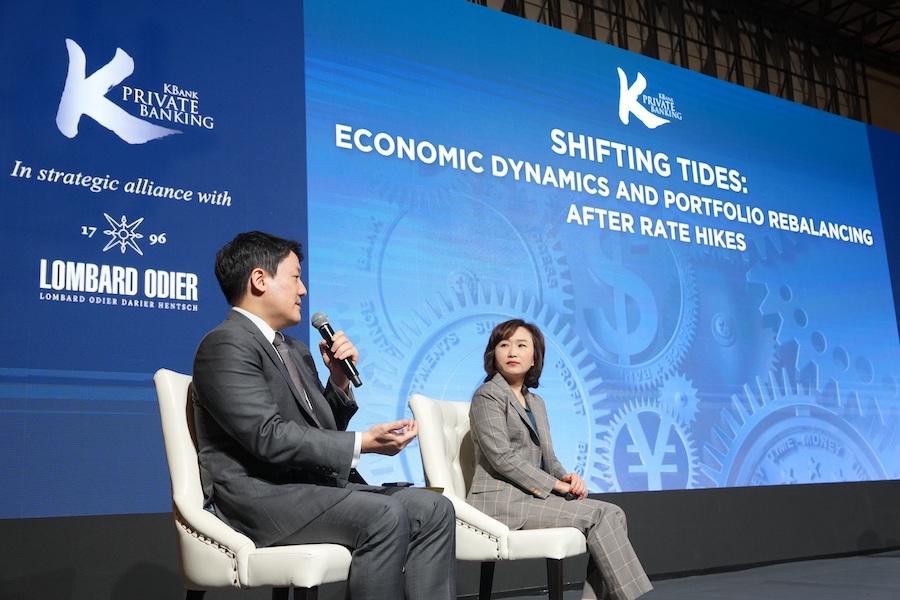
KBank Private Banking, in collaboration with Lombard Odier, a global private banking partner from Switzerland, held a seminar titled “Shifting Tides: Economic Dynamics And Portfolio Rebalancing After Rate Hikes” to assess the global economy for 2024, predicting continued growth but at a slower rate. It highlighted that economic changes are expected following the halt in interest rate hikes and gradual reductions starting this March, while geopolitical issues, such as the U.S. elections, remain crucial. The seminar advised diversifying investments to generate long-term returns, emphasizing a Risk-based investment approach that spreads investments across major global assets through the ALL ROADS Series, along with allocations in bonds, equities, and alternative investments. The Kasikorn Research Center noted that Thailand requires new machinery to drive its economy forward to sustain growth, forecasting a 3.1% GDP growth for Thailand this year.
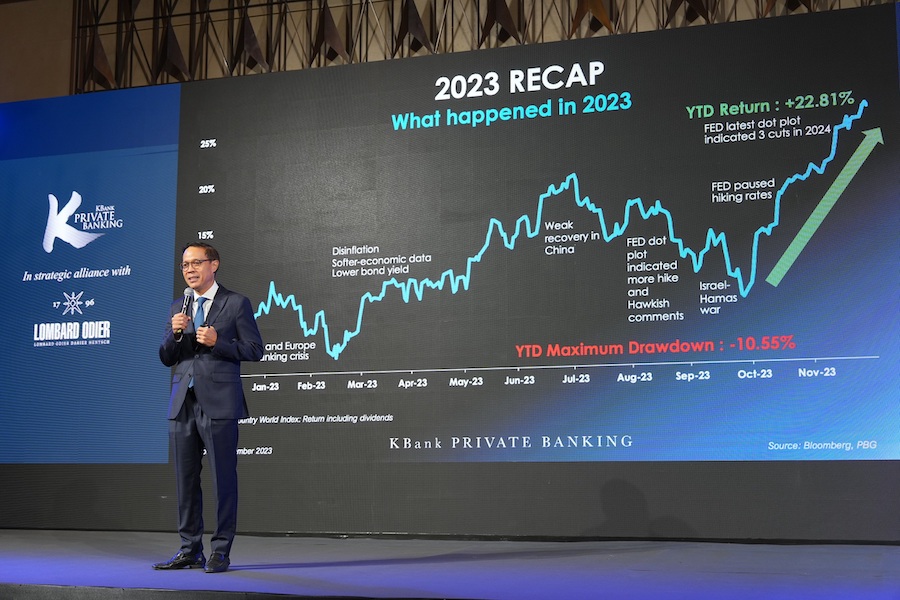
Mr. Jirawat Suphanpaiboon, Executive Chairman of the Private Banking Group at Kasikorn Bank, revealed that last year, the investment market faced numerous events causing volatility, starting from the end of the first quarter when global financial stability was shaken by the collapse of Silicon Valley Bank (SVB) and the Credit Suisse (CS) crisis. In the second quarter, the market rebounded due to U.S. inflation nearing its peak. However, in the third quarter, China's economy failed to recover as expected, leading to another downturn in the overall market, compounded by uncertainties from the FED regarding interest rates. This was followed by the conflict between Israel and Hamas that began in early October, causing continued declines in the investment market. Nevertheless, the market showed signs of improvement in November and December, following the FED's pause on interest rate hikes and signals of potential rate cuts in 2024, resulting in a global stock market return increase of approximately 23% for 2023.
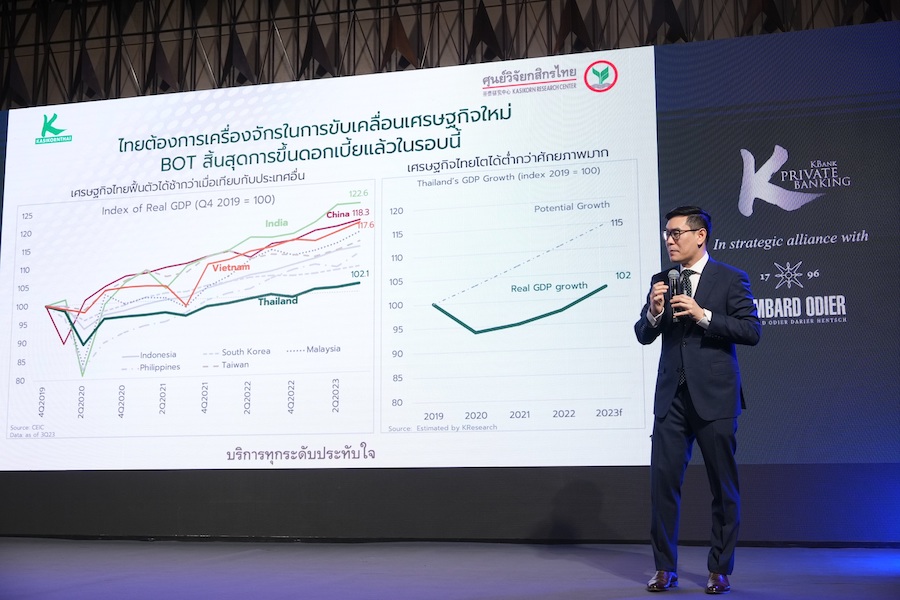
Mr. Burin Adulwattana, Managing Director and Chief Economist at the Kasikorn Research Center, stated that in 2024, Thailand's economy is expected to grow by around 3.1%, supported by public investment, private sector spending, and projected export growth of 2%, along with an anticipated increase in tourist arrivals to 30.6 million. Furthermore, if digital wallet measures are implemented, Thailand's economic growth could rise to 3.6%. However, it is viewed that Thailand needs new machinery to drive its economy towards long-term potential levels, such as in the electric vehicle industry and opportunities arising from the relocation of production bases from China.
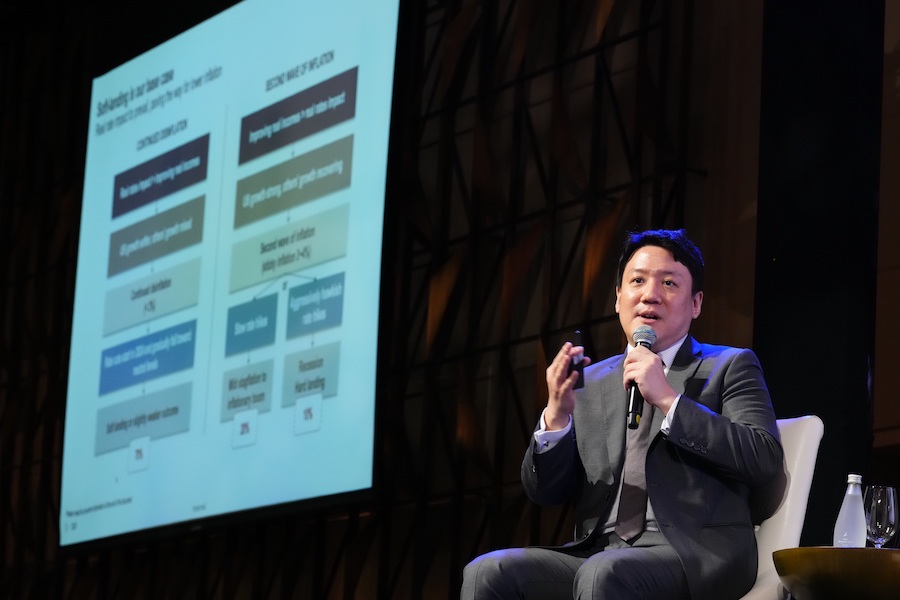
Mr. Homin Lee, Senior Asia Macro Strategist at Lombard Odier (Singapore), summarized five interesting perspectives on the global economy as follows:
- The global economy will continue to grow but at a slower rate – The U.S. economy can avoid recession and expand at a slower pace, while the European economy will continue to grow at a low level, and China's economy faces challenges that require economic stimulus measures to restore consumer and business confidence.
- Inflation will continue to decline, particularly in the U.S. and Europe, while inflation in China will stabilize around 1%.
- The U.S. and European central banks have already paused interest rate hikes in 2023 and will begin to lower rates starting March 2024, but not to pre-COVID levels. The Bank of Japan will raise rates and exit the negative interest rate era in the second quarter, while China will maintain a loose monetary policy.
- The market will closely monitor political issues, especially the U.S. elections, the China-U.S. relationship, trade conflicts between China and its trading partners, and conflicts in the Middle East.
- Investment will flow more into the bond market due to high interest rates that will decrease in 2024, while the stock market remains challenging as returns compared to interest rates are not as attractive as in the low-interest era, necessitating a focus on selecting standout stocks for returns.
For investment strategies this year, KBank Private Banking recommends dividing investments to accumulate and enhance wealth over the long term into two parts: (1) Core Portfolio (50-70%), selecting mixed funds using a Risk-based approach that diversifies risks across equities, bonds, commodities, and volatility (VIX Index), employing systematic investment management principles with clear rules that do not rely on market predictions or fund manager forecasts. The core strategy should be actively managed and highly flexible according to economic cycles and key market indices to ensure portfolio flexibility. It is recommended to invest in funds with proactive asset allocation and risk management, such as the All Roads Series. (2) Satellite Portfolio (30-50%), allocating investments in:
- Bonds – Invest in government bonds and high-rated corporate bonds, focusing on long-term securities due to current high interest rates, making interest returns attractive, and also providing opportunities for profit from price differences when the FED lowers rates. Additionally, government bonds are considered safe assets that help diversify risks well if the economy enters a slowdown. Recommended funds include K-GDBOND and TUSBOND. Furthermore, enhance the portfolio with CoCo Bonds issued by financially strong institutions that offer attractive returns after interest rates increased last year, through the UPINCM-N fund. For high-risk bonds or High Yield (HY) bonds, there may be risks from an economic slowdown and liquidity risks following rising interest costs.
- Stocks – For example, (1) Global Growth Stocks: After interest rates have peaked and are entering a downward cycle, this will benefit high-growth stocks. It is recommended to diversify investments globally, as tech stocks in the U.S. have risen significantly in 2023. It is advisable to invest in the K-CHANGE fund. (2) Emerging Market Stocks: Besides benefiting from outstanding economic growth potential, they will also receive support from capital inflows after the FED signals rate cuts, leading to a weaker U.S. dollar, which is positive for investments in emerging markets. Recommended funds include PRINCIPAL VNEQ and K-INDIA.
- Alternative Investments – It is recommended to diversify investments in multi-strategy hedge funds, such as (1) Macro strategies and trend-following strategies that help generate returns and diversify risks through the ability to use various indicators for Long/Short of core assets, both equities and bonds. Recommended funds include ASP-LEGACY-UI and LHMCMULTIUI. (2) Major currency trading strategies: Based on fundamental factors such as interest rate differentials, economic trends, inflation, balance of payments, and capital flows in and out. It is recommended to invest in the DAOL-FXALPHA-UI fund.
Mr. Jirawat concluded by stating that although the investment market continues to experience volatility, the overall outlook is improving. Therefore, investors are still advised to focus on effective risk diversification to reduce portfolio volatility, aligning with acceptable risk levels to increase opportunities for consistent long-term returns. For high-net-worth clients of KBank Private Banking, they can invest in the ALPHA fund, a ready-made fund that actively adjusts portfolios in all market conditions, tailored to their return objectives to accumulate wealth.
For those interested in more details, the seminar “Shifting Tides: Economic Dynamics And Portfolio Rebalancing After Rate Hikes” can be viewed at https://youtu.be/sP90BJ_4MkI or for more information, visit the KBank Private Banking website at https://kbank.co/3NrNbw9.