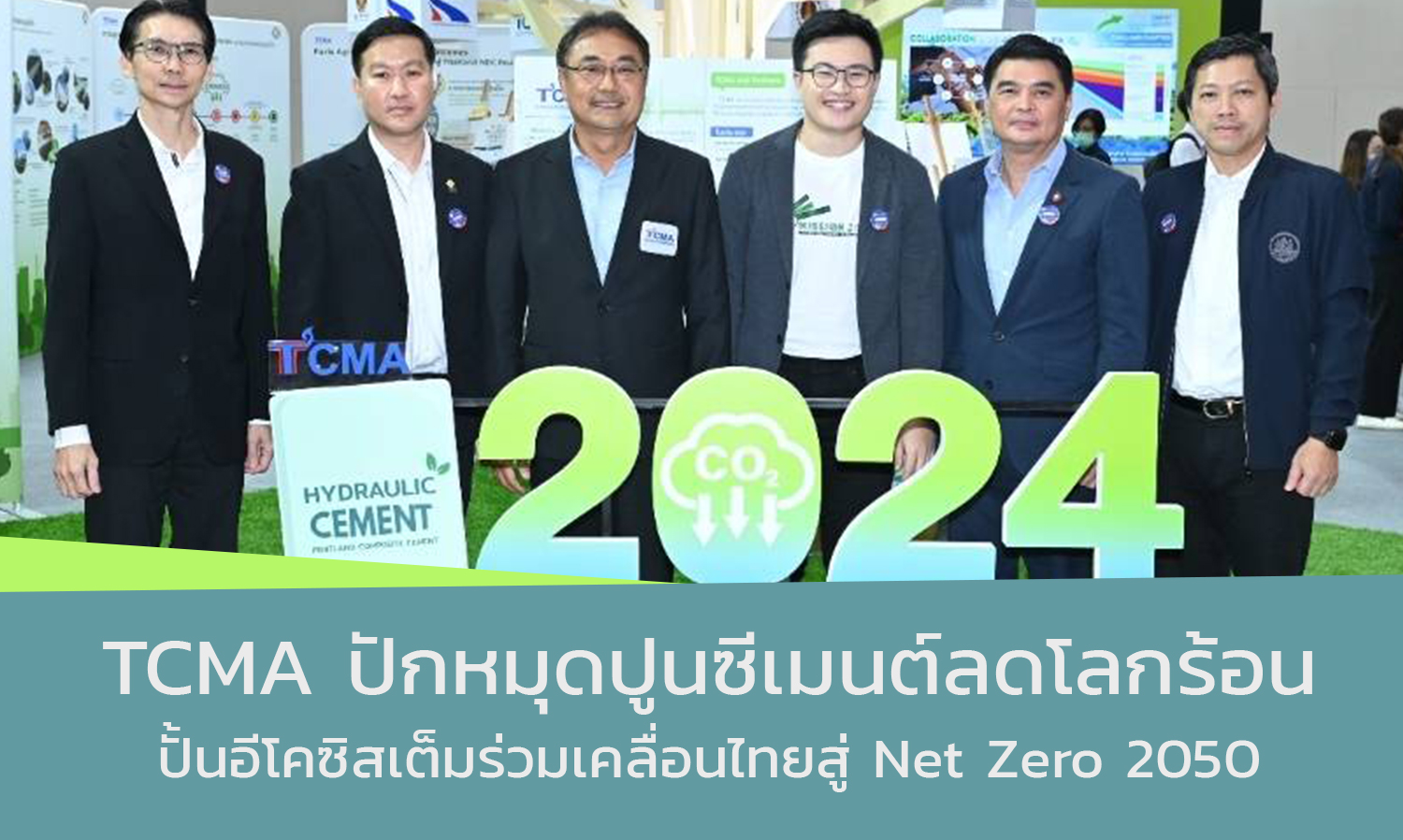
TCMA Marks Cement's Role in Combating Climate Change, Building an Ecosystem for Thailand's Journey to Net Zero 2050
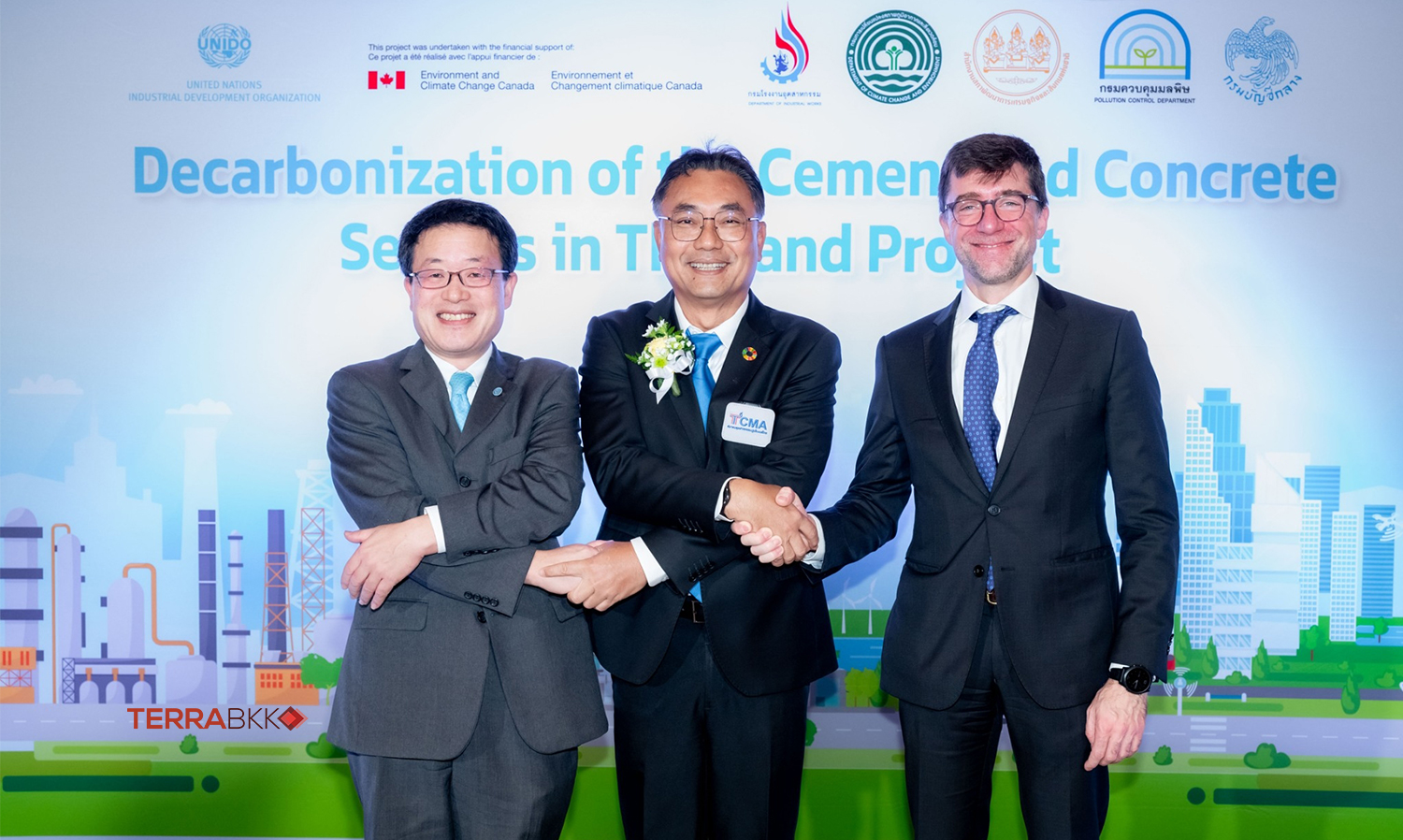
The Thai Cement Manufacturers Association (TCMA) has partnered with 30 allies to advance efforts in reducing global warming, creating a new paradigm in the construction materials industry, and paving the way for a sustainable world. By utilizing innovations and technologies to produce hydraulic cement, they aim to reduce greenhouse gas emissions in line with global targets set at COP 27. This initiative highlights the readiness to raise awareness about hydraulic cement (the climate-friendly cement) and aims to lead Thailand into the "2024 Thailand's New Era of Low Carbon Cement: Hydraulic Cement".
Mr. Chana Poomi, President of TCMA, stated that TCMA is actively addressing the climate crisis at the National Engineering Conference 2022, promoting the concept of "Together for Our World: Uniting to Combat Global Warming...Reducing Greenhouse Gases". The issue of global warming is more severe and imminent than many realize, with extreme disasters, changing weather patterns, floods, and droughts affecting everyone. Thus, all sectors must be aware of the ongoing climate crisis and find ways to ensure that economic activities do not contribute to rising global temperatures, with a goal of limiting the increase to no more than 1.5 degrees Celsius by the end of this century.
The solution to this problem, developed through research, is the "hydraulic cement" that helps reduce carbon dioxide emissions during production by minimizing the burning of limestone, a primary raw material. By incorporating material science and innovation, hydraulic cement can significantly lower greenhouse gas emissions while maintaining quality standards, paving the way for engineering standards to replace Portland cement in all types of construction.
"This marks a new dimension where cement manufacturers unite as one, receiving strong support from relevant sectors to jointly promote global warming reduction. We seek collaboration and serious action from all professional sectors supporting standard certification, with the industry being the origin of product development that does not harm the environment, and the education sector supporting research to develop technologies and innovations that help combat global warming," Mr. Chana said.
The public is encouraged to use environmentally friendly products, while the government sets pilot product standards for agencies to start using "hydraulic cement" in various construction projects. This has led to the first success in achieving a reduction of over 300,000 tons of CO2 emissions in 2021, nine years ahead of the NDC Roadmap target.
Progress in concrete operations and unexpectedly rapid positive feedback have positioned Thailand's cement industry as a leader in aligning with global directions towards Net Zero 2050. Additionally, mechanisms for collaboration have been established to drive towards shared success, setting clear standards and processes for the rapid and effective use of hydraulic cement, expanding cooperation and setting even greater goals, such as reducing carbon dioxide emissions by another 1 million tons in 2023, equivalent to 110 million native trees in CO2 absorption.
"TCMA has coordinated with various sectors, initially involving 16 agencies and 5 ministries, to collaborate from policy to management levels, driving the implementation of measures to replace clinker with hydraulic cement to seriously reduce greenhouse gas emissions, leading to successful expansion. Currently, the number of collaborating partners has increased to 31 agencies with support from 6 ministries, creating complex standards and regulations that can be effectively driven through integrated cooperation among relevant agencies," he added.
Mr. Chana emphasized that the success and progress in transitioning to hydraulic cement stem from the collaborative support of all sectors, serving as a model for creating a tangible process to drive down global temperatures. It is a source of pride for all of us to cultivate awareness among people in the country across all sectors to choose environmentally friendly materials or those that have minimal impact on global warming, not just hydraulic cement but extending to other products as well. Furthermore, TCMA has collaborated with the GCCA (Global Cement and Concrete Association), a leading organization in cement and concrete, and has been honored to participate in COP 27 in Egypt, where they will exchange working methods with GCCA members and countries attending COP 27 to seek cooperation in technology, funding, and more to collectively reduce greenhouse gas emissions in Thailand to achieve future goals.
Professor Dr. Somnuk Tangtemsirikul, Head of the Construction Technology and Maintenance Research Center at Sirindhorn International Institute of Technology, stated that the cement production process involves high-temperature combustion, resulting in carbon dioxide emissions. The production of hydraulic cement includes processes that help reduce these emissions without compromising the quality of the cement. On the contrary, it can improve certain aspects of its application. Currently, Thailand uses 20-30 million tons of cement annually; if various construction projects switch to hydraulic cement, it could significantly reduce CO2 emissions by several hundred thousand tons per year.
The education sector must support the creation of knowledge and understanding, instill confidence in its application, and further develop new types of climate-friendly cement products to meet the sustainable development needs of the construction industry.