Economic Trends in 2022: Keeping an Eye on Promising Investment Futures
The ongoing tension between Russia and Ukraine, the surge in global oil prices exceeding $100 per barrel, the 0.25% increase in the U.S. Federal Reserve's policy interest rate, inflation, and the rapid transition to a Digital Economy present both opportunities and challenges that Thai investors must prepare for this year. Financial investment experts shared insights and recommendations during the online seminar “THE WISDOM The Symbol of Your Vision: Game Changer for Investment Strategies Amid Changing Interest Rates”.
Dr. Pipatpong Posayanont, Managing Director of Kasikorn Bank, stated that since early March, the escalating conflict between Russia and Ukraine and the West has impacted gold prices, which have risen significantly, while stock markets and exchange rates have experienced global volatility. This situation has affected the pace of Thailand's economic recovery and is likely to keep inflation at elevated levels through the second half of the year. The Kasikorn Research Center has revised its GDP growth forecast for Thailand in 2022 to 2.5%, down from the previous estimate of 3.7% made at the end of 2021.
Global and Thai Economies Still Have Potential... Awaiting the Outcome of Russia-Ukraine Conflict
The International Monetary Fund (IMF) predicts that the global economy will grow by 4.4% in 2022, slightly slowing from last year. The Russia-Ukraine war will be a significant indicator, with Dr. Don Nakornthap, Senior Director of Financial Stability at the Bank of Thailand, suggesting that the most likely scenario is a prolonged conflict throughout the year.
- United States: Economic growth this year is projected at 2.8%, despite facing rising interest rates, inflation at 7.9% (the highest in 40 years), and a hot labor market. The impact of the war is relatively minor due to the U.S. being a major oil producer.
- Europe: There is a possibility that the economy may enter a recession due to reliance on oil and gas from the region.
- China: The key factor affecting the economy is not the war but the COVID-19 outbreak, with 20 key regions, accounting for 70% of the country's GDP, currently facing this situation. China aims for a growth rate of 5.5% per year.
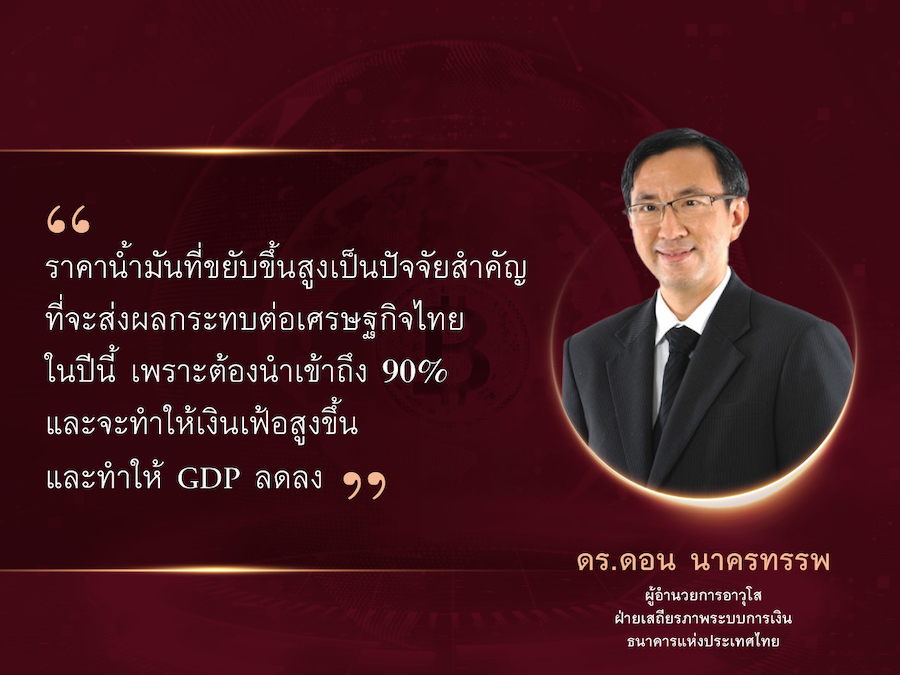
Furthermore, the rising oil prices are a crucial factor that will impact Thailand's economy this year, as the country imports up to 90% of its oil, which will drive inflation higher and reduce GDP. However, the export sector remains strong, with good growth prospects, and there is less cause for concern as long as the war remains confined to Russia and Ukraine, as these two countries together account for less than 0.5% of Thailand's exports.
4 Key Trends Investors Should Watch!
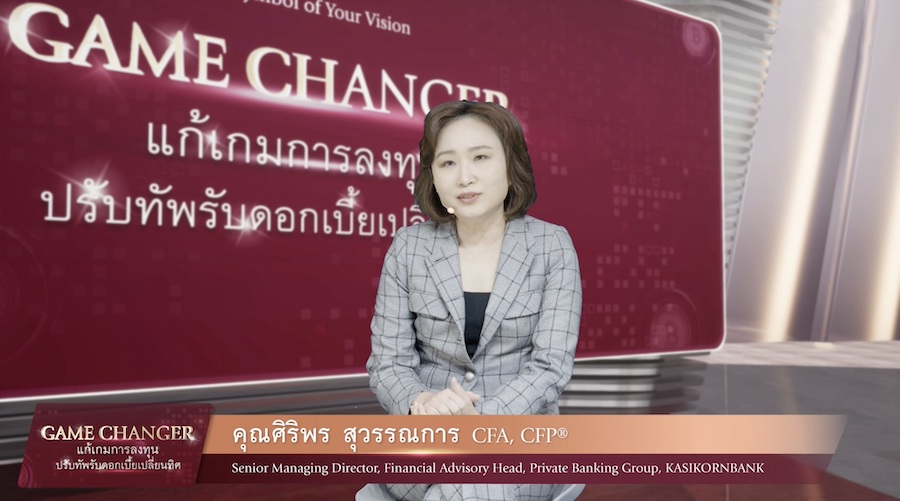
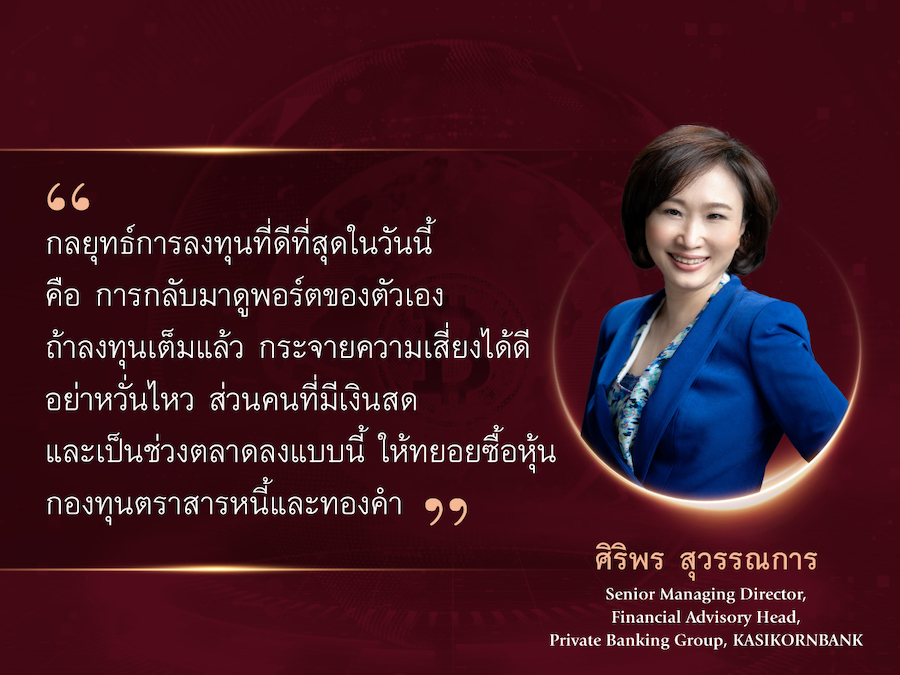
In terms of investment, it is essential to consider the financial war alongside the physical conflict. Ms. Siriporn Suwannakarn, Senior Managing Director, Financial Advisory Head, Private Banking Group at Kasikorn Bank, highlighted four significant trends that investors should closely monitor this year:
1. How will the Russia-Ukraine war conclude, and how long will it last? This includes surrounding factors such as various sanctions, the cessation of the SWIFT international payment system, and trade restrictions.
2. How much will global GDP estimates be revised downwards? With soaring oil prices, how high will inflation rise, and how will the COVID-19 situation in China exacerbate supply chain issues?
3. Monetary policy: If the war drags on, central banks worldwide may adopt a more patient approach, likely resulting in slower and smaller interest rate hikes.
4. Fiscal policy: It is crucial to monitor how countries will manage fiscal spending and what packages or programs will be introduced to stimulate the economy.
The best investment strategy today is to review one's portfolio. If fully invested with good risk diversification, it is advisable to hold onto the portfolio firmly without wavering. For those with cash, it is wise to diversify investments by gradually purchasing stocks, bond funds, and gold, as this market downturn presents an opportunity for cash holders.
Cryptocurrency... Highly Volatile but Still Strong
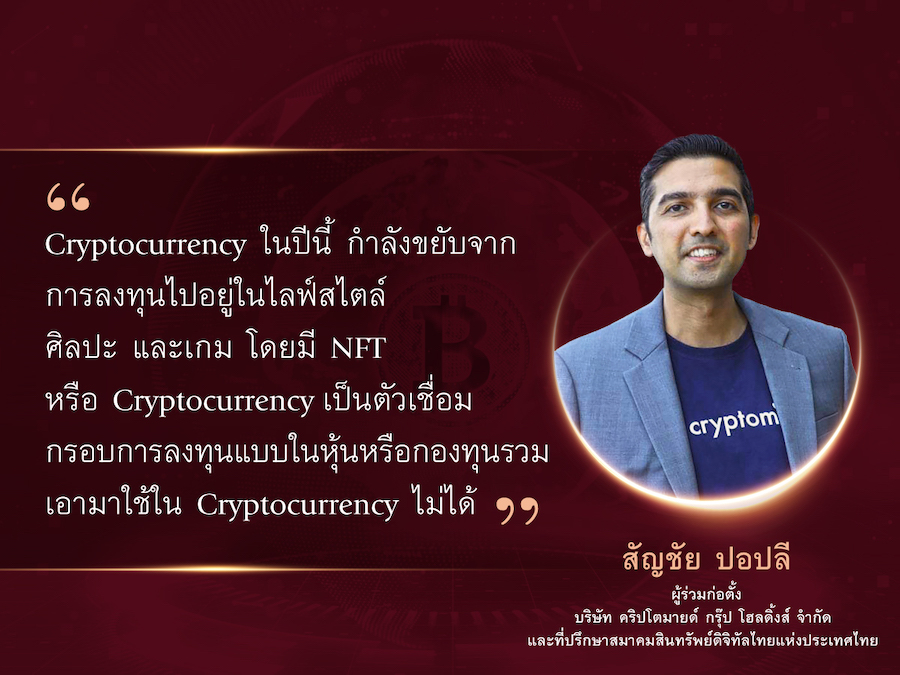
Since 2020, there has been a noticeable shift in the adoption of cryptocurrency, primarily driven by COVID-19. Mr. Sanchai Poplee, co-founder of Cryptomind Group Holdings and advisor to the Thai Digital Asset Association, noted that the number of cryptocurrency traders in Thailand surged from around 100,000 in 2018-2019 to 2 million today, a growth of approximately 20 times in just two and a half years. This remarkable growth is expected to continue, with the following trends anticipated for cryptocurrency this year:
- Shifting from niche use to broader adoption, not just for investment but also encompassing lifestyle, art, and gaming, with artists and gamers increasingly entering the Digital Asset space, using NFTs or cryptocurrencies as a bridge.
- Large companies are investing more in cryptocurrency.
- Many countries are considering legalizing Bitcoin as a means of payment (Legal Tender) after El Salvador became the first country in the world to do so last year.
However, for those looking to invest in this market, it is essential to understand that cryptocurrency is highly volatile and requires constant monitoring due to rapid changes and numerous factors and information that need thorough study. Traditional investment frameworks used for stocks or mutual funds cannot be applied to cryptocurrency.
Digital Tokens: A New Dimension of Investment
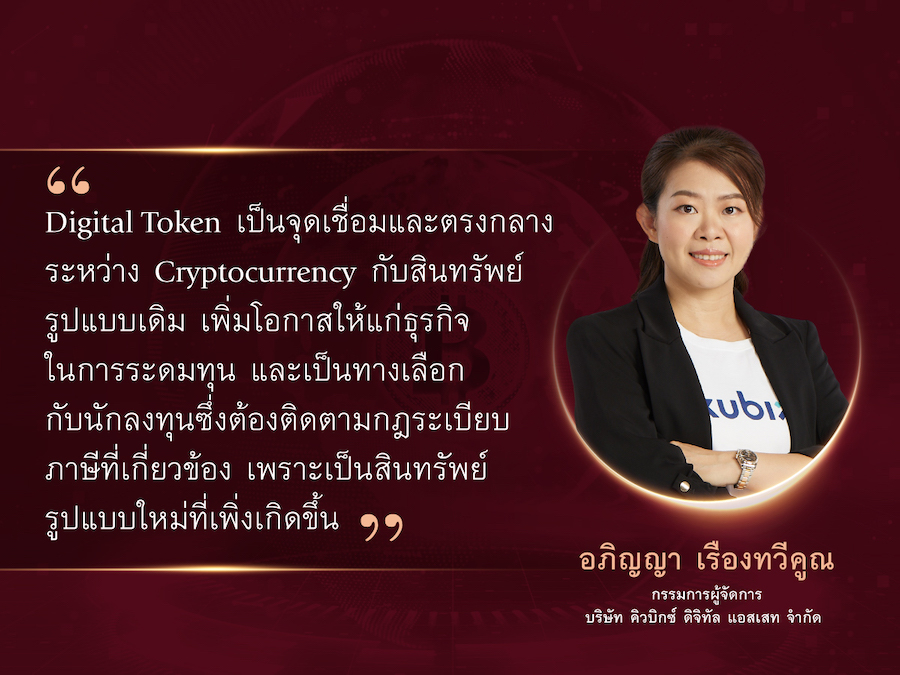
Digital Tokens are gaining significant attention as a new form of digital asset that can help diversify investment portfolios. Ms. Apinya Ruangthaveekoon, Managing Director of Cubix Digital Asset Co., Ltd., explained that Digital Tokens in Thailand will be issued by corporate entities or large companies, categorized into two types:
1. Investment Tokens are tokens issued for fundraising purposes to invest in projects presented by the issuer, which may grant rights to share in revenue or dividends, representing a new avenue for fundraising and a new way to access capital.
2. Utility Tokens are tokens that grant holders the right to receive goods or services offered by the issuer, such as hotel stays or discounts at shopping malls, transitioning ownership into a digital format for greater convenience.
As Digital Tokens represent a new industry, investors should thoroughly understand the tokens or industries they are entering, as well as stay updated on news, regulations, taxes, and related changes. This alternative asset class can create opportunities for both issuers and investors.