EIC Predicts CLMV Economy in 2022 to Accelerate from 2021 Due to Higher Vaccination Rates, Opening Borders for Tourists Without Quarantine, and Continuous Export Growth
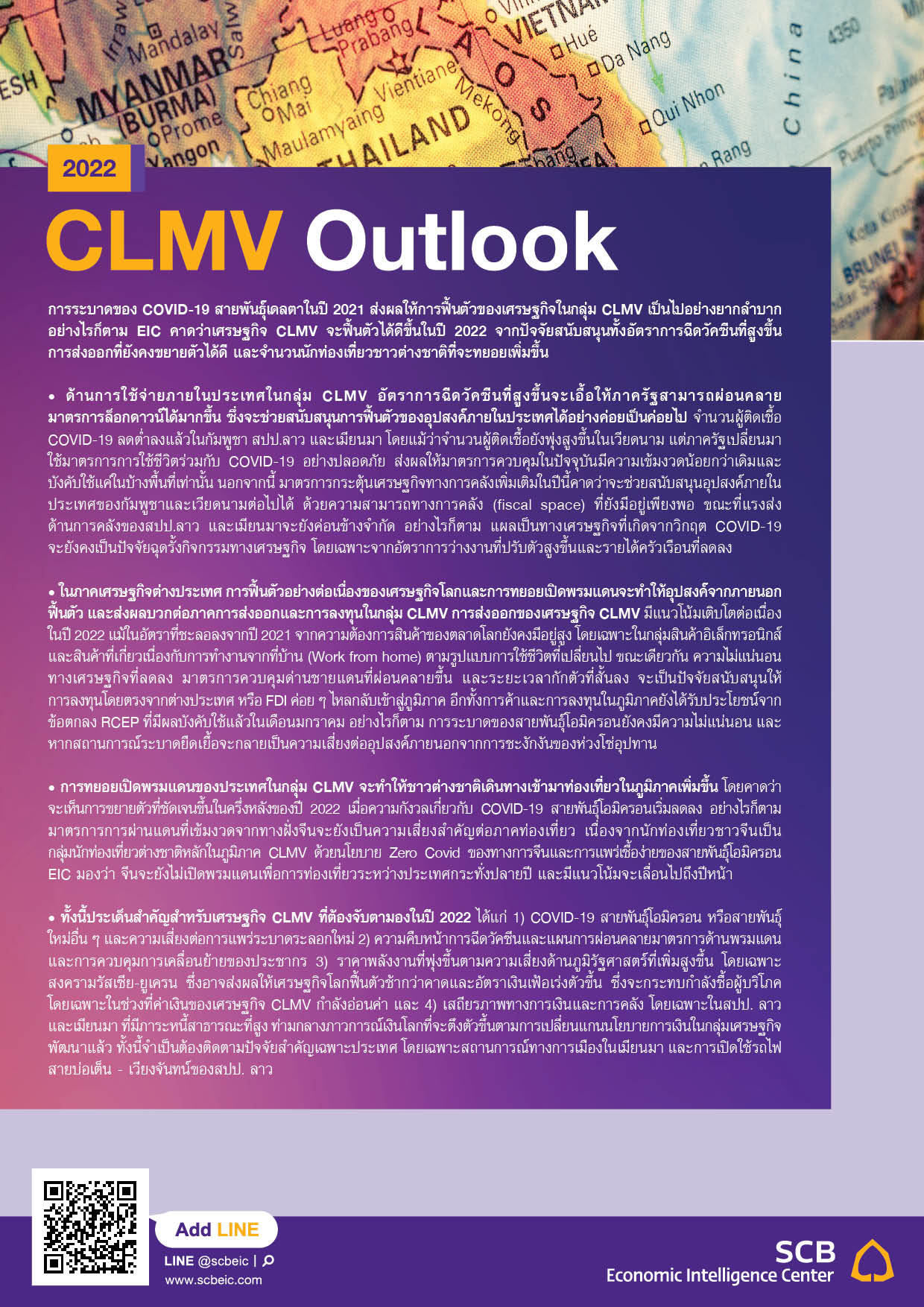
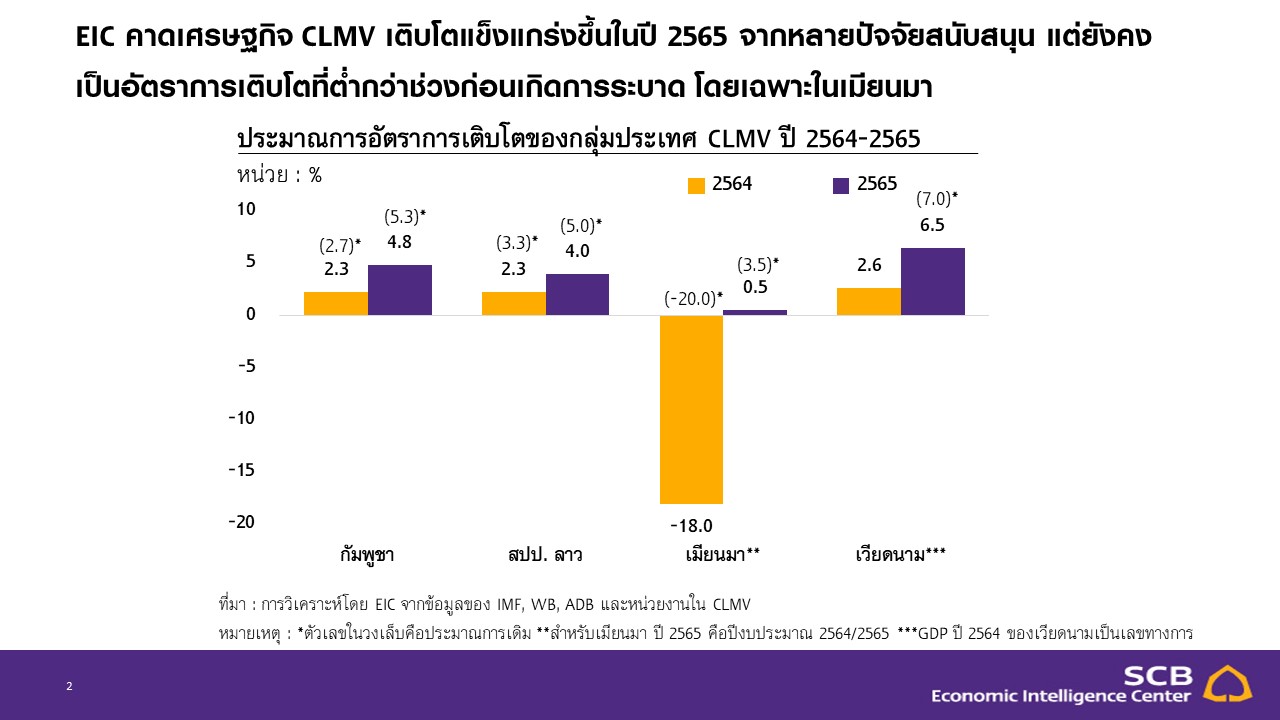
EIC forecasts that the CLMV economy in 2022 will grow at an accelerated rate compared to 2021, driven by the easing of COVID-19 control measures, gradual border openings in line with higher vaccination rates in the region, and continuous export growth. It is estimated that Cambodia's economy will grow by 4.8%, Laos by 4.0%, Myanmar by 0.5%, and Vietnam by 6.5% this year.
In 2021, the CLMV economy showed limited recovery despite benefiting from a rebound in exports aligned with the global economy, facing pressure from the Delta variant outbreak in Q2 and Q3, which was the most severe wave leading to stricter lockdown measures. Additionally, the coup in Myanmar in February 2021 severely contracted Myanmar's economy and exacerbated the impacts of the COVID-19 outbreak.

However, the CLMV economy began to show signs of recovery in Q4, with a decrease in daily infections (to hundreds per day in all countries except Vietnam), partly due to higher vaccination rates (Cambodia has fully vaccinated 81.8% of its population, Laos 58.7%, Myanmar 38.4%, and Vietnam 78.5% as of March 2, 2022) and the easing of lockdown measures in favor of safely living with COVID-19. The export sector also resumed strong growth after the supply chain disruptions eased. Furthermore, some countries, such as Cambodia and Vietnam, have started welcoming tourists without quarantine or reduced quarantine periods for fully vaccinated individuals. EIC believes that COVID-19 control measures in the CLMV economies in 2022 will be more relaxed than last year, which will positively impact domestic demand, while external demand will be supported by the ongoing global economic recovery and the opening of borders to welcome tourists.
Domestic demand in the CLMV economies is expected to gradually recover as lockdown measures are eased and government economic stimulus measures are implemented, but it will still face pressure from economic scars and country-specific risks. Data from Google Mobility, which reflects population activity in retail and recreation, shows recovery in almost all countries except Myanmar, indicating a rebound in economic activities. Additionally, employment in the CLMV countries is expected to gradually increase as various economic sectors recover, particularly in the service sector.
Recently, Vietnam's unemployment rate decreased to 3.6% in Q4 2021 from 4.0% in the previous quarter, which will positively impact domestic spending. Meanwhile, Thailand is likely to open up to more foreign workers, which will also increase remittances from the CLMV countries. The speed of recovery in domestic demand will vary depending on fiscal status and domestic situations. EIC expects that Cambodia and Vietnam, which have sufficiently strong fiscal positions, will be able to implement additional economic stimulus measures. Recently, Cambodia extended its household relief support measures until September 2022.
Vietnam has announced an economic stimulus package worth 4% of GDP, which will be disbursed during 2022-2023, while Laos and Myanmar, facing fiscal constraints, will not be able to implement sufficient measures for economic stimulus, especially Myanmar, which is expected to recover the slowest due to the political crisis and sanctions from Western countries. However, risks to the recovery of domestic spending remain due to economic scars from the COVID-19 period, such as unemployment rates still being higher than pre-COVID-19 levels, which may decrease slowly as some workers have shifted to other sectors during the outbreak, and rising household debt levels.
Regarding foreign trade, EIC expects that exports from the CLMV economies will grow at a slower rate this year, while cross-border trade and foreign direct investment will benefit from border openings. The export sector is expected to be supported by the easing of supply chain disruptions and the opening of additional border checkpoints. Demand for CLMV products is still likely to continue to grow in line with the global economic recovery and demand for New Normal products such as electronics and electrical appliances.
Vietnam is expected to benefit the most from this factor, as it is a key manufacturing base for various multinational electronics companies, which supported Vietnam's exports to grow by 19.0% YOY in Q4 2021. Additionally, there are new supportive factors from the Regional Comprehensive Economic Partnership (RCEP) agreement, which came into effect in January 2022, which will help reduce trade barriers and investment with partner countries.
Overall export growth is expected to slow down from last year due to a higher base, and there are still risks from the outbreak of the Omicron variant or other new variants that remain highly uncertain and could lead to further supply chain disruptions. Foreign direct investment is expected to gradually recover in line with the recovery of major economies in the region and the opening of borders to welcome travelers without quarantine. RCEP will be another important factor stimulating investment in the region, particularly in businesses that will benefit from infrastructure investment projects from China under the Belt and Road Initiative in Cambodia, Laos, and Myanmar. For example, the Laos-China railway project (Vientiane-Boten) has been completed and opened for service since December 2021.
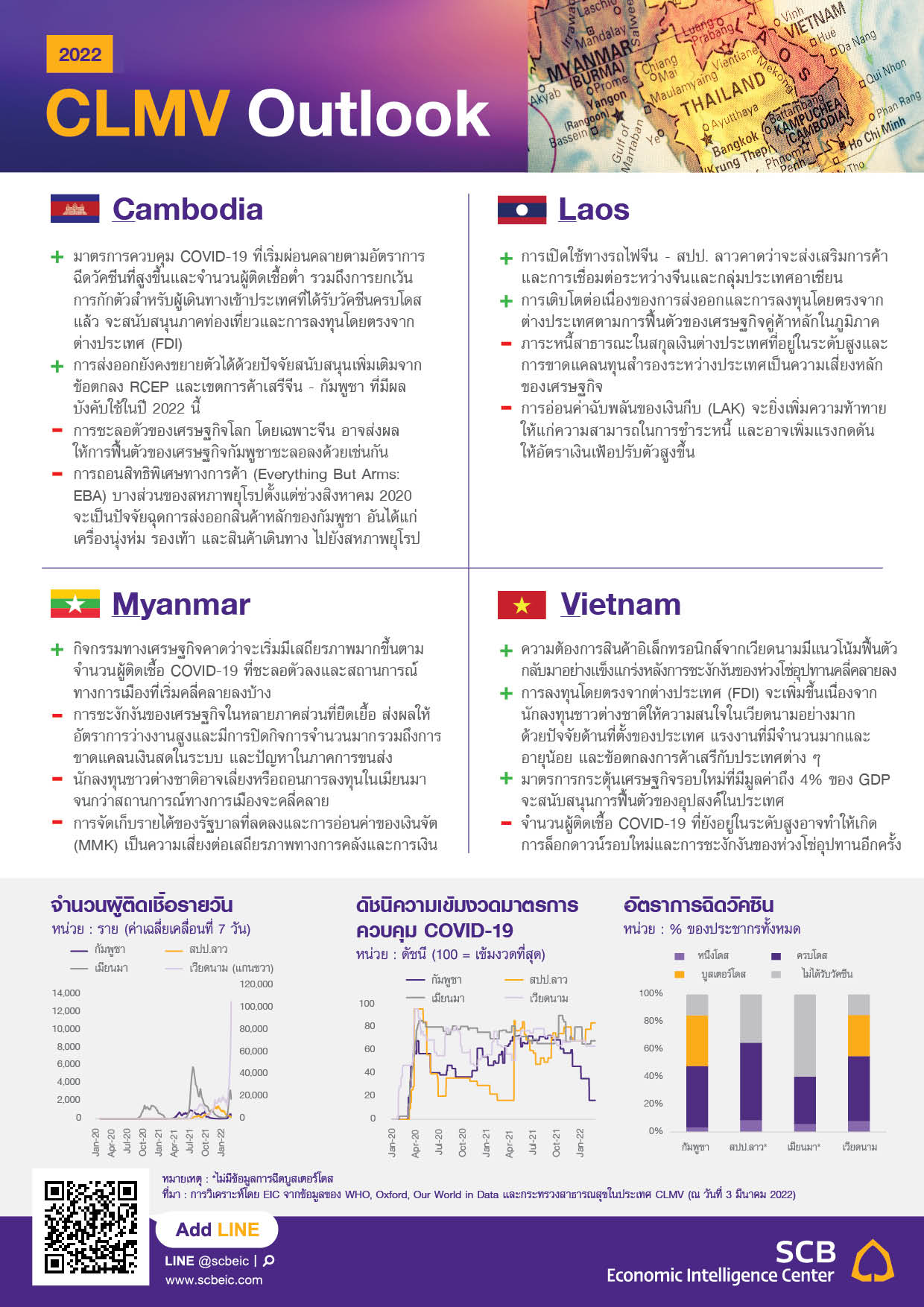
Vietnam continues to attract foreign investors due to its proximity to China, a large and youthful workforce, and free trade agreements with many countries worldwide. Additionally, the governments of CLMV countries are likely to offer more incentives for foreign investors, with Cambodia having enacted a new investment law last year to reduce investment barriers, while Vietnam has introduced a new tax incentive package as part of its latest economic stimulus measures. However, the recovery of the export sector and foreign direct investment in Myanmar is expected to be limited due to disruptions in various economic sectors and reduced investor confidence from international sanctions and risks to corporate image.
The number of tourists traveling to the CLMV countries is expected to recover slowly this year, with a clearer recovery anticipated in the second half of the year. In the first half of the year, EIC expects that the number of tourists will remain sluggish due to the Omicron variant outbreak and ongoing quarantine measures, such as Vietnam mandating a 3-day quarantine even for fully vaccinated individuals, or Laos allowing tourists to enter the country only through group tour bookings. In the second half of the year, EIC believes that these measures will ease as vaccination rates gradually increase, coupled with reduced concerns about the Omicron variant, which will support an increase in the number of tourists traveling to the region.
Among the CLMV countries, Cambodia was the first to open its borders without quarantine for fully vaccinated individuals since November 2021, while Vietnam is preparing to open its borders in mid-March, with the condition that tourists must still quarantine for one day while awaiting test results. The number of tourists will still be significantly lower than pre-pandemic levels, especially from Chinese tourists, who are the most important market for CLMV, as China is likely to continue to restrict its population from traveling internationally for tourism this year.
Risks to the CLMV economy to watch in 2022 include:
1) The situation of the Omicron variant outbreak or other variants that remain highly uncertain.
2) Relatively low vaccination rates in Laos and Myanmar.
3) The global economy, which may recover slower than expected amid rising geopolitical risks, especially the Chinese economy, which is highly interconnected with the CLMV economies.
4) Rising energy prices due to the Russia-Ukraine war, which will lead to accelerating inflation and impact consumer purchasing power, especially during a time when the currencies of the CLMV economies are depreciating.
5) Fiscal and financial stability in each country, particularly in Laos and Myanmar, which have high public debt burdens compared to government revenue collection, amid a tightening global financial environment this year. Additionally, country-specific factors remain important for economic trends, such as the ongoing political uncertainty in Myanmar, which will limit recovery in almost all sectors of the economy.
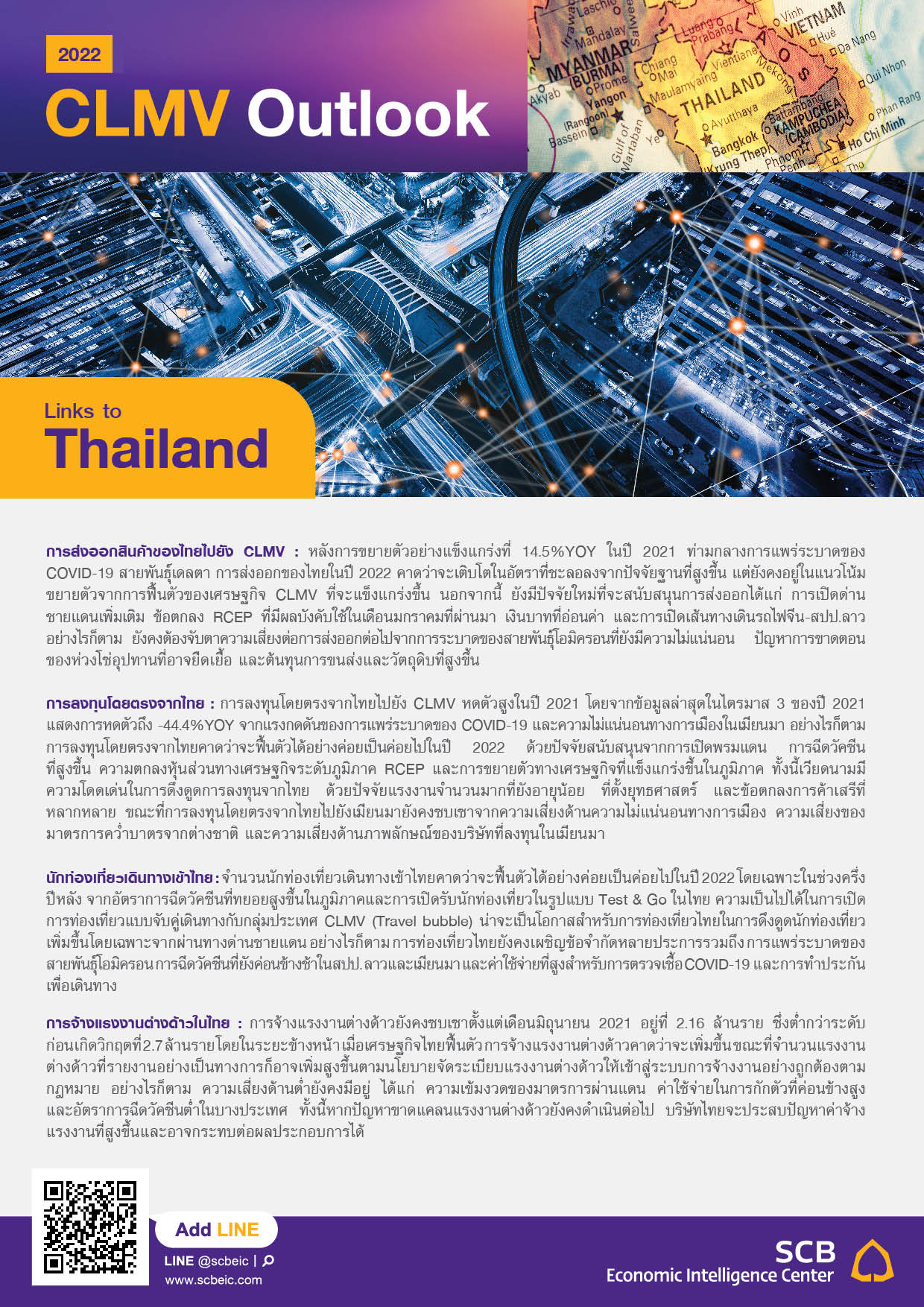
The recovery of the CLMV economy will positively impact the Thai economy through increased exports and present opportunities for Thai businesses to invest in neighboring countries. Thai exports to CLMV are expected to continue to grow at a slower rate, with new factors to watch, including opportunities to export agricultural products to China via the Laos-China high-speed railway, which is expected to significantly reduce transportation costs and time, and the opening of additional border checkpoints, with the Ministry of Commerce expecting to open 12 more checkpoints this year. However, there is a risk of delays in opening border checkpoints if COVID-19 infection rates rise again.
Direct investment from Thailand to CLMV is expected to gradually recover in line with the economic recovery in the region and the measures to welcome travelers without quarantine. Vietnam is expected to continue to be the country with the highest share of Thai investment, while investment in Myanmar will remain sluggish due to political uncertainty in the country. Tourists from CLMV countries are expected to gradually travel to Thailand more in the second half of the year as the Omicron variant outbreak situation begins to ease. If Thailand can establish travel bubble agreements with CLMV countries, it will be another positive factor for Thailand's tourism sector this year, especially for travelers crossing border checkpoints. However, high costs for COVID-19 testing and travel insurance will pressure the recovery of the tourism market from CLMV countries.
Regarding the situation of foreign labor from CLMV this year, it is expected to increase due to higher employment opportunities in Thailand, anticipated easing of quarantine measures, and policies to organize foreign labor into legal employment systems. The employment of workers from Cambodia, Laos, and Myanmar in Thailand has remained stagnant since June 2021 at approximately 2.16 million, lower than the pre-COVID-19 level of about 2.7 million. If the labor shortage issue persists, it may lead to higher labor wages and impact the performance of Thai businesses during the economic recovery.
Analysis from the EIC website…https://www.scbeic.com/th/detail/product/8153