FPT Launches REDPAPER Report on Real Estate Trends, Highlighting Single-Family Homes and Townhomes for 4 New Lifestyle Needs
Frasers Property (Thailand) Public Company Limited has launched REDPAPER, a report on data, trends, and movements in the residential, industrial, and commercial real estate sectors. The report aims to share knowledge with the business sector and begins with an analysis of this year's housing market trends, which are expected to become more vibrant as operators adjust their business and marketing plans, focusing on expanding their portfolio of horizontal projects to meet consumer demand in the Now Normal era, where people have adapted to living with COVID-19. The segments that have received positive market responses include single-family homes and townhomes, which stand out for their value and price, as well as their ability to cater to lifestyles with flexible spaces and larger sizes.
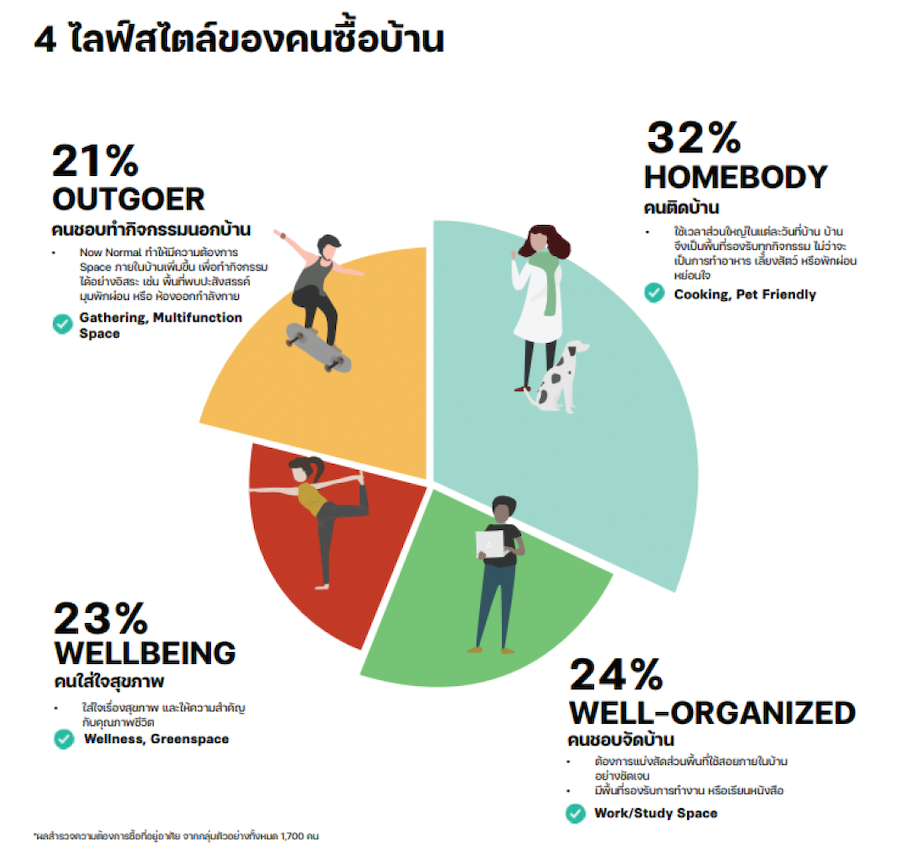
The COVID-19 situation has had a widespread impact on both the economy and society, leading to changes in people's behaviors, with a significant focus on health and safety. Activities conducted at home, whether working, daily living, or exercising, have become the new lifestyle for many today. This has increased the demand for residences that can accommodate the Now Normal lifestyle. REDPAPER surveyed and analyzed data from a sample of 1,700 individuals aged 22-53 with monthly incomes ranging from 35,000 to 160,000 baht at the end of 2021. The findings revealed four consumer segments interested in purchasing homes based on lifestyle: Outgoer (21%), Wellbeing (23%), Well-Organized (24%), and Homebody (32%). All groups emphasized the importance of having more space for various activities, as well as a good environment and high safety standards. Furthermore, REDPAPER found that the Homebody, Well-Organized, and Wellbeing groups showed a clear interest in purchasing single-family homes, as they spend most of their time at home and prioritize their living conditions. The trend of working from home or hybrid working also influences the decisions of those interested in buying single-family homes.
According to this survey, potential homebuyers prioritize value above all else. Consumers are not necessarily looking for the cheapest homes but rather those that offer the best value for money, considering the functionality of the home's interior space, the quality of construction materials, and the size of usable areas. Following this, they also value a good quality of life, seeking high standards of hygiene and safety in common areas that provide a sense of security. There is an increasing acceptance of technology that enhances convenience, such as Smart Home features. Consumers also desire homes designed for good air circulation to promote health. Additionally, there is a growing interest in sustainable homes, whether energy-efficient or built with environmentally friendly materials, as well as a desire for green spaces within the home. Lastly, the preferences of residents of various ages, including pets, are considered, emphasizing the importance of privacy and the use of safe decorative materials for all living beings.
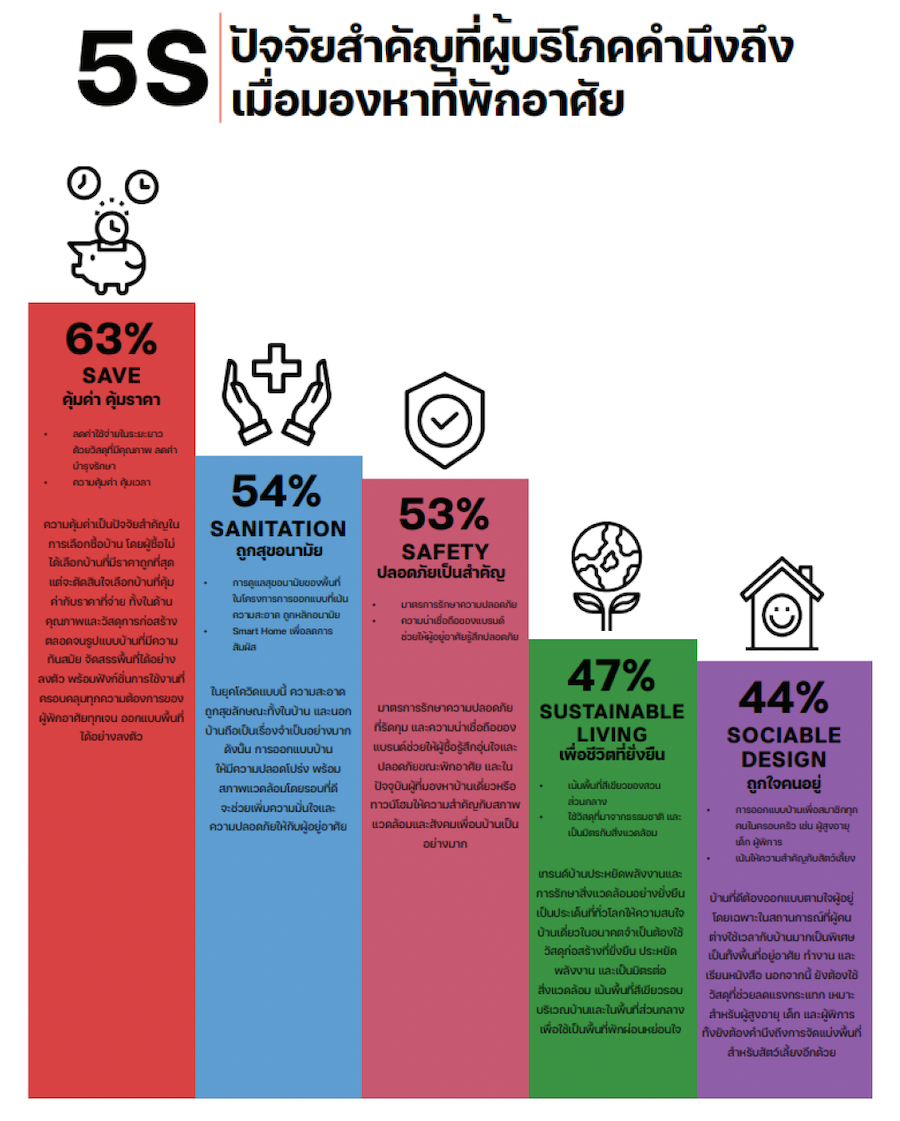
Given the various important factors mentioned above, along with the lifestyle characteristics of single-family homes that offer more privacy, designated spaces, and flexibility, they can accommodate diverse uses and meet the needs of hybrid work and learning. This has led to an increased demand for single-family homes, which has risen by 21% compared to the previous year. Among the five factors influencing housing choices, buyers of single-family homes prioritize value for money (SAVE) and safety (SAFETY) as top considerations.
As for townhomes, they continue to attract significant interest, with half of potential buyers expressing a desire for this type of home located in urban areas priced around 2-5 million baht. This is due to the same reasons as single-family homes, primarily focusing on value. For the new generation or small families, townhomes priced from 3 million baht and up are considered affordable compared to single-family homes or condos in the city, while offering more usable space and convenient locations.
REDPAPER observes that, overall, the residential real estate sector will adapt its space allocation to better meet the lifestyles of residents, emphasizing the design of functional spaces within homes for maximum benefit, along with common areas that promote a good quality of life, such as green spaces and recreational areas like fitness centers and clubhouses. In the near future, we will continue to see multifunctional homes that can accommodate diverse uses, with new projects expanding or developing in locations close to amenities and important places, as convenience is a key consideration for homebuyers alongside their lifestyle needs.