Relaxation of LTV Measures with Hopes to Propel the Stagnant Economy Forward
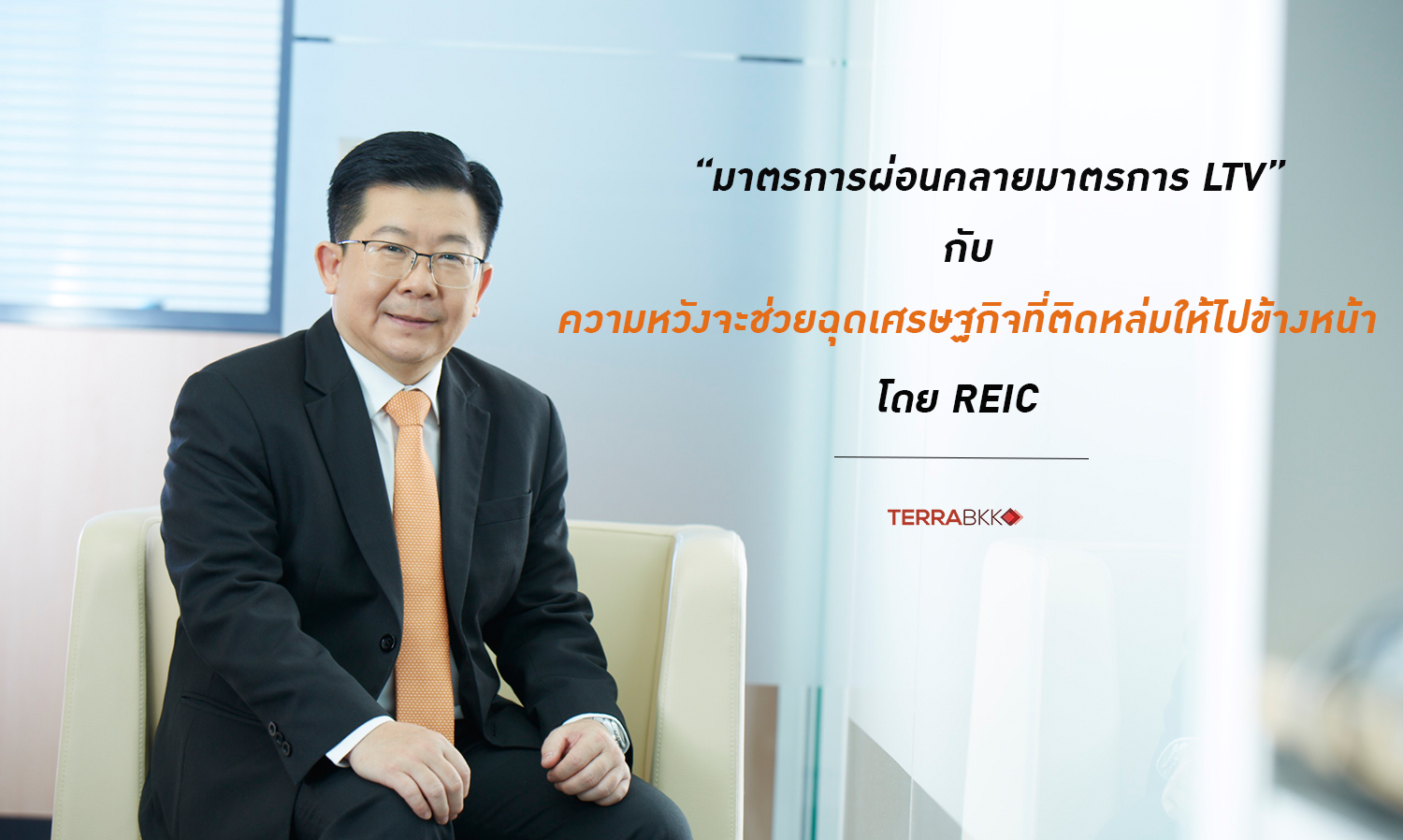
On October 21, 2021, the Bank of Thailand (BOT) announced a temporary relaxation of LTV measures to stimulate the economy through the real estate sector, aiming to support the Thai economy affected by the prolonged COVID-19 pandemic, which has lasted nearly two years. This is another significant piece of good news, as it serves as a financial tool expected to help revive the still fragile Thai economy, which faces high uncertainty, financial difficulties in some business sectors and households, and the impact on the real estate sector where demand remains weak.
The relaxation of the LTV measures is temporary and will start from October 20, 2021, until the end of 2022 to accelerate the influx of new funds into the economy through the real estate sector, which has many related businesses, especially from groups with strong financial positions or those capable of taking on additional debt. Financial institutions, both private and state-owned, will be allowed to issue loans with an LTV of up to 100% for all contracts and price levels (previously 80%-90%). The real estate sector is significant, accounting for over 9.8% of the Gross Domestic Product (GDP) and employing more than 2.8 million people.

Many parties have inquired about the opinion of the Real Estate Information Center (REIC) regarding whether this measure will stimulate the real estate economy in 2021 and 2022.
Such questions are very difficult to answer because the recovery of the real estate sector depends on various factors. However, I would like to provide observations and suggestions as follows:
1. The relaxation of the LTV measures is a financial measure aimed at stimulating those with purchasing power and the ability to repay debts to buy and create housing-related debts. This will help absorb new housing in the remaining stock of approximately 283,500 units, boosting sales in 2021 to exceed 100,000 units, amounting to at least 500 billion baht. This does not include the second-hand housing supply, which has over 100,000 units waiting to be purchased, and various industries related to the housing sector that will also contribute significantly to production value, leading to increased employment in the economy. Thus, this LTV measure will serve as a tool to pull the stagnant economy up and enable it to move forward.
2. Observations regarding the inconsistency of measures related to real estate indicate that implementing the LTV measure alone cannot pull the Thai economy forward. It must be accompanied by fiscal measures in the same direction, such as reducing fees and taxes for housing at all price levels. In other words, the relaxation of the LTV measures allows for loans on all price levels, including second-hand housing. However, the fiscal measures regarding benefits for reducing transfer fees and mortgage fees remain limited to those buying new housing from developers and buyers of properties priced below 3 million baht. This discrepancy in target groups may lead to the measures being less effective than expected. Therefore, it should align in the same direction by providing benefits to buyers of housing at all price levels and for second-hand housing to create incentives for those with purchasing power and repayment ability to enter the housing market, as current buyers often seek properties priced above 3 million baht.

3. The second-hand housing market is significant and should not be overlooked as there are announcements for sale every month, averaging 114,000 units, with a total value of approximately 800 billion baht. This market is substantial, and most sellers of second-hand housing will use the proceeds to purchase new housing due to changing space needs in their living situations. The buying and selling of second-hand housing will inject funds into the economy through the spending of sellers and the costs of repairs, renovations, and extensions.
4. The success of the LTV measures is noted to likely have a limited positive impact on the real estate sector in 2021, as the measures were introduced just over two months before the end of the year. It can be said that the relaxation of the LTV measures comes at a time when the real estate sector is already facing difficulties. However, the extension of the LTV relaxation until the end of 2022 provides a good opportunity for the real estate sector and the overall economy to recover from 2021, as projected by the Real Estate Information Center.
The Real Estate Information Center has provided observations and recommendations that are hoped to be beneficial for policy implementation aimed at driving the real estate economy to improve and achieve sustainability, supporting the continued growth of the Thai economy.