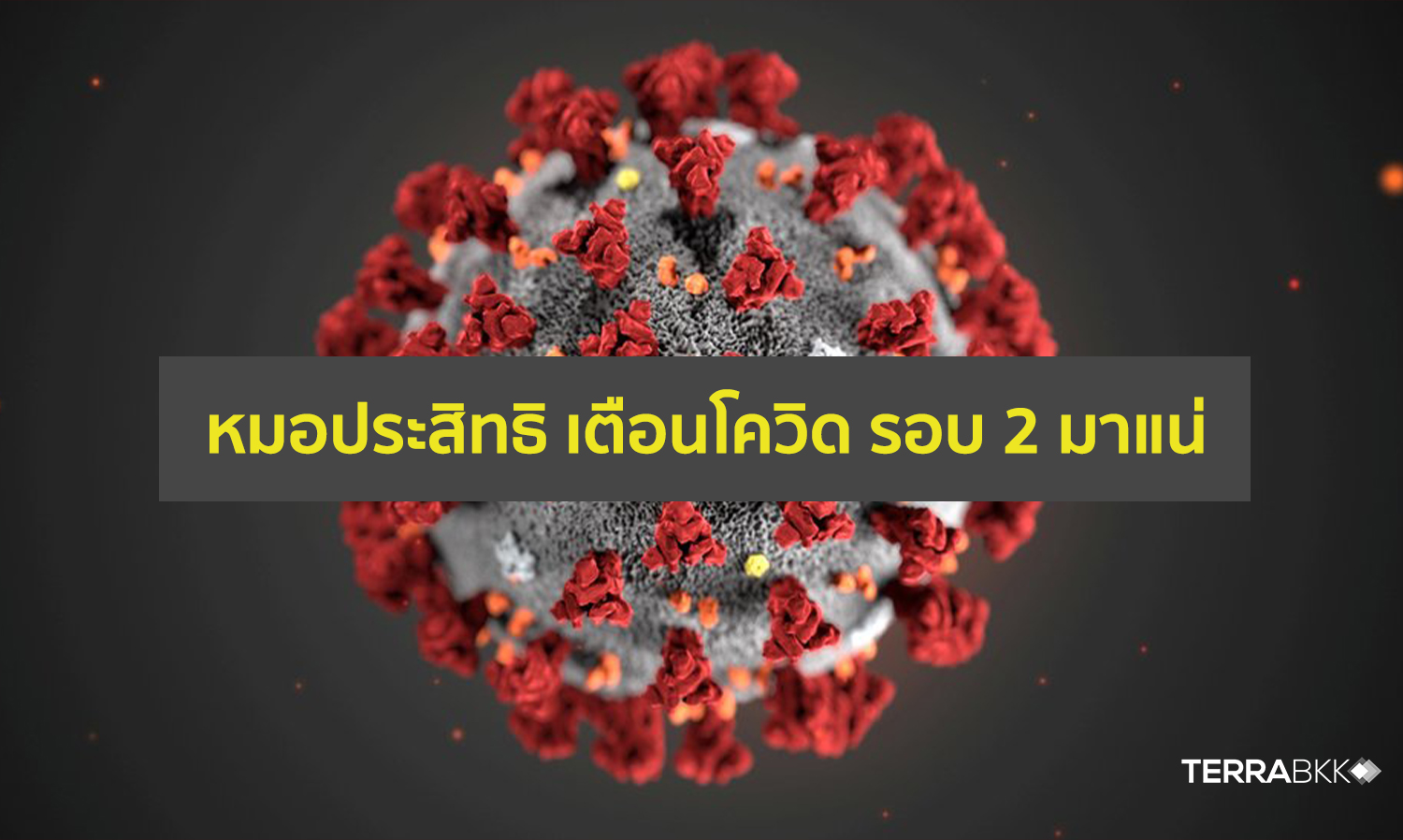
Dr. Prasith Warns Thais to Strictly Follow Public Health Measures, COVID-19 Second Wave is Coming
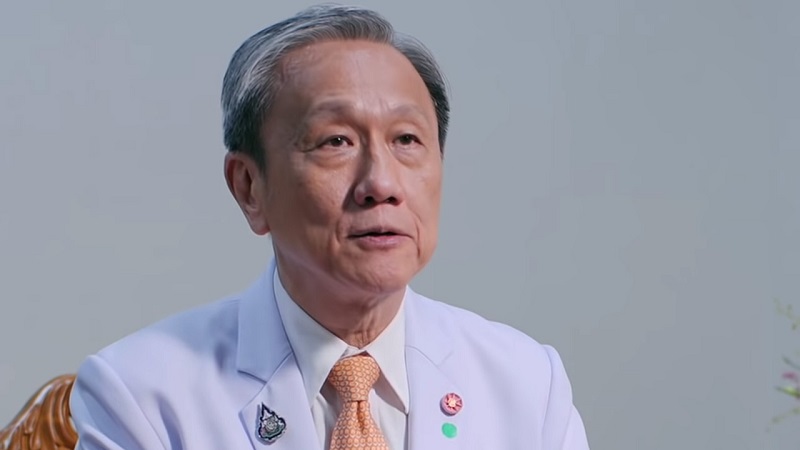
Professor Dr. Prasith Wattanapa, Dean of Siriraj Medical School analyzed the COVID-19 situation in Thailand, stating that a second wave of infection is certain to occur, and the virus can resurface at any time, but it will be a slow burn, with a gradual increase in cases. He emphasized that recent events over the past 2-3 days serve as a reminder for us to tighten our measures. For example, if 100% of people in Thailand wear masks and maintain social distancing, the chance of the Egyptian soldier spreading the virus is very low. The more we wear masks, keep our distance, and wash our hands frequently, the lower the risk of infection.
"The problem is that in recent weeks, we have started to see a number of people wearing masks less and washing their hands less. If these people were in Rayong province, they would surely be alarmed. Once alarmed, there would be a massive reaction due to concern. I think they may not only worry about themselves getting infected but also about whether they might infect others."
We must follow the disease investigation procedures.
According to theoretical procedures, it starts with searching for potential carriers, such as close contacts, but we must first know where the infected person has been and who they have met. However, the Egyptian soldier in Rayong may not have downloaded the Thai Chana application, so this information cannot assist in tracking the disease. The next step is for officials to investigate and test people in the vicinity at the same time as the infected person. Initially, many tests have been conducted in Rayong, and the results so far show no infection, but testing must continue. If 1-2 cases are found, we need to trace their close contacts. If all tests return negative, I would like to emphasize that we should not assume it is 100% safe because our investigation process may not cover everything, but the risk is reduced.
"This is a valuable lesson. I believe the reactions that occurred are due to fear of COVID-19 returning. I do not want to call it a measure taken after discovering cases in Rayong, but in the future, we may not need to take such extensive measures if we have effective tools for early detection. I pray that we must quickly hold a press conference today because I fear there will be an increase in cases. The important thing is how to prevent it from spreading. Today, I must reiterate immediately. If I do not speak out today, this weekend people will go out and engage in activities, and by Monday, we may see new cases. I do not believe any province is completely safe right now because we do not know. The best course of action is to return to the basics: wear masks, maintain distance, wash hands, and check in and out. Let’s do this for now and wait for the results. I urge any Thai person, even if you have not been to Rayong, if you have a fever or symptoms, please go to the hospital. Do not think that you cannot be infected because we do not know if the person we talked to has returned from Rayong. Therefore, if in doubt, go to the hospital for screening and testing. If you are infected, you will enter the treatment process; if not, we can feel relieved." Professor Dr. Prasith stated.
Should VIP groups have their quarantine privileges revoked?
Professor Dr. Prasith stated that there are usually agreements between countries, but at the same time, we are talking about rules. To be honest, I do not want to call it a sense of responsibility, but it is about mutual respect. We respect international rules, but at the same time, we are concerned. We do not mind whether the other party is infected or not, but if everyone cooperates, the conditions are already in place for them to stay in designated areas.
It is similar to state quarantine facilities, but it must be strictly monitored. If it can be done internally, it can be accepted. Today, every embassy in Thailand should return to assist us by tightening the rules for disease surveillance that have been agreed upon. We must prevent situations where outbreaks occur because these things are detrimental to future international relations.
Severity of the second wave outbreak
The severity of the second wave outbreak depends on factors such as 1. Testing and 2. Searching. The main principle is to clearly separate individuals within the country to identify who is at risk of infection and who may spread the virus. Then, we must implement strict measures to control those individuals. Anyone at risk of infection must be tested to confirm whether they are infected. If they are, they should be hospitalized for treatment. At the same time, we must isolate those who may spread the virus. While we do not yet know who may be a carrier, those classified as PUI (Persons Under Investigation) must be quarantined to ensure they are not infected. If we implement these strict procedures, no infected individuals will slip into society. However, if we relax even one step, it could lead to danger and further spread of the virus.
"Personally, I do not want there to be exceptions. We are talking about a situation that concerns everyone, and if too many exceptions are made, it will have adverse effects and may not return to normal. I want to emphasize that during this situation, we should not waste time pointing fingers at who is right or wrong, as this is wasting time on national prevention. At this time, I believe mistakes can happen in many countries, but what we must do now is to prevent outbreaks. Please have confidence in what we have been doing all along. Whether the government recommends it or not, wearing masks, maintaining distance, and frequent handwashing should become a habit because it is good for ourselves and our responsibility to the country. I believe that the lessons learned from the mistakes made must not be repeated," Professor Dr. Prasith stated.
We must monitor disease at the borders through natural channels.
From what I have observed, those who illegally enter the country do not go through checkpoints; they must walk through areas without checkpoints or inspections. These individuals enter the country illegally, and we cannot detect them as they do not appear. I believe there may still be such individuals in Thai society. The numbers may rise again. The best course of action is to kindly ask employers not to hire such individuals. Do not view them as cheap labor. If an outbreak occurs, it will not be cheap at all; it will be extremely costly. If these individuals enter, please report them to the authorities to intercept, test, or send them back, or whatever is necessary to ensure they are not carriers. Border officials are doing their best, but we have thousands of kilometers of borders that cannot be monitored entirely. Therefore, the government must act, employers must act, and we must all do our part. Today, I have seen some shops where the employees are not Thai. The question is whether these individuals are working legally. If we work together to keep an eye out, we may be able to intercept these individuals. We may not achieve 100%, but achieving 99% can significantly reduce the risk of transmission.
"Right now, the world is filled with hotspots, with an increase in COVID-19 outbreaks. These hotspots can enter Thailand if they slip through in one way or another. However, what Thailand can do is to manage the disease quickly when outbreaks are detected. Managing infectious diseases requires a global perspective. Travel across borders, especially on foot, has a high likelihood of occurring if there is lax enforcement of disease control measures and public health protocols. I reiterate that what we are doing now must be strict."
Declaring zero domestic infections has led the public to relax their behavior.
When we announce that there have been no infections for over 50 days, people may question why they should wear masks or maintain distance. This reflects a one-sided view. In reality, there is another side to the coin. If someone is infected with COVID-19 but is otherwise healthy, wears a mask, washes their hands frequently, and maintains distance while meeting others who are doing the same, even if that person transmits the virus, the likelihood of transmission to others is minimal. However, if they remove their masks and do not follow public health measures, the virus can spread.
"It is not wrong to announce that there are no infections in the country, but I want to provoke some thought about the events in other countries experiencing a second wave. Many countries are still wondering where the new cases are coming from. For example, in China, where there were no infections for over 57 days, new cases suddenly appeared again. This highlights that the virus is invisible and can enter at any time. The important thing is that once it enters, it cannot spread if we wear masks and adhere to these measures consistently. We should focus on prevention, regardless of whether new cases are announced or not; the virus will eventually find its way in."
Balancing society and the economy during the COVID-19 situation.
If every time we leave the house, we wear masks and follow all measures, the chances of a large outbreak are very low. If a second wave occurs, it will be a slow burn, with only a slight increase. The important thing is that the Disease Control Department must immediately investigate which activities are causing the spread and stop those activities. Other activities that have no evidence of transmission should continue to allow the economy to move forward. We should avoid engaging in high-risk activities to protect ourselves and our families. Those high-risk activities must be promptly addressed; if they are not, they will not survive.
"I assure you that if we follow these guidelines, the economy can continue to thrive. The key is cooperation; those who comply will help the economy move forward. Those who do not follow the measures and cause infections will face consequences. I firmly believe that a second wave will come, but I am confident that over 90% of the second wave in Thailand will be a slow burn, with only minor infections. The events in Rayong indicate that Thai society is aware of this; nearly half of the population is cautious. This is a positive sign that we are not neglecting the situation. Although an emergency occurred suddenly, at least our awareness tells us what we need to do."