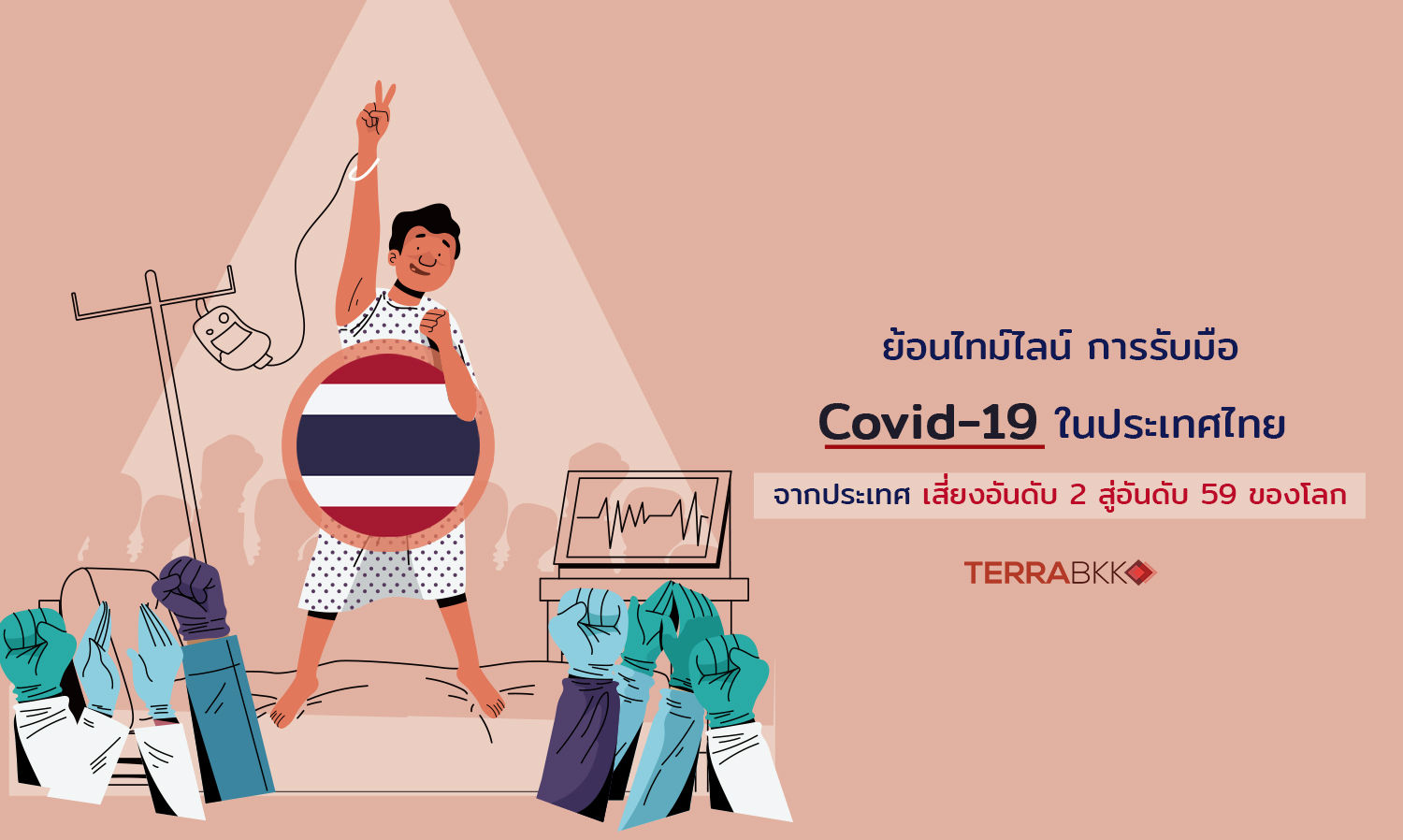
A Timeline of Thailand's Response to Covid-19: From the Second Most At-Risk Country to the 59th
Four months ago, around January 2020, the Thai people were introduced to a new epidemic known as the “Wuhan Virus”. It is well-known that the severity of the Wuhan virus lies in its rapid and unnoticed transmission. However, it wasn't long before on January 28, 2020, Thailand became the second country with confirmed cases of the Wuhan virus, following China. At that time, the world was closely watching Asia, particularly China and Thailand, to see how effectively they would manage the outbreak. Now, nearly four months have passed, or if we consider the peak period in Thailand, it was in mid-March when the number of confirmed cases exceeded 100. Thailand managed the Wuhan virus (Covid-19) in less than two months, and here is the important timeline that has allowed Thailand to effectively respond to Covid-19, ranking among the best in the world.
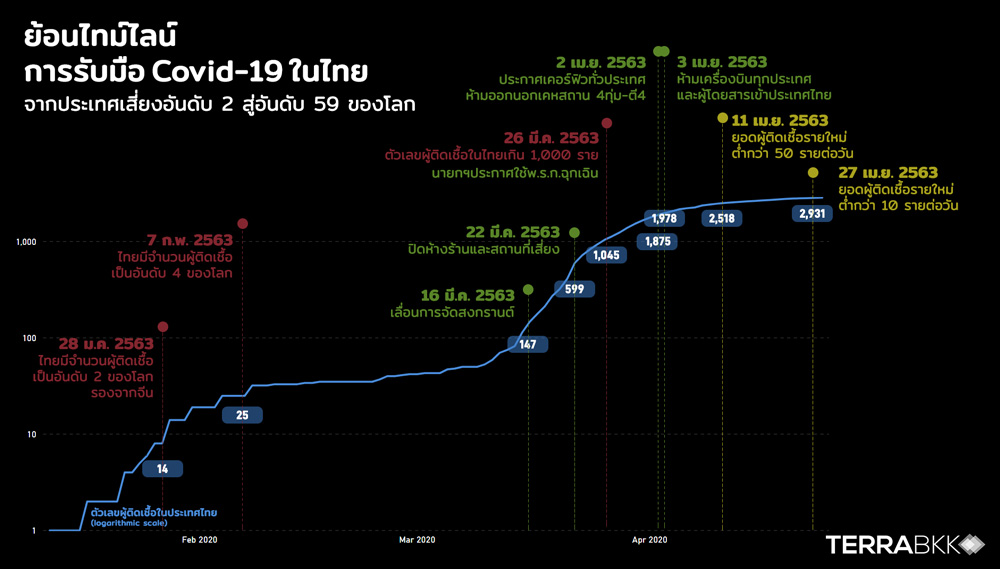
January: Thailand is one of the highest-risk countries in the world
Thailand became one of the top high-risk countries among 30 nations at risk from Covid-19 because it received travelers from China, ranking first with over 1,030,148 tourists in January 2020 (data from the Tourism and Sports Economic Office). Shortly after, Thailand was the first country (excluding China) to report confirmed cases of the coronavirus and had the second-highest number of cases after China.
The government elevated the emergency operations center to level 3 to prepare for this major Covid-19 outbreak.
February: Increased stringency in airport screening
In February, during the initial phase for Thailand, most confirmed cases were still foreign nationals or those returning from abroad. On February 7, 2020, Thailand became the fourth country with Covid-19 cases, marking a turning point in detecting cases outside of China, prompting other countries to increase their screening efforts.
On February 12, surveillance intensified, especially in eight provinces popular with tourists: Chiang Rai, Chiang Mai, Bangkok, Samut Prakan, Chonburi, Prachuap Khiri Khan, Krabi, and Phuket.
On February 29, Covid-19 was declared a dangerous communicable disease, classified as the 14th in Thailand.
Additionally, in February, we began to see changes in Thai behavior, as the Ministry of Public Health and the Department of Disease Control provided information on self-protection against Covid-19, leading to “face masks” and “hand sanitizers” becoming essential items to carry whenever leaving home.
March: A turning point for Thailand
March is considered the most critical turning point for Thailand, as it was the month when the first death was reported, illegal workers from South Korea returned to Thailand, and a Super Spreader was identified at Lumpinee Boxing Stadium. This led to a rapid increase in confirmed cases, averaging a 20% rise per day. If Thailand allowed new cases to increase by 20% continuously, within 30 days, the total number of cases would exceed 22,000. Yet, as of today (April 30, 2020), Thailand has not even reached 3,000 cases. How did we get through that?
From March 1-15, new cases were discovered increasingly, marking a period of panic among the Thai people. The first death was reported on March 1, and shortly after, the numbers of confirmed cases surged from the tens to the hundreds when a large Super Spreader was identified at Lumpinee Boxing Stadium. This incident caused the number of confirmed cases to skyrocket into the thousands, with daily increases of 20-30%. By March 15, the number of confirmed cases exceeded 100, drawing attention to Thailand once again.
From March 16-31, the government implemented stricter measures to minimize the number of confirmed cases. April's Songkran festival was postponed to prevent gatherings that would increase the risk of transmission. Businesses and places where large groups gathered were closed, and on March 22, the Prime Minister declared a nationwide state of emergency to control the Covid-19 outbreak and prevent further spread.
Additionally, travel between provinces was controlled by setting up checkpoints to monitor interprovincial travel, organizing traffic, and observing travelers' behaviors that posed a risk of disease transmission, which could lead to cross-province outbreaks.
#StayHomeStopTheSpread was a campaign encouraging all Thais to stay home to stop the mutual spread of the virus. We witnessed the private sector and state enterprises playing a role in promoting people to stay home, such as providing free 10GB internet to support remote work, and the electricity and water authorities reducing bills to ease the burden on those who had to stay home 24 hours a day. Many private sectors also stepped in to assist citizens during this crisis, such as creating real-time maps to track Covid-19 cases in Thailand, converting hotels into field hospitals to accommodate more patients, and donating medical equipment to strengthen the capacity of healthcare workers to better combat the Covid-19 virus.
April: From the Second to the 59th in Two Months
In April, the situation in Thailand began to improve. We had new daily cases in the low hundreds, and on some days, it was less than 100. However, Thailand remained cautious. On April 3, the Civil Aviation Authority of Thailand (CAAT) announced a temporary suspension of all incoming flights to prevent cross-border infections. On April 9, a nationwide ban on the sale of alcoholic beverages was announced to curb gatherings that posed a risk of infection. Thanks to all the measures taken in Thailand, on April 11, we had fewer than 50 new cases per day, and by April 27, we managed to control new cases to below 10 per day.
As of now, Thailand has fewer than 3,000 confirmed cases (April 30, 2020). From being the second-highest risk country, there was a real concern that the number of cases could reach tens of thousands quickly if no action was taken. With strict measures and the discipline of the Thai people cooperating effectively, today we have become the 59th country in terms of confirmed cases worldwide, down from second place just two months ago. Currently, Thailand has not fully lifted the lockdown but is gradually easing restrictions to allow citizens to return to a more normal life, as we have learned from other countries that experienced a second wave of outbreaks. This clearly demonstrates that Thailand has managed this crisis effectively, ranking among the best in the world.