"Re-engineering" Overhauling Cost Management to Reduce Employee Lay-offs
One of the strategies businesses are adopting during this period is to focus on "reducing internal expenses" as much as possible, while also "seeking new markets" to maintain business liquidity, especially in the real estate sector, which is considered to be at the highest risk. With an average gross profit margin of 30-35% and a net profit margin of 10-15%, this means that without adjusting management and sales costs, the overall performance could result in a net loss of about 15% for the year.
"Re-engineering" is a concept introduced by Michael Hammer and James Champy, which starts with the question of why things are done this way now and whether there is a better method. It is a way to transform management and operations to be more efficient by considering what the organization needs to do and how to achieve it, focusing on what "should be" rather than what "currently is." This means that Re-engineering involves a complete overhaul of business processes using modern and critical performance metrics, including cost, quality, service, and speed.

The advantages of Re-engineering include enabling personnel to work across multiple short management levels, increasing employee involvement in decision-making, reducing operational steps, enhancing organizational agility, and helping to lower both direct and indirect costs.
For Re-engineering, there are interesting techniques that senior executives must understand well. It is advisable to undertake Re-engineering when top executives have been in their roles for more than two years to minimize impacts on the organization's structure and multiple management systems that may constrain the new appointees. Several aspects of the Re-engineering process require caution, especially regarding traditional organizational culture, which may lead to sticking to a single process. Change is necessary; Re-engineering should not be initiated from the bottom up, as lower levels may lack broader perspectives. Additionally, avoid wasting resources on multiple large-scale Re-engineering projects, as focusing on fewer projects may yield better efficiency.

The key points of designing new processes through Re-engineering include:
- Integrating tasks to reduce the number of related documentation steps and resource usage.
- Empowering employees to make decisions, which leads to timely outcomes and accountability for their decisions when errors occur.
- Standardizing operational processes to minimize work duration and avoid repetitive corrections.
- Creating flexible work formats suitable for specific businesses or industries.
- Reducing oversight and control, which can be achieved through integrated management.
- Minimizing external contact points to reduce data conflict issues, enabling quicker decision-making and fewer errors.
- Adopting a mixed model of centralized and decentralized operations that is generally accepted.
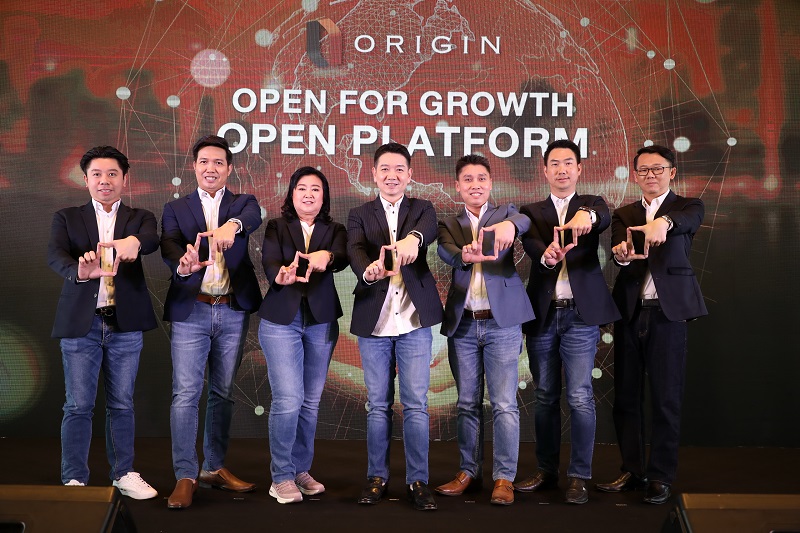
For example, Origin Property, one of Thailand's real estate developers, is tackling the current market downturn by restructuring its internal organization into six subsidiaries across six business types: smart condos, luxury condos, housing developments, real estate in the EEC area, income-generating properties, and services.
This restructuring allows each business group to have its own management, creating a more diverse business portfolio. It is an internal reform that transforms the company into a large enterprise capable of sustainable growth, ready to face all changes in the world while diversifying business risks.
Each subsidiary will have greater operational freedom, reduced business process steps, and the ability to grow rapidly and comprehensively, adapting to external factors more appropriately for each business type. This change will be a significant step toward sustainable growth.
Similarly, Singha Estate, a subsidiary of Singha Beer, began by acquiring Rasa Property before rebranding as Singha Estate, aiming to become a "Global Holdings Company" by acquiring hotels as flagship revenue generators, particularly in Europe, along with investing in real estate for sale and rental. They recently planned to expand into renewable energy.
However, in such uncertain circumstances, businesses must always be prepared. The COVID-19 virus has become a significant variable that businesses must adapt to by cutting various expenses, including marketing budgets and personnel costs, or even laying off employees. Yet, from Singha Estate's perspective, this presents a good opportunity to acquire troubled hotels with limited financial resources, as there are already signs of properties for sale in various locations across Europe and the Asia-Pacific region.

"Currently, if there are good deals available, we are still in the mood to buy, whether it's buildings or land. We are gradually purchasing properties, some of which are offering significant discounts of 30-40%. If the location is excellent, we will buy. Additionally, there are hotels starting with discounts of 10-20%. For those we believe we can invest in further, we will hold off until we find something genuinely good and affordable because we still have the capacity to purchase."
When laying off employees is not a viable solution during the COVID-19 pandemic, which impacts both large businesses and operational staff, the focus on business planning through "Re-engineering" to adapt for survival, especially for medium and small real estate developers, will be a significant challenge reflecting the management team's perspective. They must brainstorm to adjust internal cost management systems to maintain liquidity, emphasizing what "should be" rather than what "currently is" according to the concept of "Re-engineering."