"Curfew" What It Is and How to Prepare for Strict Measures Amid the Covid-19 Pandemic
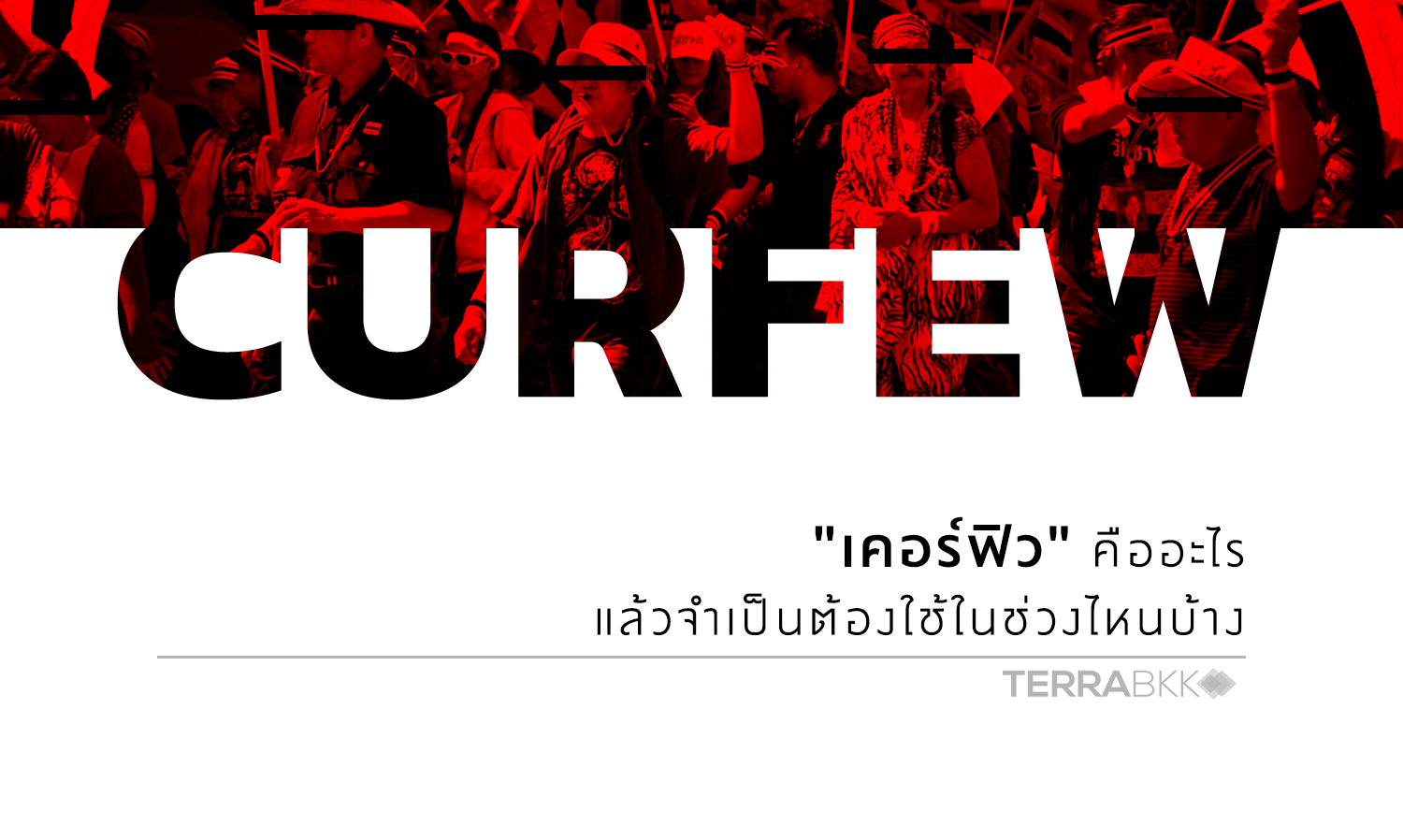
The Emergency Decree, commonly referred to as "curfew" is a declaration prohibiting citizens from leaving their residences in designated areas for a specified period. This can occur in regions under special security laws during times of national instability. The declaration of "curfew" significantly impacts the daily lives of citizens, making it a measure that should be used as a last resort and for the shortest duration possible.
In the past, Thailand has declared a "curfew" only a few times, which may make it unfamiliar to many Thai people. Most declarations have been in response to emergency situations involving terrorism, violent acts against life, body, or property, or credible threats to state security and public safety. For example:
The declaration on October 6, 1976 following a coup led by Admiral Sangad Chaloryu, using powers under martial law, prohibited citizens in Bangkok from leaving their homes after a bloody incident at Thammasat University.
The declaration on October 20, 1977 by the revolutionary council led by Admiral Sangad Chaloryu, based on the fourth revolutionary order, prohibited citizens in Bangkok from leaving their homes after the military seized power from Prime Minister Thanin Kraivichien.
The declaration in May 1992 by Prime Minister Suchinda Kraprayoon during protests against his government.
The declaration in May 2010 by the Center for the Resolution of Emergency Situations (CRES) during the prolonged protests by the Red Shirt movement lasting about three months.
The declaration on March 15, 2007 by the Fourth Army Commander, prohibiting residents in Yala Province's Yaha and Bannang Sata districts from leaving their homes between 8:00 PM and 4:00 AM after a series of bombings and shootings against civilians.
Regarding the Emergency Decree during the COVID-19 pandemic, it will be a stringent measure enforced by the government. The Center for COVID-19 Situation Administration (CCSA) at Government House will be the central body announcing measures daily after meetings at 7:00 PM.
Certainly, in the context of the COVID-19 outbreak, strict measures are necessary. Phase 1 of the "Emergency Decree" or "curfew" will be enforced starting March 26, focusing on reducing the spread in various areas through cooperation or enforcement. Whether to impose further closures or openings will depend on public cooperation, including home quarantine or designated quarantine areas if necessary, with additional state quarantine facilities being established.
The Emergency Decree No. 1 does not specify times for entering or leaving residences. However, if the outbreak worsens or more cases are detected, the government will need to implement additional measures, including field hospitals, large quarantine areas, and ensuring sufficient resources to manage the outbreak.
“These matters will be discussed daily at the CCSA, so please do not panic.”