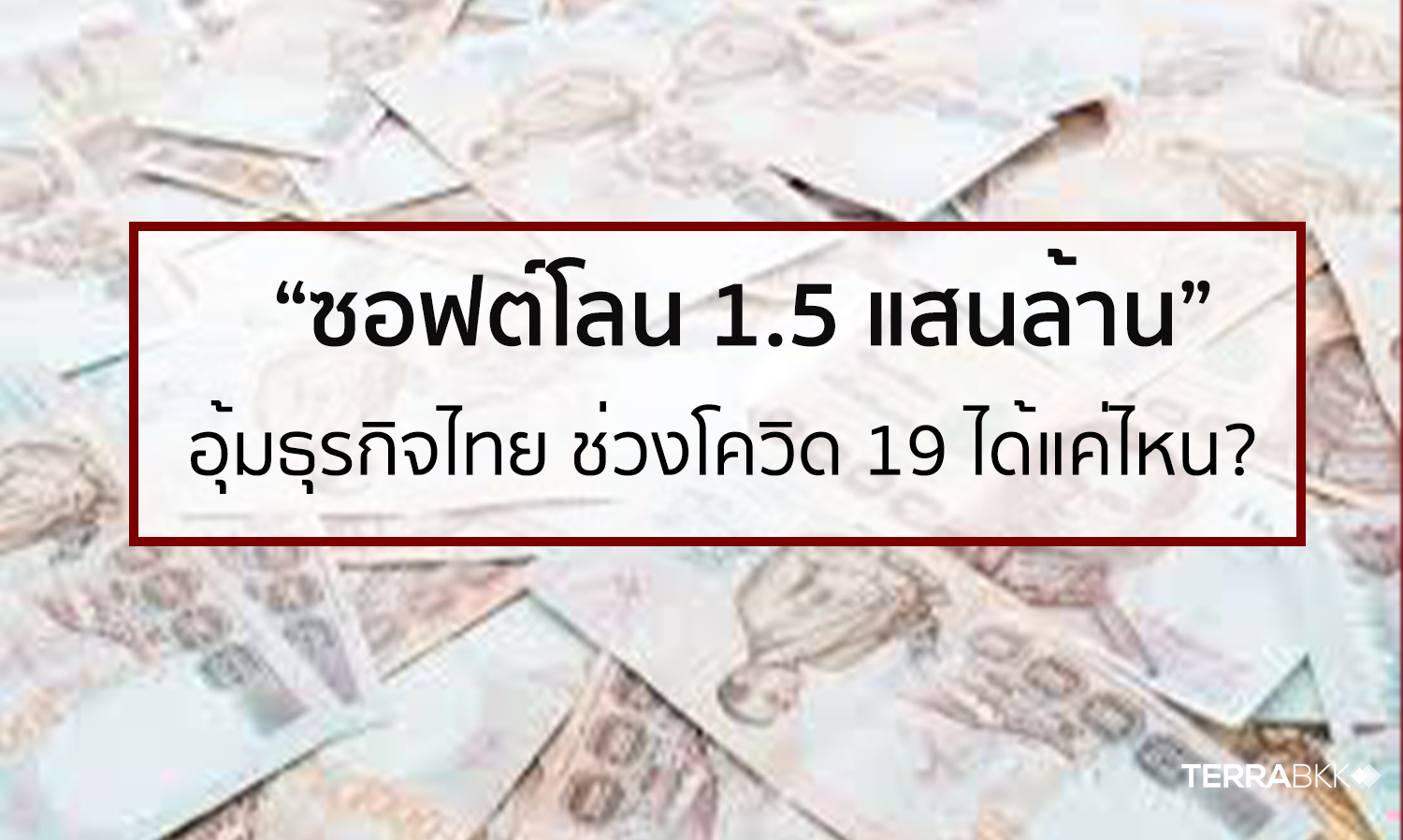
Timeline of the 150 Billion Baht Soft Loan: How Much Did It Support Thai Businesses During COVID-19?
The outbreak of COVID-19 has led the government to announce the closure of entertainment venues, severely impacting operators and employees who lost their income. According to data from the Economic and Business Forecasting Center, University of the Thai Chamber of Commerce, if the government announces a nationwide lockdown, it would result in an economic loss of 240 billion baht per month or 8 billion baht per day. This includes losses from tourists unable to enter Thailand, amounting to 180 billion baht or 6 billion baht per day, and the impact from border trade being halted, which would cost 60 billion baht per month or 2 billion baht per day.
It is clear that the service sector, including restaurants, tourism, hotels, and related businesses, has been rapidly and widely affected. To mitigate the impact and enhance liquidity for operators, as well as to ease the financial burden on the public, the Ministry of Finance, responsible for overseeing the Thai economy, proposed that the Cabinet (Cabinet) issue a set of measures to alleviate the economic impact of COVID-19.
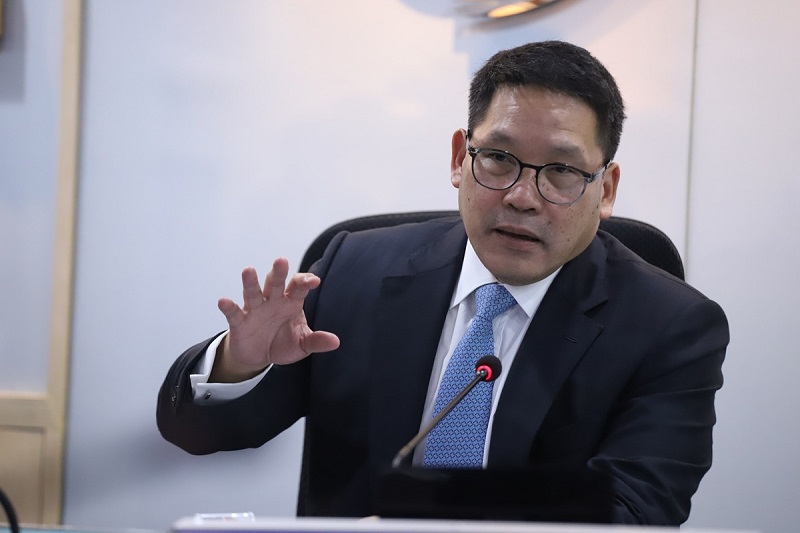
The Cabinet Issues a Set of Measures to Assist Operators and the Public
On March 10, 2020, the Cabinet approved measures to manage and alleviate the economic impact of the coronavirus on Thailand, both directly and indirectly, in Phase 1 as proposed by the Ministry of Finance. This included financial, tax, and other measures, among which the low-interest loan (soft loan) of 150 billion baht was one of the key measures to assist operators affected directly and indirectly by the COVID-19 outbreak. The Government Savings Bank supports low-interest funding totaling 150 billion baht to financial institutions at an interest rate of 0.01% per annum, and financial institutions will lend to operators at an interest rate of 2% per annum for a period of 2 years, with a maximum loan amount of 20 million baht per borrower.
Government Savings Bank Injects 150 Billion Baht Soft Loan to Assist COVID-19 Affected Parties
On March 13, 2020, Mr. Chatchai Payuhanavichai, Director of the Government Savings Bank, announced that the bank is ready to disburse the low-interest loan (soft loan) of 150 billion baht to commercial banks and state banks to provide loans to support businesses affected by the COVID-19 outbreak at an interest rate of 2%, as per the Cabinet's resolution. The bank has liquidity of over 300 billion baht, which is sufficient to support this initiative.
For the allocation of the 150 billion baht soft loan, the Government Savings Bank will retain 10% for itself, approximately 15 billion baht, while the remainder will be allocated as quotas to banks based on their size; banks with more clients will receive larger allocations. This differs from previous soft loan distributions, which were on a first-come, first-served basis. It is believed that this round of loans will adequately support SMEs and businesses in need, as the maximum loan amount is capped at 20 million baht per borrower to enhance liquidity and distribute funds to multiple borrowers.
Furthermore, the measures cover individual customers, business loans, personal loans, and SME loans, including a moratorium on principal repayments for up to 2 years, allowing only interest payments of 50-100% of the scheduled interest (at the rate specified in the contract, but not lower than 4%) for 1 year, with the bank refunding 20% of the interest paid to customers every 6 months for a total of 2 times over 1 year. For any overdue or partially paid interest, repayment can be averaged over a maximum of 10 years, and the repayment period can be extended up to twice the duration of the principal moratorium, but not exceeding 4 years. Customers participating in this measure will maintain their status as regular debtors and will not be reported to credit bureaus.
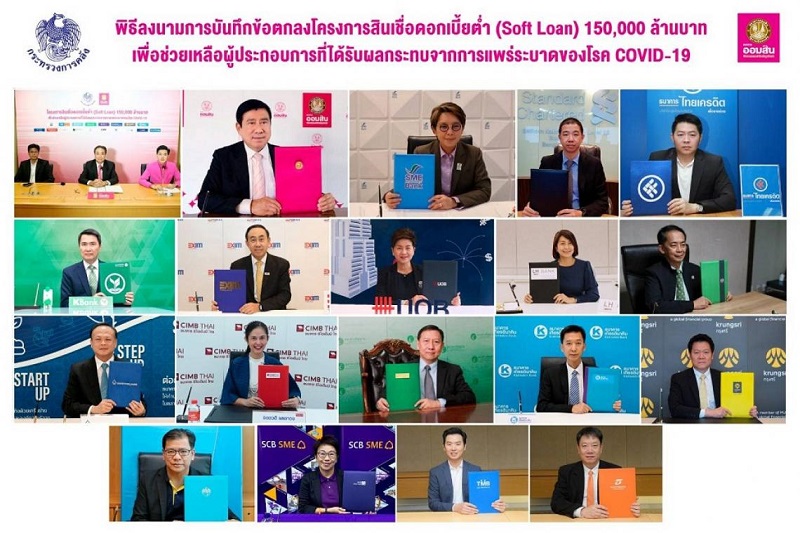
On March 20, 2020, a signing ceremony for the low-interest loan (soft loan) project to assist operators affected by COVID-19 was held between the Government Savings Bank and 20 financial institutions via video conference.
“It is expected that this project will help at least 7,500 operators maintain their business operations effectively. With the participation of financial institutions' branch networks in this project, funds from this initiative will reach customers and the economy more quickly, allowing operators to alleviate concerns and strengthen their ability to operate under the pressures of the COVID-19 virus,”
Tourism Operators Estimate COVID-19 Will Impact Business for Over 6 Months
Tourism operators have reported that the overall situation for Thai hotels shows a significant drop in bookings extending through May due to the lockdowns in many countries. Following this, it is anticipated that the over 60,000 SMEs in tourism, employing over 4 million workers in the tourism sector, will increasingly shut down as they cannot continue without urgent access to new soft loans.
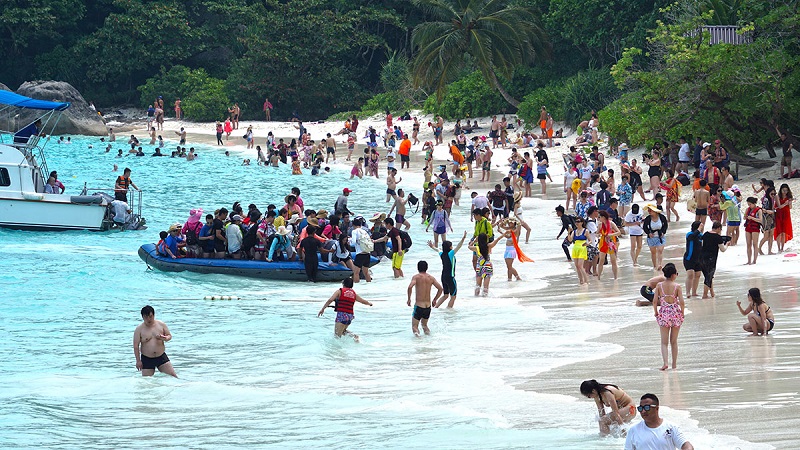
The Tourism Sector Proposes to the Ministry of Commerce to Relax Soft Loan Conditions
Although the government has issued a low-interest loan measure of 150 billion baht for affected operators to borrow at an interest rate of 2% for 2 years, sources indicate that most tourism operators still find it difficult to access loans because they are primarily medium and small-sized businesses that do not meet the criteria for regular loan approvals from financial institutions.
Dr. Wasu Chatchai, Vice President of the Tourism Industry Council of Thailand (TICT) stated that TICT has been negotiating with the Tourism Authority of Thailand (TAT) and the Ministry of Tourism to coordinate and negotiate with financial institutions to relax certain conditions, allowing tourism operators to access soft loans and bring cash to enhance liquidity, thus extending the lifeline for the tourism private sector to keep businesses afloat. The proposals include:
- Allowing tourism operators who already have access to loans to defer principal repayments for at least 12 months, reduce interest payments by 50% for at least 12 months, and request additional loans up to the original amount previously received.
- For the soft loan aimed at enhancing liquidity, providing working capital for at least 6 months with a maximum loan amount of 20 million baht per borrower, along with a request for an urgent loan of 3 billion baht directly from the Government Savings Bank by March 31, 2020, from the government’s allocated relief fund of 150 billion baht, with a TICT task force involved in monitoring the results.
Loan applicants will have certification from TICT along with supporting documents for actual expenses, such as salaries (social security/income tax), and requests for exemption from collateral requirements or for the government’s guarantee instead, with leniency for operators with credit bureau issues. Additionally, there is a request for emergency loan funds for self-employed individuals, not exceeding 200,000 baht per person, with exemptions from collateral requirements and the government’s guarantee instead, along with leniency for those with credit bureau issues, using supporting documents for actual expenses.
Proposal to the Government for a 0% Interest Soft Loan of 500 Billion Baht to Support SMEs
Mr. Pichai Naripthaphan, former Minister of Energy stated that during this crisis, the government should consider comprehensive measures to minimize the impact on the public. He suggested four urgent actions that the government should take to assist the public, including that the government and the Ministry of Finance, in collaboration with the Bank of Thailand, announce a reduction of interest rates to 0% and prepare a soft loan fund at 0% interest of 500 billion baht to support SMEs affected by the crisis to help them survive this challenging period.
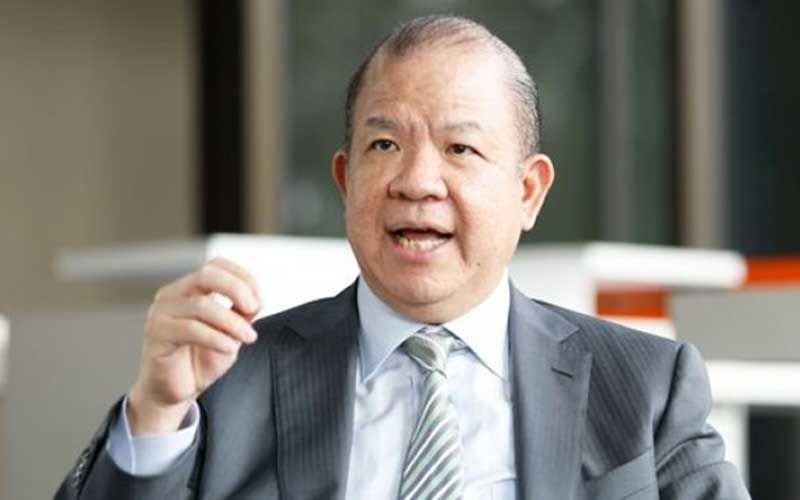
The United States has also announced a reduction of interest rates to 0% and injected over 700 billion dollars. The announcement of Thailand reducing interest rates to 0%, similar to the U.S., would significantly alleviate the burden on businesses and reduce the government's and the Bank of Thailand's burden in supporting the business sector. It would also weaken the Thai baht to support exports and increase agricultural product prices.
There is no need to worry about inflation, as global oil prices have dropped significantly to just over 20 dollars per barrel due to the oil price war between Saudi Arabia and Russia. Additionally, the issuance of a 500 billion baht soft loan for SMEs affected at a 0% interest rate is necessary to sustain businesses and maintain employment. The central bank must collaborate with commercial banks to reduce costs in lowering interest rates for businesses. The government should also be willing to share some of the burden, and commercial banks should cut their profits to support this initiative.
After last year, commercial banks reported profits of 270 billion baht, an increase of 30.8%. This soft loan may need to extend beyond the crisis to allow businesses to recover. It is essential to align monetary and fiscal policies in such situations, and the government may need to consider reducing taxes in various areas to help revive the economy. In times of crisis, the country needs immediate and effective measures, rather than conservative approaches typical of normal circumstances.
The Ministry of Finance Prepares to Propose to the Cabinet on Tuesday to Support Unemployed Workers, Focusing on Businesses Ordered to Close, Anticipating an Increase of 4,000 Baht per Person
On Tuesday, March 24, the Ministry of Finance will present its Phase 2 economic relief measures to the Cabinet, focusing on assisting individuals, small businesses, and workers affected by COVID-19 and the current economic situation. Following this, the economic cabinet will closely discuss with various ministries to address additional relief measures.
“The Ministry of Finance is summarizing all proposals for the Cabinet. Please wait for two more days for clarity on the measures. If the second set of measures is insufficient, the government is ready to introduce a third set to help mitigate the impacts of COVID-19 on the public and small businesses,”
Mr. Prasong Poontaneat, Permanent Secretary of the Ministry of Finance stated that the measures prepared for the Cabinet will focus on assisting workers affected by the COVID-19 situation and those in businesses ordered to temporarily close, such as hotels, restaurants, and massage parlors. There will be both financial measures and liquidity support for these workers to sustain their livelihoods, as when the government orders a business to close, there must be measures to assist them. These measures will supplement social security payments for work stoppages and will also cover workers not in the social security system, with various approaches to provide support.
When asked if there would be another cash distribution, particularly the previously considered 2,000 baht distribution, Mr. Prasong stated that we should wait for the Cabinet meeting on Tuesday. The measures may be better than previously thought, and once approved by the Cabinet, they will take effect immediately. He assured that the government has funds ready to support these groups and has prepared the necessary budget.
A source from the Ministry of Finance revealed that the ministry will request the Cabinet to approve a contingency budget of 20 billion baht for emergency or necessary expenses in 2020 to alleviate the hardships of individuals who are unemployed due to the temporary closure orders in Bangkok and other provinces, which is expected to affect around 5 million people. These unemployed individuals will receive 2,000 baht each per month for two months, totaling 4,000 baht each.
Mr. Duangrit Benjathikool Chairungruang, Assistant Minister of Labour stated that for establishments ordered to “temporarily close” under measures to prevent the spread of COVID-19, the Ministry of Labour has the following assistance measures: Social security will pay 50% of unemployment benefits for a period not exceeding 60 days (50% not exceeding 7,500 baht) for insured persons who are not working or whose employers do not allow them to work due to COVID-19. Social security will pay 50% unemployment benefits for a period not exceeding 180 days (50% not exceeding 7,500 baht).
According to the Social Security Act, the maximum unemployment compensation is 15,000 baht per person. In the case of compensation due to the COVID-19 crisis, the Social Security Board has decided to compensate at 50%, which means a maximum of 7,500 baht of the 15,000 baht maximum compensation.