March 2020 Index Declines into Stagnation Zone for the Second Consecutive Month as Investors Worry About Domestic Economy and Tourism Situation
The investor confidence index for the next three months has decreased, remaining in the stagnation zone for the second consecutive month. The survey revealed that investors are concerned about the domestic economic situation and the tourism scenario, which are factors dampening investor confidence. Meanwhile, investors have high hopes for government policies, the performance of listed companies, and the monetary policy of the Monetary Policy Committee, which are seen as the main factors supporting investor confidence.
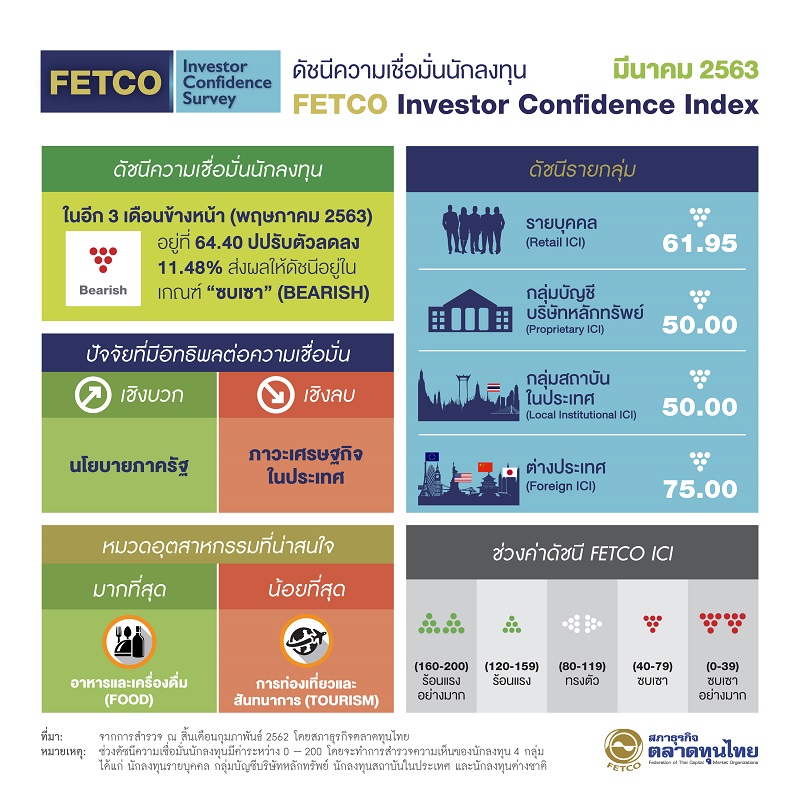
Mr. Paiboon Nalinthrangkun, Chairman of the Thai Capital Market Business Council stated that the survey as of February shows that the investor confidence index has decreased into the stagnation zone for the second consecutive month, with investor confidence across all groups remaining stagnant. When considering by group, individual investor accounts have dropped from stable to stagnation, while securities company accounts and domestic institutional investors have slightly decreased, remaining in the stagnation zone. In contrast, foreign investors have seen a slight increase, still within the stagnation zone.
In February, the stock market index saw a significant decline, especially towards the end of the month, due to concerns over the spread of the COVID-19 virus. At the beginning of the month, the index fluctuated between 1500-1540 points. Subsequently, it dropped significantly due to the outbreak of the coronavirus in China and its spread to various countries in Asia, the Middle East, and Europe. The index fell from 1500 points to 1340 points by the end of the month, with continued volatility into early March, where it hit a low of 1317 points before recovering to the range of 1380-1400 points in the first week of March, following the implementation of government budget disbursement and the announcement of an emergency 0.5% cut in the US Federal Reserve's policy rate. However, the market remains highly volatile during this period.
Investment Direction for the Next Three Months The main factors supporting investor confidence are expectations of government policies, followed by the performance of listed companies and the monetary policy of the Bank of Thailand. Conversely, concerns about the domestic economic situation are the biggest dampening factor for investor confidence, followed by tourism and the performance of listed companies. Key global economic factors to monitor include progress in controlling the spread of COVID-19 and its impact on the global economy, monetary policies of central banks worldwide, and economic stimulus policies of various governments. Domestic factors to watch include government economic policies to stimulate spending, investment, exports, and tourism, which have significantly decreased, Thailand's policy interest rates, and capital inflows and outflows.
Interest Rate Expectation Index for March 2020
The index suggests that the policy interest rate will decrease from 1% in the upcoming March MPC meeting. The yields on 5-year and 10-year government bonds are expected to decline over the next 11 weeks from the survey date (February 28, 2020) as respondents anticipate that the MPC may cut rates in March due to the Thai economy's slowdown from the impact of the coronavirus and drought, which will affect tourism, exports, and domestic consumption.
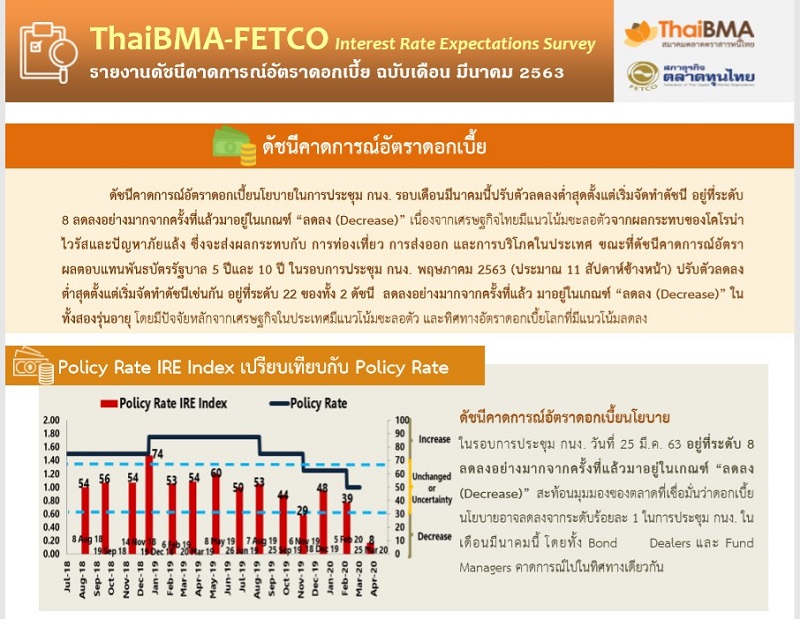
Ms. Ariya Tiranaprakij, Deputy Managing Director of the Thai Bond Market Association revealed the Interest Rate Expectation Index for March 2020 with the following details:
- The index for the expected policy interest rate in the March MPC meeting has dropped to the lowest level since the index was established, at level 8, significantly down from the previous measurement, indicating a “decrease” reflecting market sentiment that the MPC may cut the policy interest rate from 1% due to a slowdown in economic growth, declining global interest rates, and capital outflows.
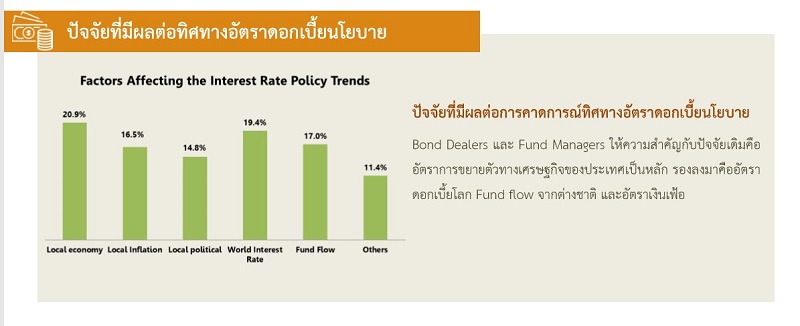
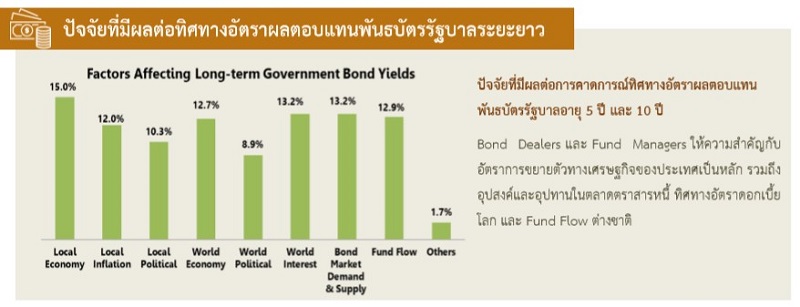
- The expected yields on 5-year and 10-year government bonds in the May 2020 MPC meeting (approximately 11 weeks ahead) have also dropped to the lowest level since the index was created, at level 22 for both indices, significantly down from the previous measurement, indicating a “decrease” as most respondents expect yields to decline from 0.88% and 1.09%, respectively, as of the survey date (February 28, 2020). Key supporting factors include a slowdown in domestic economic growth, stable supply and demand in the bond market, declining global interest rate trends, and capital outflows.
Source: Thai Capital Market Business Council