Beauty and Health Business: Thriving in the Online Market with Big Data & AI
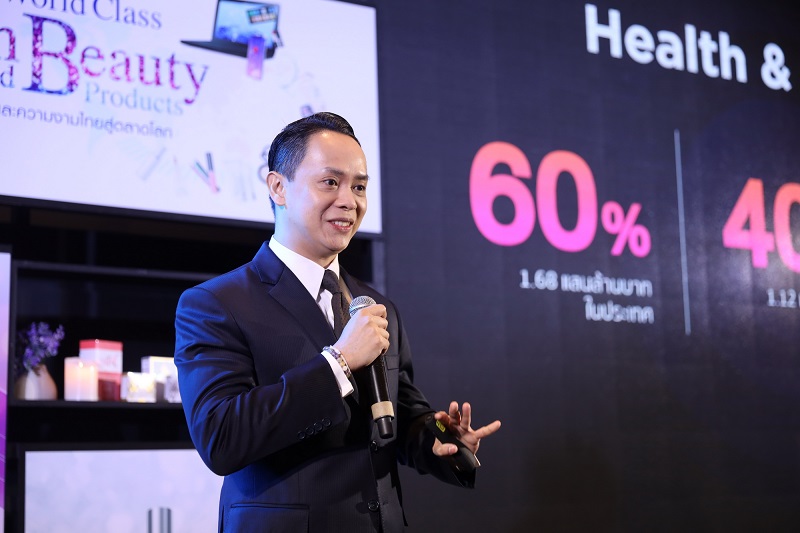
The health and beauty industry <\/span><\/strong> is one of the rising stars in Thailand, with an average growth rate of 10% over several consecutive years.<\/span> In 2019, this industry was valued at 280 billion baht, with the domestic market accounting for 60% or approximately 168 billion baht, and the export market making up 40% or over 112 billion baht (this growth comes from over 1,800 operators nationwide). This does not include the dietary supplement industry, which is valued at over 667 billion baht, particularly in the categories of beauty supplements, health and disease treatment supplements, and physical performance supplements.
The global market overview shows that the beauty product market is valued at approximately 9.3 trillion baht, with Thailand ranking 17th as a significant producer and exporter. This data indicates that Thai health and beauty entrepreneurs have a high opportunity to expand their market and develop their brands to grow into the global market. However, they must adapt to changing lifestyles and increasingly prioritize technology, innovation, and the use of digital tools.
 <\/p>
<\/p>
Mr. Nantapong Jiralertpong, Director of the New Era Entrepreneurs Development Institute (<\/span><\/strong>NEA) <\/strong><\/span> stated that in the past, China's economy <\/span> has grown rapidly, with citizens enjoying increased incomes and improved living standards. This has led to greater attention to health, beauty, and skincare, resulting in continuous expansion of the cosmetics market in China. Therefore, techniques for exporting products to the Chinese market require knowledge of product standards, as Chinese consumers prioritize safety in products. The Chinese government has announced that cosmetic manufacturers must help regulate the behavior of producers and protect consumer rights, particularly regarding the quality of non-standard products, which has become stricter. This necessitates that Thai entrepreneurs study and understand the behavior of Chinese consumers to determine what types of cosmetic products their target customers prefer, in order to develop appealing products for the Chinese market. Additionally, they should obtain an exporter-importer identification card for easier communication with government agencies and to build business credibility with Chinese partners, which is a good starting point for a reliable export business. All cosmetics intended for sale in China must undergo strict procedures and quality checks by agencies such as SFDA, customs, and CIQ, which verify product labeling, size, and quantity, among other factors.
Moreover, entrepreneurs must be prepared to create new markets in various countries. Engaging in online marketing in the era of Digital Disruption and utilizing Big Data Analytics and Design Thinking can help entrepreneurs better understand consumers and address the pain points of their businesses to be on par with leading countries, thereby establishing Thai brands as recognized and desired in the global market.<\/p>
<\/strong><\/p>
Thank you for the information: New Era Entrepreneurs Development Institute (<\/span>NEA)<\/span><\/strong><\/p>
<\/strong><\/p>
<\/p>
<\/strong><\/p>
<\/p>
<\/p>