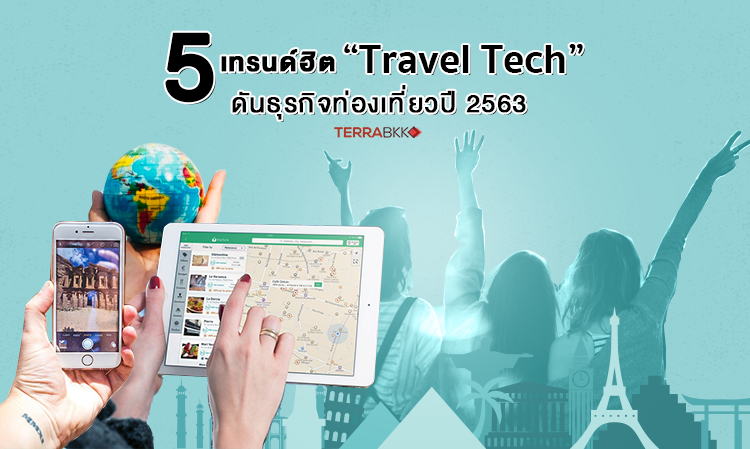
5 Popular Trends in 'Travel Tech' Boosting the Tourism Business in 2020
<\/p>
5 Popular Trends in 'Travel Tech' Boosting the Tourism Business in 2020<\/strong><\/span><\/p>
The United Nations World Tourism Organization (UNWTO)<\/span><\/strong> predicts that the changes in the tourism landscape will become more evident in 2020, with over 1.6 billion travelers worldwide, including 416 million entering the Asia-Pacific region, accounting for one in four. Thailand is expected to be a key destination, which will greatly benefit tourism-related businesses such as accommodations, restaurants, and transportation. This growth must be driven by innovation, technology, and creativity, combined with collaboration from all sectors to strengthen local capacities before connecting to the global economy. It is essential to adapt to the disruptions caused by technology and maintain a strong position as a leading global tourist destination.<\/p>
<\/p>
Dr. Phanuchat Chairat, Director of the National Innovation Agency (Public Organization)<\/span><\/strong> or NIA<\/span> stated that the tourism industry is facing significant challenges, where digital technology will transform "tourists" into "travelers," while "representatives from tourism organizations" will become merely "advisors" or "travel consultants." This is because consumers can increasingly book flights, accommodations, and tickets for various attractions themselves through smartphones and online platforms. Therefore, technology and innovation will be crucial factors that Thai operators and startups must pay attention to, leveraging the technology available around them more effectively. Here are five essential innovations for the tourism industry in 2020:<\/p>
<\/p>
<\/p>
<\/p>
<\/p>
<\/p>
In 2019, the group of independent travelers, or FIT, continued to be a strong segment, with over 19.9 million entering Thailand, an increase of 2% from the same period the previous year. It is evident that various technologies will play a significant role in the tourism industry. Therefore, operators, startups, and innovators in the tourism business must adapt to the ever-changing behaviors of travelers, such as the need for accommodations to cater to more personalized demands, like providing free internet everywhere, easy access services, and faster information searches. These small factors will be crucial variables that reinforce tourism potential, accommodating modern travelers, enhancing travel experiences, boosting tourism capabilities, and inviting more tourists to flock to Thailand in 2020.<\/p>
<\/p>
Thanks to information from: NIA <\/span><\/strong><\/p>  <\/p>
<\/p>
 <\/p>
<\/p>
 <\/p>
<\/p>
 <\/p>
<\/p>
 <\/p>
<\/p>
 <\/p>
<\/p>
 <\/strong><\/p>