The Direction of Thailand's Real Estate Economic Development Amidst the Global Trade War Crisis
The uncertainty of the global economy, under the conditions of a trade war that impacts business operations, remains a risk for the Thai economy, particularly in the real estate sector. During an academic seminar marking the 15th anniversary of the establishment of the "Real Estate Information Center", both public and private sectors engaged in discussions on the topic of "Economic Development in the Real Estate Sector Amidst Challenging Negative Factors". This led to diverse perspectives on economic development that could support the continued growth of the real estate business in the face of various negative challenges.
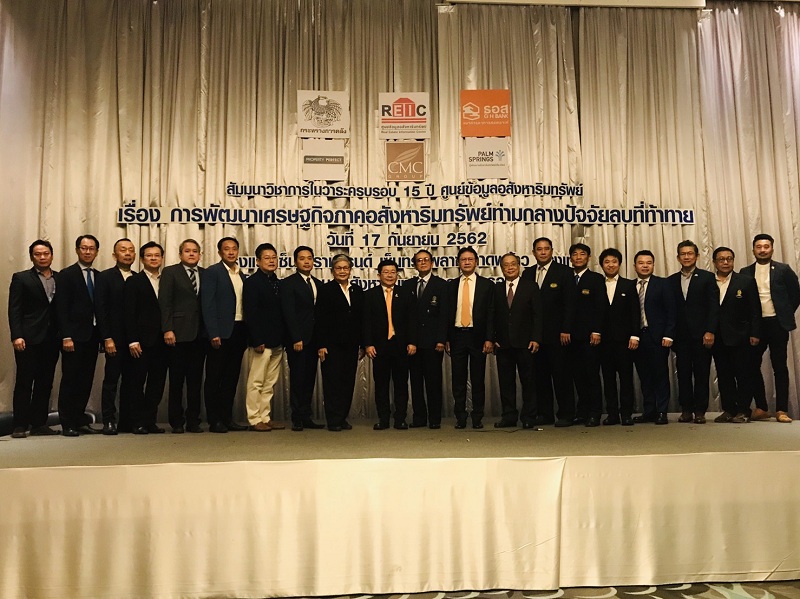
Mr. Narinth Kalayanamitr, Chairman of the Government Housing Bank and Chairman of the Real Estate Information Center delivered a keynote speech on the topic The Role of the Real Estate Information Center Post-Tom Yum Kung Crisis and Future Directions. He stated that since the Tom Yum Kung crisis in 1997, many viewed the real estate business as the villain that caused the bubble due to rapidly expanding artificial demand. Short-term speculative investors led developers to believe there was high demand, prompting them to launch new projects with loans from foreign sources at low interest rates. This caused both state and private banks to fall into the trap of lending 2-3 times more than actual demand. After the Tom Yum Kung crisis, it became evident that Thailand lacked a real estate information center to collect and analyze real estate data. The center was established to gather data across seven categories, serving as an important database and producing reports on the real estate business situation for the government to use in formulating key policies to support sustainable housing for the public.
Over the past 15 years, it is acknowledged that the Real Estate Information Center still has weaknesses in many areas. Currently, it is seen as necessary to enhance its role as a forecaster of the situation by using real data to warn of business risks. Therefore, the development direction of the Real Estate Information Center this year includes plans to increase its role, potentially merging with the Government Housing Bank. Currently, it has 40 employees and a budget of approximately 80 million baht from the GHB to share resources, collecting data through over 200 branches of the GHB. Additionally, a Big Data system will be implemented to improve predictive data analysis accuracy. Furthermore, there is a need to promote the creation of new tools and innovations to convey information in a virtual reality format, making it easy for people to understand and implement, while also being ready to embrace disruptive technology that will impact the country's financial and fiscal sectors.
However, data collection must be continuously updated to use new data as a basis for the government and private sectors to access information on desired locations immediately. If this adjustment is made, it will lead to a better understanding of customer demand, product development according to needs, and knowledge of loan applications, thereby stimulating purchasing power for housing more easily.
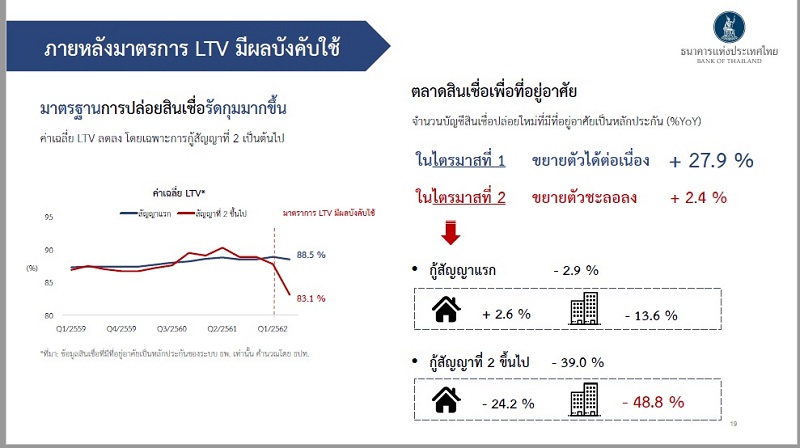
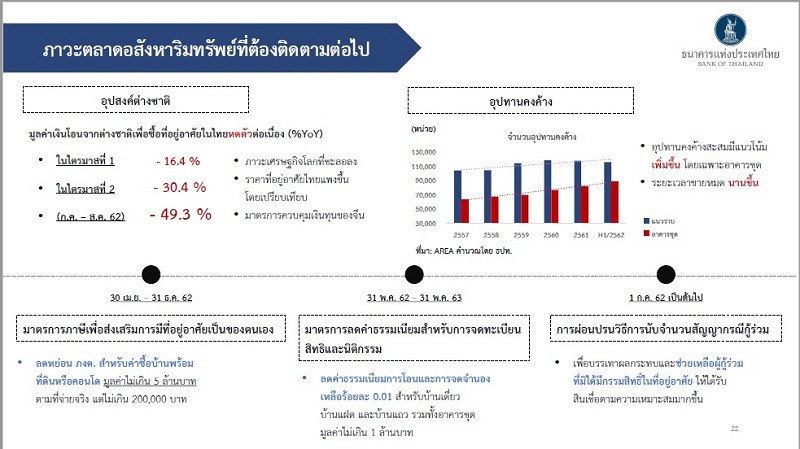
Dr. Vichai Viratakapan, Bank Inspector and Acting Director of the Real Estate Information Center stated that the overall real estate market this year is expected to decline by 7% for the entire year, reflecting adjustments from the LTV measures, which prompted customers to rush to transfer ownership in the first quarter of 2019. The LTV measures have impacted the condominium sector more than the landed property sector, with an expected 14% decline in condominium transfers for the year, leading to an increase in condominium stock. Meanwhile, prices have not decreased, with only some projects offering promotional discounts to clear remaining stock to close projects.
Regarding monetary and fiscal policies and their impact on the development of the real estate economy amidst the global trade war, Mr. Suwatchai Jaikhot, Director of the Economic Statistics Office, Macroeconomic Department, Bank of Thailand stated that in the near future, the global economy remains bleak, extending into 2020 due to the international trade war, resulting in a slowdown in trade and investment. In the first half of 2019, the Thai economy continued to slow down, with GDP in the second quarter at 2.3%, as the main engine, exports, contracted by 5.3% due to the slowdown of trading partners' economies, tourism, and public investment growing below expectations due to disbursement constraints. In 2020, if plans proceed as expected, disbursement is anticipated to accelerate. Meanwhile, private consumption and household income have decreased due to drought and flooding, leading to higher agricultural product prices. Private sector investment, which has grown at around 1-2% per year, is also slowing down due to economic uncertainty sentiment.
Although Thailand still has hope in the EEC, if project progress does not occur as planned, it will pose problems in the future. Thailand may need to adjust to become a country that relies primarily on services and tourism, but environmental issues must also be considered in the future.
The Bank of Thailand continues to use policy interest rates as a primary measure to maintain financial system stability amidst the China-U.S. trade war. Thailand's direction remains neutral, maintaining good relations with China to create trade opportunities, allowing Thailand to benefit from the trade war as China relocates production bases to third countries, which is expected to take 2-3 years. However, contract manufacturing may not significantly add value to Thai businesses. Therefore, Thailand should develop its workforce to have skills, improve efficiency, and utilize automation systems to reduce production costs.
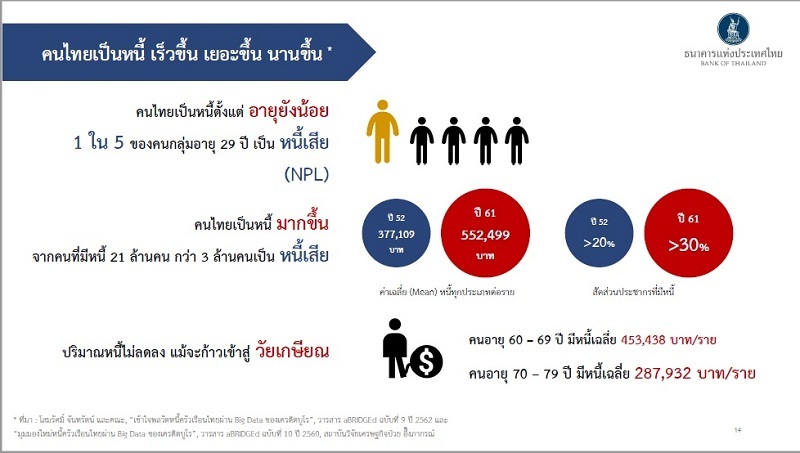
Nevertheless, this year, the Bank of Thailand will not implement DSR measures due to concerns over the high household debt level in Thailand, which currently stands at 78.7% of GDP, the highest in nine quarters, particularly in the real estate sector. Thus, LTV measures have been introduced to foster a culture of sustainable borrowing and reduce over-indebtedness, controlling investment volumes from investors who cannot repay debts. The Bank of Thailand remains committed to supporting Thai citizens in owning their homes, which is the basis for LTV for the second and third homes.
Since the implementation of the LTV measures, the housing market is currently undergoing a new adjustment phase, leading to a 2.4% slowdown in new loan accounts secured by housing in the second quarter of 2019, indicating a noticeable decline in speculation in the condominium market.
In line with Mr. Thedsak Thaveethirath, Assistant Managing Director of Research at Asia Plus Securities said: Most companies still operate in a borderless manner, resulting from global collaboration, not limited to any one country. Thai mutual funds have chosen to invest in industries that yield the best returns, showing cash flow from investment activities. However, external factors remain concerning due to volatility in financial markets, with geopolitical risks causing capital to fluctuate from risky assets to safe assets, leading to a contraction in overall investment, impacting the money and capital markets.
Regarding the overall real estate sector from the performance of companies listed on the stock exchange, which collected data from over 16 companies, it was found that most have adjusted their plans to launch new projects down from 290 projects worth a total of 440 billion baht to over 230 projects worth a total of 370 billion baht. This has resulted in a decrease in pre-sales for 2019 compared to the past 2-3 years, with total unsold condominiums combined with newly launched condominiums exceeding 800 billion baht, indicating that it may take up to 2 years to absorb the existing supply in the market. Therefore, operators should further reduce the launch of new condominiums by another 1-2 levels.
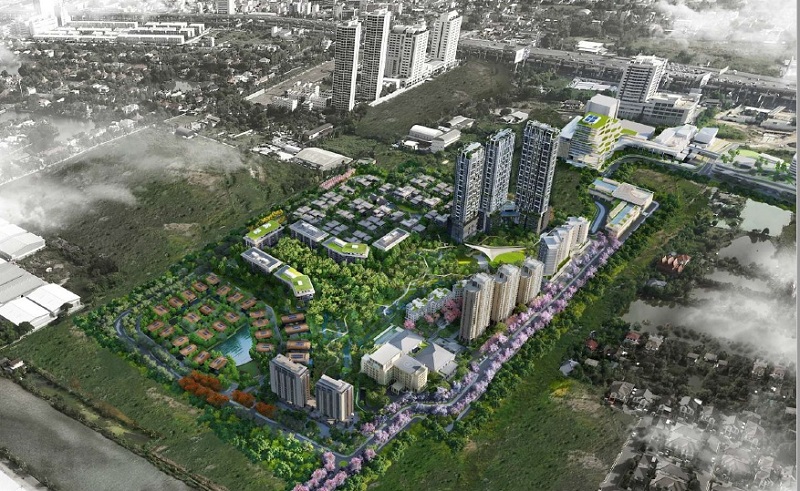
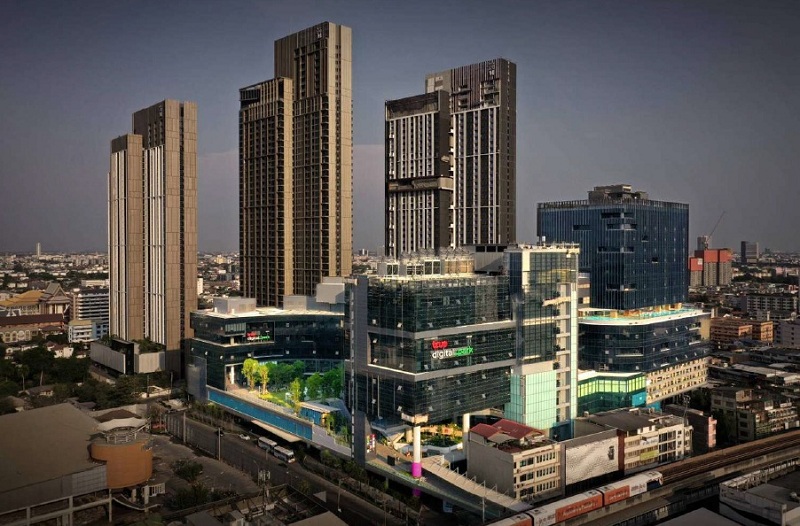
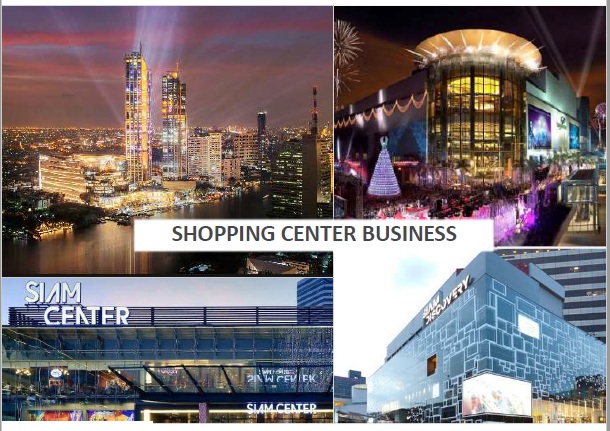
Real estate operators are also adapting to accommodate fluctuations from the Thai and global economies that will affect customers' purchasing power. During a discussion on the adaptation of major Mixed-Use operators amidst the global trade war crisis, Mr. Suveth Theerawachirakul, CEO and Managing Director of MBK Public Company Limited along with Mr. Kiran Chuthamsathit, Chairman of the Real Estate and Services Business Group at Magnolia Quality Development Corporation Limited and Mr. Thanapol Sirithanachai, Chairman of the Board of Land and Houses Public Company Limited stated that the development of mixed-use projects is a trend that continues to attract investment from major operators because these projects can generate continuous long-term income, even as the condominium or landed property market slows down amidst an economy facing multiple negative factors. Investment in mixed-use projects requires planning and construction time of 3-5 years. Currently, several mixed-use projects are emerging on Rama 4 Road, such as Samyan Mitrtown, One Bangkok, and The Park, all of which provide diverse usable spaces in accordance with the mixed-use project model, which typically includes offices, hotels, and retail spaces, ensuring that no single component exceeds 60% of the total area. The concept of mixed-use projects is increasingly focused on entertainment to meet the needs of people in the area.
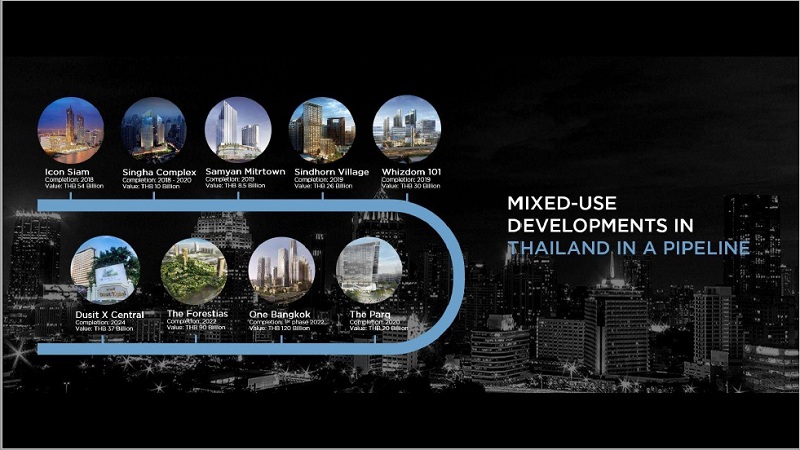
Many people ask why mixed-use projects are necessary. The simple answer is that mixed-use projects are a trend that is gaining global attention and development due to the increasing demand for people to return to urban areas, especially in Thailand, which is about to face an aging society, making the need for housing that is ready in all aspects essential.
However, it must be acknowledged that mixed-use projects currently face high competition from large operators with substantial capital investing in large projects in city centers. Therefore, the development of mixed-use projects must be diverse and distinct, identifying target customer groups, as well as clearly defining the building concept and project highlights. Additionally, attention must be given to place-making, which is one of the essential components that mixed-use projects must prioritize, creating activity spaces that bring joy to the local community without charge. A well-developed mixed-use project should promote learning and comprehensively meet customer needs.
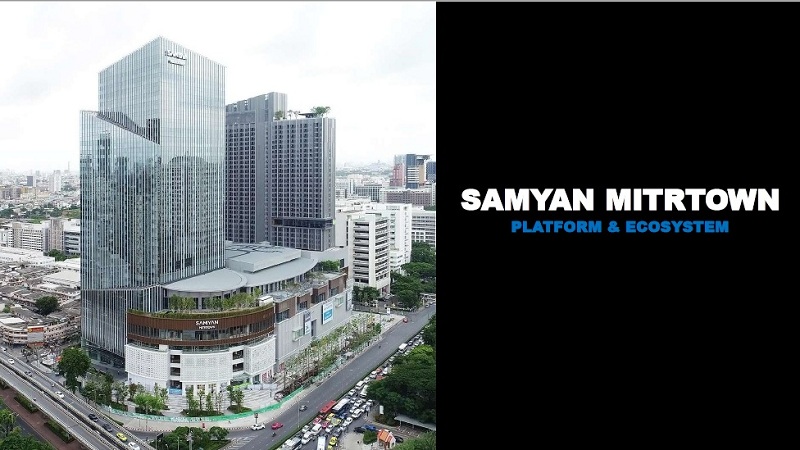
For the overall real estate business in 2020, all three individuals agree that it may not recover and will remain stable from this year's base due to the volatility of the global and Thai economies. The situation surrounding the U.S. elections must be monitored, as it may temporarily reduce the intensity of the trade war.
In conclusion, conducting real estate business requires careful planning, selecting customer groups wisely, and developing products in locations that meet market demand. It is believed that consumers still have a need for housing, and if there are not many new supplies entering the market, customers will have to decide to purchase existing products. Therefore, it is believed that the real estate market next year may alleviate concerns if operators can correctly identify their target customer groups.