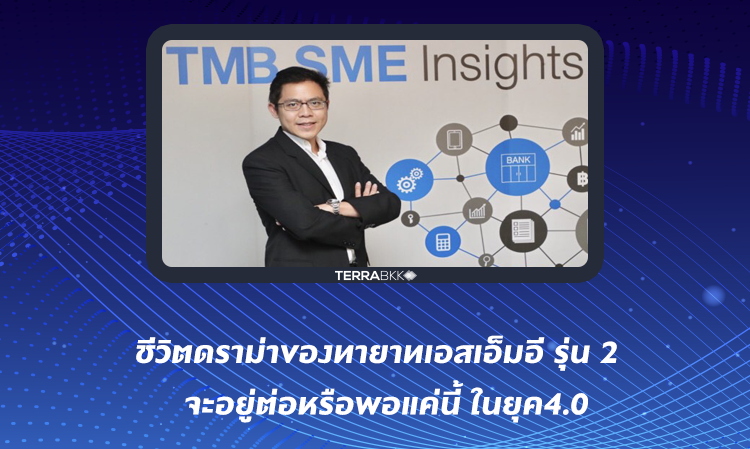
The Dramatic Life of Second-Generation SME Heirs: Will They Continue or Stop Here in the 4.0 Era?
Continuing a family SME business may not be difficult if you are a descendant who has been involved in the business. However, if you are a second-generation heir tasked with carrying on the family business, you may encounter various stressful problems that leave you unsure of how to resolve them. This issue has become significant enough for TMB to research the challenges and attitudes surrounding the topic of “9 Dramas of Second-Generation Business Heirs: Options and Survival Strategies for SMEs 4.0.” The findings reveal that second-generation heirs face issues such as a lack of knowledge, experience, genuine management authority, and a lack of confidence from both within and outside the company. These are crucial matters that new managers must address to ensure their businesses survive in such a highly competitive era.
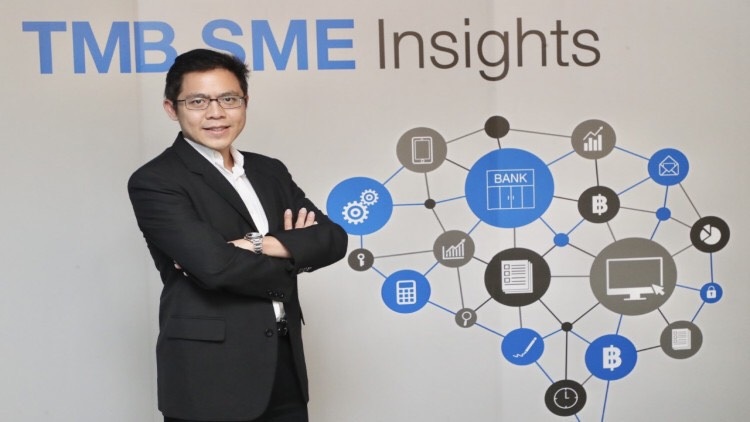
Dr. Rujikorn Phavasuthipaisit, Chief Executive Officer of TMB's Business Customer Marketing, stated that TMB SME has conducted in-depth studies on the behaviors of SME entrepreneurs to provide guidance and support for SME clients to achieve sustainable growth “beyond expectations.”
According to the Brand Power of SME Study in 2018, over 50% of Thai SMEs are managed by second-generation heirs and this number is expected to grow by more than 20% in major cities (Bangkok and its vicinity). This group of SME entrepreneurs contributes 55% of the GDP of small enterprises in Thailand, amounting to 2.7 trillion baht, making it a crucial foundation for driving Thailand's economy. If SMEs are strong, then the Thai economy will be stable as well.
Given the importance of the second-generation business heir group, TMB SME collaborated with a leading research firm in Thailand to conduct an online survey with 200 second-generation business heirs who have been managing their businesses for at least six months and have an average annual income of 10 to 100 million baht across various industries. The aim was to identify the challenges faced by these heirs that hinder their management and business growth, as well as to propose solutions to ensure a smooth succession and further business development.
As a result of the survey, TMB SME analyzed and presented a summary titled “9 Dramas of Second-Generation Business Heirs: Options and Survival Strategies for SMEs 4.0,” which is divided into three groups of issues faced by second-generation SME heirs:
Issue Group 1: Business Foundations
- Because they have never... they are not capable The survey found that 36% of business heirs took over the family business without any prior internships or work experience. Upon graduation, they immediately assumed executive positions. Without a solid foundation, lacking “work experience” and “people management experience,” they struggle to manage the business effectively.
- Because they don’t know... they are lost As many as 34% of business heirs have never received job training or business preparation from their parents. Without knowledge and understanding, they cannot grasp the industry landscape and manage effectively.
- Because they don’t love... they just go through the motions The survey revealed that 43% of business heirs wish to pursue their own business ideas but feel obligated to continue the family business. Without passion, they manage the business ineffectively, and when faced with competition or changes, they are less likely to continue or grow the business.
Issue Group 2: Management
- Authority is not mine It was found that 70% of business heirs, once in management, do not have full decision-making authority and must always seek guidance or approval from first-generation executives.
- The world is changing, but we are not (willing to) change Founders who have successfully managed businesses often have high self-confidence and reject new proposals from business heirs, including new partners, innovations, digital solutions, and operational systems like databases, internet banking, and online marketing. The lack of vision for future growth and the resistance from first-generation executives hinder the heirs' ability to manage change, posing a significant risk to the organization's adaptability in this era of disruption.
Issue Group 3: Confidence
- Partners are not close Customer and partner confidence is crucial for the new generation to continue the family business. However, 38% find that customers and partners still prefer to negotiate with first-generation executives, often overlooking the business heirs, creating a gap in relationship management.
- Still smells like milk 31% of business heirs are perceived as inexperienced and untrustworthy, leading to evaluations of their management capabilities.
- Lost customers because first-generation executives stepped back 27% of business heirs lost customers to competitors when first-generation executives retired, as customers lacked confidence in the heirs' management.
- Can they really give orders? In addition to external challenges to confidence from partners and customers, business heirs also face internal challenges from employees, colleagues, and senior partners. It was found that 85% do not receive trust and are challenged by older employees or partners, with 35% of employees immediately opposing any proposals or decisions. Older staff often question whether the heirs have received approval from first-generation executives.
In light of the three groups of issues identified in the 9 dramas, TMB SME has proposed solutions as follows:
- Strengthen the foundation If business heirs lack experience, they should start developing themselves by seeking knowledge from various organizations, such as management skills, personnel management, and enhancing specific skills relevant to their industry. This foundational management knowledge should be complemented with advanced knowledge, such as LEAN Supply Chain by TMB or leadership courses.
- Build confidence Identify the reasons why customers, partners, senior associates, and employees lack confidence. Once identified, make adjustments, improvements, and seek opportunities to prove oneself to enhance credibility. At the same time, explore new opportunities by finding new customers and partners. For internal employee issues, it is recommended to review the company's compensation and benefits to ensure they meet the needs of today’s workforce. If addressed sincerely, it is believed that trust from employees will increase.
- Integrate management Once confidence is built and trust from those around increases, business heirs will be better prepared for management. They should start by seriously requesting shared decision-making authority from first-generation executives, beginning with small matters to gain trust in their management. They should also gather data and support, such as statistical information, business advisors, and seek opportunities for business matching to create better networks for future growth and strength.
TMB has always prioritized understanding and addressing customer needs (Need-based) by developing and offering simple and convenient products and services. This has led TMB SME to launch TMB SME Insights (http://tmbbank.com/sme-insights)—a website that compiles information, news, articles, management techniques for SME entrepreneurs, and in-depth economic analysis from TMB's Economic Analysis Center. This serves as a resource for SME entrepreneurs to conveniently study and leverage for business growth. TMB SME believes that the research on “9 Dramas of Second-Generation Business Heirs: Options and Survival Strategies for SMEs 4.0” and the proposed solutions will help second-generation SME entrepreneurs smoothly navigate the transition of business succession and effectively grow their businesses.
Thank you for the information from: TMB SME