CBRE Looks at the Condominium Market in Bangkok Over the Past 30 Years
Bangkok, <\/strong>4 July 2018 <\/span>–<\/strong> On the occasion of CBRE celebrating its 30th anniversary of operations in Thailand, Ms. Aliwassa Pathanjit, Managing Director of CBRE Thailand, shared insights on the condominium market over the past 30 years, stating that “In 1988, when I joined CBRE, then known as Richard Ellis, there were only 2,600 condominium units in central Bangkok. Today, that number has grown to 140,000 units, with a total of 630,000 condominiums across Bangkok.”<\/span><\/p>
In 1988, new condominiums in central Bangkok that were still under construction had a selling price of around 20,000 to 25,000 baht per square meter. Buyers received only empty rooms without walls, flooring, or ceilings, and kitchens without any installed equipment, along with standard bathrooms that lacked air conditioning, light fixtures, or appliances provided by the developers. However, today, most condominiums are sold with partial furnishings, including air conditioning, equipped kitchens, flooring, ceilings, lighting, and bathrooms, requiring buyers to only purchase additional furniture.<\/p>
The prices of new condominiums have increased by more than 1,000 percent, with many new condominiums in prime locations of Bangkok priced over 300,000 baht per square meter. In the early 1990s, the most expensive condominium was Somkid Gardens, located behind Central Chidlom, priced at around 35,000 baht per square meter. Today, the most expensive condominium is 98 Wireless, developed by Sansiri, which has units selling for over 700,000 baht per square meter.<\/p>
The Condominium Act, which allowed for the permanent ownership of condominium units, came into effect in 1979, but in the first five years, not many projects were developed.<\/p>
In the early to mid-1990s, during Thailand's “Asian Tiger”<\/strong> era, over 90,000 new condominium units were developed in Bangkok. The condominium market saw rampant speculation, with units being resold as if they were stocks, often disregarding design and material quality, as the focus was not on the end-users.<\/p>
As a result, some projects from that time lacked quality. The speculative bubble began in 1994 and burst in 1997 during the Asian financial crisis. The market stagnated, construction halted midway, and no new sales occurred. Condominium prices did not drop immediately due to the lengthy legal processes involved in property repossession. It wasn't until 2000-2002 that unsold units began to be cleared, and projects that had been halted resumed construction. During this time, no new projects were launched until 2003.<\/p>
Since then, demand has surged, especially in the outskirts of the city center or midtown, as younger generations moved out of their family homes before marriage and had sufficient purchasing power to buy their own residences. Social changes and rising incomes have led to rapid growth in the one-bedroom condominium market in midtown areas.<\/p>
Additionally, high-income Thais have begun to prefer living in condominiums, primarily because Bangkok has become a hub of development, with top offices, shopping centers, restaurants, and leading hospitals located in the city center. The public transportation system is also concentrated in the city center, which has become increasingly evident today, and numerous condominium projects have emerged along the subway lines in the city center, midtown, and outskirts.<\/p>
Overall, the condominium market in Bangkok has experienced continuous growth over the past 15 years, with a brief slowdown in 2008 due to the global financial crisis.<\/span><\/p>
One notable difference in the Bangkok condominium market compared to other cities worldwide is that the resale market for second-hand condominiums is still relatively small. Most Thais prefer to buy new condominiums, whether from projects launched before or after construction completion. There are some buyers who purchase for speculation, intending to resell their units before construction is completed, but the resale of condominiums after completion remains at a relatively low level. The price gap between new and old condominiums is widening, with only a few projects over five years old still priced similarly to new projects in the same location. In Singapore, owners of older condominium units sometimes agree to sell all units in a building to redevelop the project, as the current land prices exceed the total value of all units combined. However, such events have not yet occurred in Bangkok, partly due to Thai condominium laws requiring 100 percent consent from all co-owners to sell the entire project.<\/p>
Ms. Aliwassa added, “Over the past 30 years, the condominium market has developed significantly in terms of design, material selection, and construction quality, as developers prioritize the needs of residents. Moving forward, the market will evolve with economic conditions, and we may see increased interest in older condominiums as buyers recognize the benefits of renovating them. Nevertheless, the demand for new condominiums will continue to exist, just as in other cities around the world.”<\/p>
Thank you for the information from www.cbre.co.th<\/a><\/p> 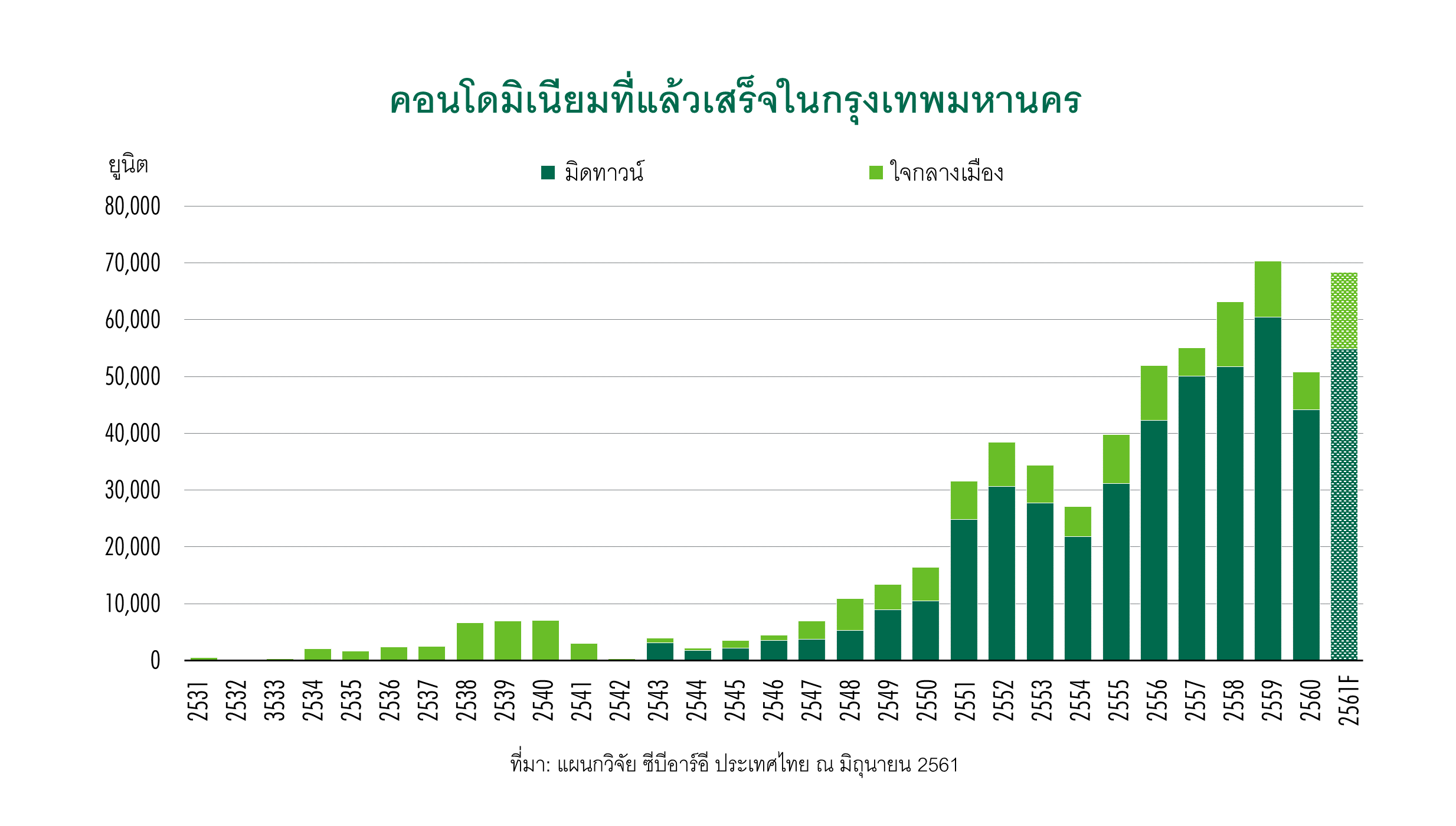 <\/p>
<\/p>