7 Hot Topics in the Bangkok Real Estate Market
Nexus Property Marketing indicates that the real estate market in Bangkok is adapting to investments from foreign capital groups, with medium and new operators entering the market. Meanwhile, large operators are looking for investments in the rental market to manage costs and generate long-term income. In the second half of the year, the luxury condominium market in the city center continues to grow.

Bangkok, April 18, 2018: Ms. Nalindrat Charoensupong, Managing Director of Nexus Property Marketing Co., Ltd. a real estate consultant, stated that during the first quarter of 2018, the Bangkok real estate market remains vibrant, with several key issues worth monitoring in terms of investment, land prices, trends for the second half of the year, and next year.
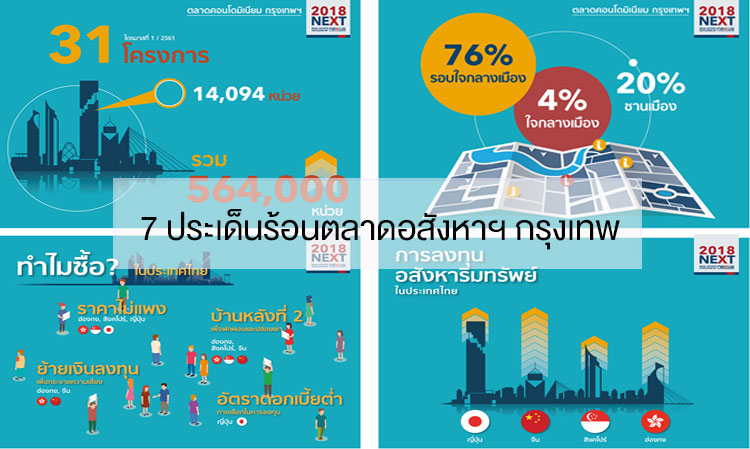
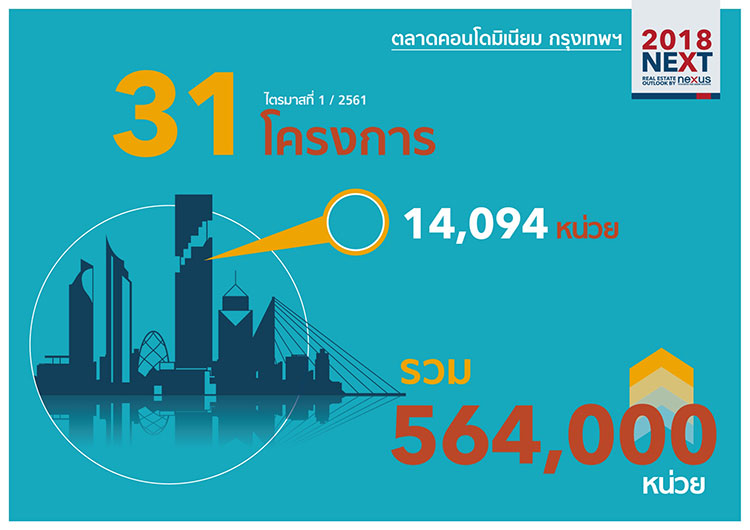
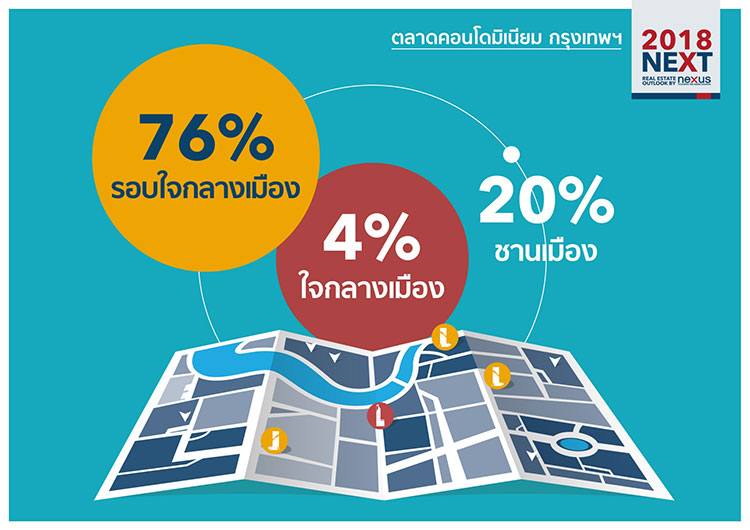
Issue 1: In the first quarter of 2018, there were 14,094 new condominium units from 31 projects by both large and small operators, which is close to previous estimates, bringing the total number of units in the market to 564,000. As land prices in the city center continue to rise, developers are struggling to find suitable land for new projects. The new units are primarily located in the lower Sukhumvit area (29%), Phaya Thai-Ratchadapisek-Rama 9 (23%), and Taksin-Petchkasem (17%). In the second half of the year, we can expect to see more new projects in the Chaeng Watthana and Ram Inthra areas due to the more concrete plans for the Pink Line subway. However, by the end of this year or early next year, we will increasingly see super-luxury condominiums in the city center priced at 400,000 baht per square meter, driven by rising land prices, while the city condo market will expand along the subway extensions, keeping prices from rising significantly.
Issue 2: In recent years, the main developers in the condominium market have been publicly listed companies, accounting for over 70% of the market. However, in the first quarter of this year, medium and new project developers have begun to increase their market share, including foreign developers. Approximately 38% of new units in the market are from medium and new developers, indicating that the market remains attractive for new operators. Additionally, many medium-sized operators have a roadmap to list their companies on the stock market within the next 1-2 years.
Meanwhile, large operators are refocusing their business plans and project developments towards more sustainable markets, adjusting their investment proportions and being cautious about purchasing land in the city center. They are increasingly developing low-rise housing markets with long-term land leases to create projects with higher rental income, such as hotels or office buildings, and are also looking for investment opportunities in foreign real estate.
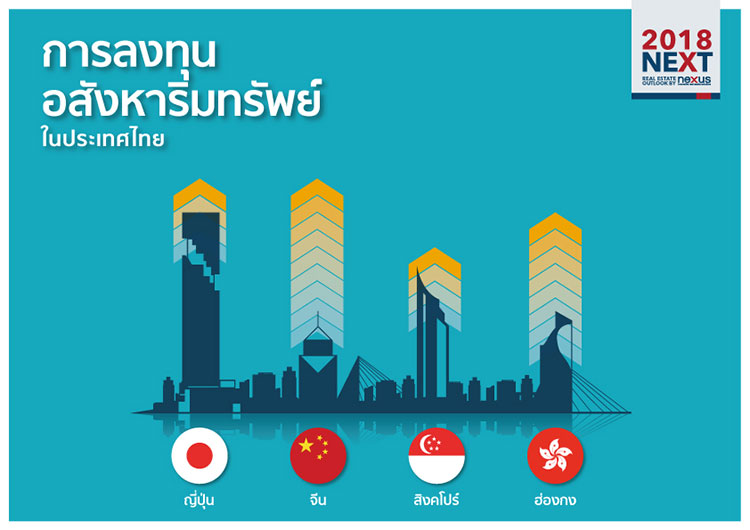
Issue 3: Foreign capital in the first quarter saw large companies from China launching projects without relying on well-known Thai companies, accounting for 20% of the new units in the Bangkok market, with a total project value exceeding 30 billion baht. This reflects confidence in investing in Thailand. Foreign investors from Japan, Hong Kong, and Singapore, who have previously invested, continue to seek opportunities, with an increasing number of condominiums catering to Japanese buyers. This year, Japanese capital is expected to continue developing at least 4-5 large projects.
Issue 4: Foreign individual investors continue to show interest in purchasing condominiums, with increasing numbers. The main factor remains the significantly lower prices compared to their home markets, especially for investors from Hong Kong and Japan. The short travel distance makes purchasing a condominium akin to having a second home for relaxation and rental purposes. Previously, this trend was mostly seen in luxury and super-luxury products, but now the high-end and mid-range markets are also attracting more investors. Additionally, investors from China are looking to move their investments abroad to diversify risks, while large domestic developers are increasingly presenting their products abroad, establishing confidence by opening branch offices to serve customers. This has led to continuous growth in foreign markets, particularly in Asia.
Another noteworthy aspect is that recently, investors have been looking to purchase units within the 49% foreign quota to offer to individual foreign investors, seeing profit opportunities. At the same time, they believe that individual buyers from various countries continue to seek condominiums in Thailand, indicating that this market is likely to keep growing.

Issue 5: For new investors with family business capital, the older generation is starting to collaborate to develop new residential projects, whether condominiums or luxury homes. This group resembles startups in other businesses, with lower management costs and high agility. Some groups have clear market support for their products, which are developed within their main business networks. This includes not only residential markets but also new hotel concepts, apartments, co-working spaces, and various lifestyle retail options.
Issue 6: Many real estate projects have incorporated lifestyle platforms that respond to the rapidly changing lifestyles of Thais as selling points in project development. This includes command systems or services via various mobile applications, smart robots, or smart lockers. These innovations are expected to meet the needs of the new generation effectively. Opportunities in the market for those already owning residences to have platforms that can cater to their existing housing needs should be closely monitored in the near future, whether through the installation of smart lockers or various service systems that enhance safety, relaxation, and convenience in daily life.
Issue 7: Market opportunities for the housing market in the second half of the year continue to show growth in the foreign market, while prices are still rising due to higher costs. Small-scale condominium projects of 7-8 stories from new developers continue to emerge, and there remains ongoing demand for high-end luxury homes. There is also interest in project development locations; for city center projects, the focus is shifting from Thonglor to Ekkamai, with Sukhumvit 31-49 moving deeper into the alleys.
As foreign investors increasingly purchase and invest in real estate, the economic and political situation, as well as the currency values of those countries, will have a greater impact on the Thai real estate market than before.
Thank you for the information from www.nexus.co.th