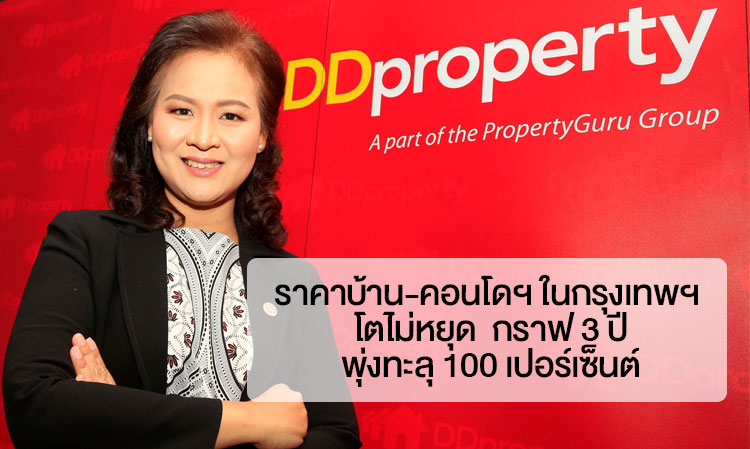
House and Condo Prices in Bangkok Continue to Rise: 3-Year Graph Surpasses 100 Percent
Bangkok - February 27, 2018 – The latest report from the DDproperty Property Index reveals that the trend of residential price indices in Bangkok remains positive, in line with improving economic conditions and purchasing power. Although the supply in the market is being absorbed slowly, there are still no signs of oversupply.
Despite the continuous increase in prices since the beginning of 2017, the growth rate compared to the previous quarter has been slow due to developers delaying launches and promotional activities during periods of mourning and significant royal ceremonies. In the last quarter of the year (4Q60), the price index increased from 199 points in the previous quarter to 205 points, representing a quarter-on-quarter growth of about 3%.
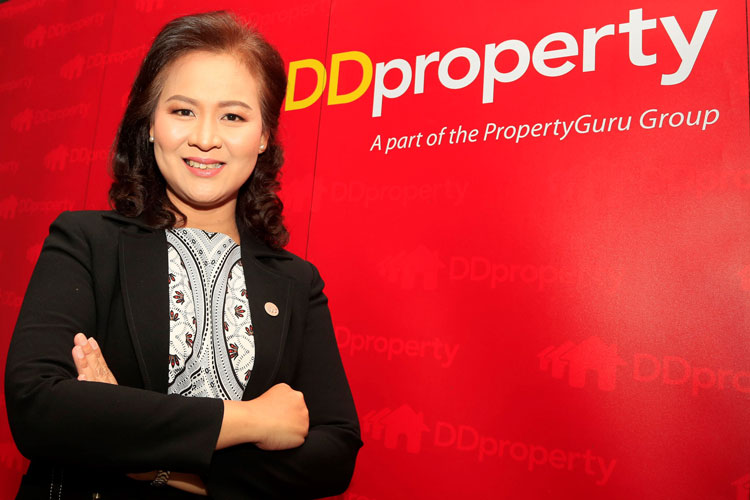
“Although the growth rate of the residential price index in Bangkok during the last quarter of 2017 was relatively low compared to the previous quarter, it still reflects a positive overall picture of the Bangkok housing market, which is gradually recovering, while the purchasing power of consumers in the middle to upper segments is improving,” said Mr. Kamolpath Saengkit, Managing Director of DDproperty, Thailand's leading real estate buying and selling platform under the Property Guru Group.
House prices in Bangkok have increased by over 100 percent in 3 years
Looking back since data collection began in 2015, the growth of residential prices in the Bangkok area has risen by 105%, which is a noteworthy growth rate, especially for condominium prices (per square meter), which are currently more popular compared to single-family homes and townhouses. In 4Q60, the condominium price index reached 154 points, an increase of 54% from the beginning of the year. However, townhouses saw the highest price growth in 4Q60, increasing by 7% from 3Q60 and about 14% over the year.
When examining price trends across different segments, the index for residential properties priced at 15 million baht and above showed the highest growth, increasing by about 12% from the previous year and 39% over two years.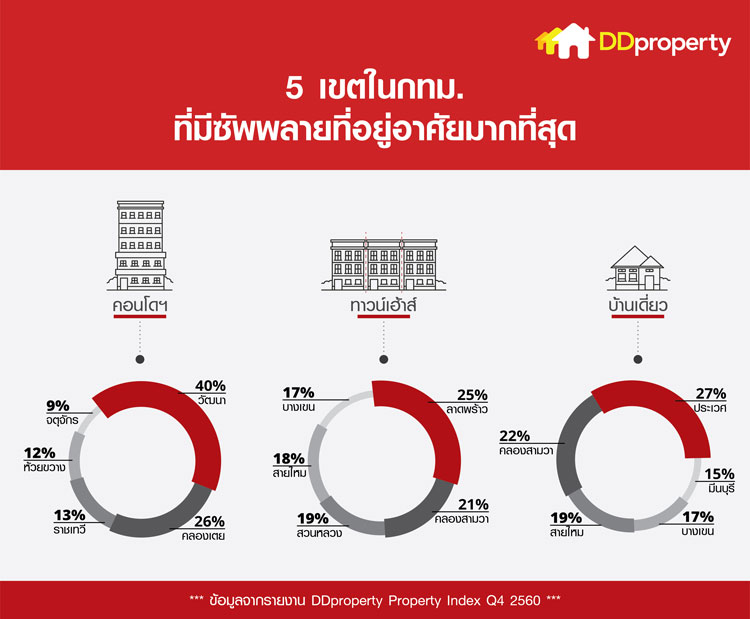
The Chatuchak area continues to be the region with the highest price growth, increasing by 5% from 3Q60, while Bangna has surpassed Phra Khanong to take the second spot with a quarter-on-quarter growth rate of about 3%. In the long term, Bangna is considered a promising area, as the price index indicates a growth of 75% over less than three years.
“Overall, residential prices are expected to continue to rise due to positive factors that create potential areas suitable for development, including increased living space, such as the progress of several extension projects for the electric train and the 20-year transportation system development plan (2017-2036), which is expected to stimulate the development of residential projects in new locations both in Bangkok and in major cities, particularly in the Eastern Economic Corridor (EEC),” Mr. Kamolpath added.
High-rise supply continues to grow faster than low-rise
On the supply side, although October saw almost no new project launches or promotional activities, purchasing power rebounded quickly in the last two months of 4Q60. During 4Q60, the residential supply index in Bangkok decreased by 7% to 240 points, partly due to developers competing with numerous campaigns and promotions to boost sales in the final stretch of the year.
When considering the types of housing, the majority of the supply in the market consists of condominiums, accounting for 88% of the total supply in 4Q60, while single-family homes and townhouses have a relatively small share. This is because most low-rise housing is typically purchased for personal residence, unlike condominiums, where many buyers purchase for resale or investment, leading to a quicker absorption of condominium supply, while developers continue to launch new projects into the market.
In terms of locations with the highest condominium supply in 4Q60, it was found in Wattana, while Lat Phrao had the most townhouses entering the market, and Khlong Sam Wa was a popular zone for single-family homes.
Supply expected to grow in 2018, but no signs of oversupply
It is anticipated that the residential supply index in Bangkok will increase in 2018, as both small and large developers signal plans to launch numerous new projects. The Bangkok housing market is expected to continue its recovery, though perhaps not dramatically, as purchasing power remains somewhat limited due to household debt issues, which, while beginning to ease, are still at a high level.
“Although the absorption of supply in the market is slow, with developers planning to launch new projects actively in 2018, we believe there will not be an oversupply or market saturation, as developers and all related parties are closely monitoring the situation,” he added.
“Sellers will continue to benefit from the ongoing increase in residential prices in Bangkok, with the price index growing by over 100% in less than three years. However, buyers will also benefit from low interest rates and various promotions and special offers from developers looking to accelerate the sale of stock and continuously launch new projects,” Mr. Kamolpath concluded.
For the full report, it can be downloaded here
Thank you for the information from www.ddproperty.com