
Bank of Thailand Eases Regulations for Commercial Banks to Appoint 'Deposit-Withdrawal-Payment-Transfer Agents' Without Prior Approval, Clarifying It's Not the Establishment of New Banks
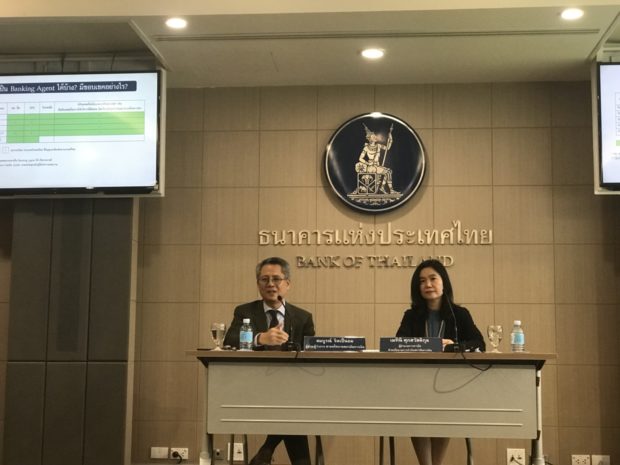
Mr. Somboon Jitpaethum, Assistant Governor of the Financial Institutions Policy Group at the Bank of Thailand (BOT), revealed that in light of rapidly changing technology affecting customer behavior in financial services and the strategies of commercial banks to expand their service offerings, the BOT has revised the guidelines for commercial banks' service channels to be more flexible and responsive to changes. This will enable the public to receive services that are more affordable, tailored to their needs, and offer a wider variety of options, while allowing commercial banks to serve customers more efficiently and align better with their business strategies.
The key points of the new guidelines are to provide flexibility and agility for commercial banks in adapting their service formats and channels, categorized into two main types:
- Branches of commercial banks will have more flexible formats regarding transactions, operating hours, and services through electronic channels or mobile banking.
- The appointment of banking agents, which is already permitted, will now allow commercial banks to appoint other commercial banks, specialized financial institutions, and postal services as agents. The new guidelines expand this scope to include other qualified legal entities.
Previously, the BOT had regulations governing banking agents under the “Announcement of the Bank of Thailand regarding the Guidelines for Appointing Agents of Financial Institutions (Banking Agent)” signed on October 20, 2010, based on the Financial Institution Business Act B.E. 2551, allowing commercial banks to appoint agents in six categories:
1) Deposit Agents include other commercial banks, specialized financial institutions, and postal services.
2) Withdrawal Agents include postal services.
3) Payment Agents for Retail Customers (e.g., transferring money from banks in Bangkok and having postal services in provinces pay individuals instead of withdrawing from bank branches) include postal services.
4) Payment Collection Agents (bill payment) include other commercial banks, specialized financial institutions, and postal services.
5) Payment Agents for Large Customers (e.g., foreign banks with few branches using Thai bank agents to issue checks to individuals at various branches) include commercial banks and specialized financial institutions.
6) Other Agents must apply for permission on a case-by-case basis. Currently, there are four entities that do not fall under the five categories above and have received approval from the BOT, including Counter Service, a subsidiary of CP, Boonterm kiosks, Sabaik kiosks, and Airpay.
Thus, the new announcement will allow the appointment of all types of agents (except for payment agents for large customers) generally for legal entities that meet the qualifications and conditions outlined in the announcement without needing prior approval from the BOT. Additionally, the new announcement opens the door for commercial banks to apply for permission to appoint individual agents on a case-by-case basis, targeting small community shops or local convenience stores that are not registered as legal entities to participate in providing services.
“Banking agents are merely individuals appointed by commercial banks to provide services on their behalf for certain transactions, not the establishment of new commercial banks with a banking license from the BOT. Currently, the BOT does not have a policy to issue licenses for new commercial banking operations. The primary guideline for supervision is that the actions of the agents must be the responsibility of the bank as if they were providing the service themselves. In practice, banks wishing to appoint agents must prepare a report plan approved by their board of directors and submit it to the BOT at the beginning of each year. On the other hand, the BOT will conduct retrospective checks on the operations of the agents. Any actions by agents that may cause harm under banking principles will be fully accountable under the law,” Mr. Somboon stated.
Mr. Somboon also discussed fees, suggesting that agents should be viewed as alternative channels for financial services, which must compete with banks and other channels. If a ceiling is set on the fees for all agents, the market fees will inevitably rise to that ceiling. Although some banks may be willing to compete or have lower service costs and can charge lower fees, they will not compete with other banks, ultimately harming the public as a whole.
Furthermore, the BOT is aware that commercial banks are adjusting their business operation channels and may close branches. The new guidelines require commercial banks to have measures in place to care for customers who may be affected, including developing strategic plans regarding branches and service channels, which must be approved by the bank's board and reported to the BOT annually. They must also ensure there are sufficient alternative service channels for customers and establish appropriate and fair measures for affected employees.
Thank you for the information from thaipublica.org