How Will Asia Change When China Becomes a Regional Superpower?
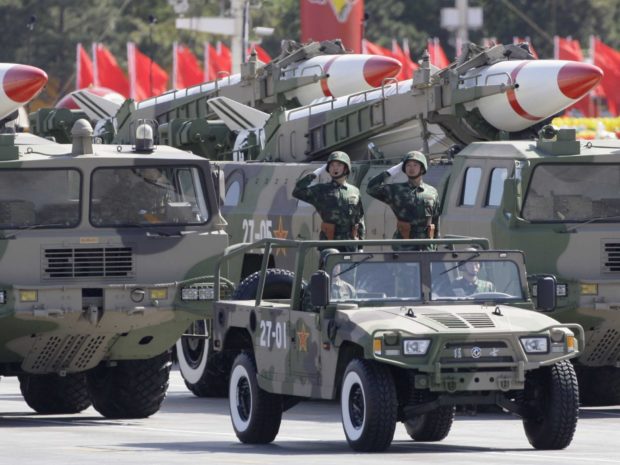
Over the past 40 years, China has undergone significant economic transformation. In the 1970s, China was a poor country, lagging behind Western nations and some Asian countries in terms of industry, technology, and agricultural output. Today, however, China boasts the world's second-largest economy, is the largest trading nation globally, and is the leading producer of automobiles, commercial ships, computers, and phones.
China's rise as a superpower has raised concerns among its Asian neighbors and the United States, the current global superpower. For the U.S., China's ascent signifies a loss of power and influence in international political and economic arenas. The U.S. is apprehensive about developments that could lead to a multipolar world, where it becomes just one of several superpowers.
If the world continues to evolve into a multipolar state and China emerges as the Asian superpower, particularly in Northeast Asia, this region will be directly affected. Australia, Japan, South Korea, and the Philippines will face critical issues, such as whether to collaborate more with other regional countries to balance China's influence or to accept Chinese leadership, similar to how they previously accepted U.S. leadership.
A world where China is a superpower with significant roles and influence will be more complex than the world when the U.S. was the leading superpower, a role that China has previously played in a limited capacity. If the U.S. rapidly reduces its role in international trade and investment, China will be more aware than other countries of its opportunity to step in as the leading superpower.
In the early 20th century, the world experienced a multipolar political landscape, which ultimately led to two world wars and a major global economic depression. Therefore, it is crucial that China's role in this multipolar era helps the world avoid past disasters in the 21st century.
What Kind of Superpower Will China Be?
Some analysts believe that China will emerge as a gentlemanly superpower. The economic interdependence between China and various Asian countries may help curb aggressive behavior from China, as the Chinese Communist Party's legitimacy relies on China's economic growth, which depends on international trade. Thus, China must maintain peaceful relations with its Asian neighbors.
Moreover, Chinese leaders have consistently stated that China will be a superpower different from past superpowers. China opposes interference in the internal affairs of other countries and views the creation of "spheres of influence" as an outdated relic from the Cold War era. President Xi Jinping has declared that China will not engage in colonialism or any form of invasion, as China values peace. Based on China's declared stance, it can be inferred that the face of Asia in an era dominated by China will not differ significantly from the current situation.
However, looking at historical precedents, regional superpowers have not behaved in the manner proclaimed by Chinese leaders. Security necessities often compel superpowers to dominate their own regions. Superpowers use economic influence to pressure other countries, build military capabilities, and intervene in the internal politics of neighboring countries, often fearing that external competitors might establish military bases nearby. They also attempt to spread their culture to draw other nations closer.
Economic Center of the Region
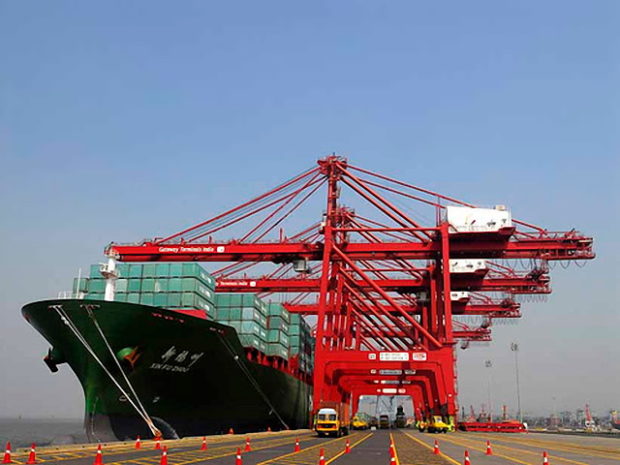
In recent decades, China has become the number one trading partner for nearly every country in Asia and a primary export market for many Asian nations. China has signed free trade agreements with Australia, Singapore, South Korea, and ASEAN. Additionally, in 2014, China, along with Russia, Brazil, and India, established the New Development Bank with a capital of $100 billion, headquartered in Shanghai.
In 2015, China established the Asian Infrastructure Investment Bank with a capital of $100 billion, involving 80 participating countries. The “Belt and Road Initiative” has enabled China to engage in trade and investment cooperation in infrastructure and natural resources with various countries across the Asian region. The China Development Bank has already lent $250 billion to various projects.
The U.S. has previously pursued policies to position itself as the economic center for countries in Latin America, which it considered its backyard. In the 19th century, American companies flocked to invest in this region to trade fruits, minerals, sugar, and tobacco. The American company United Fruit managed to control the entire fruit export of Central American countries.
American financial institutions in Latin America also raised local funds for American companies. In 1948, the U.S. established the Organization of American States (OAS) to promote security and cooperation in the region, which became a legitimizing body for U.S. military interventions in Latin America. The U.S. employed various policies, such as the “Big Brother” policy, gunboat diplomacy, or dollar diplomacy, to promote its own trade and investment interests.
Being a leading or central economic power in a region allows superpowers to use it as leverage for economic pressure, such as imposing sanctions to achieve their goals or interests. Recently, China has also begun to adopt such measures. In 2017, China punished South Korean company Lotte for cooperating with the U.S. THAAD missile installation project in South Korea (Lotte sold land to the South Korean government for the THAAD missile site), and the Chinese government banned Chinese tours to South Korea.
New Face of Asia

What will China's policy towards Asia look like in the future? It may be predicted based on the past behaviors of other regional superpowers. Economic interdependence has both positive and negative aspects. The positive aspect is that it raises the cost of conflicts, as it would impact trade between nations. However, the negative aspect is that the leading economic power can use it as a tool for economic pressure against another country. Additionally, regional superpowers may intervene in the internal politics of neighboring countries.
However, China may not need to resort to economic pressure if Asian countries align their policies with China's. For instance, in 2013, the Philippines brought the South China Sea dispute to international court, but under President Rodrigo Duterte's administration, the Philippines began to distance itself from the U.S. and move closer to China, which offered to invest $24 billion in the Philippines.
In Australia, there has been extensive debate about its stance towards a new Asia that “excludes America.” Hugh White, an analyst from the Australian National University, wrote a significant article titled “Without America: Australia in the New Asia”, discussing how the competition between the U.S. and China will unfold, whether peacefully or violently, and whether it will happen quickly or slowly. What is certain is that the U.S. will end its strategic role in Asia, the old order led by the U.S. is passing, and a new order led by China is emerging.
Historically, Australia's role in Asia has relied on the support of leading nations, namely England and later the U.S. Therefore, Australia is uncertain about how to position itself as U.S. power and influence in Asia diminish. What is certain is that Australia will likely establish a new order of relations in Asia by collaborating with superpowers like China, Japan, and India, as well as with middle-tier countries like Indonesia and Vietnam.
However, as China rises to become a superpower in Asia, will it adjust its policies to emphasize cooperation with other countries? Recently, China's stance and policies have not indicated such a direction. Between 2010 and 2015, China's policies towards the Asian region reflected nationalist sentiments, such as the conflict with Japan over the Senkaku Islands, which strained the previously smooth relations between China and Japan over the past 30 years.
Conducting policies based on China's core interests makes it difficult for China to compromise considering the interests of other countries in the region. However, compromise may occur when China's policies are based on two principles: protecting China's interests and adhering to the shared values of the international community.
Thanks to information from thaipublica.org