Latest Research Findings Reflecting the Challenges of 'Social Impact Assessment' in Thailand
According to a report by JP Morgan and GIIN in 2014, 94% of social investors believe that understanding the social outcomes of investments is crucial and part of their mission, with only 1% of social investors not measuring social outcomes.
However, for 'social enterprises,' there are still many challenges, including viewing social impact assessment tools as a 'cost' and 'burden,' not to mention the significant issues surrounding the ability to measure social outcomes.
In light of the 'magnitude' of the problem and the 'novelty' of the concept of social impact assessment in Thailand, Sal Forest Co., Ltd., supported by the Thailand Research Fund (TRF), has developed the 'Social Impact Assessment Research Development System for Social Enterprises and Pilot Cases', led by Suranee Achavanantakul. This project has uncovered several findings and challenges regarding social impact assessment, as follows:
Social Impact Assessment: The Compass for Social Enterprises
Social Impact Assessment (SIA) is an essential tool for tracking the performance of social enterprises, as it helps verify the work process and communicate the results to stakeholders and funders. However, measuring social outcomes is still a new concept in Thailand, with limited knowledge and research available.
The objective of this research project is to study the principles, tools, and roles of social impact assessment in other countries for social enterprises and to develop a knowledge base regarding social impact assessment in the context of Thailand for social enterprises. It also aims to develop personnel and a network of researchers in social impact assessment for social enterprises. Through a literature review on social impact assessment for social enterprises both in Thailand and abroad, as well as pilot assessments of social outcomes for six social enterprises in Thailand, the research team discovered several interesting points:
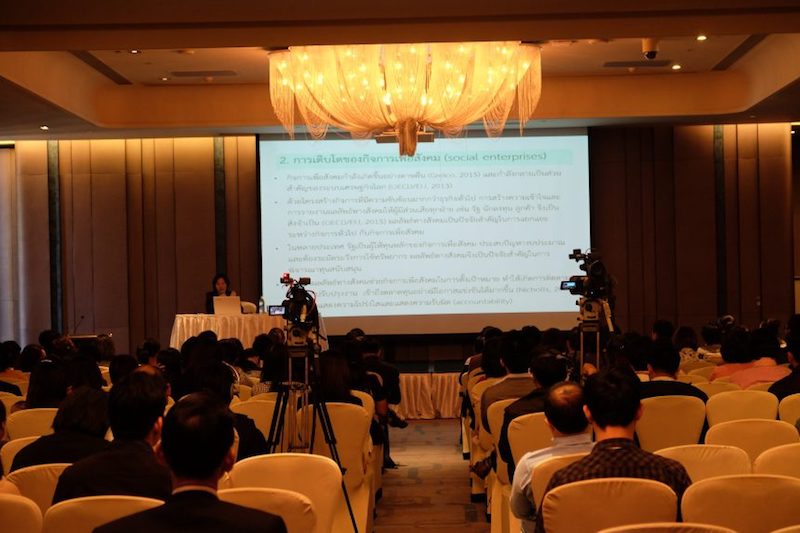
Atmosphere of the research project announcement on developing knowledge in social impact assessment for social enterprises and pilot case studies at DoubleTree by Hilton on December 19, 2017.
Challenges of Social Impact Assessment
The first challenge is that social outcomes have diverse meanings and are interpreted differently in application, leading to a lack of standardized social impact assessment. Experts from the Acumen Fund state that the first challenge in social impact assessment is identifying what 'social outcomes' are and to what extent, as defining the scope of outcomes is crucial for determining resource allocation for assessment.
Another challenge is that social impact assessment requires significant resources, including skills and expertise, time, budget, and dedication, as well as a need for extensive quantitative and qualitative data. A survey by J.P. Morgan and GIIN in 2015 found that funders view 'cost' as a major barrier to assessment, while 88% of social investors believe that the most significant issue in assessing social outcomes is the ability to measure the social outcomes of the social enterprises receiving investment. Only large, well-established social enterprises have invested in data collection systems and have dedicated staff or departments for social impact assessment.
A further challenge is that social enterprises do not yet recognize the importance or benefits of social impact assessment and often view it as more of a burden than a benefit. Consequently, social impact assessments typically occur only when they are prioritized by investors or mandated (Lingane & Olsen, 2004).
The final challenge is that certain types of social impact assessments can undermine the credibility of the assessment itself, such as scoring, ranking, or proxy measures, which can be subjective. Organizations may adjust their behaviors to increase scores or proxies without regard for the actual social outcomes achieved. Additionally, many aspects of 'social value' cannot be measured, making it difficult to produce quality and credible social impact assessments (Bielefeld, 2009).
Regardless of the challenges, the growth of social investment, which has led to the expansion of social enterprises, makes social impact assessment increasingly important and necessary. A report by J.P. Morgan and GIIN in 2014 found that 94% of social investors believe understanding the social outcomes of investments is crucial and part of their mission, with only 1% of social investors not measuring social outcomes.
Regarding trends in social impact assessment, Flynn, Young, and Barnett (2015) noted that social impact assessment has shifted away from valuing outcomes in monetary terms and is moving towards more 'standardized' assessments. A survey by J.P. Morgan and the Rockefeller Foundation found that in 2016, 65% of social investors used IRIS indicator standards or tools referencing IRIS indicators, while 37% used tools developed by organizations alongside IRIS indicators (GIIN Research Team, 2016).
Another emerging trend is that methods of social impact assessment are increasingly converging (consensus), with a preference for using the theory of change, as it helps evaluators see the broader picture of cause and effect of change and tests the logical connections and hypotheses that may or may not be linked in activity design or evaluation (Flynn, Young, and Barnett, 2015). Additionally, methods of social impact assessment that incorporate the opinions and needs of stakeholders are becoming more important. Another widely agreed-upon point in the literature is the use of multiple methods or tools for social impact assessment rather than a one-size-fits-all approach for all types of social enterprises.
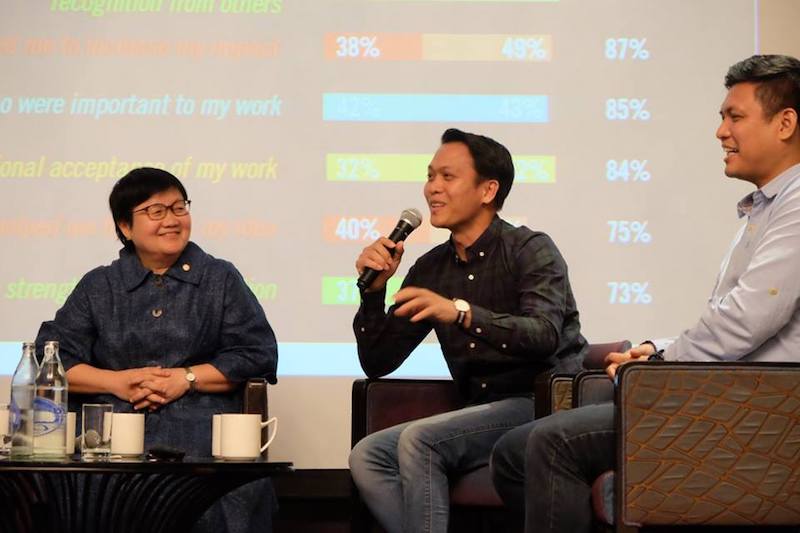
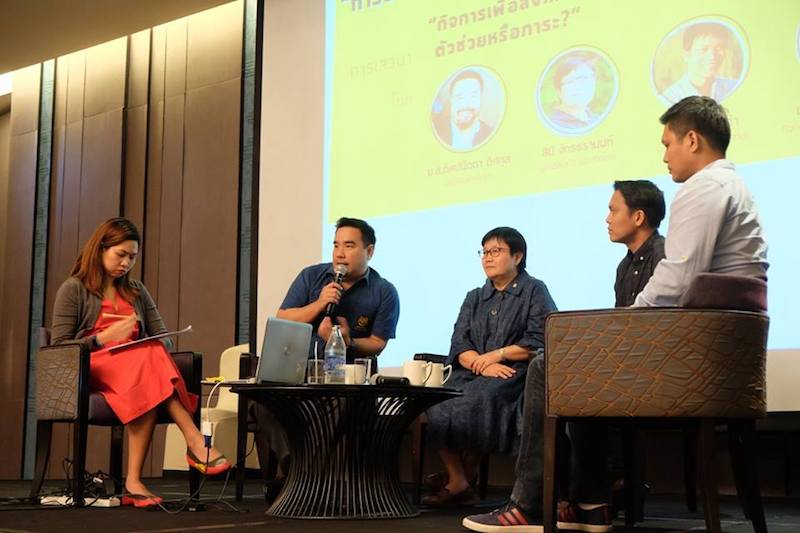
Atmosphere on the panel discussion 'Social Enterprises and Social Impact Assessment – A Help or a Burden?' as part of the research announcement event.
Theoretical Frameworks and Popular Social Impact Assessment Tools
From a literature review of theoretical frameworks and tools used by 69 organizations from 22 countries, including six social enterprises that regularly report social outcomes, the research team found three commonly used frameworks for social impact assessment: Logic Model, Theory of Change, and Outcome Linkage.
Meanwhile, the commonly used social impact assessment tools can be categorized into six types:
- Impact Value Chain, which illustrates the relationships and logic from inputs to outcomes.
- Cost-Benefit Analysis (CBA), an economic analysis method for cost-effectiveness.
- Social Return on Investment (SROI), which measures the social return on investment.
- Indicators that help quantify outputs linked to social change outcomes.
- Experimental Study, which focuses on measuring changes under controlled conditions.
- Proprietary tools developed specifically for social impact assessment.
The literature review found that 62% of funding sources and organizations supporting social enterprises (39 out of 69) used the Theory of Change as their framework for social impact assessment and employed various tools for evaluation. Among the leading social enterprises surveyed, five out of six used this framework, followed by the Logic Model used by 14 organizations (22%), with only one leading social enterprise, BRAC Microfinance in Bangladesh, utilizing this framework. It is noteworthy that BRAC was established in 1972, decades before the Theory of Change became popular in the social development sector.
Regarding the tools used for social impact assessment, the research team found that many funding sources and supporting organizations used multiple tools, with 35 organizations (50%) using indicators as the primary tool for evaluating the social outcomes of the enterprises they support. Among these, 16 organizations, or about one-quarter of all surveyed, used the IRIS indicator set as a basis for evaluation, whether directly or in conjunction with other proprietary tools for social impact assessment. Following this, 10 organizations (15%) developed their own proprietary assessment tools based on their goals and policies.
It is noteworthy that only 9 organizations (13%) used Social Return on Investment (SROI) as a tool for evaluation. Furthermore, the more diverse the social issues supported by the organization, the more likely they are to use indicators for evaluation rather than developing their own tools.
Another finding from the research team is that the age of the enterprise and duration of funding are related to the types of tools that funding sources choose to use. The younger the social enterprise seeking funding, the more likely funders are to require the use of indicators for social impact assessment, as these are tools that social enterprises can create themselves at a low cost. Conversely, if the social enterprise has reached a certain level of maturity and requires more funding to scale up or replicate its business model in other areas, funders are more likely to require the use of experimental studies to 'prove' that the enterprise has indeed created outcomes. For example, d.light design's funders supported the costs of conducting experimental studies in various locations to find empirical evidence that the business model is socially innovative, financially sustainable, and has the potential to scale to over 2 billion people worldwide who still lack electricity.
Case Studies of Six Thai Social Enterprises
The research team found that the 'size' of many social outcomes was less than what the entrepreneurs expected. Some changes were significant to stakeholders but were not the main goals of the enterprises, and many social outcome indicators were not economic outcomes, such as community cohesion. Therefore, there is a need for systematic planning and development of measurement methods in the future.
In addition to the literature review, the research team also conducted pilot social impact assessments of six Thai social enterprises to summarize lessons that could benefit the development of social impact assessment for social enterprises in Thailand. They selected social enterprises with missions related to agriculture, community development, and improving the quality of life for disadvantaged individuals, which are significant social issues in Thailand, with two enterprises in each category: one in the startup phase and one in the scale-up phase, with one enterprise operating for over 10 years. The social enterprises assessed included: the Fisherman's Store, the Organic Coconut Production Project of Green Net Cooperative, Local Alike, the Savings Group at Phai Lom Temple led by Phra Subin Panitoh, Learn Education, and Outsourcing Contact Center (OCC) of the Mahatai Foundation for the Disabled.
All six social enterprises had never conducted social impact assessments before and wished for the research team to assess their cumulative social outcomes since their establishment. However, due to data limitations, particularly the absence of 'baseline data' regarding the situation in the area before the enterprises began operations, the research team had to limit the scope to assessing outcomes retrospectively over the last 3-6 years, depending on the data available and how far back the primary target groups could provide relevant information.
The concepts and tools chosen for this assessment were the 'Theory of Change,' 'Outcome Chain,' and the selection of 'sets of outcome indicators' that the enterprises would measure, as well as assessments considering the 'base case' (some outcomes may result from other enterprises or external factors). The assessment found that this approach was appropriate because the Theory of Change serves as a starting point for entrepreneurs to frame their reasoning about what social changes they aim to create and how. The Outcome Chain is a useful tool for 'unpacking' the enterprise's Theory of Change to clearly see its various components and assist in selecting appropriate social outcome indicators. The base case scenario is beneficial in encouraging entrepreneurs to consider the context of the area and the issues they operate within more broadly than just their enterprise's scope. Additionally, it prompts entrepreneurs to consider the efforts of the target groups in improving their own situations and the role of the target groups in designing the enterprise's core activities.
The entrepreneurs of the six social enterprises themselves viewed the assessment results as beneficial for their enterprises, providing clearer information than in the past regarding whether their enterprises could create the desired social outcomes, the progress made, any unexpected results, and stakeholder perceptions. The research team found that the 'size' of many social outcomes was less than what the entrepreneurs expected. Some changes were significant to stakeholders but were not the main goals of the enterprises, and many social outcome indicators were not economic outcomes, such as community cohesion. Therefore, there is a need for systematic planning and development of measurement methods in the future. Additionally, there were changes that the primary target groups perceived as benefits they received but were not included in the enterprises' goals or theories of change, such as the target groups of the organic coconut project feeling more knowledgeable and capable of working together, or members of the savings group at Phai Lom Temple feeling they received more loans.
However, the research team proposed preliminary guidelines for writing the Theory of Change for social enterprises and selecting appropriate outcome indicators, stating that social change that the enterprise aims to create must be defined clearly and precisely as resulting from core activities. For example, instead of setting a goal to 'increase well-being in the community,' it could specify 'to enhance the economic quality of life for people in the community.' If the core activities cannot explain how they will contribute to social changes beyond economic ones, social enterprises that act as 'intermediaries' (like Local Alike) should define intermediate outcome indicators in addition to ultimate social outcomes, such as the capacity of community organizations and the knowledge and skills of community members (in this case, 'community members' will be the ones creating the ultimate outcomes). Furthermore, stakeholders, especially the primary target groups of the enterprises, should be involved in the evaluation process from the outset, as they can provide valuable information for creating appropriate indicators and help prioritize the importance of each indicator.
For enterprises wishing to expand their operations beyond their current areas or replicate their business models in other regions and seek regional funding sources, they should study international indicator databases early on and experiment with indicators that align with social outcomes linked to core activities to benchmark their operations against other enterprises. Additionally, they should use assessment tools appropriate for each stage of the enterprise's lifecycle. The literature review found that social enterprises that have been operating for a long time, have demonstrated social outcomes, and have received substantial funding tend to be encouraged to conduct experimental studies to scientifically prove social outcomes to replicate or scale their business models in the future.
Recommendations for Improving Social Impact Assessment for Pilot Case Social Enterprises
Due to time and data limitations, the pilot social impact assessment yielded mostly descriptive data and confirmed to some extent whether the social changes anticipated by the entrepreneurs 'occurred' or 'did not occur.' Therefore, to enhance clarity in future assessments, entrepreneurs should take the following steps: establish a systematic data collection framework with the aim of being able to compare assessment results with other data sources and year-on-year comparisons; attempt to collect retrospective data, especially baseline data (before the enterprise started); continuously collect data according to indicators every year; and compare outcomes with a control group that did not participate in the project to clearly assess the 'base case' or the differences between participants and non-participants. They may seek research funding from relevant agencies in the future after the enterprise has been operational for a period (no less than five years).
The full document can be downloaded at:
- Research report 'Research Project to Develop Knowledge in Social Impact Assessment for Social Enterprises'
- Appendix Report on Social Impact Assessment of Six Social Enterprises
- Guide Social Impact Assessment and Social Return on Investment Handbook, Revised 2017
Note: Some images in the article are not related to the content.
Thanks for the information and images from: www.thaipublica.org: Latest Research Findings Reflecting the Challenges of 'Social Impact Assessment' in Thailand.