Kiatnakin Bank Analyzes and Delves into the 'New City Plan for Nonthaburi Province' to Encourage Real Estate Developers to Adapt
The project advisory team from Kiatnakin Bank's business loan division has revealed that the current mass transit system (the Purple Line which is already operational), along with the Pink and Red lines under construction, represents a significant government investment that serves as a key factor in promoting urban development and the expansion of the real estate sector in Nonthaburi Province. They advise real estate developers to prepare for the new city plan for Nonthaburi, which is expected to be enforced by mid-2018, and to study the conditions and regulations that may impact future project developments, particularly high-rise projects, as there are also incentives for FAR bonuses that will help increase building area.
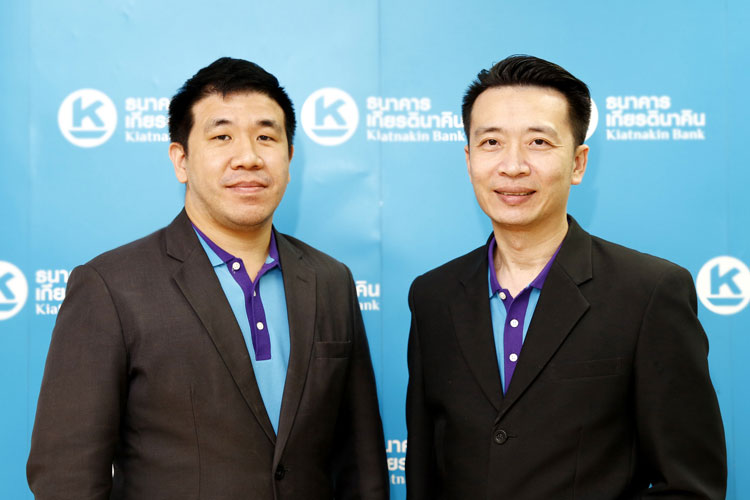
The advisory team from Kiatnakin Bank has studied and analyzed the draft city plan for Nonthaburi (the 90-day announcement version), comparing the current situation with existing local regulations. The focus is primarily on the allocation of residential areas, multi-family housing (such as apartments), condominiums, and hotels. Key points are summarized as follows:
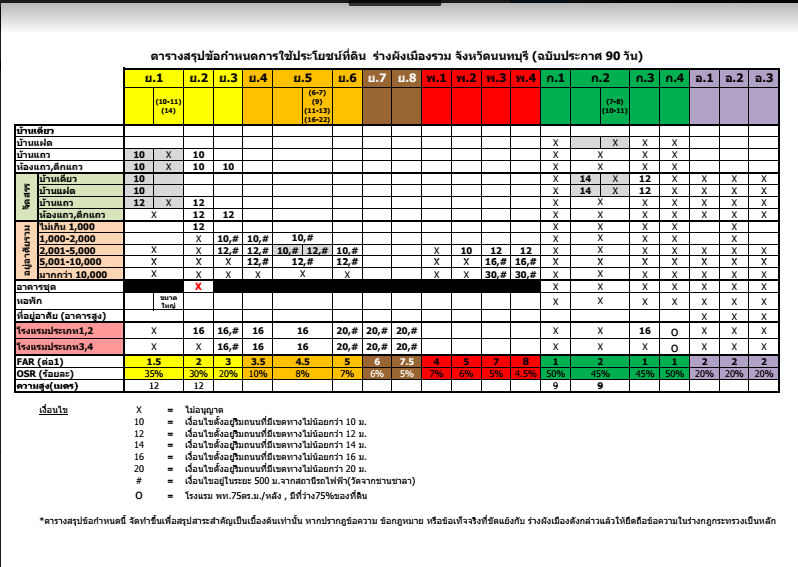
Summary of the Nonthaburi City Plan Draft (90-Day Announcement Version)
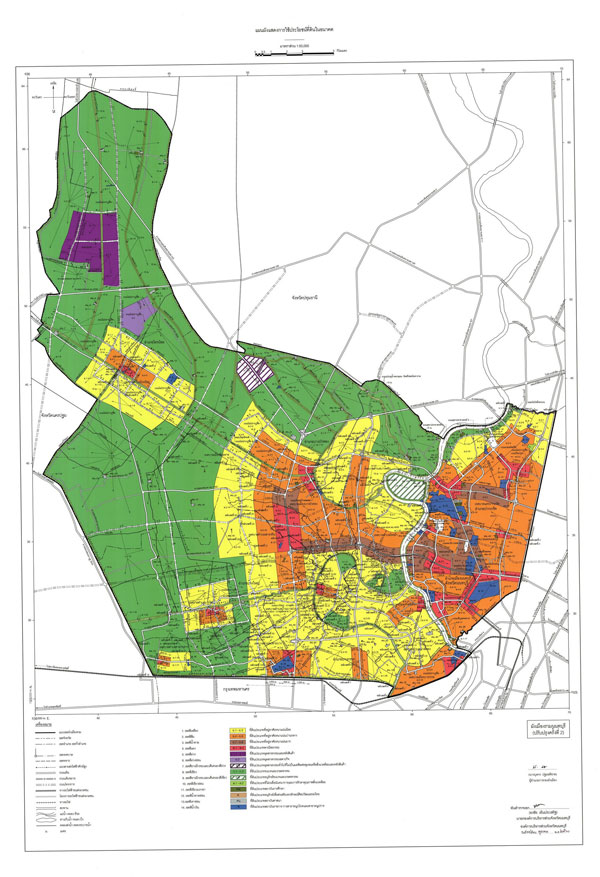
The draft city plan indicates that zoning remains consistent with the original city plan, with additional emphasis on urban density along the mass transit lines and increased areas related to industry.
However, the details of this draft city plan have undergone several changes from the original version, including more detailed regulations and zoning similar to those in Bangkok, such as emphasizing density in each area, defining FAR (Floor Area Ratio), and specifying road widths in various areas for residential building developments, including incentives through FAR bonuses.
Current Situation and Analysis of Land Use Changes According to the Nonthaburi City Plan Draft (Horizontal/Vertical/Hotels)
1. Previously, the province had a land-to-building area ratio (FAR) of 10:1 across the province. In this draft city plan, different FARs are set for each area, with a maximum of 8:1 in smaller areas, along with road width requirements that must be met to achieve full potential.
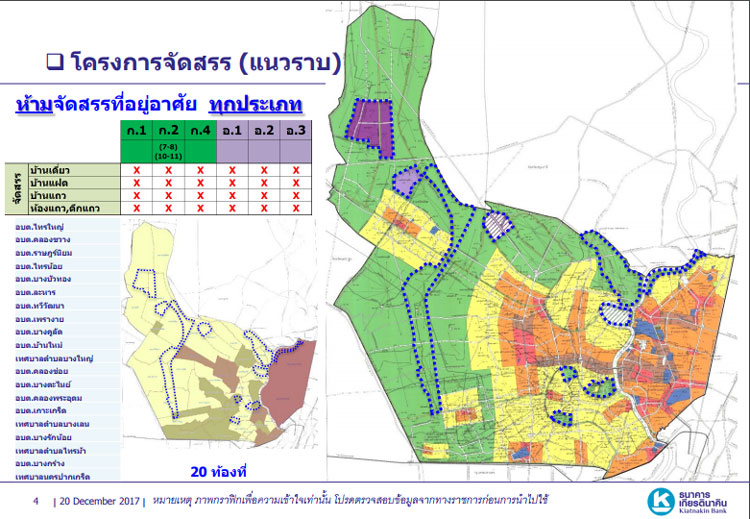
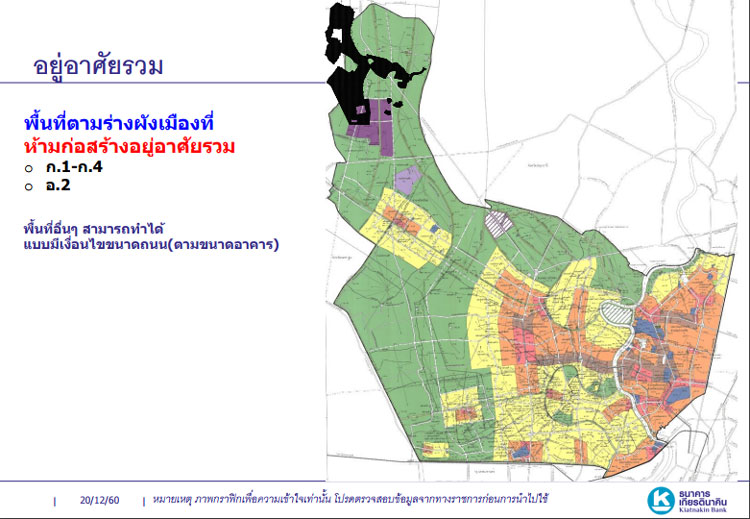
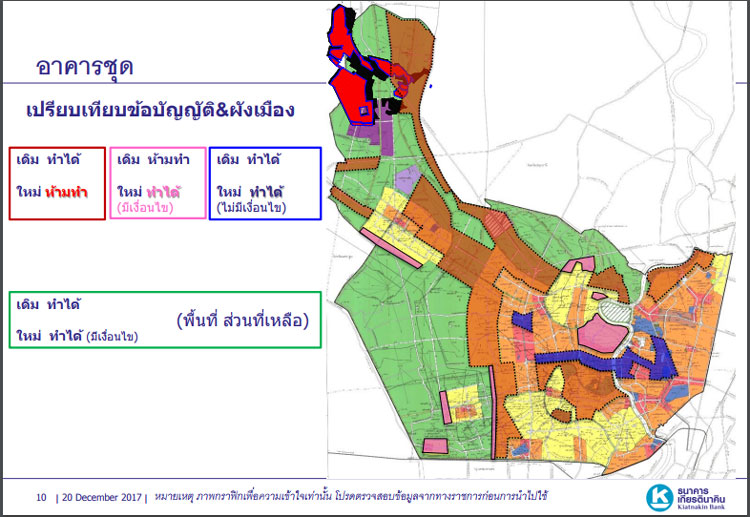
2. Previously, there were no areas prohibited for development, but this draft city plan specifies areas where development is prohibited, including agricultural and industrial zones, primarily located on the western side of the province.
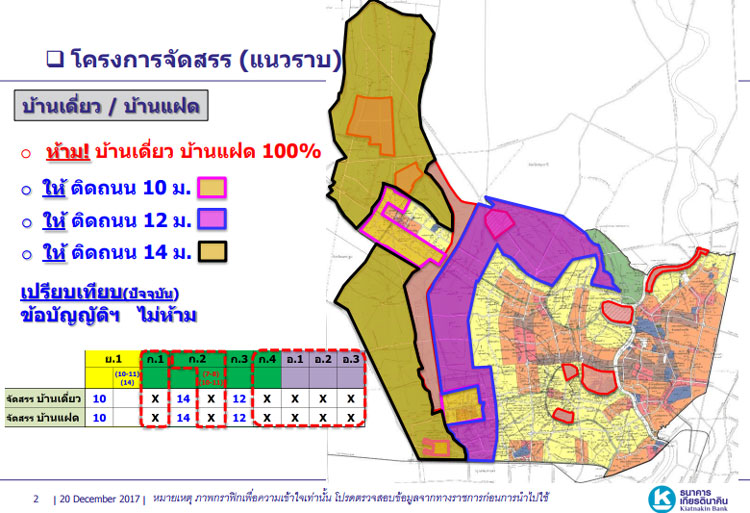
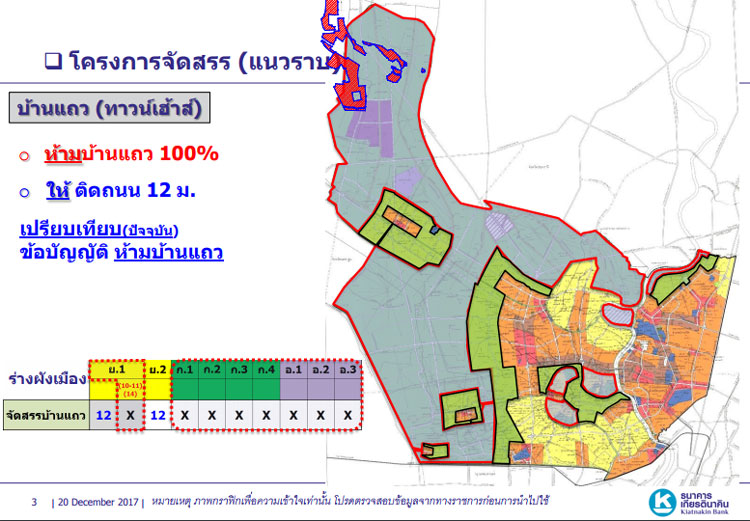
3. The development of subdivision projects is now influenced by road width requirements in many areas, which means that many areas in alleys may not be able to develop projects. Small and medium-sized developers who cannot purchase land on major roads may not be able to proceed with projects, and if land must be adjacent to major roads, land prices will be high, leading to increased development costs and subsequently higher home prices.
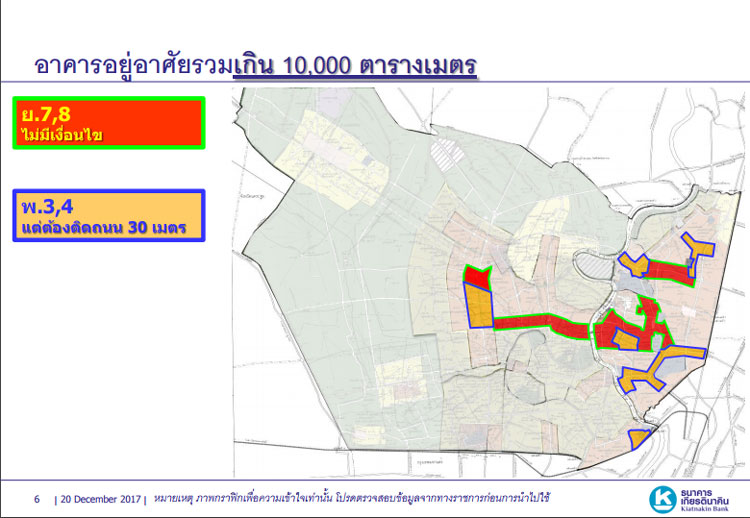
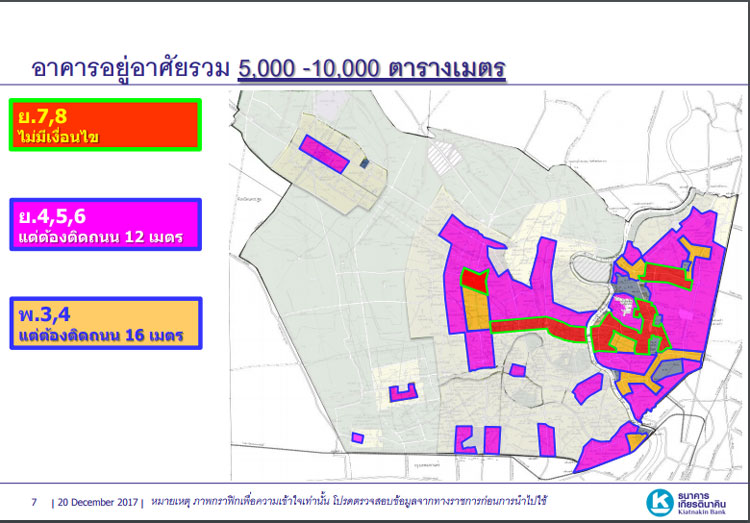
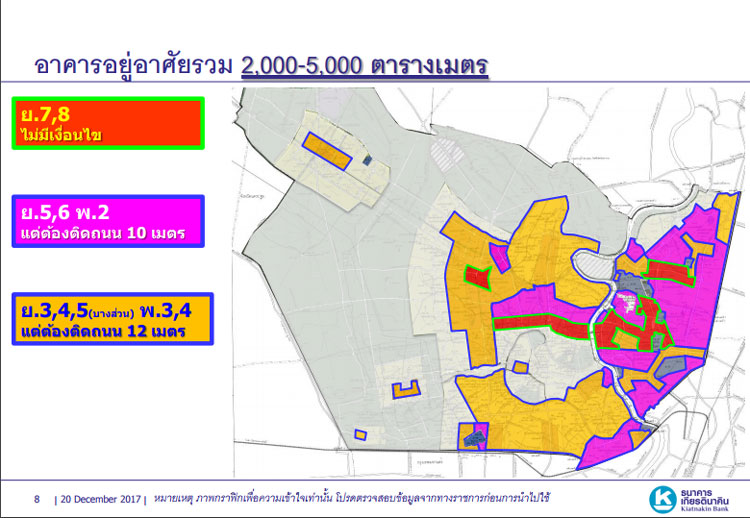
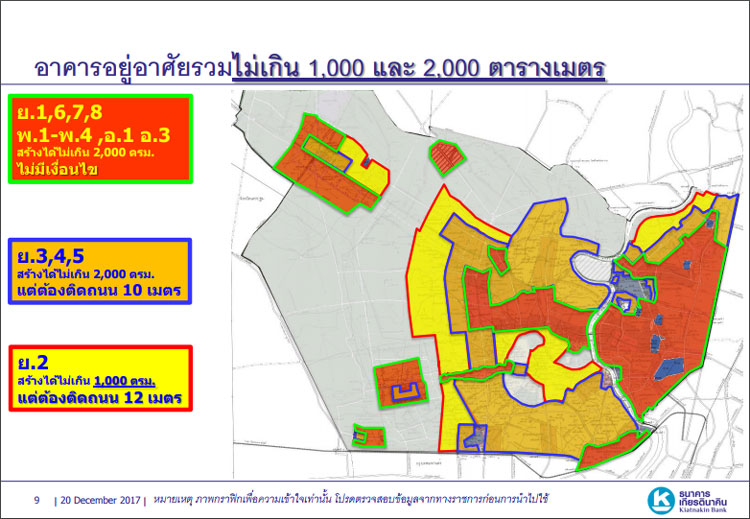
4. The development of multi-family housing and condominiums is also determined by road width. The issue is that 80% of the roads in the province are still small (6-8 meters). To develop to full potential, projects must be within the radius of the operational Purple Line, but if they extend beyond this radius, the potential of land in many areas will significantly decrease.
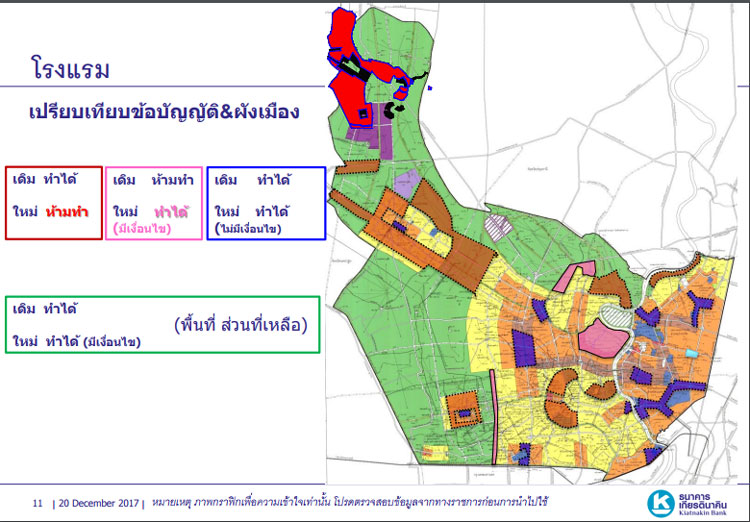
5. For hotel development, if located in commercial areas, it can be fully developed without road width conditions, but if developed in residential areas, it will be subject to road width requirements, regardless of whether it is a small or large hotel. Overall, the regulations are stricter than in Bangkok, especially for small hotels (not exceeding 50 rooms).
6. The transportation network outlined in this draft city plan mentions roads labeled A, B, and C, which can be up to 50 meters wide. If any area falls within these zones, it must be treated as if it has been expropriated. This draft does not mention the use of road width rights as outlined in the planning maps, unlike Bangkok, which specifies rights based on the planned widths of roads A and B.
7. The draft city plan includes incentives or FAR bonuses mentioned in four areas (which can increase building area by up to 20%):
- Providing front setbacks for public benefit
- Additional parking space for public buildings near designated mass transit stations
- Reducing setbacks by 15 meters on seven main roads in the province
- Providing more building setbacks than legally required
However, only one of these options can be chosen, and notably, there are no bonuses for two areas: water retention space and green buildings, unlike in Bangkok.
Issues and Observations
If this draft city plan is enacted with its current content, the consequence will be that many areas in the province will not be able to be subdivided, and the limitations on developing row houses or townhouses will confine them to narrow areas or require land adjacent to wider roads. It is noteworthy that the current reality of urban expansion is moving westward, slightly north towards Suphanburi Province, but in these areas, the draft city plan prohibits the subdivision of row houses, affecting both developers and consumers who may have to purchase homes at higher prices or further away in neighboring provinces, as the land permitted for row houses will be more concentrated in the city and must be adjacent to larger roads, increasing land costs for developers. On the other hand, any project developed or approved for subdivision before this draft city plan is enacted will have an opportunity, as there will be no new supply entering the market as competition.
For condominium development, the best area is in high-density residential land (Y.7 and Y.8), which has no road width conditions.
An interesting point for high-rise projects is that the area with the highest FAR in the province (8 times) is P.4, located along the Purple Line, but this area has road width conditions. If it is not within the radius of the mass transit line and adjacent to roads narrower than 12 meters, the development of multi-family housing or condominiums will be limited to only 2,000 square meters per building.
For hotel development, the road size requirements differ significantly from Bangkok. This draft city plan specifies larger road sizes in high-density areas, while in Bangkok, high-density areas have smaller road size requirements. However, there are still areas with increased potential for development, such as in the Sai Ma sub-district.

Thank you for the information from www.kiatnakin.co.th