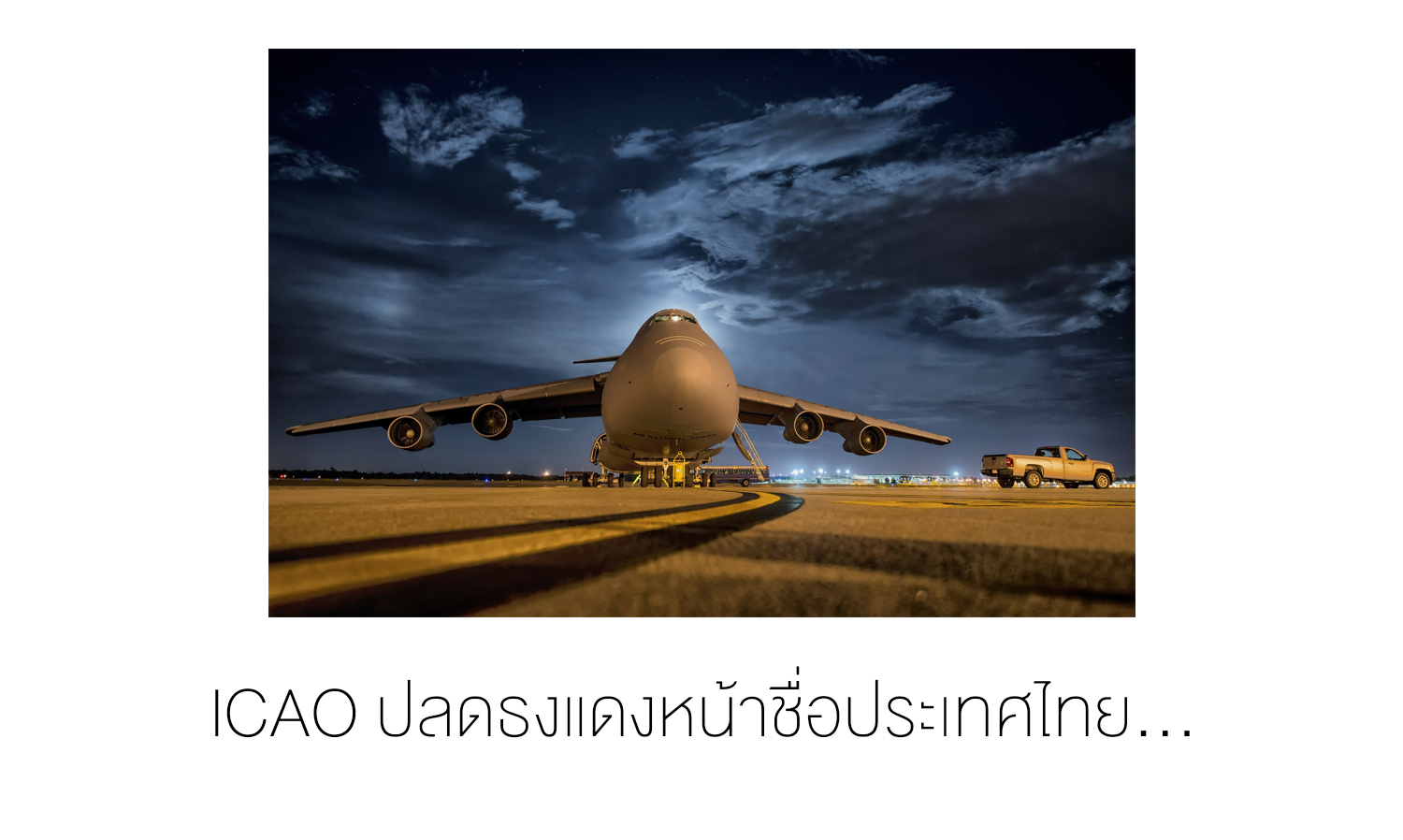
ICAO Lifts Red Flag from Thailand's Name...
- Latest Situation: ICAO has removed the red flag from Thailand's name on its website after having raised it since June 2015, which led to various challenges for Thailand's aviation business. This included the FAA downgrading the safety standard of air transport to below standard (Category 2), resulting in an opportunity cost of over 11.3 billion baht for Thai airlines over the past two years.
- The lifting of the ICAO red flag is expected to lead Japan, South Korea, and the FAA to lift flight restrictions on Thai airlines, resulting in a more vibrant aviation situation in Thailand. It is anticipated that the Thai airline business will generate revenues of 278.9 billion baht in 2017 and may reach 294.5 billion baht in 2018, which is higher than the scenario where ICAO remained flagged, amounting to 1.3 billion and 8.4 billion baht respectively.
- The removal of the red flag by ICAO is likely to boost confidence in the overall Thai aviation industry and support Thailand's goal of becoming a regional aviation hub, ultimately laying a crucial foundation for the development of the U-Tapao Aerotropolis, which the government aims to use as a key mechanism to drive the EEC and the country's economy in the future.
This is very good news as the International Civil Aviation Organization (ICAO) has lifted the red flag from Thailand's name on its website after having raised it since June 2015, which led to continuous challenges for Thai airlines, including the downgrade of the safety standard from normal (Category 1) to below standard (Category 2) by the Federal Aviation Administration (FAA) and international concerns regarding safety standards. This resulted in increased ramp inspections of Thai aircraft at international airports. Although the impact was limited to operational restrictions from Japan and South Korea due to the ICAO issue[1] and from the United States regarding the FAA issue[2], the impact on image lasted over 2 years, posing a significant obstacle to the growth of Thai airlines, as the government aimed for the aviation industry to be a key mechanism in driving the EEC and the country's economy in the future.
Watch for the reactions from Japan, South Korea, and the FAA following ICAO's lifting of the red flag from Thailand's name.
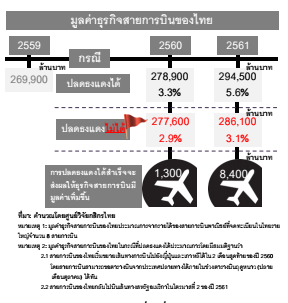
It is expected to result in an increase of over 1.3 billion baht in revenue for the aviation business in the last quarter of the year.
#Terraads
Regarding the impact on Thai airlines from the flight restrictions, since ICAO issued warnings about Thailand's aviation safety standards to member states in March 2015, the total opportunity cost for Thai airlines has exceeded 11.3 billion baht over a period of 2 years and 7 months. It is expected that member states like Japan and South Korea will...
Therefore, the Kasikorn Research Center believes that the aviation situation in Thailand in the last quarter of 2017, after ICAO lifted the red flag from Thailand's name, will grow more vigorously than before, continuing into 2018, allowing Thai airlines to reach their full potential. It is anticipated that the Thai airline business will generate approximately 278.9 billion baht in 2017 and may reach 294.5 billion baht in 2018, which is higher than the scenario where ICAO remained flagged, amounting to 1.3 billion and 8.4 billion baht respectively.
Additionally, the lifting of the red flag by ICAO will restore confidence in Thai airlines and serve as a crucial supporting factor for government policies aimed at making the aviation industry a key driver for the EEC project or the Eastern Economic Corridor through the Aerotropolis project.
Confidence in the safety standards of Thai aviation...
Key foundation for the development of U-Tapao Aerotropolis.
The U-Tapao Aerotropolis or aviation city is a strategic project that the government expects to be a key mechanism for developing the EEC, aimed at attracting investments in high-tech and innovative industries, which will enhance the country's capabilities after Thailand faced economic slowdown challenges in the past. The U-Tapao Aerotropolis will leverage the connectivity of U-Tapao airport to attract investments, creating a central economic city with the airport as the core for surrounding businesses and industries. The airport's connectivity will not only bring in flights, tourists, and air freight leading to commercial development but will also attract large foreign investments in industries that rely on the airport for connections to key suppliers and markets worldwide.
The lifting of the red flag from Thailand's name by ICAO will drive confidence in the overall Thai aviation industry, as ICAO will confirm the good governance of the state regarding aviation standards, including air navigation, airports, and ground services, aligning with Thailand's commitment to becoming a regional aviation hub. This will reflect on the production chain of the aviation industry as a whole, such as ground service businesses, warehousing, aircraft maintenance, repair, and overhaul (MRO), and aircraft parts manufacturing, expanding in the same direction, ultimately pushing the U-Tapao Aerotropolis to become a tangible reality. Currently, large global investment groups from China, France, and Sweden have shown interest in investing in logistics, aircraft maintenance, and aircraft parts manufacturing in the area. Furthermore, in the future, the U-Tapao Aerotropolis will help attract investments in industries that rely heavily on air transport, which will be a crucial foundation for the continued development of the EEC in the future.
In summary, the lifting of the red flag from Thailand's name will not only positively impact the airline business but will also be a significant part of the overall aviation industry in Thailand, which is crucial for creating an aviation city that will serve as the main hub to attract foreign investment and innovation, transforming Thailand's manufacturing sector into the digital technology era, bringing sustainable economic benefits and immense value that is hard to quantify.
Thank you for the information from www.kasikornresearch.com