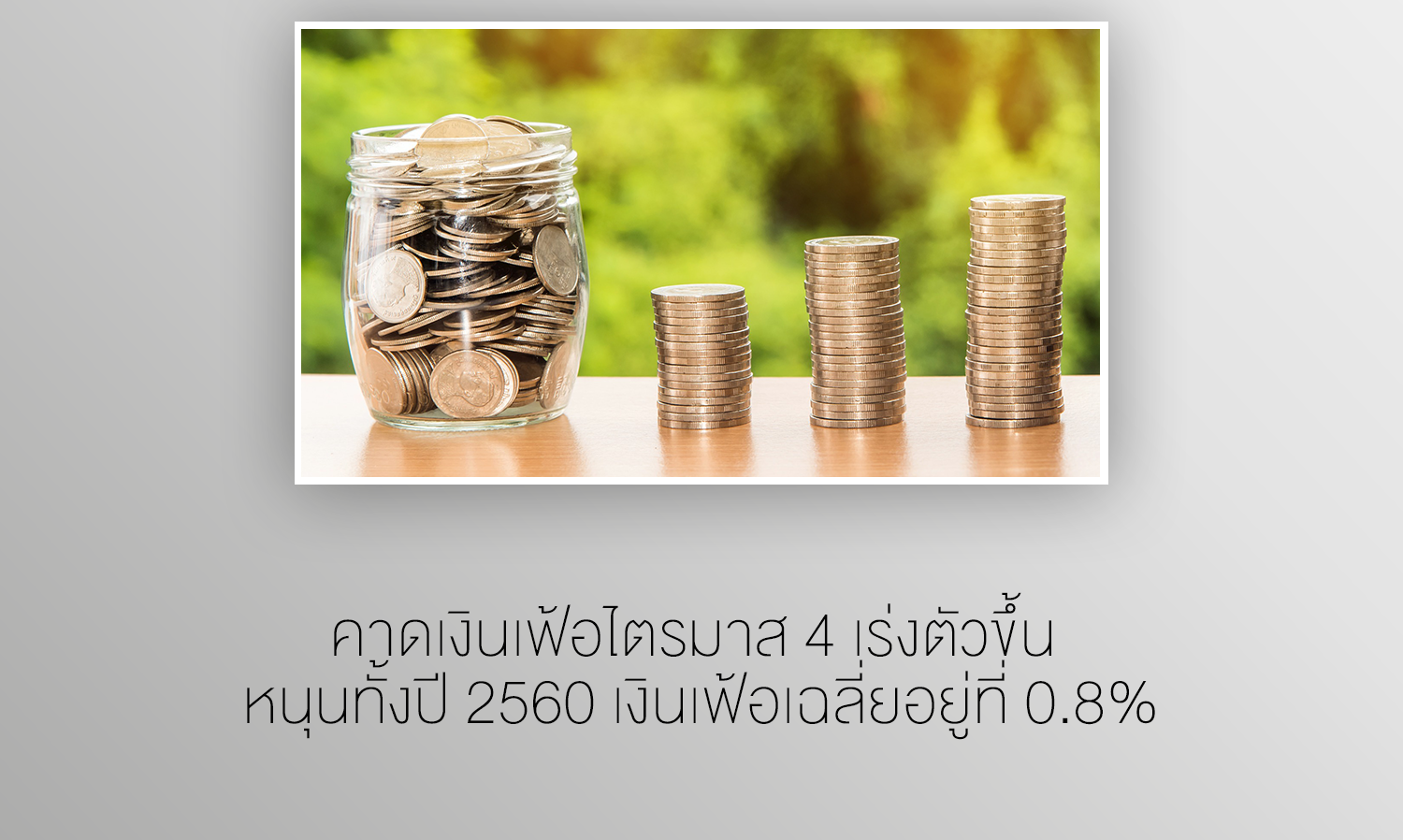
Inflation Expected to Rise in Q4, Supporting an Average Annual Inflation Rate of 0.8% for 2017
The general inflation rate for September 2017 increased to 0.86% YoY, higher than the average of 0.56% during the first eight months of the year. This marks the fastest month-on-month increase in 66 months (since March 2012), driven by rising electricity costs, energy prices, as well as the prices of tobacco and alcoholic beverages.
Global crude oil prices have been on the rise over the past 2-3 months, pushing domestic energy costs higher. This has led to increases in prices of products linked to oil prices, such as electricity, liquefied petroleum gas (LPG), natural gas for vehicles (NGV), domestic retail fuel prices, as well as fares for Chao Phraya Express Boats and cross-river ferries, which all saw price hikes in September.
|
Product |
Price Increase |
Effective Date |
|
FT Rate for September-December 2017 |
|
September 1, 2017 |
|
Price of LPG |
|
September 6, 2017 |
|
Fares for Express Boats and Ferries |
|
September 14, 2017 |
Source: Compiled by Kasikorn Research Center
Additionally, the price index for tobacco and alcoholic beverages rose by 1.94% MoM due to the restructuring of excise taxes based on a new tax base and new rates. This increase in prices for tobacco and alcoholic beverages is a one-time adjustment, which is expected to affect the month-on-month inflation rate during September-October. Meanwhile, automotive manufacturers continue to keep retail car prices stable despite increased tax burdens from the excise tax restructuring.
In the final quarter of 2017, several factors are expected to push prices of certain goods higher, including:
Rising energy prices, following the trend of Dubai crude oil prices projected to be in the range of $50-53 per barrel during the final quarter of 2017, which is higher than the average of $47.9 per barrel during the same period last year. This will lead to higher domestic retail fuel prices, including LPG and NGV prices compared to the same time last year.
Public transport fares are also expected to rise in the final quarter. For instance, BTS fares will increase by 1-3 baht per person per trip starting October 1, 2017. Additionally, changes in public transport welfare policies, such as the removal of free rides on non-air-conditioned buses and third-class trains, which previously allowed all citizens to ride for free, may result in deductions from the state welfare card for low-income individuals, potentially leading to an increase in the public transport fare index in the inflation basket.
Moreover, the effects of the excise tax restructuring are likely to reflect in the consumer price index in October 2017 as well.
The Kasikorn Research Center believes that the factors mentioned above will likely push the general inflation rate in Q4/2017 above 1.0%, but the impact is expected to be limited. This is because some consumers are supported by government measures to assist low-income individuals, which should help alleviate the burden of rising living costs from increased product prices. Additionally, given the current market conditions, consumers remain cautious about spending, leading most businesses to refrain from raising prices. As a result, the average inflation rate for the entire year of 2017 is still estimated at 0.8%.
Thank you for the information from www.kasikornresearch.com