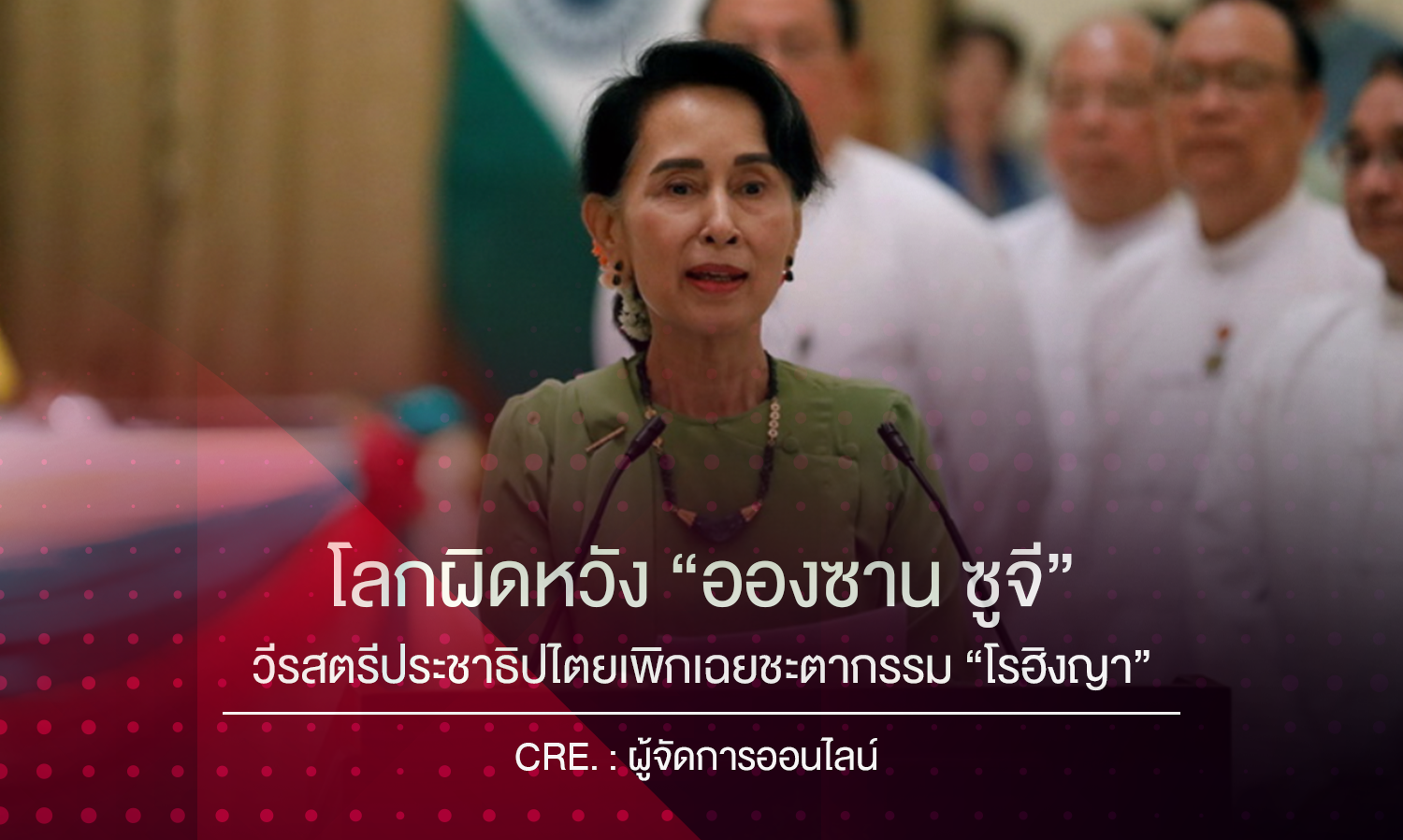
The World Disappointed: Aung San Suu Kyi, the Democratic Heroine, Ignores the Fate of the Rohingya
A humanitarian crisis that has captured global attention has unfolded as the Myanmar military has aggressively targeted the Rohingya Muslims in Rakhine State, forcing hundreds of thousands to flee to Bangladesh in recent days. Human rights activists have exposed the plight of this stateless Muslim group, which is falling victim to mass killings, torture, rape, and the destruction of homes that could escalate to genocide.
The Myanmar government claims that security forces are conducting operations against "Bengali terrorists" who have been attacking police stations and military camps since October of last year. The term "Bengali" is used by Myanmar to refer to the Rohingya, implying that they are merely foreigners and illegal immigrants rather than indigenous Myanmar citizens.
Leaders of several Muslim countries have condemned the violence, and the most heavily criticized figure is undoubtedly Aung San Suu Kyi, the Nobel Peace Prize laureate of 1991, who currently serves as Myanmar's State Counsellor and can be considered the de facto leader of the country (she is barred from holding the presidency due to her foreign spouse and children).
For over two decades, Suu Kyi has been internationally celebrated as a heroine and a champion of democracy who never succumbed to the military dictatorship that has dominated Myanmar's politics for decades. She is regarded as the "Nelson Mandela" of Asia, showcasing the beauty and power of morality to the world.
However, when faced with the issues between Myanmar's Buddhists and the Rohingya minority, Suu Kyi's morality and willingness to compromise seem to have noticeably faded.
The population of Myanmar is divided into dozens of ethnic groups, but none have been as neglected and despised as the Rohingya, especially after the military government revoked their citizenship rights in 1982.
Observers point out that the escalating unrest between Buddhists and Muslims in Rakhine State is not due to the influence of foreign Islamists, but rather a result of decades of oppressive policies that Myanmar has imposed on the Rohingya.
Human rights organizations have long warned about the vulnerability of the Rohingya community in Myanmar. In 2015, the U.S. Holocaust Memorial Museum ranked Myanmar as the country most at risk of genocide in the world.
A new wave of violence in Rakhine State erupted after armed Rohingya groups attacked police and military camps on August 25, leading to clashes and military operations that have claimed at least 400 lives.
Myanmar blames the armed Rohingya groups for burning homes and killing innocent civilians, but human rights observers and Rohingya refugees who fled to Bangladesh assert that the Myanmar military has used brutal force to drive them out.
Yanghee Lee, the UN Special Rapporteur on the situation of human rights in Myanmar, stated, “Leaders must reach out to protect the people under their legal jurisdiction. This is what we expect from every government.”
Malala Yousafzai, the youngest Nobel Peace Prize laureate from Pakistan, tweeted urging Suu Kyi to condemn the shameful treatment of Rohingya Muslims in Myanmar, emphasizing that the world is waiting for the democratic heroine to take a stand. UN Secretary-General Antonio Guterres also pressured Suu Kyi to urgently halt the brutal crackdown on the Rohingya.
After facing heavy criticism from foreign governments and international organizations, on September 6, Aung San Suu Kyi spoke about the violence for the first time, claiming that "terrorists" were trying to spread "false news" distorting the truth about Myanmar's treatment of minorities, while asserting that "the Myanmar government is protecting everyone in Rakhine State to the best of its ability," without explaining why over 140,000 Rohingya had to flee to Bangladesh.
Supporters of Suu Kyi attempt to justify her silence, arguing that she has only recently gained freedom from house arrest and must carefully navigate her stance to avoid conflict with the Myanmar military and the nationalist Buddhist groups that support the military's actions.
However, Suu Kyi has not only ignored the fate of the Rohingya but has also failed to use her power to facilitate humanitarian aid and has not allowed independent media to investigate the situation in Rakhine State.
George Monbiot, a columnist for The Guardian, remarked, “I understand that the military still holds significant power in Myanmar, and Aung San Suu Kyi cannot fully control them. I understand that she can do little, but there are legal measures and practices she could employ to curb the violence. Importantly, she has the power to speak out, yet instead of using this power for good, she chooses to remain silent, denying well-documented evidence and obstructing humanitarian aid.”
Previously, Suu Kyi's office denied reports of Rohingya women being raped by Myanmar soldiers, labeling it as a "fabrication by terrorists" and accusing the media and the UN of exaggerating the suffering of the Rohingya.
Foreign media reported last year that Suu Kyi had requested the United States to stop mentioning "Rohingya," reflecting the Myanmar government's stance that denies the existence of this ethnic group.
The Islamic Educational, Scientific and Cultural Organization (ISESCO) issued a statement calling for the Nobel Committee to revoke the Peace Prize awarded to Aung San Suu Kyi in 1991, arguing that she lacks the qualifications to hold this prestigious award.
“Her silence is merely the smallest sin and indicates that she is beginning to learn to be neutral... but in reality, Aung San Suu Kyi's stance is not neutral. She has chosen to support nationalist Buddhists and Islamophobia without reflection,” commented Mehdi Hasan from The Intercept.