SENA Identifies Shift in Housing Market from 'Loan Denial' to 'Fear of Borrowing', Promotes LivNex as a Safe Space for Aspiring Homeowners
Sena Development points out that the housing market is shifting from 'loan denial' to 'fear of borrowing' as it observes a phenomenon of Self-Rejection, where customers decline themselves before the transfer, accounting for about 50% of all transfer denials, surpassing Bank Rejects at around 40%. This reflects that Thai people have not stopped wanting to own homes, but are concerned about long-term repayment burdens. LivNex, a rent-to-save housing model, is being promoted as a Safe Zone for consumers to test living, try repayments, and build confidence before making a real purchase decision.
Associate Professor Dr. Kesara Thanyalakphak (Dr. Yui), Managing Director of Sena Development Public Company Limited, stated, 'The housing market today is not only facing the issue of loan denials but is also confronting the problem of people who are 'afraid to start'. In a time of high living costs, uncertain incomes, and ongoing household debt pressures, purchasing a home, which is a long-term commitment of 20-30 years, leads many consumers to question whether they can truly afford the repayments. Thai people have not given up on the dream of owning a home; it remains a fundamental need and a valuable asset for many families. However, what has diminished is the confidence to start. The issue is not just about being unable to borrow, but rather about not daring to borrow. The market's challenge is shifting from 'unable to buy' to 'unsure about buying.'
Data shows that Self-Rejection is becoming one of the main reasons for not transferring ownership, accounting for about 50% of all transfer denials, surpassing the problem of Bank Rejects at around 40% and general change of mind at about 10%. This group of customers is not without the desire to buy; many have already selected units, made deposits, viewed actual rooms, and prepared to enter the bank loan process, but decide to cancel in the last 30 days before transfer. This indicates that the problem lies not only with the product but also with uncertainties regarding future financial stability, such as job security, long-term repayment burdens, or concerns about being able to manage a 20-30 year debt.

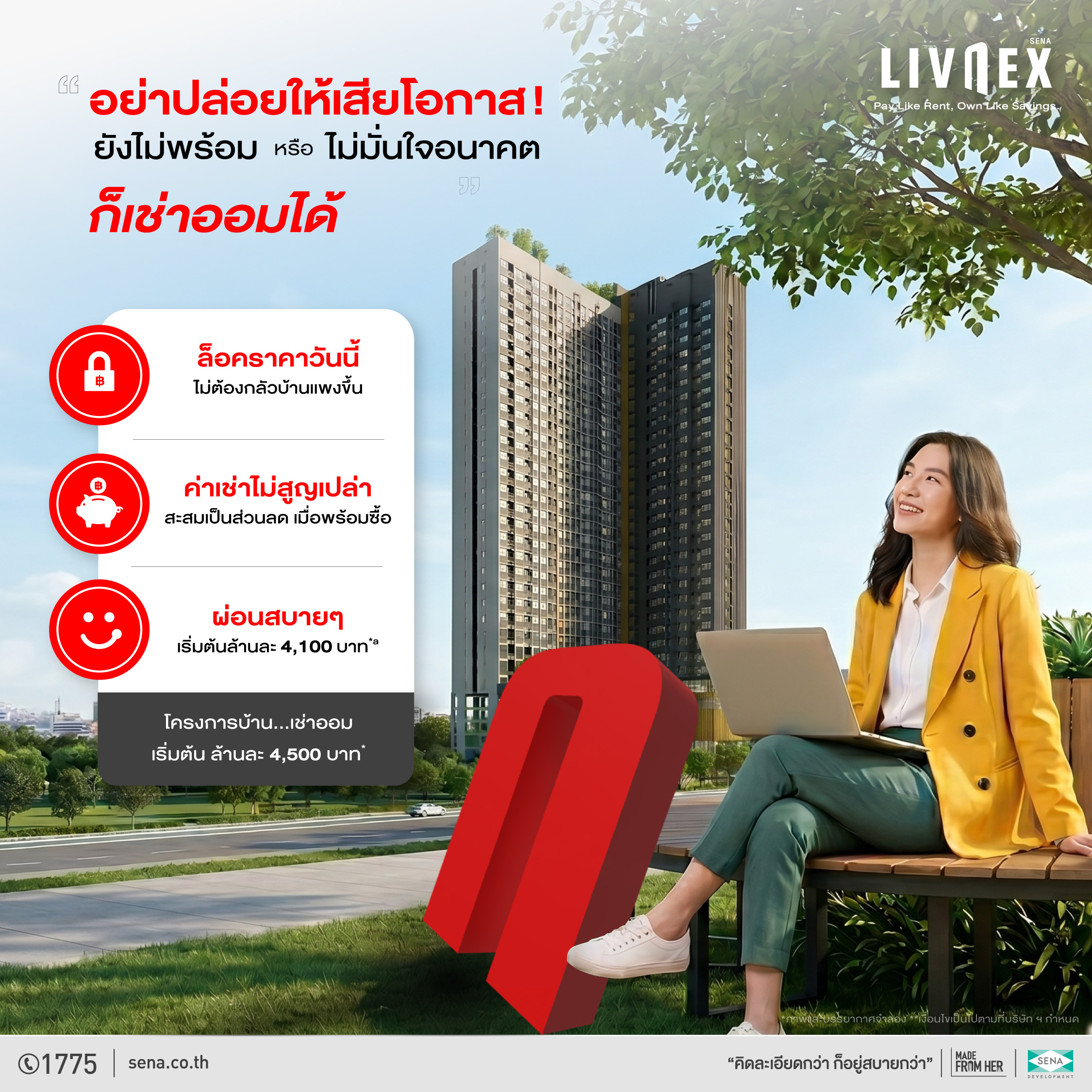
One of Sena's approaches is LivNex, a rent-to-save housing model originally designed to assist customers who are unable to borrow or are not ready to buy a home immediately. However, as consumer behavior has changed, LivNex has expanded its role to include those who 'can borrow but are afraid to borrow' or are still unsure about managing long-term commitments. LivNex serves as a 'Safe Zone' for those who want to own a home but are not yet fully ready, allowing customers to move in, experience real life, try actual repayments, and assess their readiness before committing to long-term debt. This model also allows customers to lock in home prices from today, with payments made during the first three years being deducted from the principal price of the home. After completing three years of payments, the home price will decrease by an average of about 9%. Additionally, timely repayments help build a good Credit Pattern or payment history, which can be used as evidence when applying for loans with banks in the future.
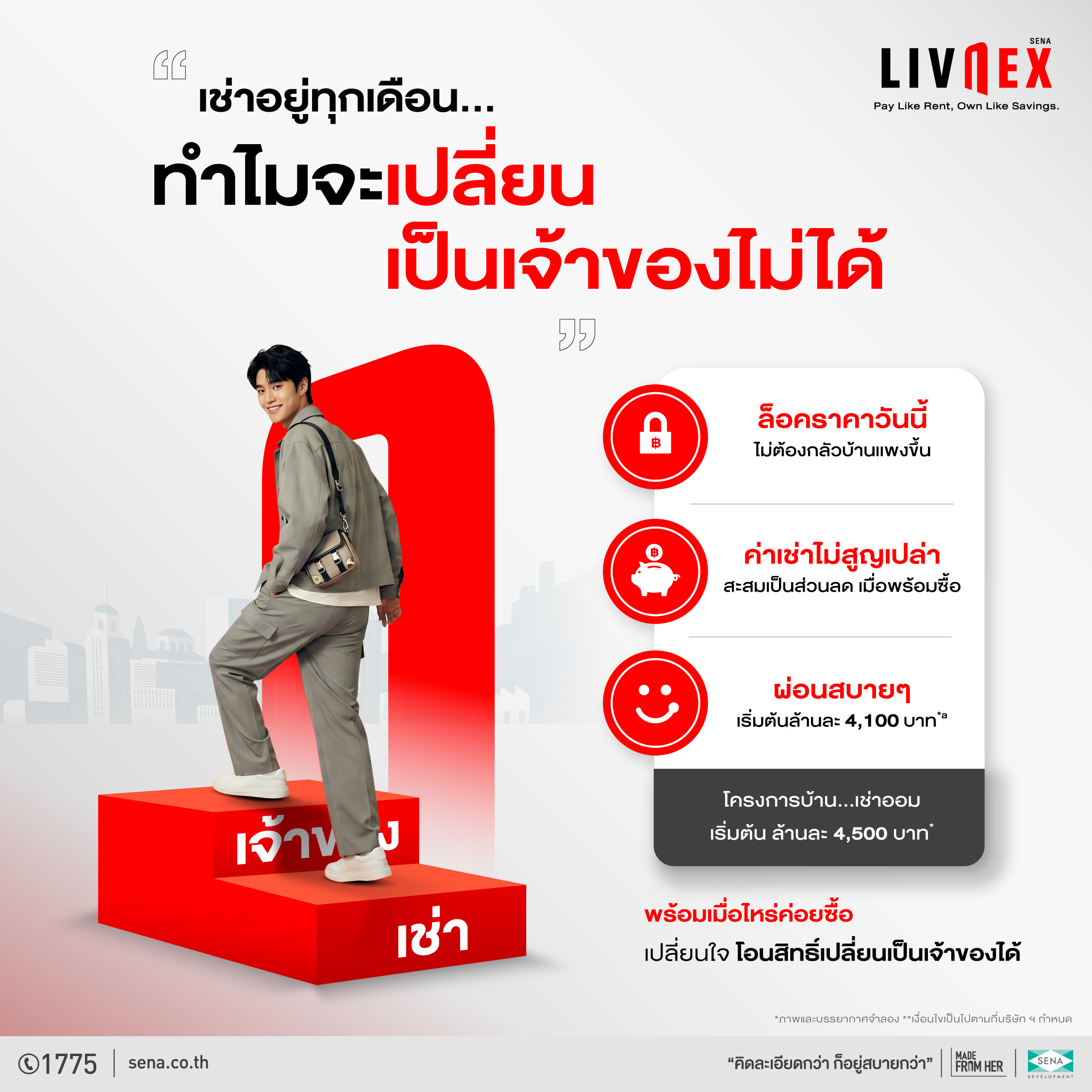
Moreover, if customers find themselves unprepared or change their minds along the way, they can terminate the contract without bearing the burden of long-term debt from day one. This makes LivNex a choice that helps reduce the pressure of deciding to buy a home and gives consumers time to plan before stepping into actual homeownership. LivNex is not just a business model but a solution that mitigates risks for consumers, developers, and financial institutions alike. When customers can test living, try repayments, and assess their readiness beforehand, the chances of incurring bad debt or NPLs in the future may decrease.
'Our goal is not just to close sales but to help customers achieve sustainable homeownership. A home should not be a source of fear but a starting point for stability in life. LivNex is an effort to transform Self-Rejection into Self-Confidence, changing from fear of starting to gradually beginning with confidence,' concluded Associate Professor Dr. Kesara.