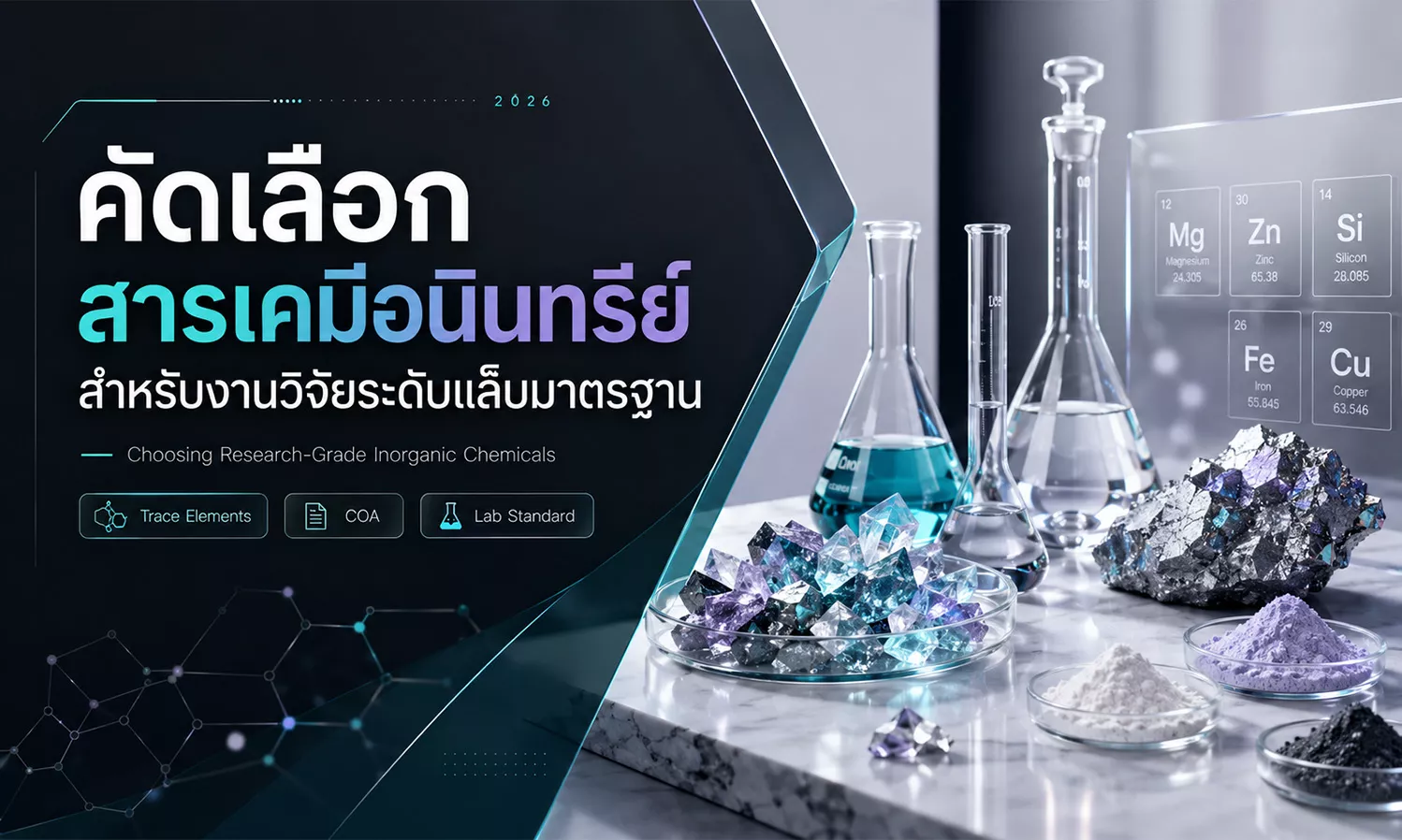
Selection of Inorganic Chemicals for Standard Laboratory Research
The failure to replicate experimental results (Replication Crisis) is one of the major issues causing significant losses in both budget and time for educational institutions and research laboratories worldwide. Often, scientific hypotheses are correct and research methodologies are flawless, yet the outcomes are regrettably inconsistent. A frequently overlooked causal variable is the quality of the starting materials at the molecular level.
Purchasing inorganic chemicals for research that are substandard or contain minimal contaminants can alter the chemical structure of reactions and completely undermine the credibility of the research. Therefore, the criteria for selecting chemicals for organizations must be systematic and delve deeper than merely considering the cost of materials.
1. Trace Element Purity and Lot-to-Lot Consistency
In advanced analyses, such as using ICP-MS or synthesizing nanomaterials, contaminants as low as one part per million (ppm) or one part per billion (ppb) can hinder catalytic reactions or create noise in measurement systems. High-standard laboratories specifically choose ultra-pure inorganic chemicals (Ultra-pure or Suprapur) for their research.
In addition to basic purity, researchers must verify the consistency of substances in each production lot (Lot-to-Lot Consistency). Chemicals with variable properties between lots can lead to discrepancies in experimental results from one month to the next, posing a significant barrier to publishing in international academic journals.
2. Traceability and Documentation Certification (COA)
Elevating laboratories to ISO/IEC 17025 standards mandates that every step must be transparently traceable. Therefore, purchasing inorganic chemicals for research cannot rely on unverified sources.
Each bottle must come with a Certificate of Analysis (COA) and Safety Data Sheet (SDS) detailing the amounts of each contaminant. This information is crucial for the Principal Investigator (PI) to calculate the proportions of chemicals and record them in the logbook to support quality assessments and confirm that the chemicals used meet the purity requirements of the research grant.
3. Specialized Packaging and Supply Chain Management
Many inorganic chemicals are sensitive to moisture, light, or oxidation reactions. Packaging serves as the final barrier to maintain the quality of the substances until they are activated. Leading research-grade chemicals are often packaged in thick borosilicate glass bottles or fluoropolymer (FEP/PFA) plastic bottles that do not leach metal ions into the solutions.
Moreover, sourcing inorganic chemicals for research requires selecting suppliers with temperature and humidity-controlled transportation and storage systems. Heat during transport in Thailand's climate can alter the state or accelerate the degradation of certain chemicals faster than expected.
Driving innovation and new knowledge within universities or research institutions requires a solid foundation from reliable starting materials. Shifting the perspective from commercial purchasing to selecting inorganic chemicals for research based on scientific principles and international standards certification is the highest return on investment to protect researchers' time, ensure the accuracy of their work, and build credibility for institutions on the global academic stage.