Sansiri Unveils Real Estate Reset Concept: Homes as the Starting Point for Sustainability at EARTH JUMP 2026
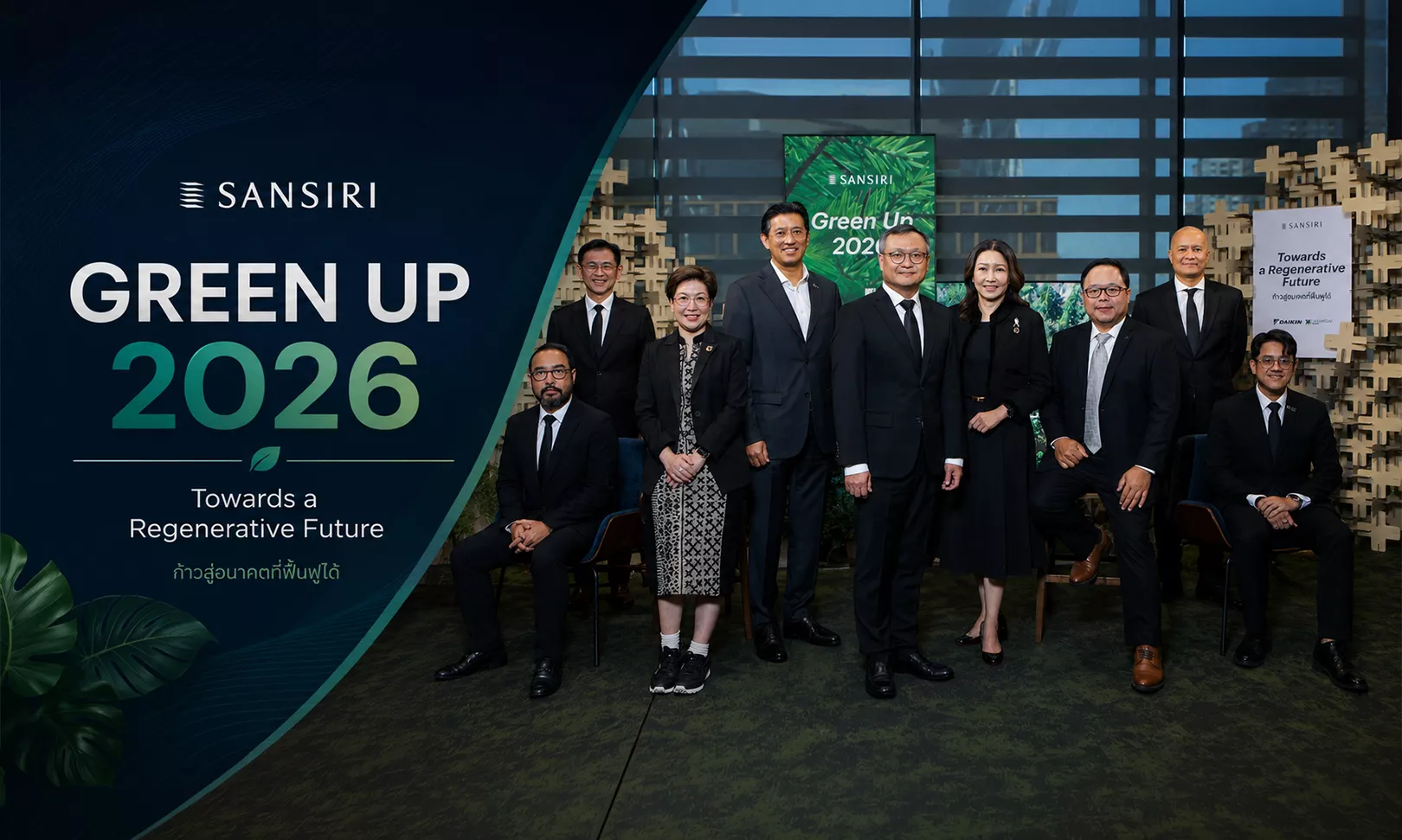
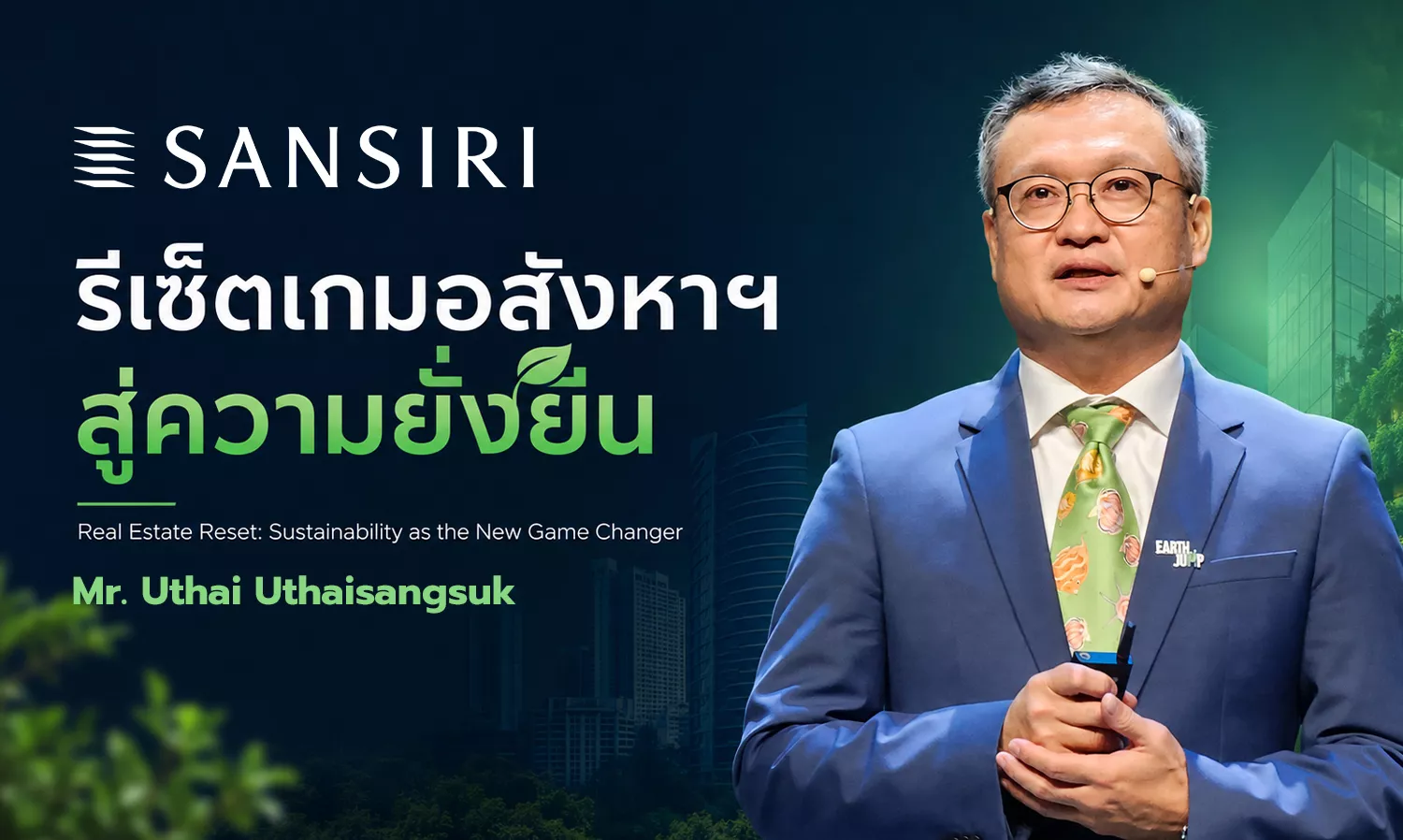
Sansiri has introduced the Real Estate Reset concept, emphasizing that homes are not just places to live but the starting point for sustainability at the EARTH JUMP 2026 event. The discussion, led by Mr. Uthai Uthaisangsuak, CEO of Sansiri Public Company Limited, focused on transforming the real estate business through sustainability.
Today, the new game in the Thai real estate business must prioritize location, price, design, and the creation of homes that are beneficial for life, the environment, and the future of the industry. Mr. Uthai highlighted that "a home is the beginning of a happy life," which for Sansiri means that a home is not merely a product delivered to customers but a space connected to quality of life, health, energy, the environment, and the long-term future of people.
✨ Over its 40 years of operation, Sansiri has consistently prioritized social and environmental care, collaborating with UNICEF to support children, youth, education, and communities. A significant turning point occurred after the COP26 conference in 2021, where climate change emerged as a major challenge for all industries. This prompted Sansiri to question how much impact the real estate business has on the environment and how to mitigate that impact.
Through a Carbon Footprint assessment, Sansiri found that residential project development must consider the entire lifecycle of a home, from design and material selection to construction and long-term energy use by residents. The company identified a greenhouse gas emission baseline of approximately 2.2 million tons of CO2 equivalent per year, which has become the starting point for their Net Zero goal by 2050.
Sansiri's Green Framework encompasses three main pillars:
▪️ Architectural design and aesthetics
▪️ Material selection
▪️ Construction processes
The core principle is to design homes suitable for Thailand's hot climate. Homes should not only be beautiful but also help reduce heat, promote air circulation, decrease reliance on air conditioning, and improve residents' quality of life. In terms of health, Sansiri emphasizes PM2.5 levels, indoor air quality, low VOC materials, and Universal Design concepts to ensure homes cater to people of all ages. Because a "sustainable home" is one that is good for the environment and also enhances the daily lives of its residents.
♻️ Another crucial aspect is reducing waste in the construction process, minimizing waste, cutting costs, and lessening impacts. Previously, construction projects could generate waste levels exceeding ten percent, but with improved management and efficient production systems, such as precast factories, some processes have reduced waste to about 1-2%. This demonstrates that sustainability is not merely a cost burden but can be directly linked to business efficiency.
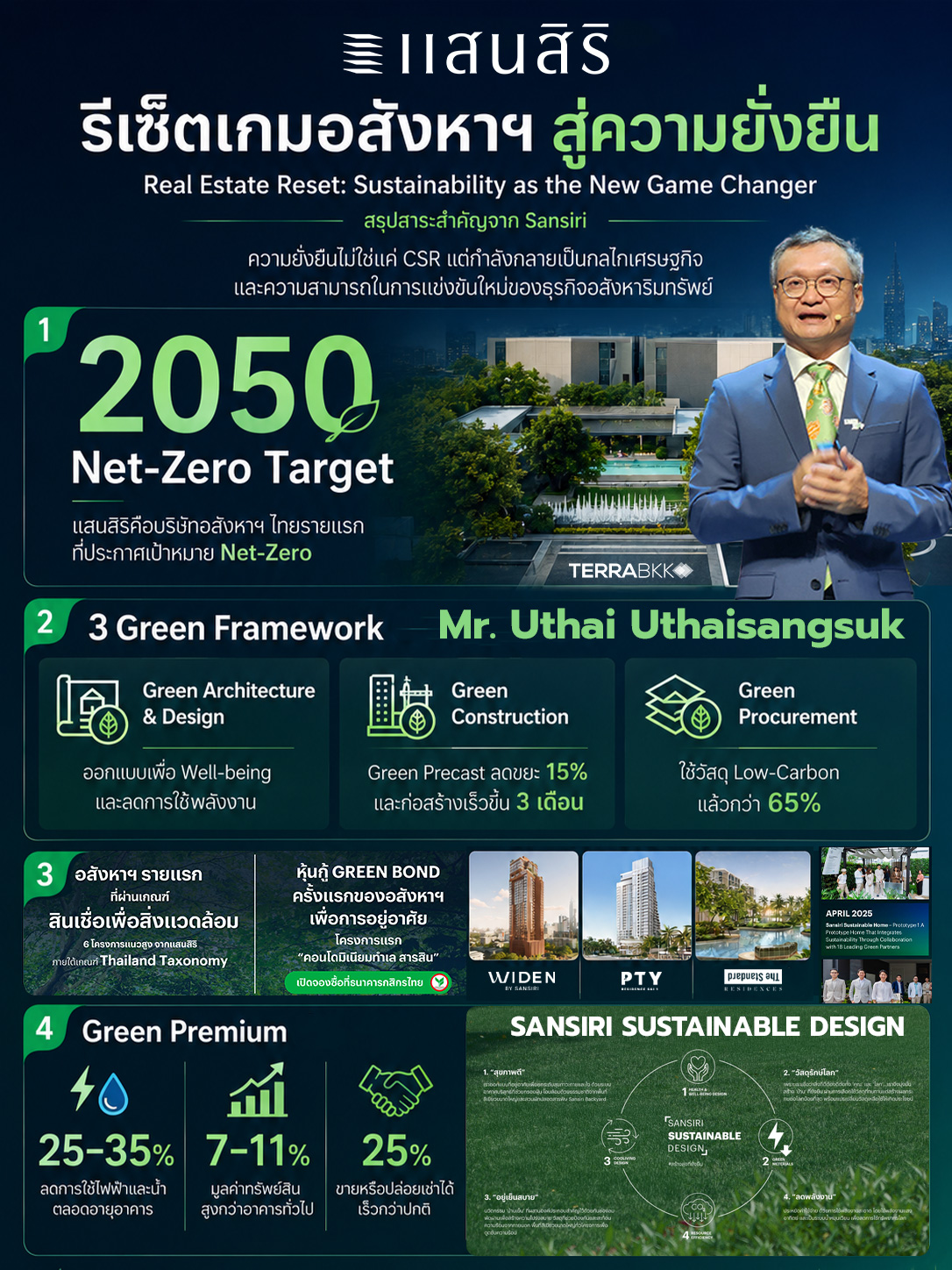
⚡ Sansiri is advancing technologies for more energy-efficient living, including solar cells, EV chargers, green spaces, and materials that help reduce heat entering buildings. The goal is to lower the organization's carbon footprint while also reducing residents' long-term expenses, including electricity, common area fees, and living costs.
One significant step for Sansiri is linking sustainability with the financial sector through Green Loans in collaboration with Kasikorn Bank, adhering to the Thailand Taxonomy criteria. Sansiri is the first real estate company to meet the environmental loan criteria for six condominium projects under the Thailand Taxonomy.
Sansiri has secured Green Loans worth over 4 billion baht for three model condominium projects, with a total project value of 11.5 billion baht, including:
▪️ PTY Residence Sai 1, Pattaya
▪️ The Standard Residences Hua Hin
▪️ WIDEN by Sansiri, Nang Linchi
Additionally, the first GREEN BOND for residential real estate has been issued for a condominium project in the Sarasin area, available for purchase through Kasikorn Bank. This project meets environmental assessment criteria, such as emission intensity (the concentration of greenhouse gas emissions per square meter per year) and has been verified by Bureau Veritas, a global standards verification organization. Therefore, in the future, projects that reduce carbon emissions, utilize energy efficiently, and meet environmental criteria may not only enhance brand image but also become prerequisites for accessing funding, financial costs, and investor credibility.
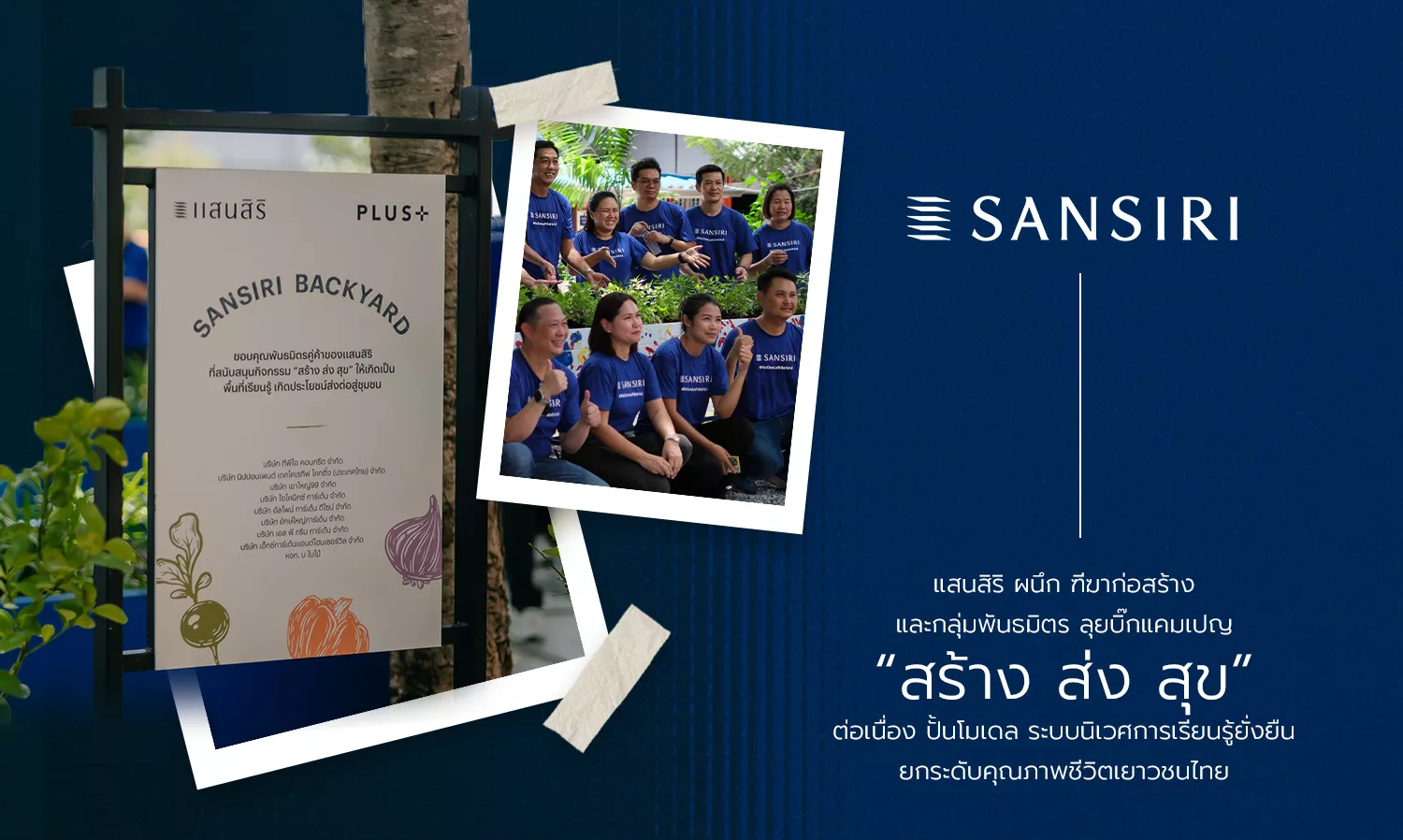
Importantly, sustainability must progress alongside the supply chain, involving cooperation from partners and allies. With approximately 4,000 partners, contractors, material suppliers, and service providers, Sansiri's organizational transition must align both internally and across the entire ecosystem.
One significant example is the development of prototype homes in collaboration with 18 partners from the Green Supply Chain, incorporating dust-free home elements, low VOC materials, solar cells, battery systems, water management, and energy-saving technologies.
These prototype homes can reduce carbon emissions by about 80% compared to conventional homes. Although the commercial costs may not be suitable today, this serves as an important lesson showing that new housing standards can indeed be realized when technology, costs, and market readiness align.
The lesson from Sansiri at the EARTH JUMP 2026 event is that sustainability is not an ancillary task for organizations but must be integrated into design, construction, finance, supply chains, and the resident experience from day one of project development. Ultimately, a good home in the future must help people "live well" while ensuring that our world "survives" together.