WHA Group Advances Green Economy and Environmental Technology
Showcasing comprehensive ESG achievements while elevating WHA to become "Thailand's first industrial estate that develops natural ecosystems and restores biodiversity in a tangible manner."
|
5 Key Strategies Environment, Society, Innovation, Governance, Green Economy |
1,222 MW Renewable energy production target |
24.25 million m³ Reclamation Water target |
10,000 vehicles EV target by 2030 |
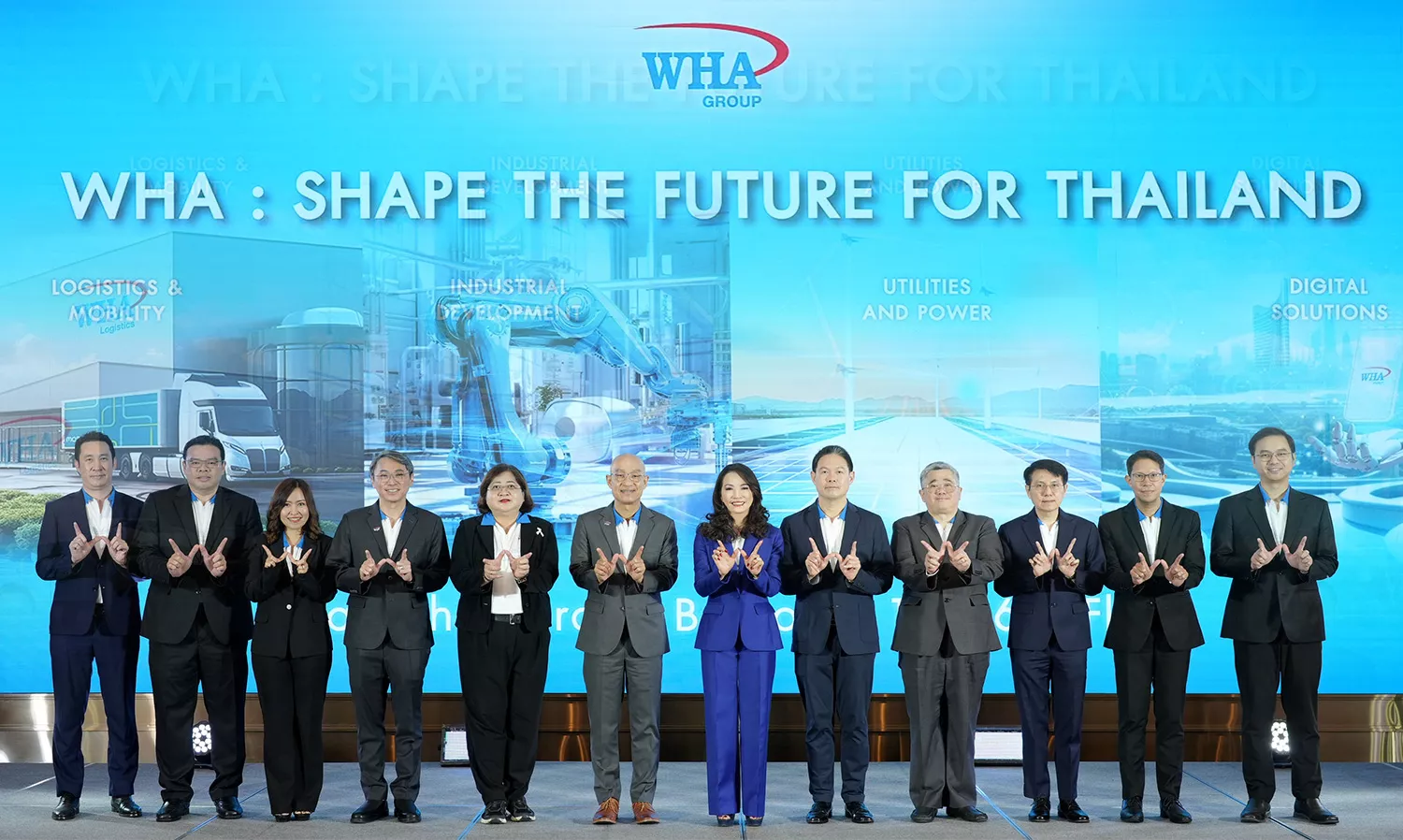
On June 5, 2026, WHA Group elevated its commitment to driving Thailand towards sustainability through five key strategies – environmental care, social empowerment, innovative governance, leadership in the green economy, and promoting sustainability for the country. The company revealed outstanding performance results over the past year in renewable energy, comprehensive water management, and the transition to electric vehicles (EVs), alongside progress on a pilot reforestation project in collaboration with the Mae Fah Luang Foundation under the Royal Patronage at WHA Eastern Seaboard Industrial Estate 2 (WHA ESIE 2), which is the first industrial estate in the country to develop natural ecosystems and restore biodiversity (Biodiversity) in a tangible manner, aligning with the mission to create a Net Positive Impact by 2050, reflecting operations that go beyond mere carbon reduction.
Green Strategies Must Be Profitable: Sustainability that Delivers Business Results
|
“Mr. Pojjavee Phongsivapai, CEO of WHA Industrial Development Public Company Limited (WHAID), stated, “Under the vision of Ms. Jareeporn Jarukornsakul, Chairwoman and CEO of WHA Corporation Public Company Limited (WHA Group), who is committed to being a leader in developing green business models with the 'Green Strategies Must Be Profitable' concept, sustainability is seen as a business opportunity that generates economic returns, reduces environmental impact, and enhances competitiveness simultaneously. This approach not only drives our own business but also aims to play a significant role in accelerating Thailand's transition to a new economy focused on carbon reduction and a circular economy. We are pioneers in applying technology and innovation for carbon reduction, efficient resource use, and circular economy, while creating an ecosystem that supports green technology throughout WHA Group's value chain to tackle global challenges such as climate change, resource security, biodiversity conservation, and increasingly stringent sustainability standards worldwide.” — Mr. Pojjavee Phongsivapai, CEO of WHAID |
Green Business Model Goals and Carbon Reduction Technologies
Under the green business model, WHA Group aims to increase renewable energy production capacity to 1,222 megawatts and enhance water management through Reclamation Water systems to 24.25 million cubic meters, as well as transition to using 10,000 electric vehicles by 2030. Additionally, the company is studying technologies for carbon reduction and future energy transitions, such as SMR power plants, green hydrogen, carbon capture, utilization, and storage (CCUS), and aims to develop a circular economy model to address industrial waste issues, targeting industrial waste management in industrial estates, recycling expired solar panels, and repurposing expired electric vehicle batteries.
Biodiversity Towards Net Positive Impact
|
“In addition to driving carbon reduction and developing green infrastructure according to WHA Group's guidelines, WHAID also emphasizes creating a balance between industrial development and natural resource management. We believe that economic growth and environmental sustainability must go hand in hand. With this concept, WHA has become the first industrial estate developer in Thailand to implement ecosystem development and biodiversity (Biodiversity) in a tangible manner within industrial estate areas, creating a strong, sustainable investment ecosystem ready to support future industries.” — Mr. Pojjavee Phongsivapai, CEO of WHAID |
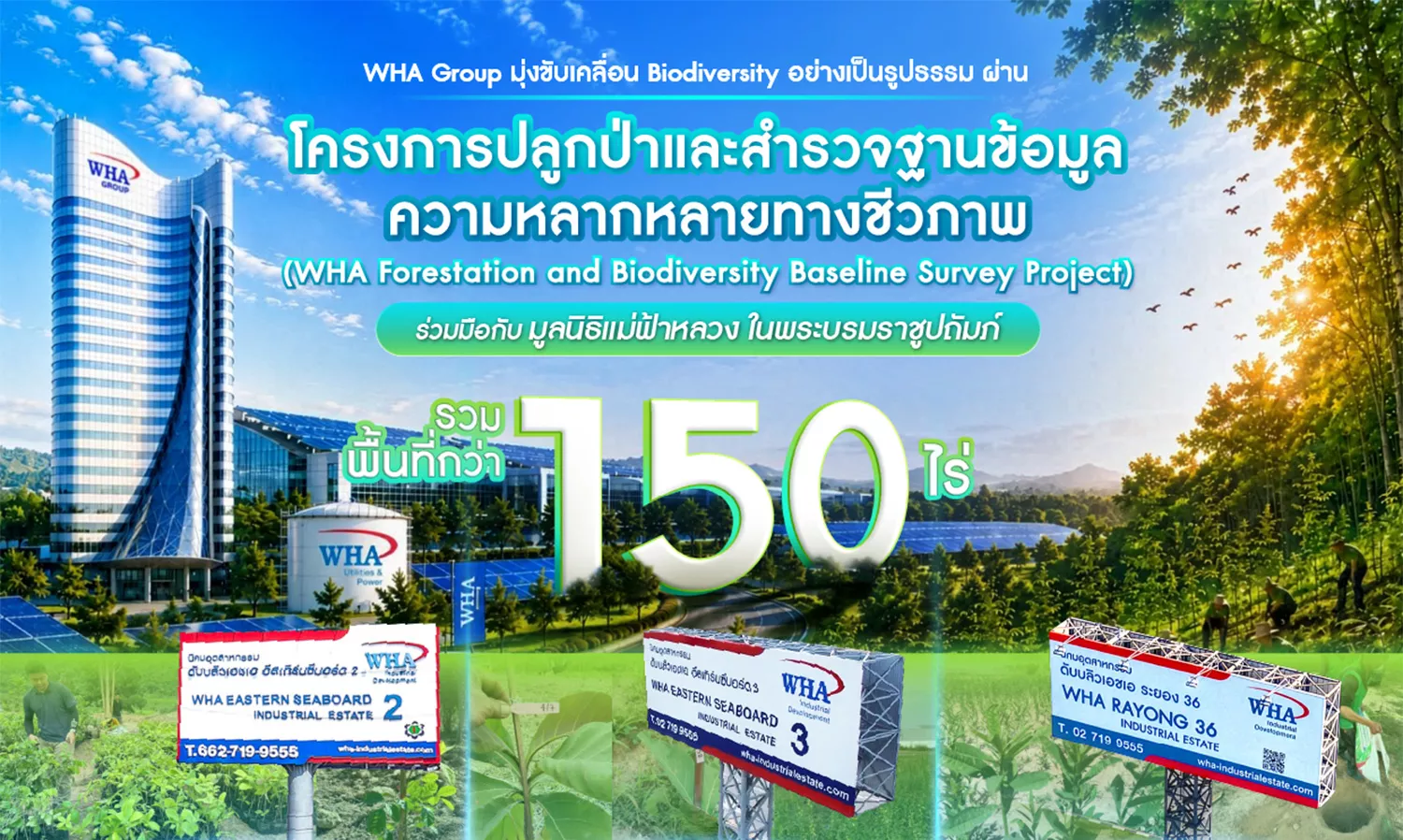
In the context of declining biodiversity globally, including in Thailand, we recognize the importance of accelerating environmental restoration, which is central to creating a 'Net Positive Impact.' This approach aligns with the National Biodiversity Action Plan (2023-2027). We have set a clear target of no net loss of forest area (No Gross Deforestation) by 2030 and achieving a net positive impact on biodiversity (Net Positive Impact on Biodiversity) by 2050, guided by the principles of Avoid, Minimize, Restore, Regenerate, and Transform. We have initiated projects to develop ecosystems and restore biodiversity in industrial estate areas in collaboration with the Mae Fah Luang Foundation on a 150 rai area across three estates in 2025, which will expand to 233 rai across eight estates by 2026,” Mr. Pojjavee added.
Nature-based Solutions and Biodiversity Databases
|
“Mr. Samit Haraeunphit, Chief Nature-based Solutions Officer of the Mae Fah Luang Foundation, explained the principles behind this collaboration: “The ecosystem development and biodiversity restoration project in the green areas of WHA ESIE 2 is a clear example of applying Nature-based Solutions to enhance the quality and biodiversity of green spaces in the industrial estate. We will start the project in 2025 with a Biodiversity Baseline Survey, which will reveal that the area has 89 plant species and 31 bird species, along with moderately organic soil and high density. This 'Baseline' data is crucial for planning systematic restoration. Additionally, there are pilot projects for soil integrity development and restoration through regenerative agriculture and soil improvement concepts in ESIE 3 and WHA Rayong 36 (RY36) to prepare for future tree planting and biodiversity restoration.” — Mr. Samit Haraeunphit, Chief Nature-based Solutions Officer, Mae Fah Luang Foundation |
Reforestation and Ecosystem Restoration Plans in Industrial Estates
With a systematic approach, WHA Group has begun continuous restoration efforts. In 2025, over 15,800 trees were planted on 69 rai of WHA ESIE 2 and WHA ESIE 3. For 2026, an additional 81 rai will be planted in WHA ESIE 2 and RY36. Furthermore, plans are in place to expand to other industrial estates, with additional targets for reforestation and ecosystem restoration of 82 rai within 2026, covering several estates such as WHA Saraburi Industrial Estate (WHA SIL), WHA Chonburi 1 Industrial Estate (CIE1), WHA Eastern Seaboard Industrial Estate (ESIE), WHA Eastern Seaboard 1 Industrial Estate (ESIE1), and WHA Rayong Industrial Estate (RIL), reflecting WHA Group's ongoing commitment to creating positive biodiversity impacts.
Conclusion
With a vision to create a Net Positive Impact and a serious commitment to Nature and Biodiversity, WHA Group is driving economic growth while laying a crucial foundation for future industries that integrate ecosystem development into business operations. This is yet another testament to the commitment to 'Shape the Future for Thailand' by balancing economic, social, and environmental growth for a better future for the next generations.