Thailand Faces Risk of Super El Niño: Businesses Prepare for Extreme Heat and Drought, Including Air Pollution (Kasikorn Research Center Infographic)
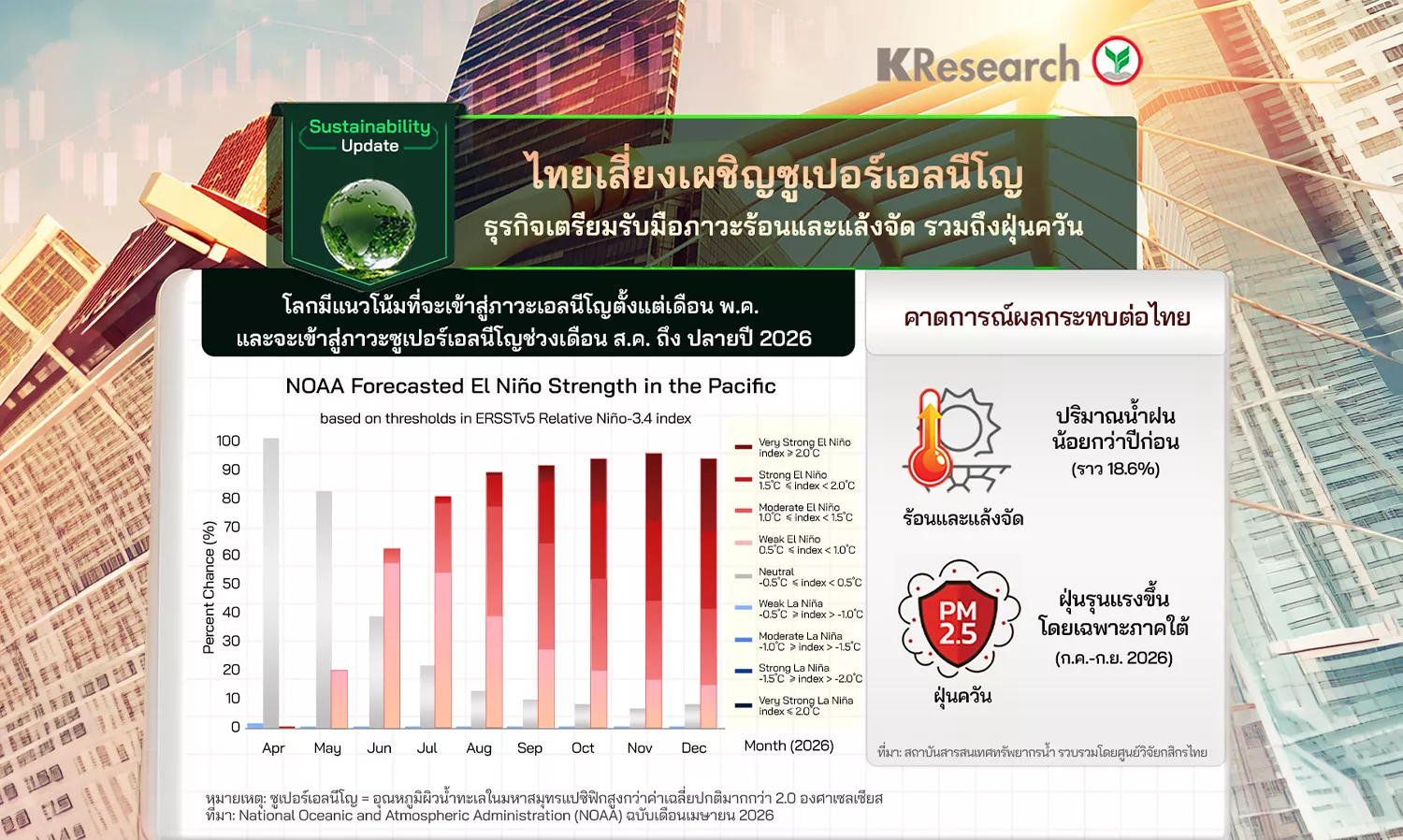
► A report from the National Oceanic and Atmospheric Administration (NOAA) in April 2026 indicates that the world is likely to enter an El Niño phase starting in May 2026, with a transition to a Super El Niño from August to the end of 2026. This could lead Thailand to face extreme heat and severe drought, with rainfall expected to be 1,479 millimeters this year, a decrease of about 18.6% from last year's 1,816 millimeters. The issue of PM2.5 air pollution from transboundary haze may worsen, particularly in the southern region, during July to September 2026.
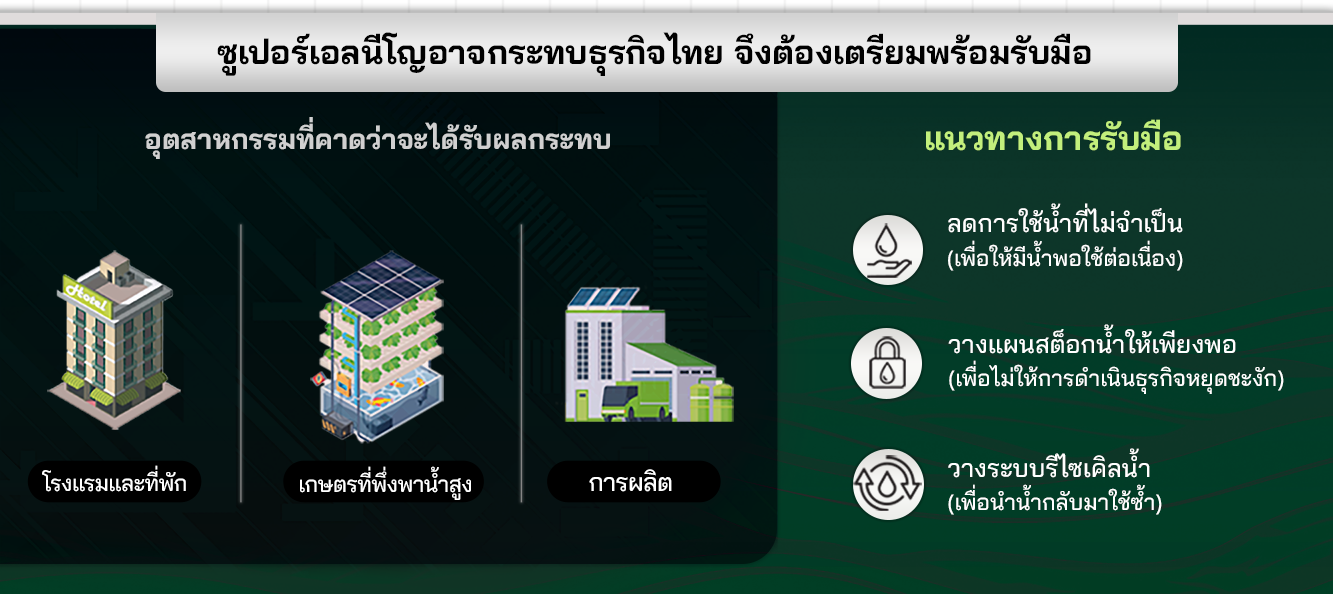
► The Super El Niño phenomenon will impact various sectors of the Thai economy, including: 1) Agriculture, especially rice, sugarcane, and cassava cultivation, which are highly water-dependent; 2) Manufacturing, which may face water shortages in production processes; and 3) Hotels and accommodations, which may experience additional challenges due to air pollution, leading to a decrease in tourist travel and outdoor activities.
► Businesses must prepare to cope with these conditions by starting to reduce unnecessary water usage to ensure a continuous water supply, planning sufficient water stock for consumption to prevent business disruptions, and implementing water recycling systems to reuse water.