The World Shakes, Even in Thailand! The Impact of the Iran-U.S. War Forces Thais to Tighten Their Belts, Real Estate Adopts Strategies to Compete, Offering Affordable Condos and Reviving the Longstay Visa to Attract Foreign Buyers
The condominium market in 2026 continues to face challenges from all sides due to the economic slowdown, compounded by the conflict between Israel, the U.S., and Iran, which directly affects oil prices, product costs, and services. This has raised energy concerns, leading Thais to reduce spending and be more cautious with their finances. In addition to external factors, the delayed formation of the government in the first quarter has impacted private sector confidence, causing delays in investment decisions for high-value assets, especially housing. Despite government efforts to stimulate the market through measures like reducing transfer fees for homes priced below 7 million baht and relaxing LTV criteria, the results have been limited.

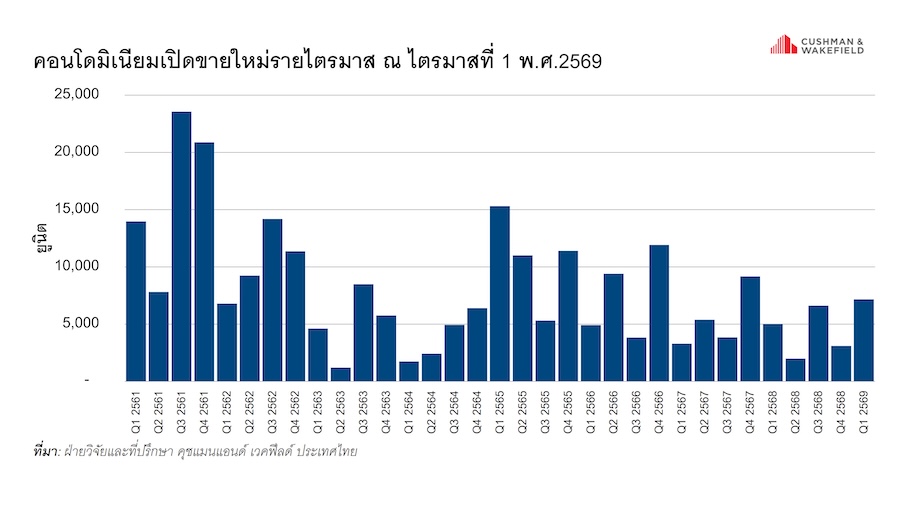
Surachet Kongcheep, Head of Research and Consulting at Cushman & Wakefield Thailand, revealed that in the first quarter of 2026, approximately 7,170 new condominium units were launched, a figure higher than the previous quarter due to the introduction of large projects. However, this increase in supply does not reflect a genuine expansion in purchasing power, as consumers are clearly spending less. Despite operators intensifying their marketing strategies, the results have not met expectations. In the first two months of 2026, there were signs of improvement, with some new condominium projects seeing potential buyers waiting several days to make reservations. While these projects did not sell out, they achieved good sales figures in line with operators' targets. However, the international conflict and rising oil prices have led to concerns about living costs and an unclear economic direction, prompting most operators to adjust their strategies and delay new project launches. It is anticipated that throughout 2026, only 15,000 to 18,000 new condominium units will be launched, although this number could increase depending on economic factors and the war situation in the latter half of the year.
In the first quarter of 2026, operators have been focusing more on affordable projects, resulting in an average selling price for new condominiums of approximately 84,500 baht per square meter, a decrease of about 55% from the previous quarter. Most new projects are located in suburban areas, with several priced below 80,000 baht per square meter. It is expected that price increases will be limited throughout 2026 due to the economic situation and consumer confidence not fully recovering. Operators are choosing to focus on markets they are confident in, launching only projects with distinctive locations and clear concepts while delaying investments in oversupplied areas. However, the foreign market is showing clear positive signals, particularly among those seeking long-term stays or relocating funds for safety, with Thailand being a prominent target due to the "Longstay Visa" policy for purchasing condominiums valued at 3 million baht and above, in collaboration with Thai Longstay Management Co., Ltd. The focus is on projects in major tourist cities such as Bangkok, Phuket, Chiang Mai, and Pattaya. The key target groups include retirees, investors, and digital nomads looking for temporary residence to avoid regional conflicts. It remains to be seen how much this measure will attract foreign purchasing power in the remaining months of the year.
Although rising oil prices will impact inflation, the effect on housing prices may not be as severe as feared, as construction material costs account for only 25% - 30% of project value. If material costs increase by 10% - 20%, it will only affect total costs or profit margins by 2.5% - 6%, a level that operators can still manage. However, if construction material prices continue to rise in the long term, it will inevitably affect future selling prices.
This year, it is expected that condominium selling prices will rise only slightly, as operators are still focused on clearing stock, especially for ready-to-move-in projects. The more concerning issue is not the launch of new projects, but the real challenge lies in "housing loan approvals," as financial institutions have become extremely stringent, with rejection rates as high as 50% - 60%, along with increasingly complex and detailed evaluation criteria.