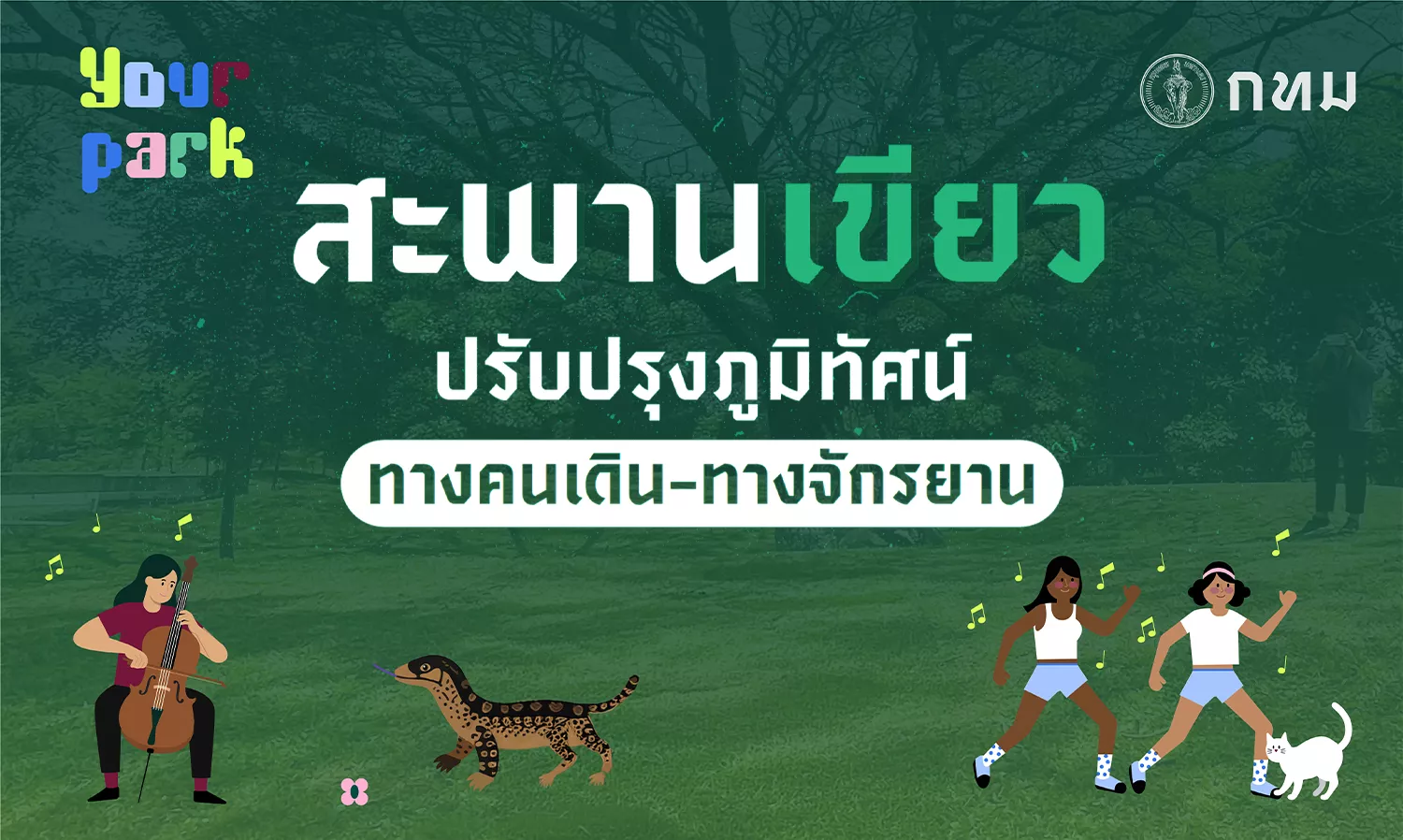
Bangkok Leads Media Team to Explore the 'Green Bridge' Transforming into a Global Landmark, Promoting the Concept of 'Reviving the City, Connecting Districts, Weaving the Future' to Enhance the Quality of Life for Bangkok Residents
Associate Professor Wisanu Supsomphol, Deputy Governor of Bangkok, led a media team on a tour to showcase the Green Bridge, providing detailed information about the improvements made to the pedestrian and bicycle pathways connecting Lumpini Park and Benjakitti Park. This major renovation addresses issues of structural deterioration, blind spots, and insufficient lighting, incorporating Universal Design principles to ensure that everyone can fully utilize this public space.
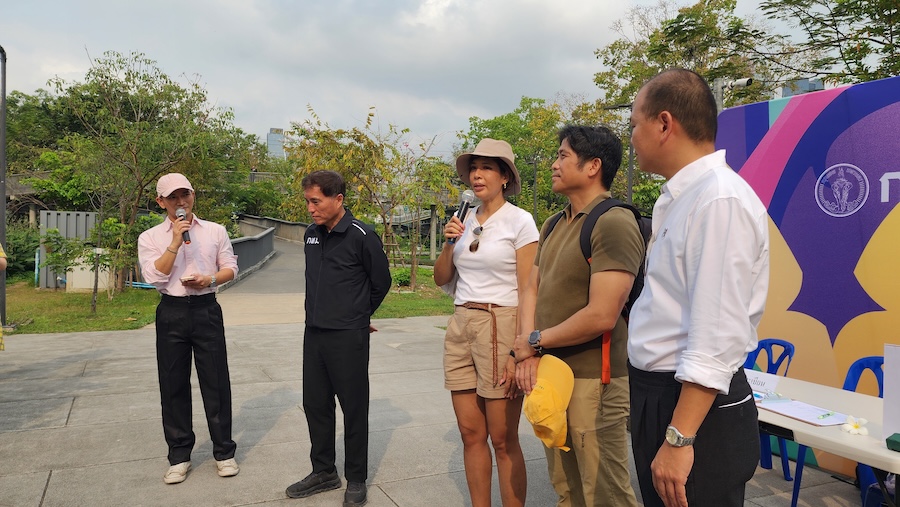
Bangkok is advancing the landscape improvement project for the pedestrian and bicycle paths connecting Lumpini Park and Benjakitti Park, known as the 'Green Bridge', which spans over 1.6 kilometers. This renovation breathes new life into the existing structure, which is over 20 years old, transforming it into one of the most modern and safe green infrastructures in Asia.
Associate Professor Wisanu Supsomphol revealed in-depth details about the project, stating that the main goal is not just to repair worn-out parts but to redesign under the strategy 'Reviving the City, Connecting Districts, Weaving the Future' to address long-standing issues related to safety, blind spots, and inconvenient access. The project includes five key new dimensions:
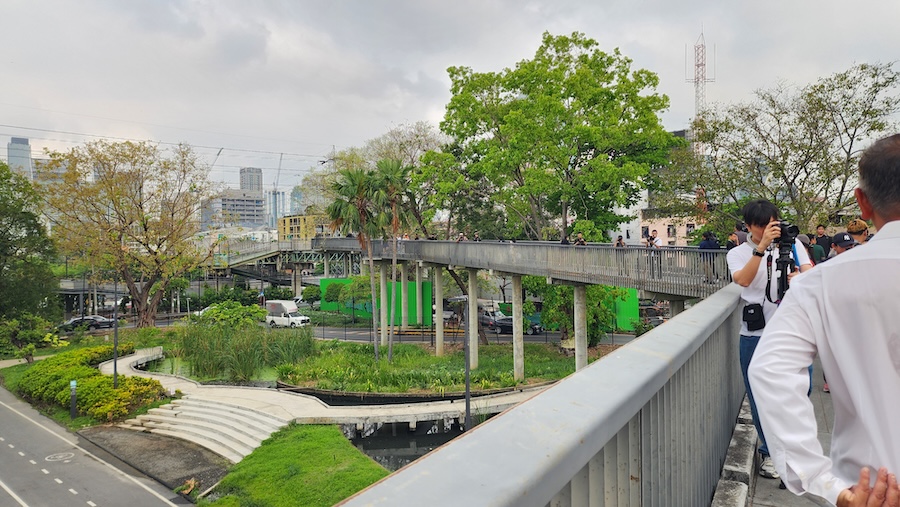
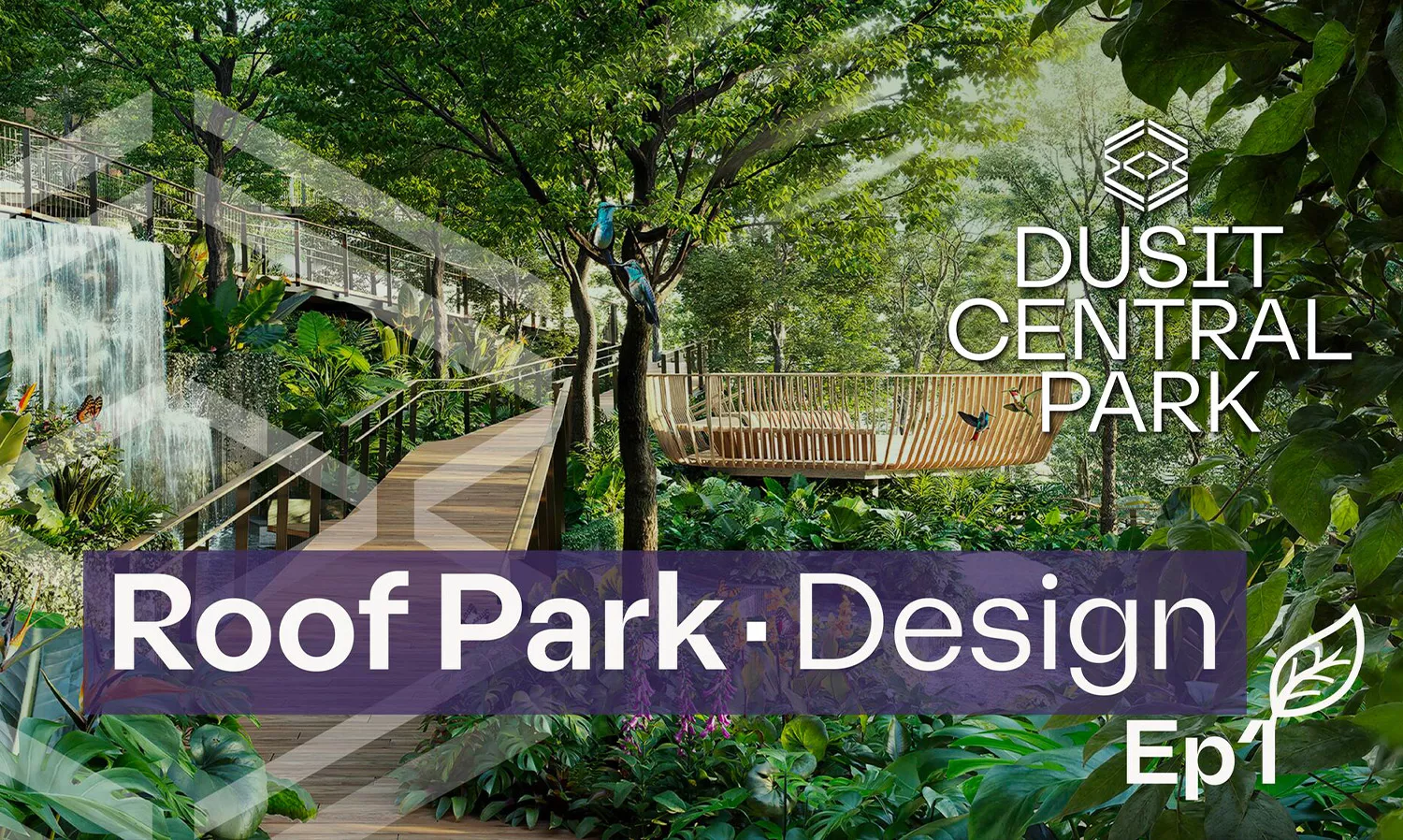
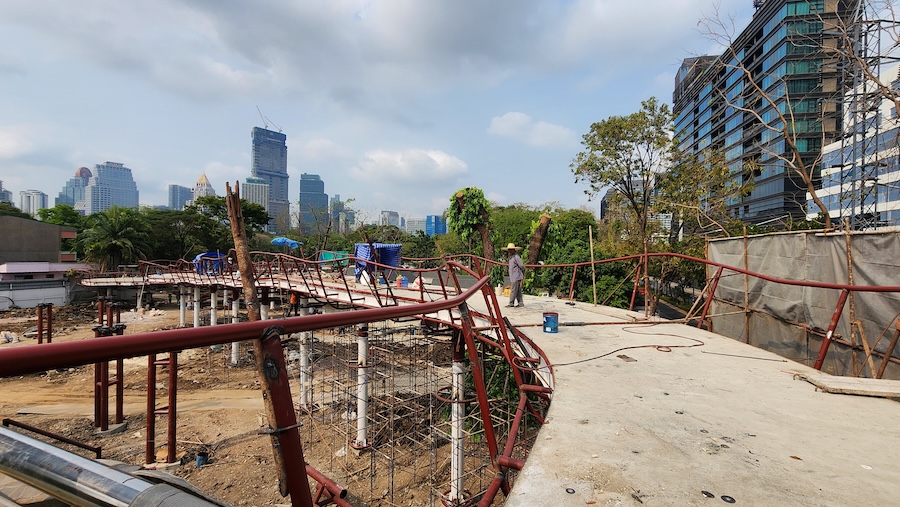
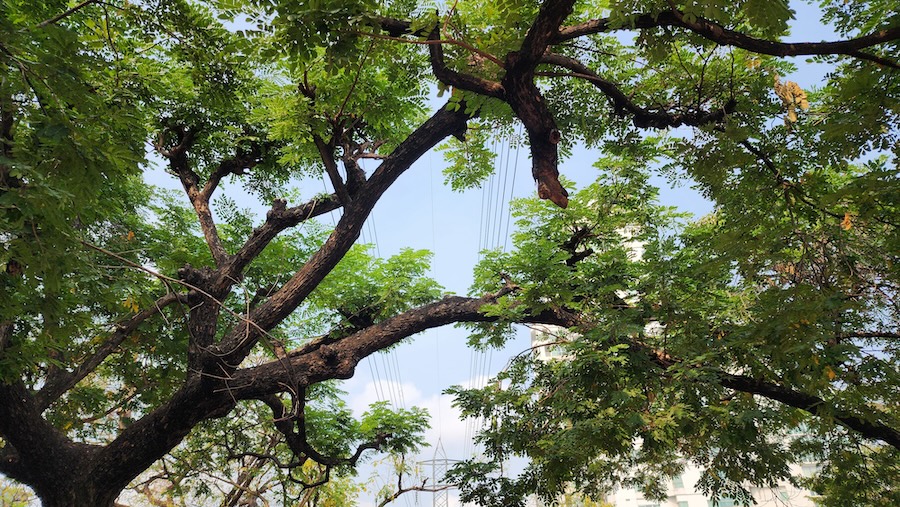
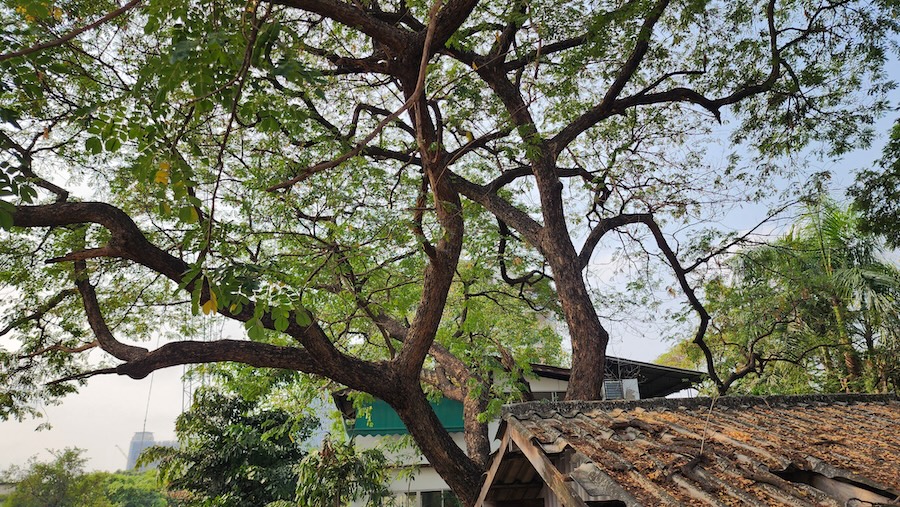
1. Landscape and Connectivity: The Green Bridge serves not only as a walkway but as an 'ecological bridge' that seamlessly connects two large lungs, Lumpini Park and Benjakitti Park. It also connects the Green Bridge to Sukhumvit Soi 10 – Ratchadapisek Road, improves the ramp for pedestrian and bicycle access between the Green Bridge and Sukhumvit Soi 4, and enhances the ramp connecting the pedestrian bridge over the expressway to the Green Bridge. Structural work includes foundation pouring, concrete beams, steel reinforcement, steel beams, and columns, as well as laying flooring and installing railings on the ramps. This will help create a continuous network of sidewalks and bike paths in key business areas like Witthayu, Sarasin, and Ratchadapisek, reducing reliance on cars and promoting environmentally friendly travel. Additionally, gardens and plants will be integrated into the bridge to create an 'Urban Forest' atmosphere, including landscape improvements at the Sarasin intersection overpass, the Chalerm Mahanakorn expressway overpass, and the Ratchadapisek overpass, as well as the pedestrian and bicycle paths.
2. Design for Everyone (Universal Design & Inclusion): Bangkok places the utmost importance on accessibility. The project has installed passenger elevators at key connection points and created a large ramp over 57 meters long with a suitable gradient according to international standards, allowing wheelchair users, the elderly, and families with strollers to access the elevated recreational area equally for the first time.
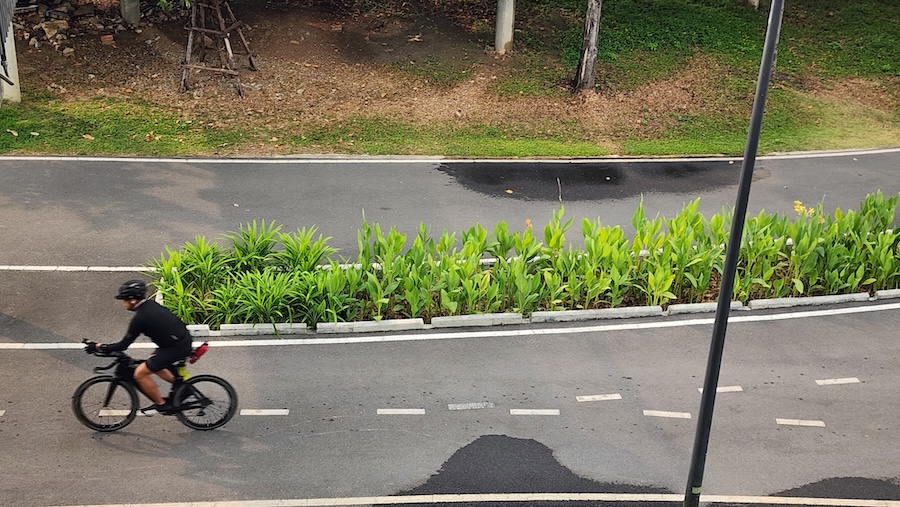
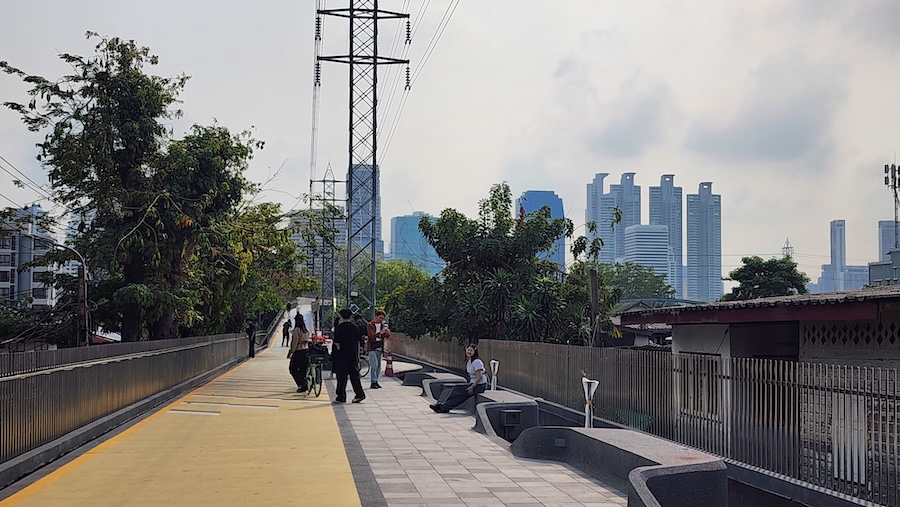
3. Activity Areas (Sport & Social Space): The pedestrian and bicycle paths have been upgraded with a Sport Surface material over a distance of 500 meters, providing flexibility and reducing impact, making it safe for running and cycling. Structural improvements include paving walkways, creating washed sand curbs for 500 meters, and installing railings over 1,000 meters. Additionally, a 'multi-purpose activity area' has been created above key intersections, such as over the Chalerm Mahanakorn expressway and above Phai Singto Canal, to serve as a learning space, photo check-in point, and relaxation area surrounded by views of the city's skyscrapers.
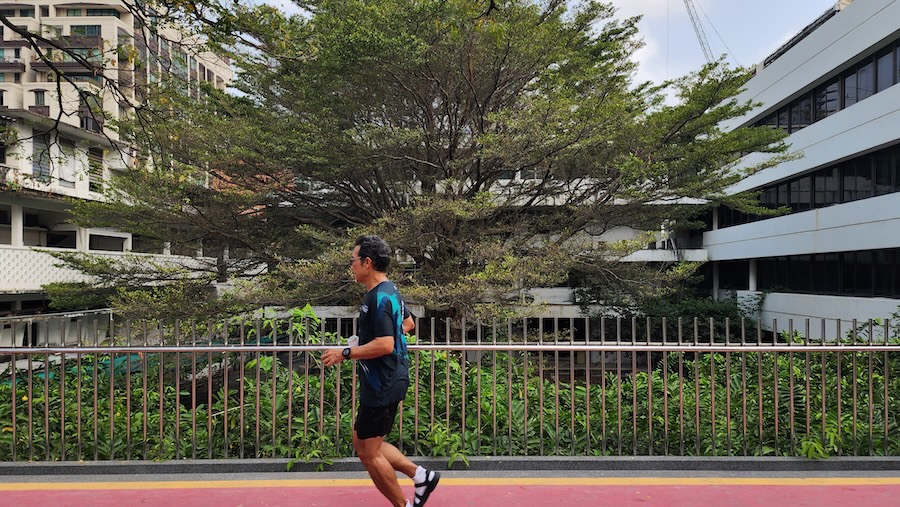
4. Transforming Deteriorated Areas into Strong Communities (Community Regeneration): A core aspect of the project is improving the landscape under the bridge and addressing blind spots in the Polo Soi and Ruamrudee community areas. Previously dark and dilapidated, Bangkok has transformed these areas into open, clean spaces where community members can engage in recreation and commerce, enhancing quality of life and stimulating the local economy.
5. Safety and Smart Lighting (Safety First): To address past concerns about crime, the project has completely revamped the lighting system, including pathway lights and decorative lights, and installed CCTV cameras along the entire route connected directly to Bangkok's control center. This ensures that the newly renovated Green Bridge can operate safely and instill confidence in users from dawn until dusk.
Bangkok is confident that this new Green Bridge, scheduled for completion by mid-2026, will not only repair the existing infrastructure but also set a new standard for public spaces in Bangkok. It aims to create a continuous and safe green travel network that enhances the quality of life for citizens, focusing on making the city a place where travel is good with seamless connectivity, the environment is good with increased green spaces in the city center, and health is good through the creation of activity spaces for all groups in an equitable and sustainable manner. This will make it a significant symbol of urban development that prioritizes the happiness and quality of life of its citizens and serves as a model for transforming neglected public spaces into opportunities for everyone.
Bangkok has been ranked as the second-best city in Asia in the World’s Best Cities 2026 report, highlighting its strengths in urban development that prioritize quality of life, especially in expanding green spaces and connecting public parks. The 'Green Bridge', or Green Mile, connecting Benjakitti Park to Lumpini Park, reflects the efforts to elevate the city to be walkable, usable, and breathable. The progress of this area improvement aligns with the vision of Governor Chatchart Sittipunt, who aims to make Bangkok one of the most livable and happiest cities in the world.
It will be a hub for talented individuals from around the world who wish to work, travel, and live safely and sustainably, even while facing challenges in increasing green spaces in a densely populated city. Bangkok continues to develop community-level green spaces through the 15-minute park project and encourages private sectors and building owners to enhance green areas, creating a natural network that is accessible in the daily lives of citizens.