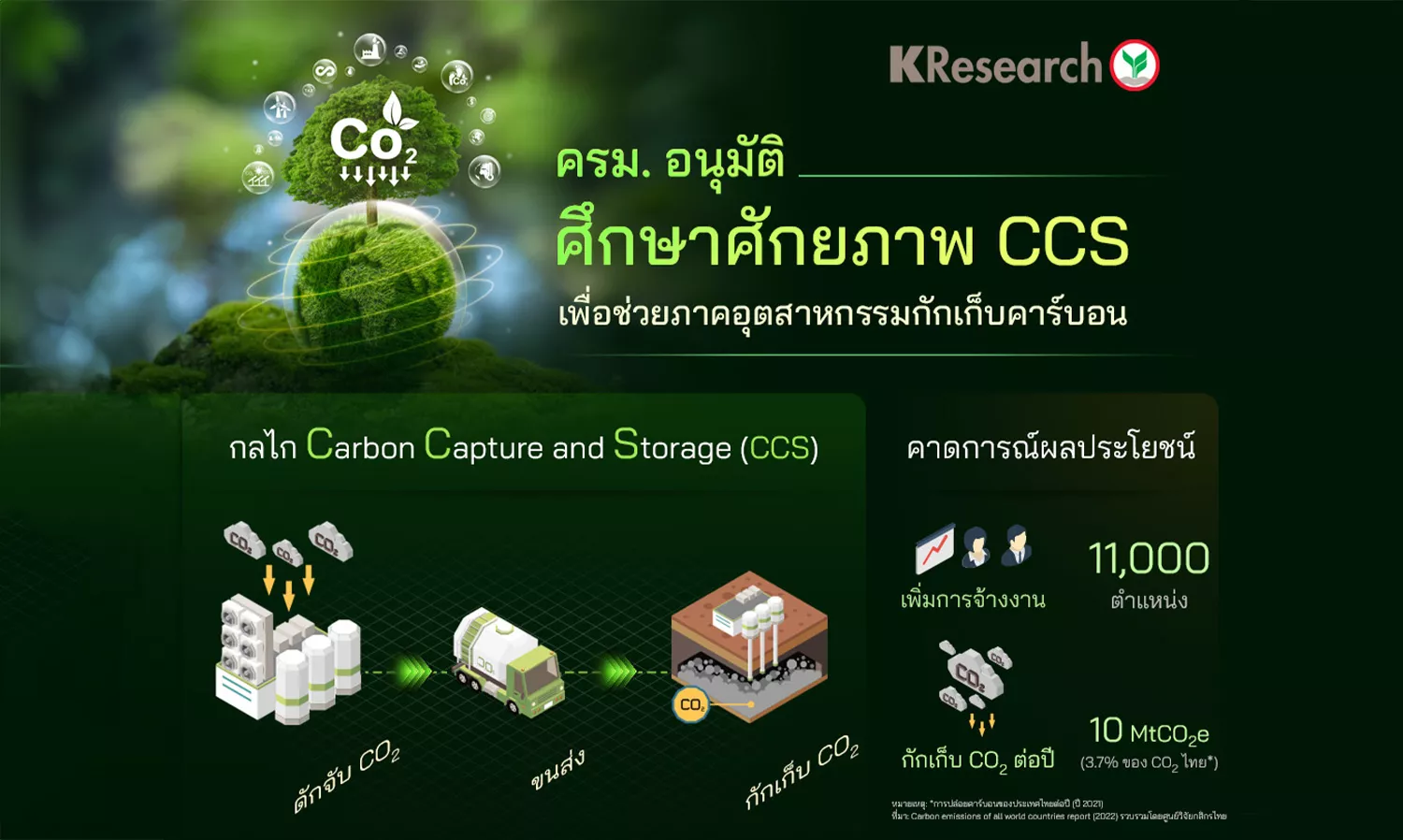
Cabinet Approves Study on CCS Potential to Assist Carbon Capture in the Industrial Sector (Kasikorn Research Center Infographic)
The Cabinet has approved the advancement of a study on the potential of the Carbon Capture and Storage (CCS) project in the upper Gulf of Thailand, marking a significant step for Thailand in preparing structural tools to reduce greenhouse gas emissions from heavy industries, which face limitations in carbon reduction through conventional technologies.
According to information from the Kasikorn Research Center, this study aims to lay the groundwork for Thailand to effectively capture carbon by the year 2034, with the CCS system expected to support the capture of up to 10 million tons of carbon equivalent per year, accounting for approximately 3.7% of the country's total greenhouse gas emissions at present. Additionally, the project has the potential to create over 11,000 new jobs, spanning engineering, energy, infrastructure, and support services within the new industrial chain.
CCS: A Carbon Reduction Mechanism for 'Hard-to-Abate' Industries
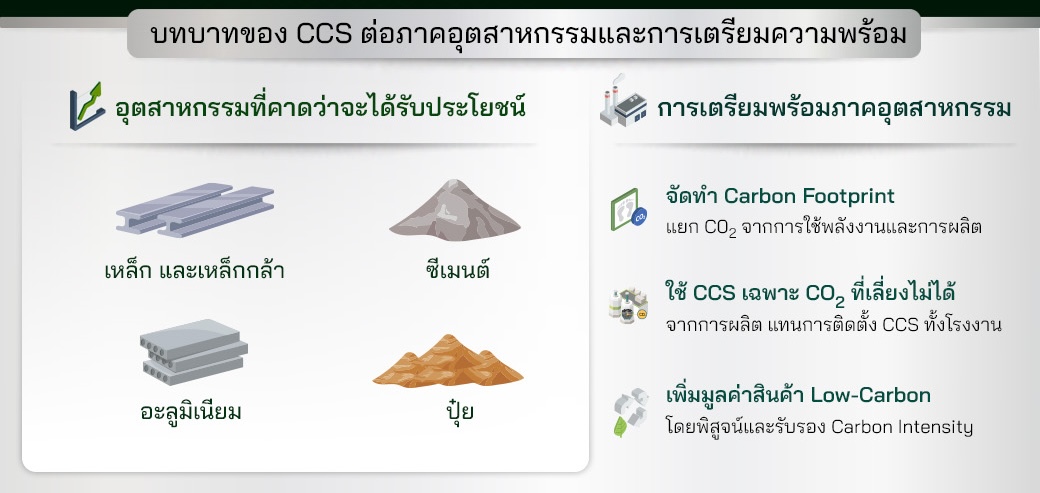
The Kasikorn Research Center estimates that the industries that will benefit the most from the development of CCS include steel and iron, cement, and aluminum, which are upstream industries in the economic system but have direct carbon emissions from the 'production process', not just from energy use, making it impossible to fully reduce CO₂ emissions through renewable energy or machinery efficiency improvements.
In this context, CCS is viewed as a supplementary tool, not a replacement for other carbon reduction methods, but rather a solution for managing 'hard-to-abate emissions' so that the industrial sector can continue to operate under long-term Net Zero goals.
Addressing CBAM to Mitigate International Trade Risks
Another significant driving force behind the CCS project is the preparation for the Carbon Border Adjustment Mechanism (CBAM) of the European Union, which will soon be fully implemented in terms of taxation. Thai industries exporting steel, cement, and aluminum face increased cost risks if they cannot demonstrate tangible reductions in emissions.
Having CCS infrastructure in the country will provide Thai operators with more 'systemic options' to reduce the Carbon Intensity of their products and enhance their competitiveness in the global market without solely relying on carbon offsets from abroad.
Preparation Strategies for Operators
The Kasikorn Research Center suggests practical steps for the industrial sector to prepare for the CCS era, including:
-
Conduct a Detailed Carbon Footprint Assessment
<\/li>
Operators should clearly differentiate between CO₂ emissions from energy use and from the production process to assess which sources can be reduced and which should utilize CCS as a supplementary tool. -
Implement CCS Only Where Necessary
<\/li>
Instead of installing CCS systems across the entire plant, which can be costly, it should be focused on processes that cannot reduce emissions through other technologies to ensure economic efficiency in investments. -
Enhance the Value of Low-Carbon Products
<\/li> <\/ol>
Systematic proof and certification of Carbon Intensity will help Thai industrial products set prices and penetrate markets that prioritize environmental concerns, especially in Europe and developed countries.CCS is Not the Sole Solution, but a Necessary Structure
Overall, the Cabinet's approval to study the potential of CCS reflects a policy direction that begins to view 'carbon reduction' as a structural issue, not just a burden on any single private sector entity. Although CCS still requires time for technology development and regulatory support, starting today will help the Thai industrial sector transition smoothly, reduce economic risks, and maintain competitiveness in a trading world that is increasingly valuing carbon seriously.