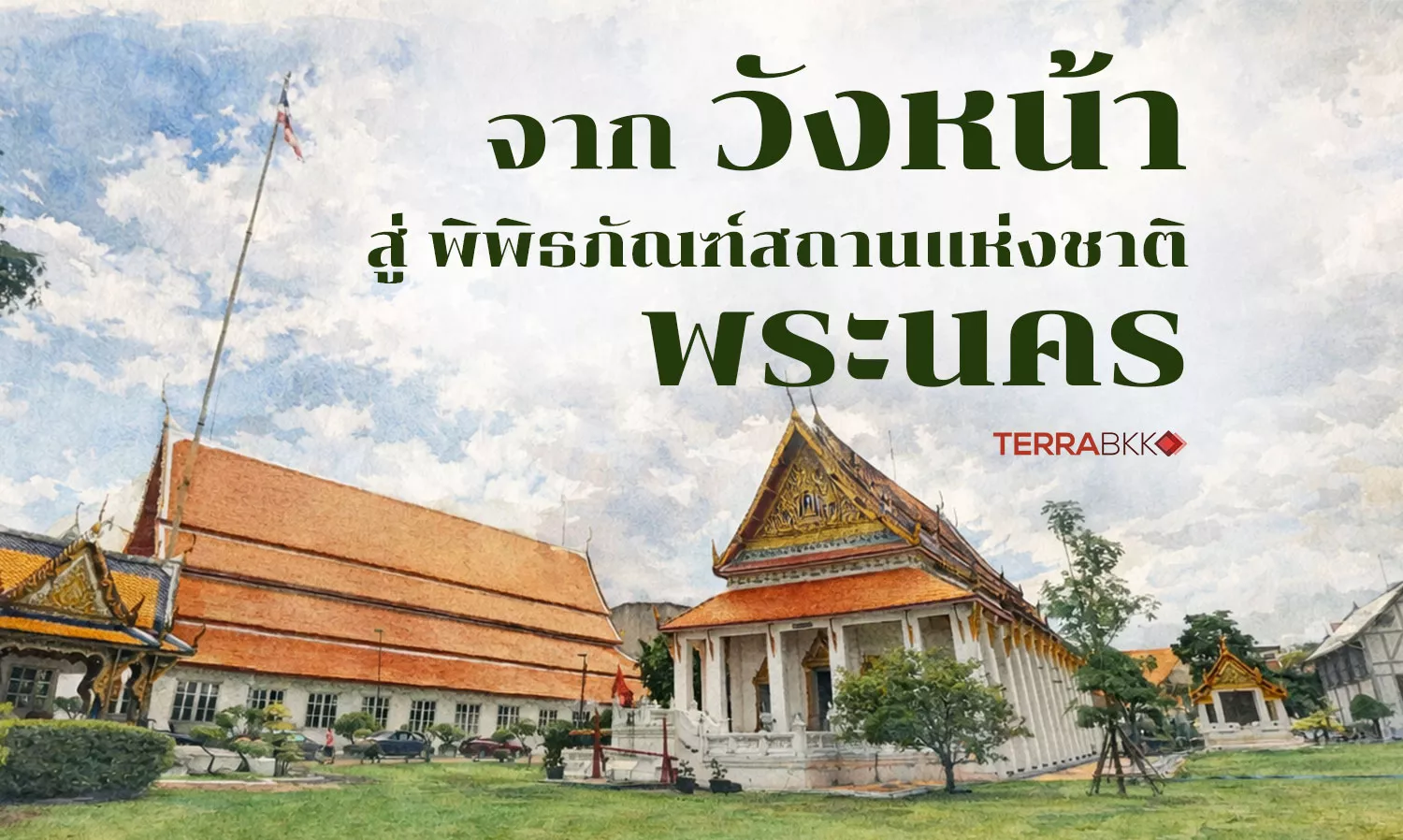
From Wang Na to the National Museum of Bangkok
"Wang Na" or the Royal Palace of Bowon Sathan Mongkhon was built alongside the Grand Palace in 1822 by Prince Boworadet Mahasurasakhanat, known as Wang Na during the reign of King Rama I. It was constructed to the north of the Grand Palace to serve as the residence of the "Department of the Royal Palace of Bowon Sathan Mongkhon" or the position of the Crown Prince for over 200 years. This location has transformed from a frontline fortification to the current National Museum of Bangkok, a treasure trove of the nation's intellectual heritage.
Wang Na during its peak was a significant center of power, housing both military forces and skilled artisans, craftsmen, and master artists. This led to the exquisite and unique artistic objects from Wang Na. The original area was vast, extending to Thammasat University, the northern part of Sanam Luang, and the National Theatre today. A pivotal change occurred after the passing of Prince Bowon Vichaicharn (the last Wang Na) in 1885, when King Rama V abolished the position of Wang Na and established the title of "His Royal Highness the Crown Prince of Siam" in its place.
The inception of the National Museum took place during the reign of King Rama V:
▪️ In 1874, King Rama V established the first museum at the Sahathai Samakhom Hall (in the Grand Palace).
▪️ In 1887, he graciously moved the museum to Wang Na, using the Siwamokkhapiman Throne Hall, the Phutthaisawan Throne Hall, and the Isaravinitchai Throne Hall for exhibitions.
▪️ In 1926, King Rama VII donated all the royal residences of Wang Na to be established as a museum for Bangkok.
▪️ In 1934, it was renamed the National Museum of Bangkok under the supervision of the Fine Arts Department.
Highlights today when you visit the museum:
▪️ The Phutthaisawan Throne Hall, which houses the Phutthasihing Buddha and features one of the most beautiful wall paintings in Thailand.
▪️ The Siwamokkhapiman Throne Hall, currently used for displaying the history of Thailand.
▪️ The Isaresaratsanusorn Hall, a European-style building that served as the residence of King Pinklao (Wang Na during the reign of King Rama IV).
▪️ The group of royal pavilions, a room that was once a bedroom, now filled with ancient artifacts.
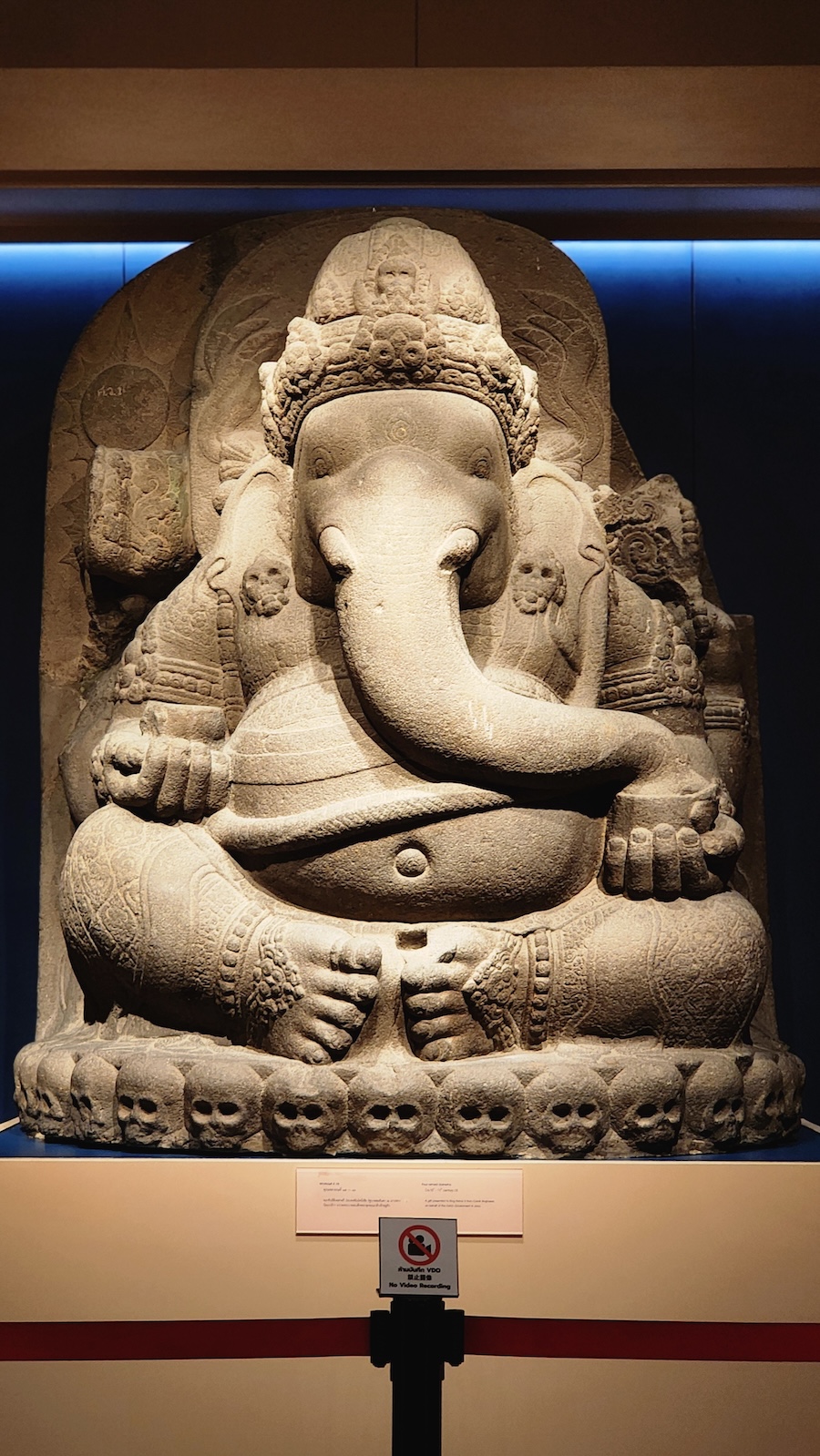
▪️ The Ganesha statue in the Srivijaya exhibition room of the Mahasurasakhanat building, a four-armed Ganesha from Javanese art, dating back to the 15th-16th Buddhist century, intricately carved in high relief, seated on a throne made of human skulls, presented to King Rama V during his visit to Java in 1896 by the Dutch governor of Java.