What Makes a Leader: True Leadership Begins with Emotional Intelligence
A classic article by Daniel Goleman from the Harvard Business Review clearly states that IQ and technical skills are merely "entry qualifications." What separates ordinary leaders from exceptional ones is Emotional Intelligence (EI), which significantly impacts performance, especially at the executive level.
Statistics Confirming the Role of Emotional Intelligence
From an analysis of the competency models of 188 global organizations
-
Emotional Intelligence weighs about twice as much as IQ and technical skills
-
At the senior executive level, the difference between standout leaders and the average can be explained by EI in nearly 90%
-
Research by David McClelland found that executives with critical EI can exceed profit targets by an average of 20%, while those lacking EI fall short by a similar margin.
These figures clearly indicate that EI is not a supplementary trait but the core of leadership.
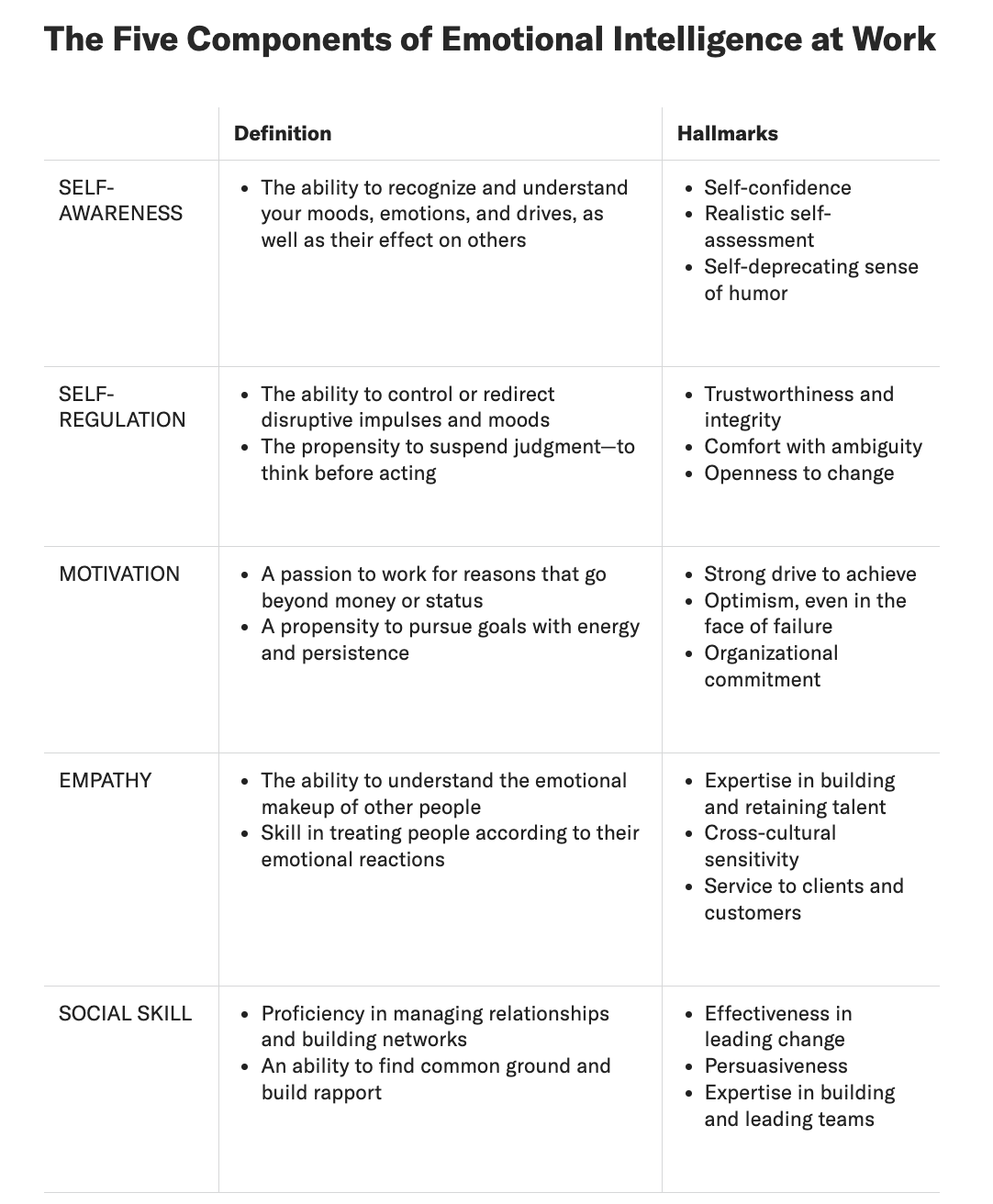
5 Components of Emotional Intelligence in the Workplace
1) Self Awareness
Understanding one's emotions, strengths, weaknesses, and values. Good leaders assess themselves accurately and do not fall for the illusions of power.
2) Self Regulation
Not allowing fleeting emotions to dictate decisions, creating an atmosphere of trust, reducing organizational politics, and increasing adaptability to change.
3) Motivation
Driven by goals beyond money or status, setting high standards, measuring results clearly, and viewing failures as lessons.
4) Empathy
Deeply understanding the emotions of team members and stakeholders, making decisions that consider people alongside business, helping retain talent and build sustainable teams.
5) Social Skills
Connecting people, building networks, and persuading with purpose, turning visions into collaborative actions.
Can Emotional Intelligence Be Developed?
The answer is yes, it can be developed, but not through short courses or reading manuals. EI is related to the brain's emotional systems and requires motivation, repeated practice, and continuous feedback. Organizations that achieve real results will use coaching, behavioral observation, and reflection in real situations.
Sustainable leadership is not measured solely by technical prowess but by the ability to understand oneself, understand others, and drive the entire organization forward. Emotional Intelligence is therefore not something that is "nice to have" but is essential.
References
Daniel Goleman, What Makes a Leader? Harvard Business Review, January 2004
https://hbr.org/2004/01/what-makes-a-leader