What Home Buyers Need to Know! The Importance of EIA When Considering a Residential Purchase
When deciding to purchase a new home, consumers often focus on location, price, and design. However, there is another crucial factor that many may overlook: the project must also pass the EIA (Environmental Impact Assessment). Not only is this a necessary legal document, but passing the EIA serves as a certification that provides buyers with some assurance that the project has been evaluated and designed to minimize environmental and community impacts appropriately.
Why is EIA Important When Buying a New Home?
DDproperty, Thailand's number one real estate platform, invites home seekers to understand the significance of EIA and how it relates to planning a residential purchase. EIA, or "Environmental Impact Assessment," is a report that both public and private sectors must prepare before constructing housing developments, condominiums, and most large-scale construction projects. This report is submitted to the Office of Natural Resources and Environmental Policy and Planning (ONEP) for consideration. In Bangkok, it is reviewed by a committee of experts who assess the environmental impact reports concerning buildings, land allocation, and community services.
The purpose of the EIA is to prevent projects from causing environmental issues that could impact the economy, society, and health of surrounding communities in the long term, both directly and indirectly. These issues may arise during construction and after the project is completed. The EIA involves a comprehensive study of four environmental systems: 1. Physical resources 2. Biological resources 3. Human utility values 4. Quality of life values.

For residential projects that are legally required to obtain EIA approval, the details are as follows:
- Housing projects with an area larger than 100 rai or subdividing land into 500 plots or more.
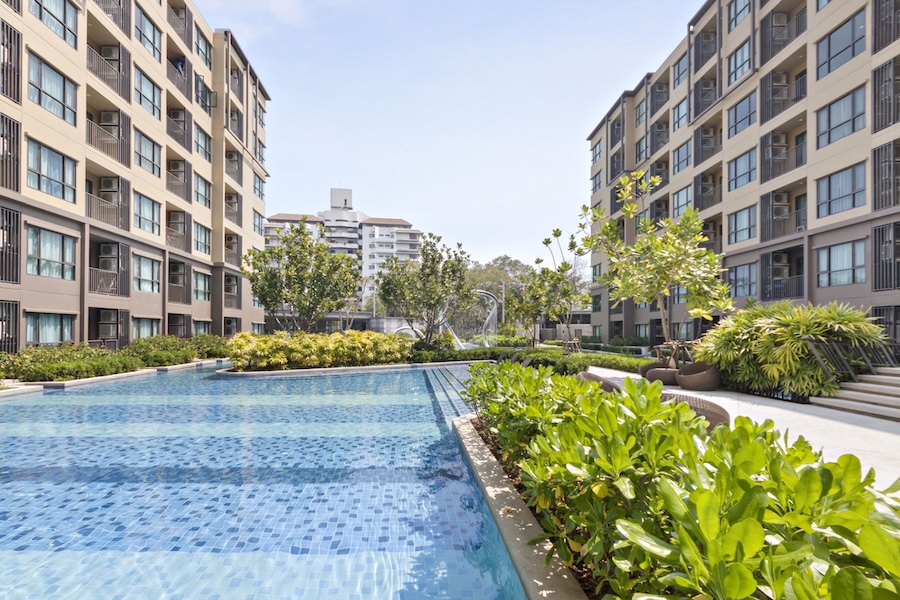
- Condominium projects with a total usable area of 4,000 square meters or more, or with 80 or more units. Therefore, most high-rise condominium projects will need to conduct an EIA to assess the overall environmental impact, while some low-rise condominium projects may not need to do so at all.
The National Environmental Quality Promotion and Conservation Act of 1992 stipulates that large construction projects can only proceed after EIA approval. This has become a selling point for real estate developers, who often highlight EIA approval in their advertising to instill confidence in potential buyers even before reservations open, assuring them that the project can indeed proceed with construction.
What Risks Do Buyers Face When Purchasing Projects Without EIA Approval?
Currently, many projects are marketed for sale while awaiting EIA approval, as there are no legal prohibitions against this. Many projects often open for sale to raise construction funds while waiting for EIA results and to test market interest. However, pre-sale condominiums or projects that allow reservations before construction begins or while under construction still attract buyers due to attractive promotional discounts compared to completed projects, along with a wider selection of unit types. Yet, this comes with the risk of the project failing to obtain EIA approval in the future.
DDproperty reveals the risks consumers should consider when purchasing residential projects that have not yet passed EIA to prepare for potential future issues.
- Inability to Obtain a Construction Permit: Applying for EIA approval is one of the essential conditions for obtaining a construction permit. Even if the real estate project has opened for reservations and sold out, construction cannot begin without a construction permit. The authority responsible for issuing construction permits must wait for EIA approval from ONEP before granting a construction permit to the project.
- Construction Delays or Possible Suspension: Typically, preparing an EIA report takes about six months. If the submitted EIA report does not meet the required standards, the developer must revise and resubmit the report, which may involve altering project plans to comply with regulations. Construction can only begin once the EIA is approved, which may lead to indefinite delays or, in the worst-case scenario, a permanent suspension of construction.
- Disputes with Neighboring Communities: If construction begins without EIA approval, the project may face lawsuits from surrounding communities, which could lead to other legal ramifications. Therefore, consumers should check whether the project they are interested in has had disputes with neighboring communities or government agencies and whether those disputes have been resolved to avoid future problems. Additionally, even if a project has passed EIA and construction has begun, there may still be complaints about impacts on the surrounding community, leading to complaints against government agencies and subsequent court actions to revoke construction permits or temporarily suspend construction.
- Impact on Project Image: Disputes regarding EIA often directly affect the credibility of the developer and the project's image, making it difficult for buyers or investors to sell or rent out the property as easily as before. Particularly in cases where disputes are pending court consideration, this may affect transactions with banks, such as retention/refinancing, and could significantly decrease property value.
A Checklist for First-Time Buyers: How to Choose a Home/Condo to Avoid Disputes
Buying a new home is a significant step in starting a new chapter in life. No one wants to face potential legal issues in the future. DDproperty provides a checklist that first-time home/condo buyers should know, including guidelines for verifying that their new home is free from disputes.
- Check if the Project Has Passed EIA: One of the critical factors consumers should consider when planning to buy a residence is whether the project they are interested in has successfully completed the EIA to prevent future construction issues. They can inquire about the EIA status with the project's sales staff before making any reservations or contracts, or they can check it themselves on the ONEP website.https://eia.onep.go.th, which will provide the project's status from the database of projects awaiting consideration or those that have been approved.
However, if the project is being sold before passing EIA, consumers should clearly ask the developer about their plans and how long they expect to wait for approval. They can request documents related to the project's EIA submission to assess risks and plan their finances accordingly.
- Clearly Define Responsibilities in the Contract: Once a suitable residence is found, consumers should carefully consider the details of the project's responsibilities outlined in the sales contract, as this serves as legal evidence in case of future issues. Particularly for projects that have not passed EIA, it is essential to check how responsibilities are defined, such as the timeline for completing the EIA application or how the project will compensate buyers who have already made down payments if the EIA is not approved or if construction is canceled.
- Verify Project Quality Against Advertisements: Visit the project to see the actual condition of the sample room and the surrounding environment, and ask staff in detail about the brands and quality of materials used in the project to ensure they match the specifications advertised. Assess whether these materials are durable and suitable for long-term use to determine if the price is justified compared to similar projects in the market. If a purchase is made, keep all advertising materials as references for future inspections of the unit/house to ensure that construction or decoration meets standards before transferring ownership.
- Check for Existing Disputes in the Project: In addition to checking EIA, another critical aspect buyers should verify is whether the project has any ongoing disputes or unresolved legal issues, as this may impact the project's image and make it difficult for buyers to sell or conduct financial transactions. Buyers should search for information/news online regarding any disputes the project has had with customers, neighboring communities, or government agencies, whether those disputes have been resolved, and how the developer has addressed past disputes affecting buyers. Additionally, it is advisable to ask residents of other projects previously developed by the same developer about their after-sales experiences and to survey the surrounding area to better assess the project's credibility.
What to Do if the Purchased Project Fails EIA Approval
DDproperty recommends steps to assert consumer rights if the purchased real estate project has to delay or cancel construction plans due to failing EIA approval, and the developer does not provide clear updates:
- Inquire about the project's corrective measures and the timeline for resubmitting the EIA. During construction delays, ask how the project will compensate buyers, and if buyers cannot wait, when will the project refund reservation and down payment? If the project fails EIA and construction is canceled, will the project be responsible for refunding the reservation and down payment with interest?
- If following up with the project does not yield results or progress, buyers should unite with others facing the same issues to collectively assert their rights, which can strengthen their bargaining power compared to addressing the situation individually.
- If the project seems unlikely to refund money or lacks clear compensation measures, affected buyers should band together to report to the Office of Consumer Protection (OCP) for advice on their consumer rights. Then, they should file a report with local police at the project's location before proceeding with legal actions.
However, there are exceptions in some cases where certain condominium projects have passed EIA approval and have been completed for several years but still face ongoing disputes awaiting court rulings. Ultimately, the court may order the revocation of the EIA approval and construction permit retroactively, requiring the developer to rectify the situation legally and provide compensation to affected residents. This serves as a case study and guidance for developers, communities, and relevant government agencies to reconsider and carefully evaluate the impacts of construction on surrounding communities.
In 2021, ONEP published a document titled "Guidelines for Studying and Assessing Environmental Impacts Related to Sunlight Obstruction and Wind Changes from Building Construction for Environmental Impact Assessment Reports of Building Projects, Land Allocation, and Community Services,” allowing surrounding communities affected by high-rise buildings obstructing sunlight and wind direction to oppose such projects. It also requires "building owners" to use 3D models to demonstrate the shadow direction of the building and analyze wind direction after construction in that location. Although these guidelines have not been officially implemented, they have created significant ripples in the real estate sector, improving the living conditions of surrounding communities and reducing health issues while increasing operational costs for developers, which may also lead to longer EIA review times.
Therefore, consumers should choose to purchase real estate projects that have already received EIA approval to reduce the risk of future issues. If considering projects still in the EIA application process, it is advisable to select those from reputable developers with financial stability and a willingness to take responsibility for any issues arising from the EIA process. DDproperty, Thailand's number one real estate platform, compiles information on buying, selling, and renting residential properties from various potential locations across the country, along with updates on articles and news in the real estate sector to keep buyers, renters, and investors informed about everything they need to know, ensuring smoother and more confident transactions for everyone.