Custom-Built Homes: A Cost-Reducing Option That Expands Business Opportunities
The real estate market in the first seven months of 2025 is showing signs of distress, with a sluggish economy compounded by the earthquake that occurred on March 28, which has left homebuyers of condominiums hesitant to make purchasing decisions. As a result, real estate developers have also postponed plans to launch new projects to align with market behavior.
Meanwhile, the market for single-family homes, duplexes, and townhouses continues to thrive. Although it is not as robust as last year, it is not as severely impacted as the condominium sector.
What is particularly interesting in the residential housing market and the movements of developers is the resurgence of custom-built homes. In fact, the concept of custom-built homes is not new in the real estate market; prior to 1997, most low-rise projects were custom-built. Buyers would sign a purchase agreement for a house with land, choosing from available house designs that fit the land size. Once the contract was signed, construction would begin based on the chosen design and materials, which benefited project owners by reducing construction costs since they did not have to build homes before selling them, only bearing the cost of the land. For buyers, this meant they could have a home design and materials that matched their preferences.
However, after the Tom Yum Kung economic crisis in 1997, the real estate sector was hit hardest, as it was blamed for the bursting of the bubble.
Many homebuyers ended up with only land, as several real estate developers faced financial crises due to the closure of 58 financial institutions, preventing them from accessing cash to continue their projects. This had a cascading effect on homebuyers who had already purchased homes but did not receive them.
During that time, major developers saw a market gap and launched the campaign “Don’t Buy Until You See.” This led to a significant transformation in the real estate business, prompting all developers to shift their strategies to building ready-to-move-in homes to assure buyers that they would receive a house, rather than purchasing based on paper without seeing the actual home.
Was this strategy effective?
I believe it was a good strategy at that time, but as the environment has changed, consumer behavior has evolved. There is now a greater demand for residences that meet lifestyle needs. A “home” is not just a place to live; it also reflects the identity of its owner. This has led homebuyers to prioritize purchasing homes with unique characteristics, opting for custom-built homes that are tailored to their personal style.
I have seen some clients buy homes in projects only to completely renovate the interiors afterward because they disliked the original decor provided by the project. This resulted in a significant amount of waste from the renovations, along with additional time and money spent on redecorating.
With changing buyer preferences, the return of custom-built homes has become an option for today’s homebuyers. I have noticed several luxury housing projects selling homes in a Bare Shell format, allowing customers to design the layout and interior finishes themselves to meet their needs, which has received positive feedback from affluent buyers seeking homes that reflect their identities.
Additionally, custom-built homes or Bare Shell homes help real estate developers avoid the burden of construction costs for homes that have not yet sold, especially in a volatile and uncertain economic climate.
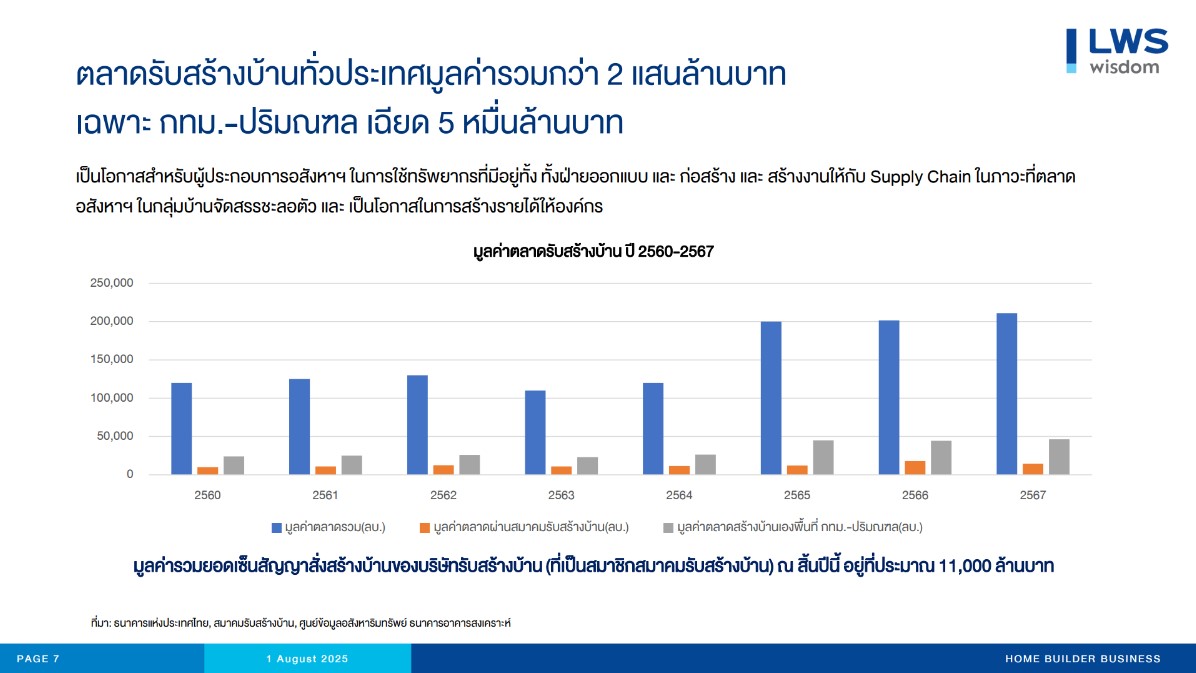
According to a survey by LWS, the custom-built housing market in the Bangkok metropolitan area is valued at 200 billion baht (as of the end of 2024), with the Bangkok area alone accounting for 50 billion baht. The total value of signed contracts for custom-built homes from member companies of the Home Builders Association at the end of this year is approximately 10 billion baht, averaging 16,000-20,000 units per year.
Consumers are increasingly interested in the 5-10 million baht and 20 million baht segments. In the single-family home custom-built market, the average order value per unit is between 5.01-30 million baht, and the overall custom-built home market nationwide is growing at an average of 10% per year.
This data indicates that the custom-built home market is likely to continue growing, as buyer concerns about not receiving their homes, as in the past, have diminished. Many real estate developers are now cautious, avoiding excessive debt and maintaining strong financial positions. Importantly, customers can easily verify the financial status of real estate companies due to the transparency and accessibility of both public and private sector databases.
In a complex, uncertain, and volatile economic situation, shifting business strategies to focus on custom-built homes or Bare Shell designs is a viable option for developers. For more information, visit www.lws.co.th.
See you again next month!
Prabhan Sak Raksaiwan
Managing Director
LW S Wisdom and Solutions Co., Ltd.