LEED Criteria and Biodiversity Net Gain (BNG)
By
Mr. Prabhan Sak Raksaiwan
Managing Director
LWIS Wisdom and Solutions Co., Ltd.
As we enter the second quarter of 2025, how is everyone doing? Since late last year to the beginning of this year, the winter has been longer than in many previous years, allowing us to save on air conditioning and electricity costs. However, the prolonged cold weather has also brought along PM 2.5 dust, so we must take care of our health.
This month, I would like to share insights on project development under the concept of LEED and biodiversity, or Biodiversity Net Gain (BNG), which is one of the approaches to create and maintain a suitable environment and is part of the efforts to combat global warming.
What is Biodiversity Net Gain (BNG)
Biodiversity Net Gain (BNG) refers to the concept of ensuring that project developments do not lead to a net loss of biodiversity but instead increase biodiversity levels. In other words, it aims to enhance the biodiversity of ecosystems after project implementation compared to the state before the project began.
You may have heard about Carbon Emission in relation to efforts to mitigate the impacts of global warming, aiming for net-zero greenhouse gas emissions as recommended by the Intergovernmental Panel on Climate Change (IPCC). This involves creating regulations and guidelines to reduce greenhouse gas emissions, which are significant contributors to global warming and make it increasingly difficult for living organisms to survive. However, merely limiting greenhouse gas emissions may not be sufficient to compensate for the exploitation and depletion of natural resources for human advancement, leading to a severe biodiversity crisis. According to the World Wildlife Fund's The Living Planet report, global wildlife populations have declined by 73% over the past 50 years from 1970 to 2020. Additionally, research by PwC indicates that 55% of the world's GDP, or $58 trillion, is at risk from natural impacts if immediate changes are not made.
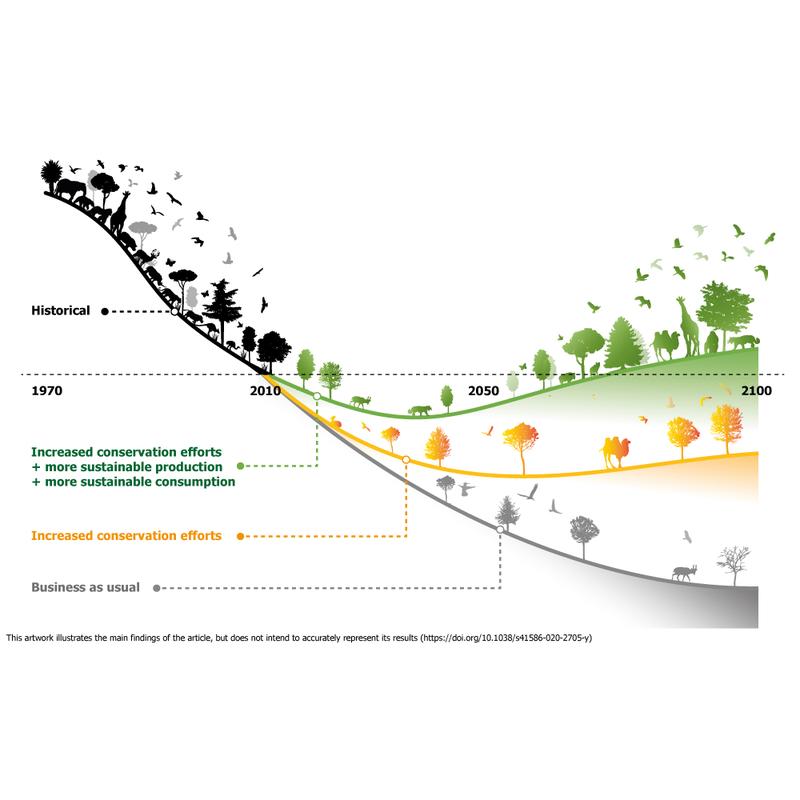
Illustration showing predictions of biodiversity impacts
In 2022, the Kunming-Montreal Global Biodiversity Framework (KM–GBF) was established, where each party contributes to setting targets based on their circumstances, priorities, and capabilities to stimulate urgent action by governments and local agencies. There are 23 operational targets aimed at reducing threats to biodiversity, meeting people's needs through sustainable use and benefit-sharing, providing tools and solutions for implementation and integration. Four of these targets are related to the business sector:
- Monitoring business and financial institution operations
- Increasing environmentally friendly consumption choices
- Eliminating incentives and subsidies that harm biodiversity
- Increasing funding sources to support operations
The goal is to halt and reverse biodiversity loss, achieving a nature-positive status by 2030 and harmonious coexistence with nature by 2050, with international commitments requiring each country to adapt. This includes mechanisms like Biodiversity Credit established by the Biodiversity Credit Alliance (BCA), which helps fund and assist countries aiming to restore biodiversity, allowing access to low-interest funding and reducing operational costs for businesses. This operates similarly to Carbon Credits, representing positive outcomes for biodiversity. As mentioned, the biodiversity loss crisis is an urgent issue that many countries are now addressing with immediate sustainability targets, such as:
- The UK focuses on Biodiversity Net Gain, requiring all developments to increase biodiversity value by at least 10%.
- Australia has established the Nature Repair Law, creating the world's first national voluntary biodiversity market framework.
- The European Union (EU) has enacted the Nature Restoration Law, aiming to restore terrestrial and marine ecosystems and achieve nature-positive status by 2030.
- Japan has released the Nature Positive Economy Strategy, along with several other countries seriously addressing environmental impacts and sustainability.
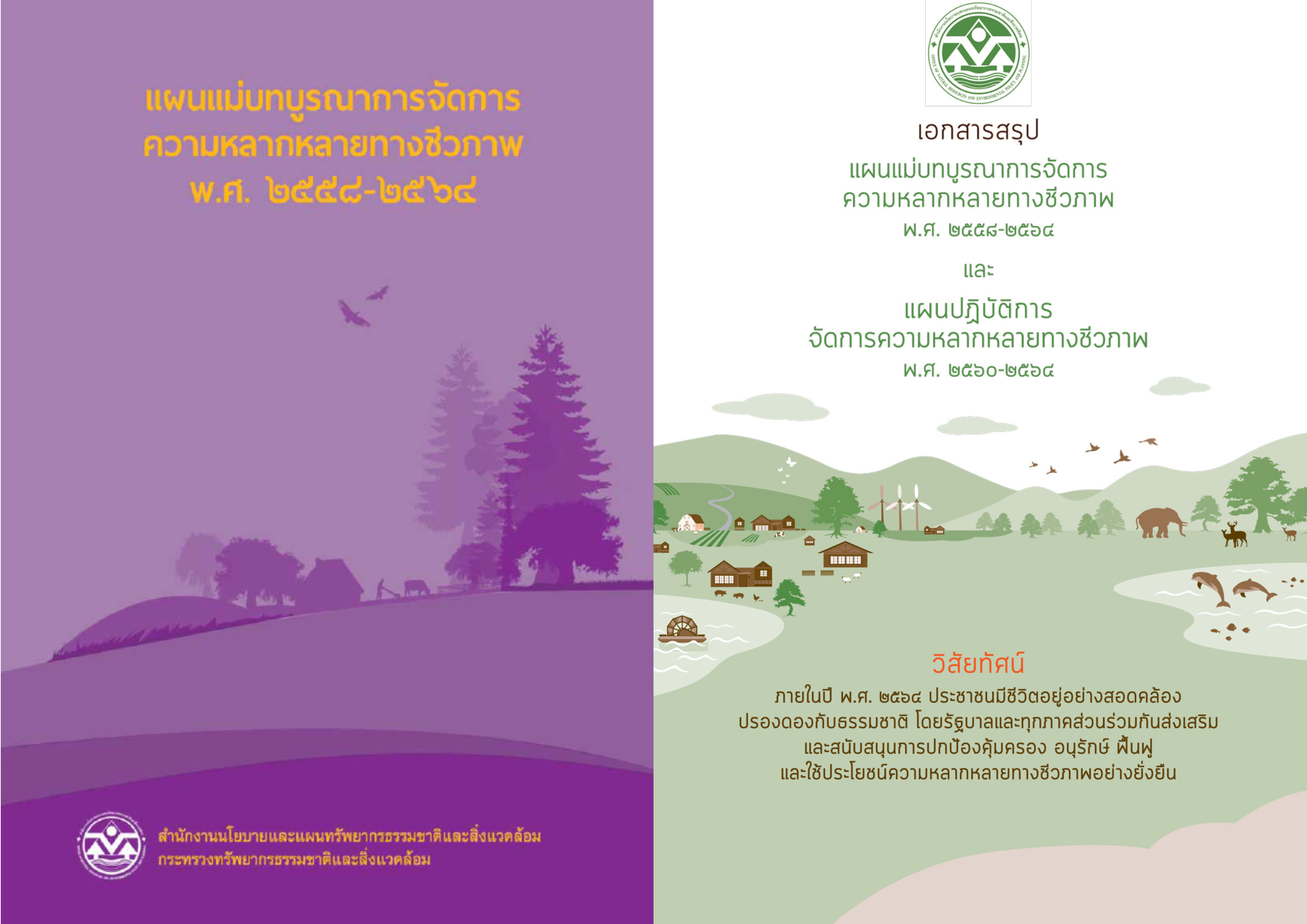
In Thailand, we are still in the process of drafting the Biodiversity Act, initiated in 2022, recognizing the urgency of developing the country in terms of bio-based economy, circular economy, and green economy (BCG Model) for sustainable and tangible outcomes. Although Thailand has existing guidelines related to biodiversity management, such as the Integrated Biodiversity Management Master Plan 2015-2021 and the Biodiversity Management Action Plan 2017-2021, there are still no clear regulations and targets for biodiversity restoration.
It can be inferred that biodiversity restoration policies will certainly emerge in the near future, compelling businesses to adapt to coexist with the environment. Many companies are already identifying potential future risks to prepare for an uncertain future. Currently, there are various sustainability assessment tools, including sustainable building criteria that evaluate biodiversity, such as TREES, WELL, Fitwel, DGNB, and the most popular one, LEED.
LEED: A Real Estate Option
for Biodiversity Development
LEED is an internationally recognized green building rating system that measures building performance in various aspects, such as energy use, water management, and environmental impact. Over 78% of the criteria and prerequisites in the LEED assessment contribute to reducing biodiversity loss in various ways. The image below illustrates how LEED assessment criteria relate to sustainability both directly and indirectly, including:
- Changes in land and sea use
- Direct exploitation of natural resources
- Prevention of invasive species
- Climate change
- Pollution
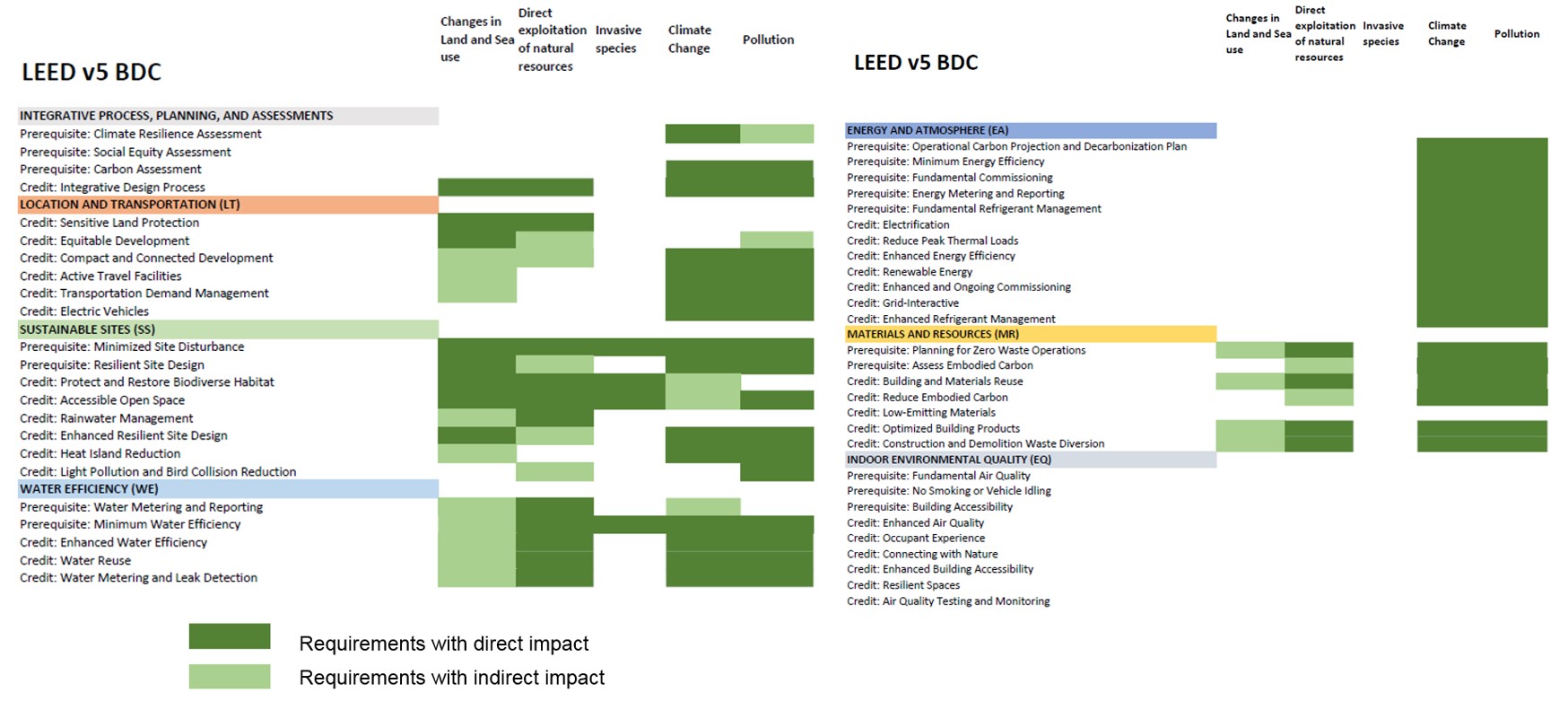
Illustration showing the direct and indirect positive impacts of LEED assessment criteria on biodiversity
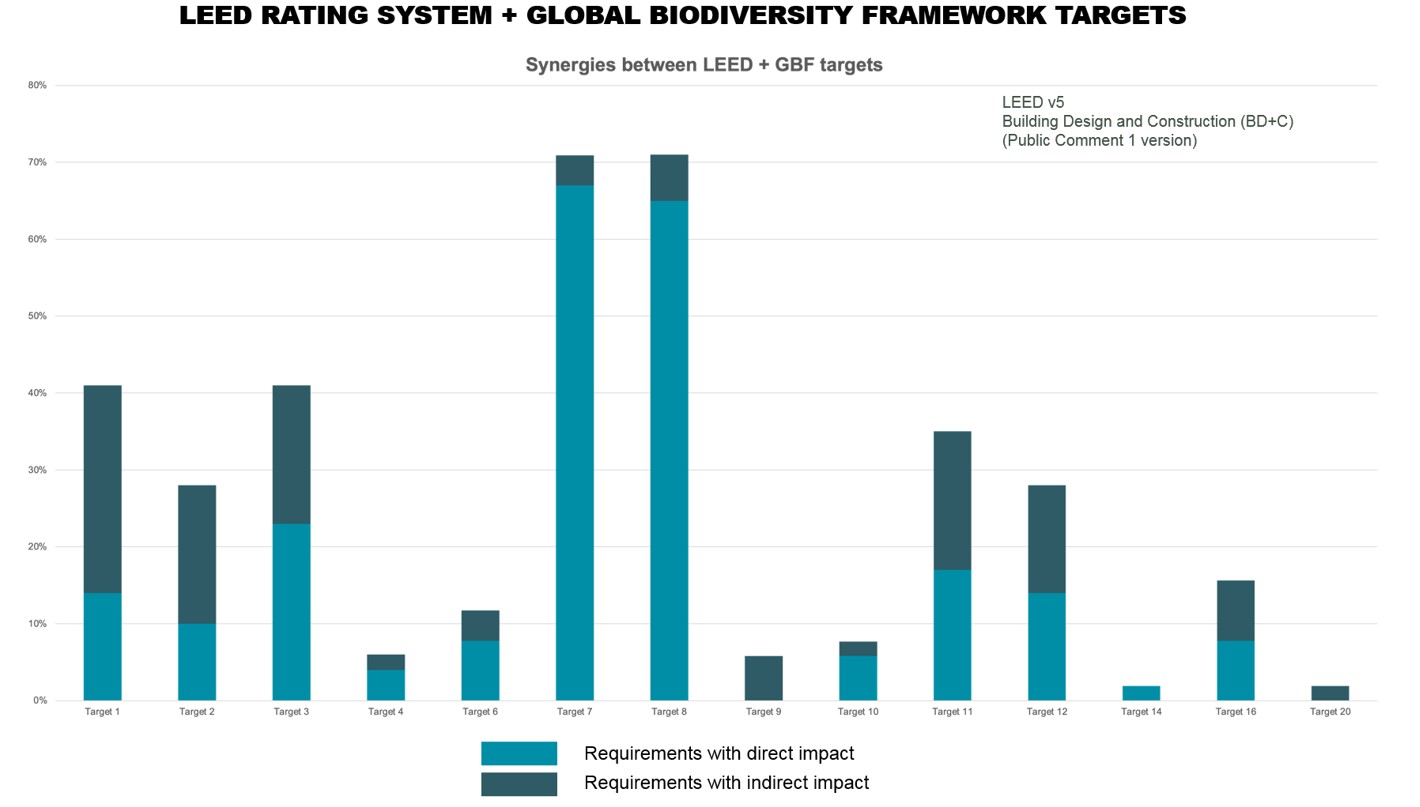
Graph showing the direct and indirect positive impacts of LEED assessment criteria against global biodiversity framework goals
Currently, LEED has advanced to its latest version, LEED v5, which focuses on creating more sustainable and efficient buildings, emphasizing reducing environmental impacts, promoting health and well-being for users, and preparing for future challenges such as climate change.
LEED v5 has developed mandatory prerequisites and credit criteria that emphasize various dimensions related to building sustainability, including:
- Reducing carbon emissions
LEED v5 underscores the importance of reducing greenhouse gas emissions throughout the building's life cycle, including material production, construction, operation, and demolition, aiming to create carbon-neutral buildings. Projects are required to assess carbon emissions over the building's lifespan and plan to minimize emissions.
- Promoting health and well-being of building users
LEED v5 emphasizes creating indoor environments that promote the health and well-being of users in physical, mental, and emotional aspects, considering indoor air quality, natural light, and health-promoting design. It should encourage building designs that support health, such as using natural light, good ventilation, and safe materials.
- Preparing for climate change
LEED v5 emphasizes that projects must consider the impacts of climate change, such as rising temperatures, rising sea levels, and various natural disasters, and have measures to prevent and mitigate those impacts. Projects must also have measures to cope with natural disasters such as flooding or heatwaves.
- Promoting social equity
LEED v5 emphasizes the importance of creating accessible buildings for everyone, especially marginalized groups, and promoting community involvement in project development.
Currently, LEED v5 is in the final stages of drafting its manual after closing the second public comment period at the end of 2024. The USGBC anticipates launching LEED v5 by 2025.
The adjustment of LEED v5 standards is part of making Biodiversity Net Gain (BNG) more tangible and clear. Implementing BNG is not a burden but an opportunity for adaptation, allowing businesses to innovate, develop environmentally friendly products and services, and enhance their corporate image. Additionally, it builds trust with consumers and investors who prioritize sustainability. Businesses that can adapt and grow alongside nature will be the winners in the competitive landscape. Investing in sustainability is not just about doing good; it also creates long-term value for businesses, and LEED is a great option to use as a criterion for assessing buildings to ensure that business projects are sustainable and biodiversity-friendly.