Evergrande Shares Delisted as China's Real Estate Sector Faces Crisis
- Since 2020, when the Chinese authorities implemented the Three Red Lines regulation to control excessive debt in the real estate sector, many real estate companies in China have faced issues with debt repayment, business operations, and have experienced bankruptcy, impacting the Chinese economy to this day
- On August 25, 2025, Evergrande, one of China's largest real estate companies and the first to signal a default in 2021, was delisted from the Hong Kong Stock Exchange after being suspended from trading since January 29, 2024. Evergrande's market price once peaked at around HKD 31 before plummeting to below HKD 1 (see Figure 1). The total debt is estimated to be around USD 45 billion.
The delisting of Evergrande from the stock market is a significant symbolic event indicating that China's real estate sector remains a major pressure point for the Chinese economy. It is expected that other large real estate companies in China facing debt issues may follow suit.

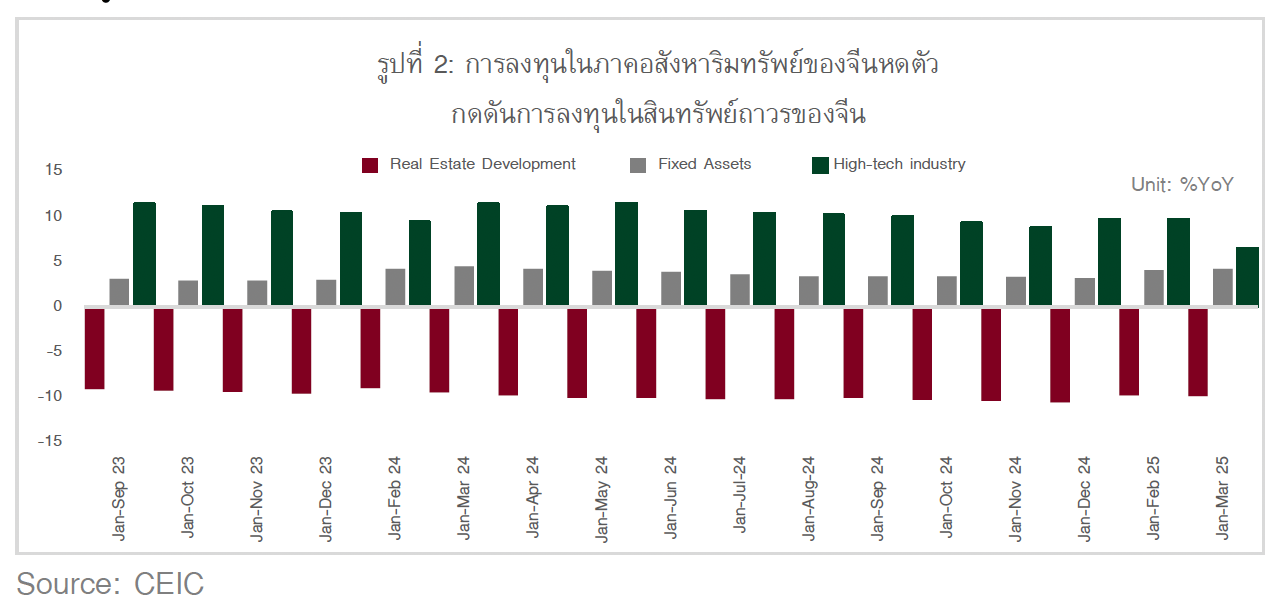
Recently, the Chinese authorities have gradually introduced various measures to support demand, such as relaxing down payment requirements, easing home purchase restrictions, and establishing new lending programs. Additionally, supply-side measures have been implemented to assist real estate companies, such as the White-list program. However, most measures focus more on stabilization rather than revitalization, as the Chinese government aims to invest in new industries, such as the high-tech sector, to replace the real estate sector (see Figure 2).
The Kasikorn Research Center believes that China is undergoing a structural economic transformation, and during this transition, the real estate sector will continue to be a pressure point for the Chinese economy in the future. The real estate sector is crucial to the Chinese economy for three main reasons:
- The real estate sector, including construction materials, accounts for nearly one-third of China's economy.
- Household wealth is tied up in real estate to the extent of 70%, affecting consumer confidence and spending patterns.
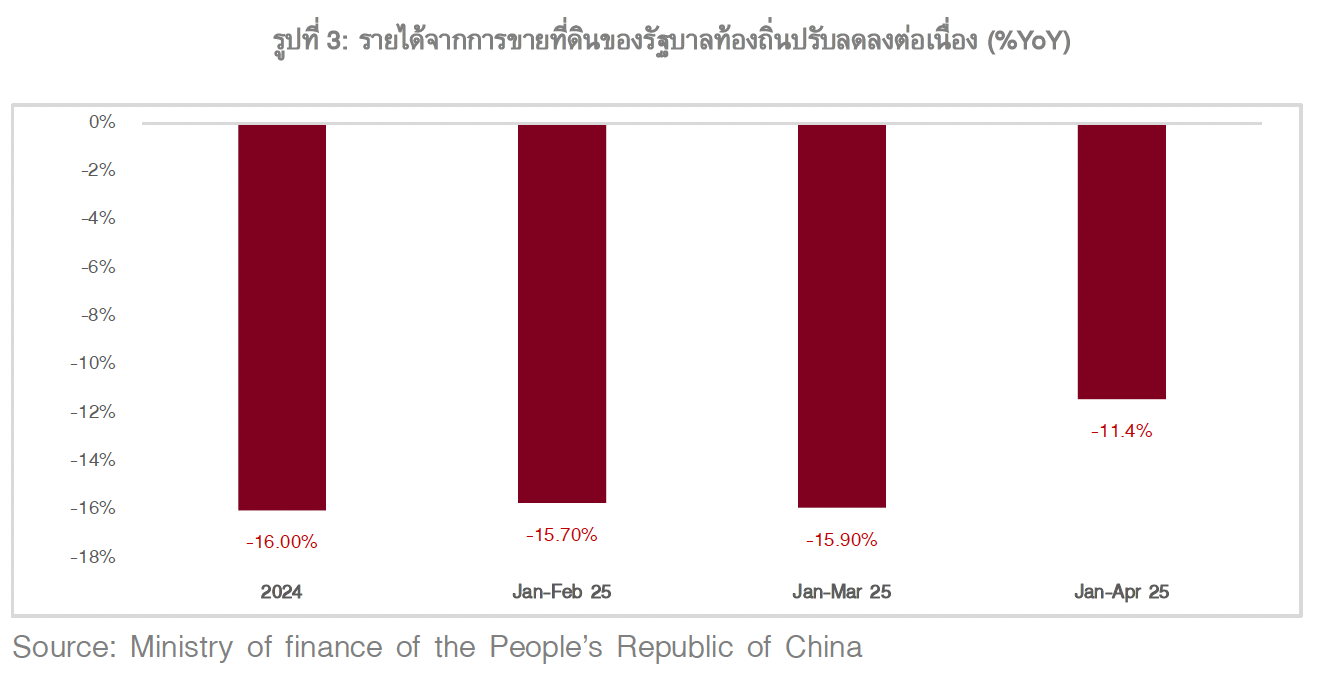
- Local government revenue comes from land sales, and recently, revenue from land sales has been continuously declining (see Figure 3), which will impact the funds available for stimulating the Chinese economy.
In 2025, the Chinese government is likely to implement economic stimulus measures through fiscal policy, such as encouraging domestic spending and monetary policy through interest rate cuts. However, amid domestic economic issues like the real estate sector and external challenges such as trade wars, it is expected that China's economy will grow by 4.8% in 2025, which is below the government's target of 5%.