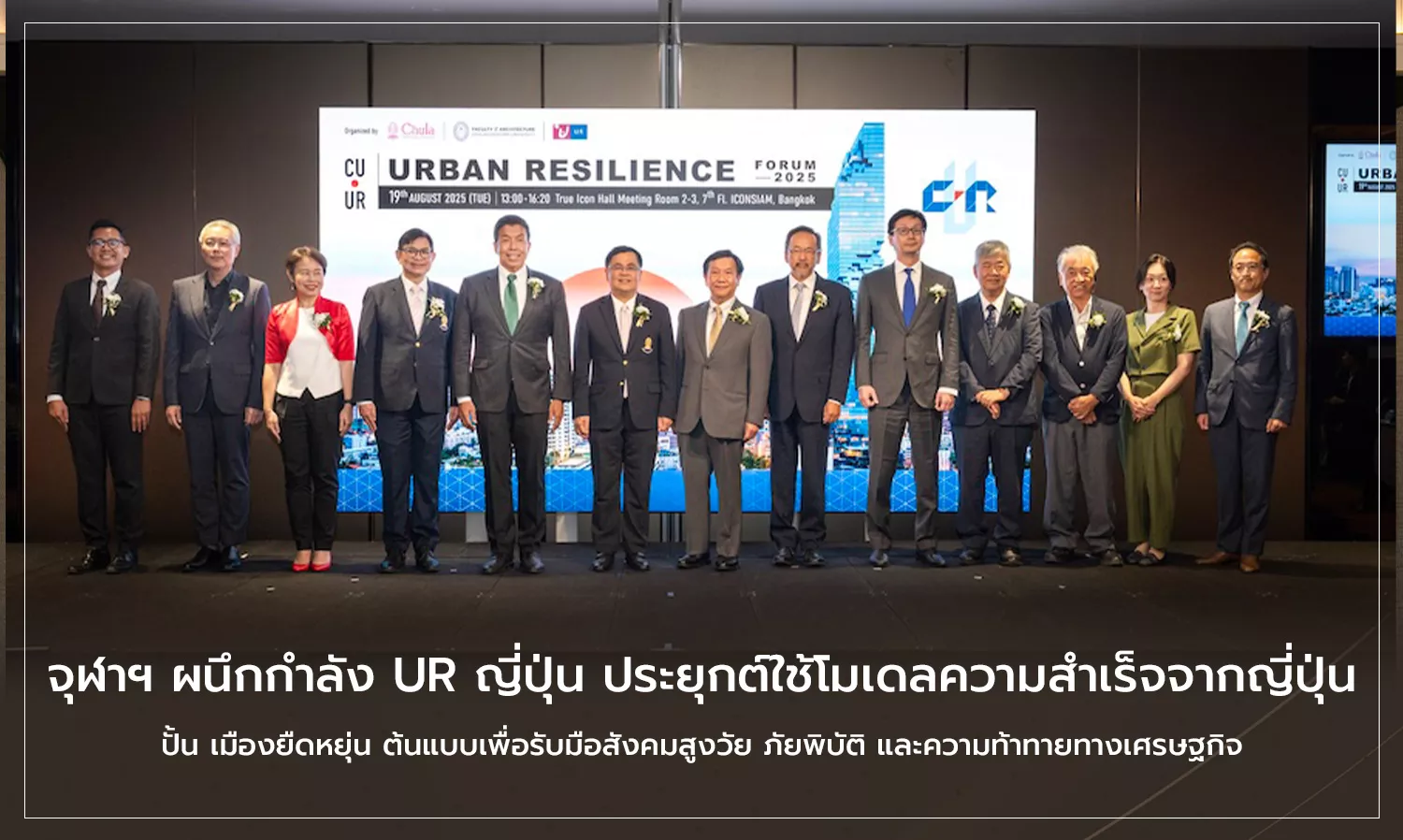
Chulalongkorn University Collaborates with Japan's UR to Apply Successful Models for Building a Resilient City to Address Aging Society, Disasters, and Economic Challenges
Chulalongkorn University Partners with Japan to Find Solutions for Future City Challenges
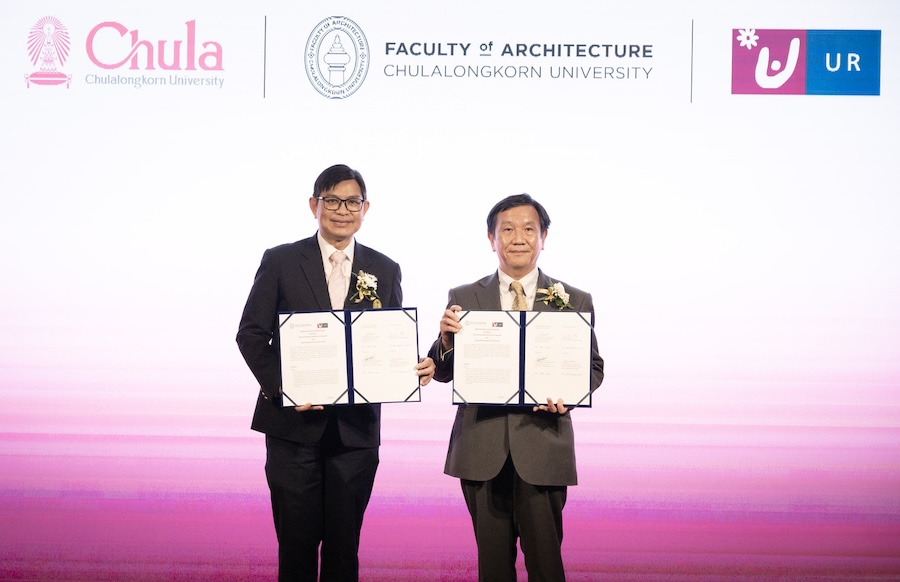
The Faculty of Architecture at Chulalongkorn University has teamed up with the Urban Renaissance Agency (UR) of Japan to organize the “Urban Resilience Forum 2025” on August 19, 2025, at TRUE ICON HALL, ICONSIAM shopping center. During the event, a Memorandum of Understanding (MOU) was signed to exchange knowledge and collaboratively design strategies for developing Thai cities to be resilient and sustainable. This collaboration comes at a time when Thailand faces multifaceted challenges, including the transition to an aging society, economic competition, and the increasing severity of climate-related disasters. Additionally, the unplanned expansion of cities, particularly in Bangkok and its vicinity, has led to complex issues such as traffic congestion, PM2.5 dust pollution, flooding, and vulnerability to natural disasters, as evidenced by the earthquake on March 28, 2025, highlighting the urgent need for development.
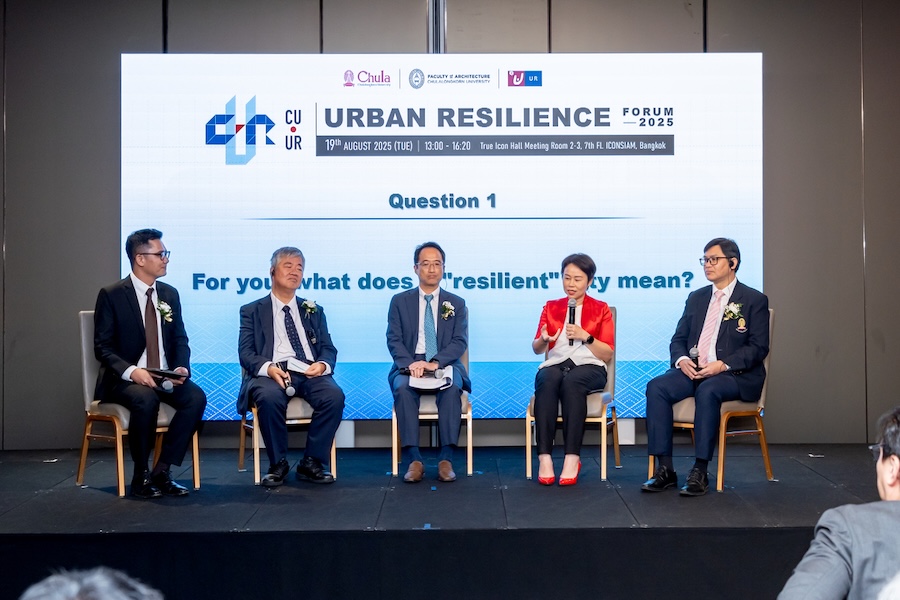
Driving Resilient Cities—Transforming Thailand for the Future
Developing cities towards resilience is a complex process. The exchange of knowledge with the Urban Renaissance Agency (UR), a government organization with a long history of urban development and revitalization in various regions of Japan, will provide Thailand with opportunities to apply successful case studies from Japan to its own cities.
Mr. Masaru Ishida, Governor of UR shared UR's experience and collaboration with Chulalongkorn University, stating, “UR has been involved in over 500 urban development projects in Japan, providing more than 1.5 million housing units for the public, including extensive Transit Oriented Development (TOD) and post-disaster recovery efforts. This is our first collaboration with a foreign university like Chulalongkorn University. We aim to apply knowledge and lessons from Japan in Thailand to help create resilient and sustainable cities for the future.”
Lessons from Japan to Bangkok
Prof. Dr. Wilead Phuriwatchar, President of Chulalongkorn University stated at the opening ceremony, “Urban development today must focus on physical improvements that enhance the quality of life for city dwellers, ensuring their happiness. If we systematically plan urban development and foster cooperation across all sectors, we can create cities where citizens live well, enjoy a high quality of life, and compete globally. This collaboration marks an important starting point for developing knowledge and technology together between Thailand and Japan.”
Additionally, Assoc. Prof. Dr. Chatchart Sitthiphan, Governor of Bangkok provided insights on creating cities ready to face changes, stating that in an increasingly complex world, cities must confront multiple challenges simultaneously, including natural disasters like flooding and earthquakes, public health crises, economic volatility, and the transition to an aging society. These issues render cities vulnerable and necessitate a "flexible" approach to resilience. He emphasized that the key to building resilient and sustainable cities lies in strong collaboration from all sectors, including government, private sector, civil society, and academia. The recent earthquake demonstrated the power of cooperation in effectively addressing shared problems. Therefore, this collaboration is a significant step towards creating a safe and livable Bangkok for everyone sustainably.
Moreover, Mr. Tadahiko Mori, Deputy Director of UR added, “UR's strength lies in making urban development projects a reality through strategic planning that addresses state policies, private sector needs, and public benefits. We develop legal processes, spatial design, investment models, and collaboration with diverse stakeholders. We believe that these experiences will enhance our cooperation with Thailand in creating resilient and sustainable cities.”
Housing Development for All: TOD and Digital Twin—Tools for Elevating Cities in Thailand
Asst. Prof. Dr. Natthapong Pannoi, Deputy Director of the Social Design Lab and Assistant Dean of the Faculty of Architecture at Chulalongkorn University explained the initial collaboration between Chulalongkorn University and UR, stating, “We received research funding from the Office of the National Economic and Social Development Council to study mechanisms for spatial development of affordable housing in urban centers across various regions of Thailand, focusing on design, investment models, and legal processes to work with partners for concrete future actions.”
Asst. Prof. Sarayuth Sapsuk, Dean of the Faculty of Architecture at Chulalongkorn University emphasized that Bangkok and its surrounding areas face challenges from urban expansion encroaching on agricultural land, flood risks, and transportation burdens, necessitating urgent development of areas around public transport systems based on the TOD concept to ensure citizens have convenient access to housing, jobs, and public services. “Thailand may still lack expertise in effectively developing cities, while Japan has established mechanisms for urban development, along with knowledge and organizations that have successfully achieved results in various forms. Therefore, the collaboration between Chulalongkorn University and UR is expected to enable the Faculty of Architecture to apply knowledge from UR to enhance understanding and shared goals among various sectors in Thailand for urban development, addressing urban issues, optimizing land use, improving living conditions, and facilitating transportation, ultimately contributing to the country's economic development.”
Collaboration for the Future
Throughout the conference, there was a unanimous voice from academics, the private sector, and civil society that creating a true ‘resilient city’ requires integrated cooperation across borders and sectors. Therefore, the collaboration between Chulalongkorn University and UR (Japan) is not merely an academic meeting but a foundation for building consensus to take concrete actions in creating sustainable model cities, aiming to extend knowledge to other cities across the country and promote ‘resilience’ as a fundamental characteristic of Thai cities, where all citizens can live in a safe, comfortable, beautiful environment filled with economic opportunities and quality of life.