Sansiri - KMITL Develops Graphene-Reinforced Precast Technology for the Future of Construction
- Sansiri reaffirms its commitment to driving sustainability within the organization and all new projects, aiming for the ultimate goal of becoming a 'net-zero greenhouse gas emissions organization' by 2050.
- Partnering with King Mongkut's Institute of Technology Ladkrabang (KMITL), a leading Thai higher education institution renowned for its science and technology.
- For the first time in Thailand! Announcing a collaboration to research and develop heat-resistant graphene-reinforced precast concrete walls, continuing the success from the Sansiri Sustainable Home – Prototype 1 towards the development of Net-zero Home 2050.
- Focusing on developing new products and knowledge to expand benefits both domestically and internationally, while driving the economy and increasing national income.
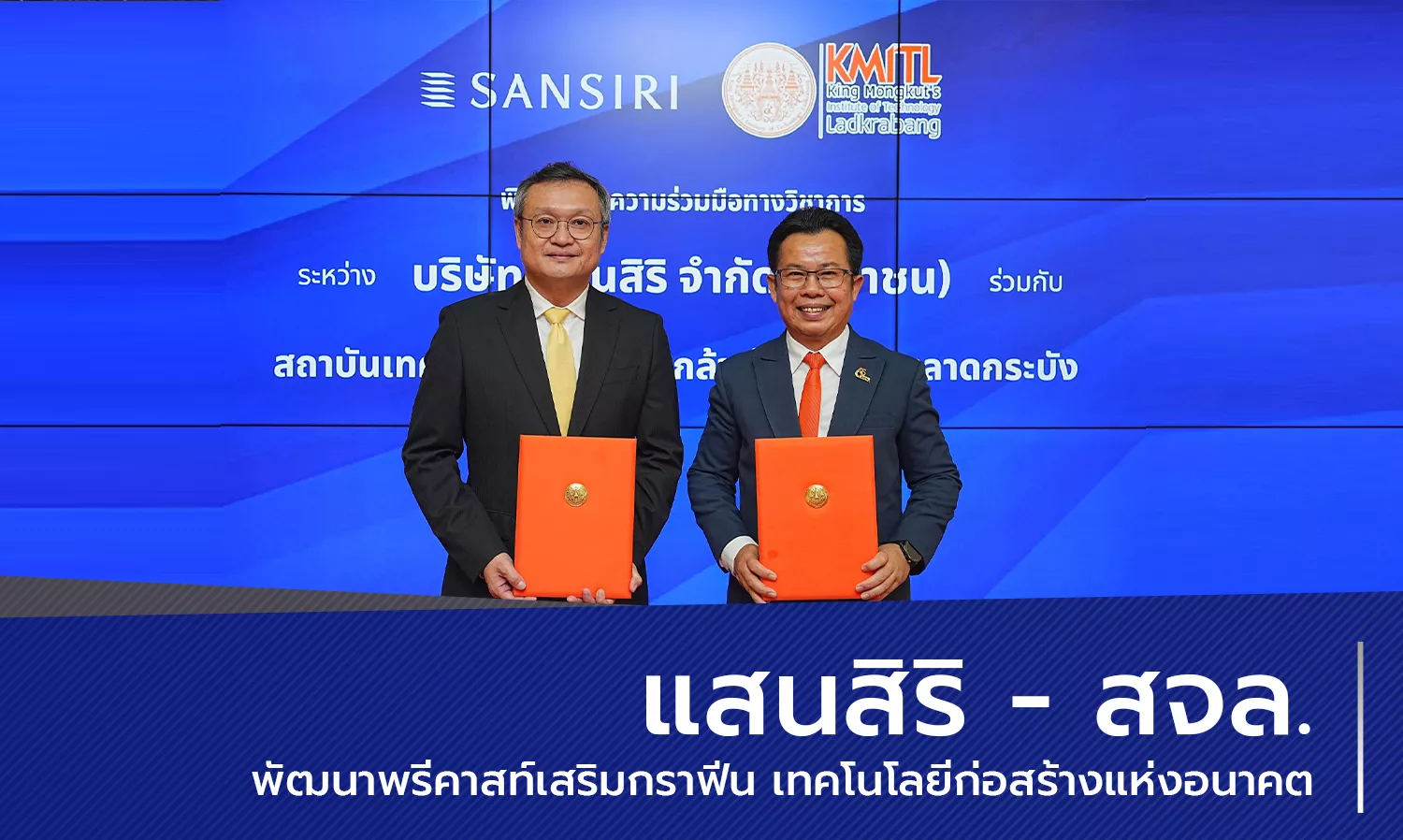
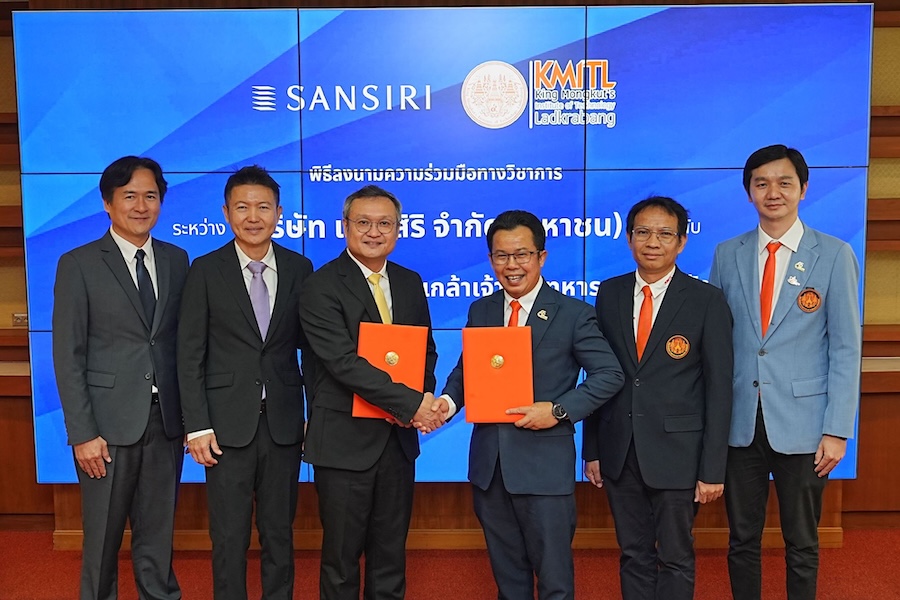
(In the image) Mr. Uthai Uthaisangkhuk (left), CEO of Sansiri Public Company Limited, along with Associate Professor Dr. Komsan Maleesee (right), President of KMITL, announced the collaboration to develop graphene-reinforced precast technology aimed at transforming the Thai real estate industry.
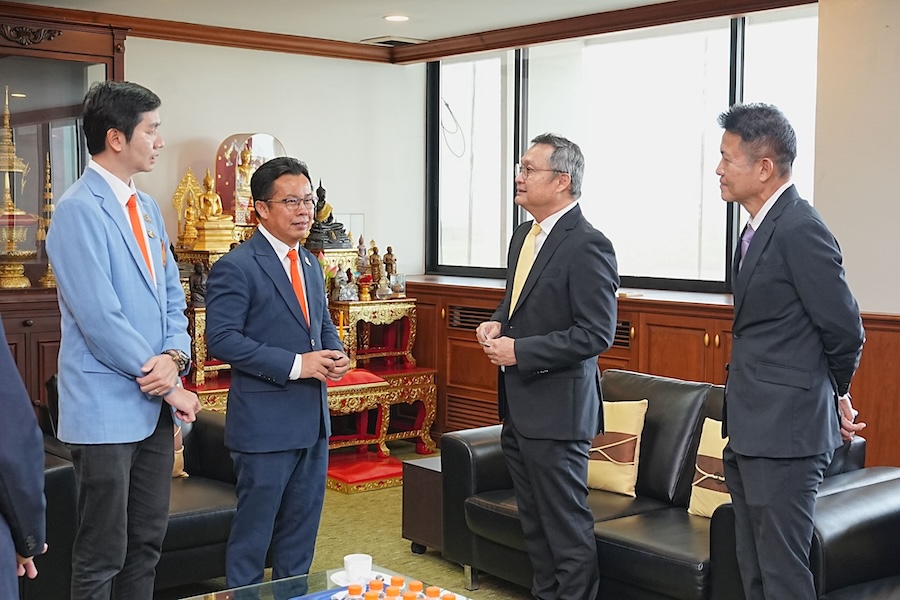
Mr. Uthai Uthaisangkhuk, CEO of Sansiri Public Company Limited, stated, "This is a significant collaboration for Sansiri, partnering with a leading Thai university known for its excellence in science and technology, such as KMITL, which is a leader in graphene research and development in Thailand, particularly in the industrial production of graphene and its applications in various fields.
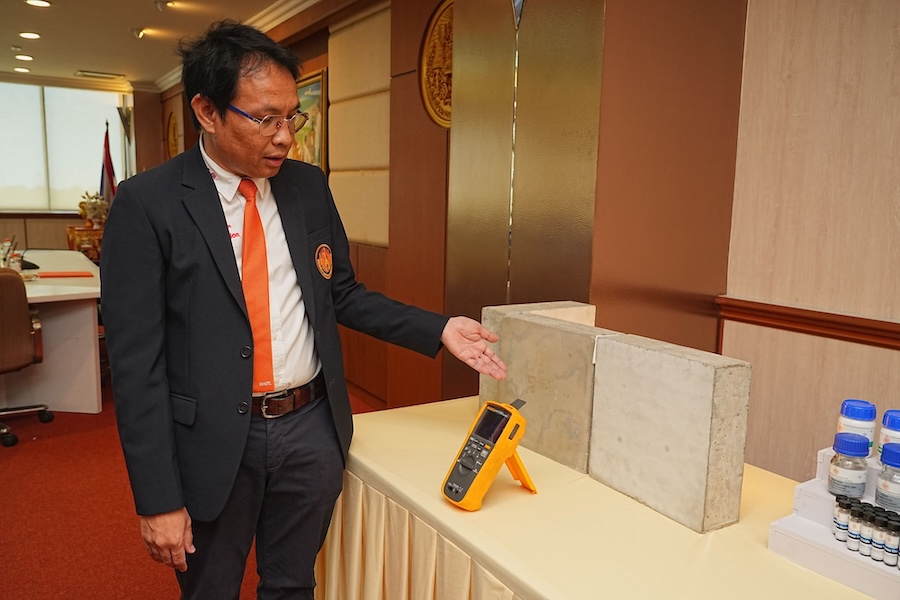
Currently, the construction industry uses graphene to enhance the strength of concrete. For instance, mixing graphene at 0.1% or less can increase concrete strength by up to 35% or more. Furthermore, using graphene to reinforce strength can reduce cement usage, which helps lower carbon dioxide emissions that impact global warming.
This collaboration involves researching graphene to develop a new type of precast concrete wall reinforced with graphene to prevent heat and reduce heat accumulation, marking the first research of its kind in Thailand. It is part of Sansiri's roadmap towards developing housing that achieves net-zero greenhouse gas emissions, or Net-zero Home 2050, following the success of the Sansiri Sustainable Home – Prototype 1, a model home that integrates sustainability launched earlier this year. Sansiri believes this collaboration will set a new standard for the Thai real estate business. The new graphene-reinforced precast concrete wall will serve as a prototype for Sansiri's precast factory to produce concrete walls for future construction projects.
Associate Professor Dr. Komsan Maleesee, President of KMITL, stated: "KMITL has a vision to develop the country through science and technology, creating research and innovations for the global community. The research team led by Professor Dr. Cherthana Rattanapan, head of the Smart Materials Research and Innovation Unit, and Assistant Professor Dr. Chawalit Sriwong, Faculty of Science, has successfully established the first industrial-scale automated graphene production plant in Thailand, capable of producing graphene independently, replacing imports valued at over 10 million baht per kilogram. This has led to further studies and developments in applying graphene in various innovations that meet the country's needs and drive the economy with advanced technology. Therefore, this collaboration aims to utilize graphene in precast concrete to prevent external heat, representing a high-potential innovation that can help reduce energy consumption in housing, improve quality of life, and lower greenhouse gas emissions, aligning with KMITL's mission to create research for the benefit of society and the nation."
The research project to develop heat-resistant graphene-reinforced precast concrete walls, under the collaboration between Sansiri and KMITL, will utilize a graphene derivative material known as graphene oxide (GO), which can be produced in large quantities within KMITL's Faculty of Science. This is achieved through the use of a "low-cost graphene oxide and reduced graphene oxide production machine for industry" as a reinforcing material to enhance the special properties of precast concrete walls. Since the nano-material graphene oxide (GO) possesses excellent properties, adding a small amount to the concrete mix can significantly improve mechanical properties, enhance thermal insulation, and the nano-material graphene oxide (GO) is non-toxic, resistant to chemicals, heat, and sunlight, and can inhibit the growth of fungi and bacteria, making it safe for residents.
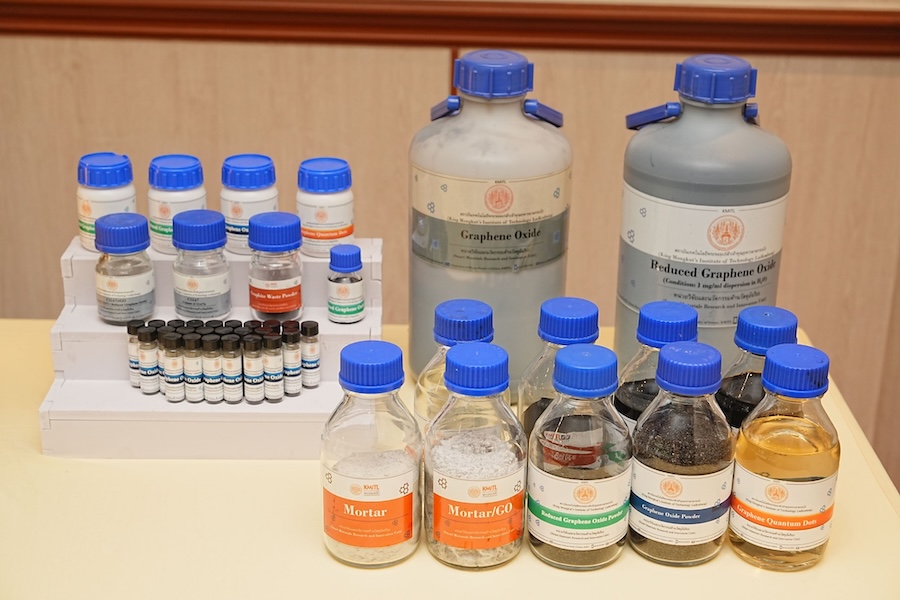
The success in developing a new type of precast concrete wall by incorporating graphene oxide from this research project will enhance heat resistance and identify the optimal ratio between concrete and graphene oxide. This marks the first research innovation aimed at developing environmentally friendly housing in Thailand, resulting in new products and knowledge to benefit the development of housing, such as houses, condominiums, townhomes, office buildings, factories, warehouses, and more, both domestically and for export, thereby supporting economic growth and increasing national income.
Note to Editor:
- Sansiri has continuously developed precast systems for over 15 years, becoming a leader in construction innovation in the real estate sector, with a total of 6 precast factories covering over 200 rai located in Pathum Thani, utilizing Semi Automated Carousel System technology controlled by computer and robots at every stage, employing green cement innovation that helps reduce greenhouse gas emissions by 5-10% (per ton of cement).
- Furthermore, Sansiri is committed to advancing its green mission, which is a key strategy integrated into all processes, as well as promoting collaboration within the ecosystem, including ongoing R&D to jointly develop various green products to deliver sustainable goods and services to residents, aiming for the organization's goal of achieving net-zero greenhouse gas emissions by 2050.