Sansiri Launches 'Future Harvest' Project to Promote Quality Coffee Cultivation, Reduce Air Pollution, and Increase Income, Aiming to Be a Model for Sustainable Agriculture in Chiang Mai
- As northern Thailand continues to face the ongoing issue of PM2.5 dust pollution, Sansiri, as a leading real estate company in the country, recognizes the role of the business sector in contributing to "change" <\/strong><\/span><\/li>
- This led to the concept of the "Future Harvest<\/strong>" project, which supports seedlings to expand the cultivation of quality Thai coffee for farmers in Chiang Mai, aiming to address environmental issues and sustainably improve the quality of life in the community.<\/span><\/li>
- Transforming the PM2.5 crisis into an opportunity to create forests, generate jobs, and build a sustainable future for the Chiang Mai community, with plans to expand this model to other communities in the northern region.<\/span><\/li>
- This led to the concept of the "Future Harvest<\/strong>" project, which supports seedlings to expand the cultivation of quality Thai coffee for farmers in Chiang Mai, aiming to address environmental issues and sustainably improve the quality of life in the community.<\/span><\/li>
 <\/p>
<\/p>
Samatcha Promsirirak <\/span><\/strong>Chief of Staff <\/span><\/strong>of Sansiri Public Company Limited <\/span><\/strong>stated that Sansiri recognizes the air pollution problem in the northern region caused primarily by forest burning, leading to the idea of helping to reduce air pollution, create a better environment for the community, and promote sustainable development in the future. This resulted in the coffee seedling support project to expand the cultivation of Thai coffee for farmers in Chiang Mai, which we call <\/span>"Future Harvest" <\/span><\/strong><\/p>
+ <\/span><\/strong>Coffee: A New Alternative Crop to Replace Destructive Burning Practices<\/span><\/strong><\/p>
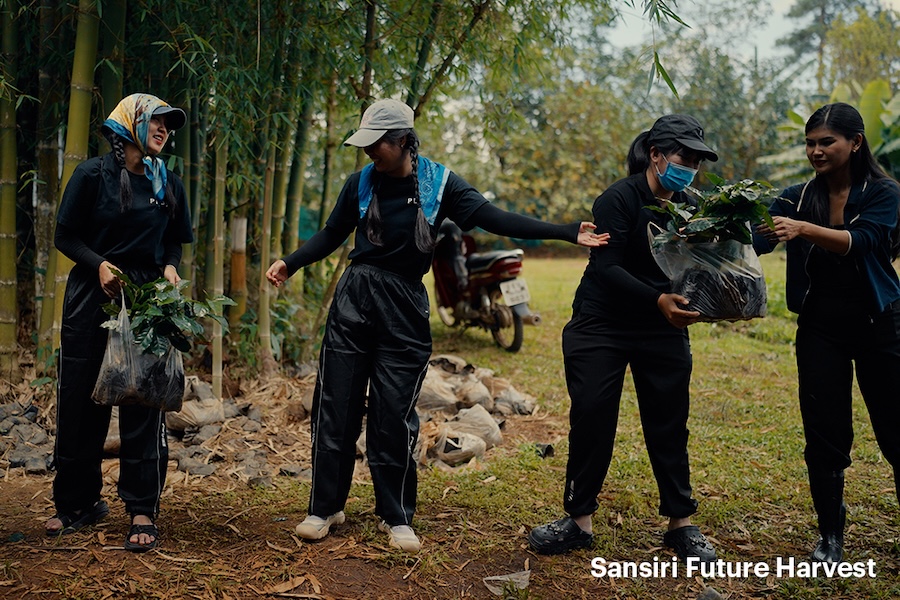
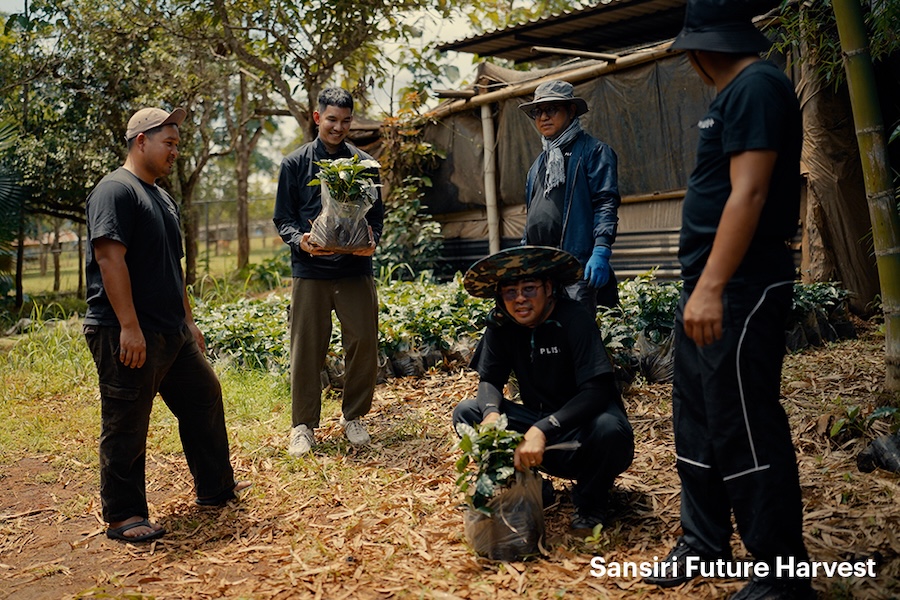
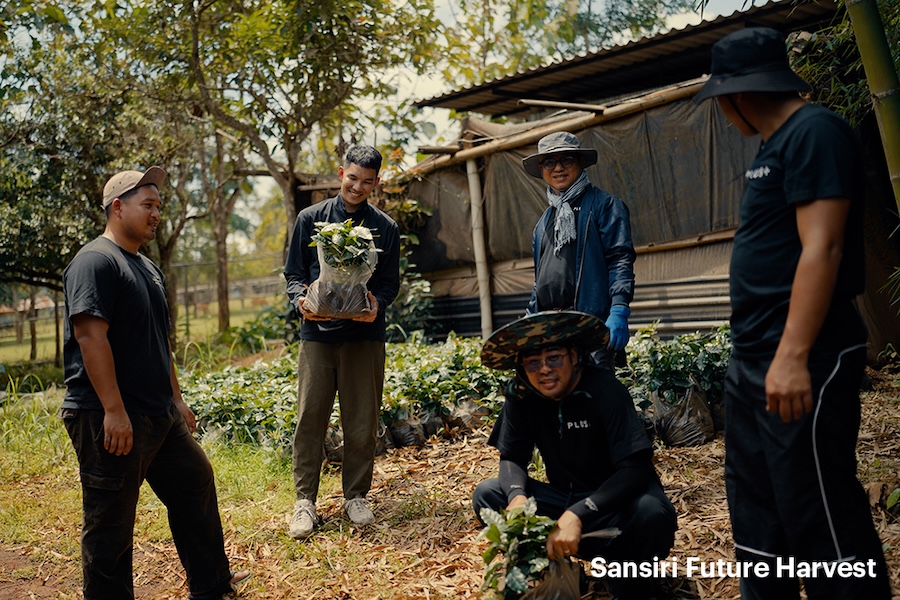
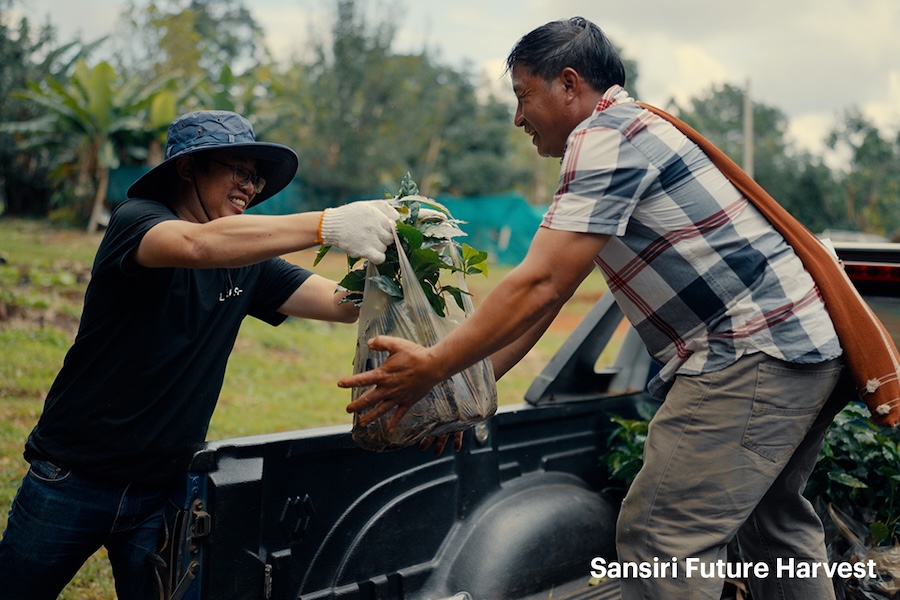
In many areas of the northern region, economic crops such as corn and sugarcane require burning to prepare the land for cultivation, becoming a source of smoke and deforestation. The <\/span>"Future Harvest" <\/span>project therefore focuses on promoting the cultivation of quality coffee that can be grown in a sustainable agricultural system, helping to preserve forests, reduce encroachment, and provide a sustainable source of income for farmers. In 2024-2025, Sansiri plans to support 5,200 quality coffee seedlings for 15 farmers in the Hang Dong district of Chiang Mai, covering approximately 26 rai of land, with "Saen Chai Estate" owned by Saen Chai Jupoa, a nationally awarded estate, serving as a consultant and key model for growing and processing specialty Thai coffee.<\/strong> The coffee seedlings supported by Sansiri will absorb over <\/span>57.2<\/span> tons of carbon dioxide per year. At the same time, farmers will see increased income from the coffee they cultivate, with an average yield of <\/span>1<\/span> kilogram per tree by the fourth year, translating to a total income of over <\/span>1.56<\/span> million baht per year, and from the fifth year onwards, income could increase to <\/span>2.73<\/span> million baht per year due to higher yields.<\/span> Saen Chai added that coffee can provide a stable and significantly higher income compared to traditional crops, with each family potentially earning "hundreds of thousands of baht per year," enabling farmers to support their children’s education, build homes, own vehicles, and access better healthcare. Unlike other crops, coffee has a "global market," reducing reliance on single traders and providing export options if domestic prices are low. Coffee is also an "environmentally friendly crop" <\/strong>that does not require harmful chemicals, thus protecting soil quality, water sources, and surrounding ecosystems. All of this aligns with the traditional lifestyle of highland communities that "love the forest" and "do not want to destroy their home," particularly in Kalyanivathana District, Chiang Mai, recognized as the "lungs of Asia" due to its vast forest areas, making coffee an important tool for conservation. Growing coffee also aligns with local culture and lifestyle, encouraging young people who study or work in cities to return home and support their families, fostering family bonds and allowing communities to coexist harmoniously with nature without being forced to deforest or resort to destructive practices out of despair. "Leading by example instead of just telling others to stop doing bad things, showing that coffee is a "sustainable" and viable profession, and the success that everyone can see will inspire others to shift from destructive agriculture to creative agriculture."<\/span> The pilot project supporting Thai coffee seedlings for farmers represents a coffee variety with competitive potential in the global market and high demand. Additionally, coffee cultivation helps restore ecosystems in areas promoting sustainable agriculture in the long term and contributes to increasing forest areas and reducing air pollution or PM2.5 dust in the northern region.<\/span> + “Future Harvest” <\/span><\/strong>Aligns with Sansiri's ESG Approach <\/span><\/strong> The "Future Harvest" project is also in line with Sansiri's ESG (Environmental, Social, and Governance) approach in all dimensions. In terms of Environment (E), <\/span>Sansiri has supported farmers in reducing burning practices, increasing green spaces, and lowering carbon emissions. For Social (S), <\/span>Sansiri strives to create alternative careers for local farmers, such as in the coffee business, and Governance (G), <\/span>drives business responsibly and sustainably.<\/span> + <\/span><\/strong>Monitoring and Expanding the Project <\/span><\/strong> The operational approach of the "Future Harvest" project not only involves action but also includes a registration system for farmers and a dedicated team from Sansiri to closely oversee the project, along with annual field activities by the Sansiri team to assess and promote ongoing care for the seedlings.<\/span> In the future, Sansiri plans to expand the distribution of coffee seedlings to new farmer groups and extend the project to other areas to replicate the success from Kalyanivathana District to communities capable of transitioning from forest burning to forest conservation through a sustainable coffee model.<\/span> "We hope that this assistance to farmers will enable Kalyanivathana District, led by Saen Chai Estate, to become a model area that shares knowledge and expands results to other areas, and that farmers receiving coffee seedlings can propagate them to provide to other farmers, promoting learning to be both receivers and givers at the same time. In the next phase, we may expand to nearby districts or northern areas affected by forest fires," Samatcha stated.<\/span> +<\/strong>Images<\/strong> *On June 5-6, Sansiri took its employees and Plus Property to the field to help distribute coffee seedlings and plant coffee in Kalyanivathana District, Chiang Mai. Additionally, Sansiri supported leaf blower equipment to create firebreaks after witnessing the impact from the Saen Chai Estate, which suffered significant damage from forest fires last year.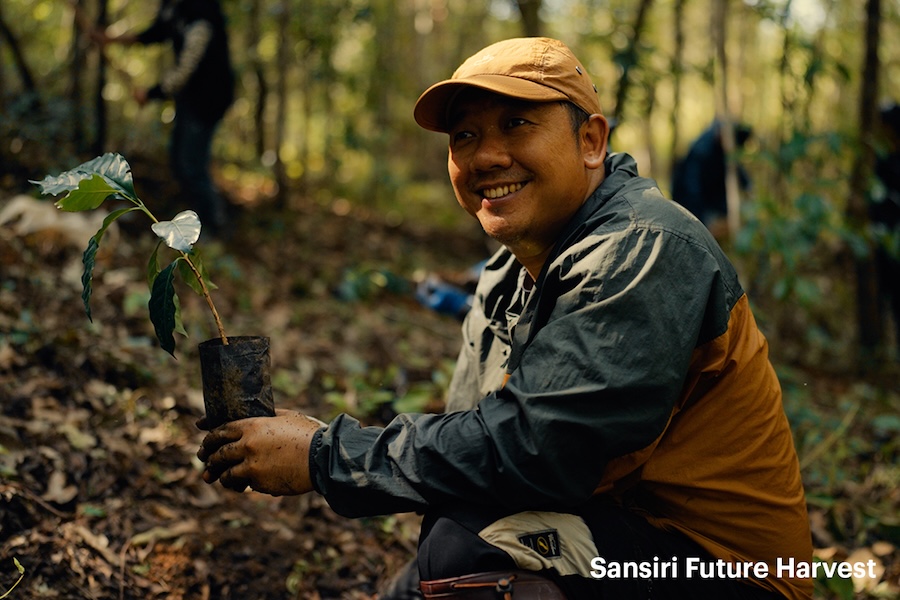 <\/p>
<\/p>
 <\/p>
<\/p>
 <\/p>
<\/p>
 <\/p>
<\/p>
 <\/p>
<\/p>