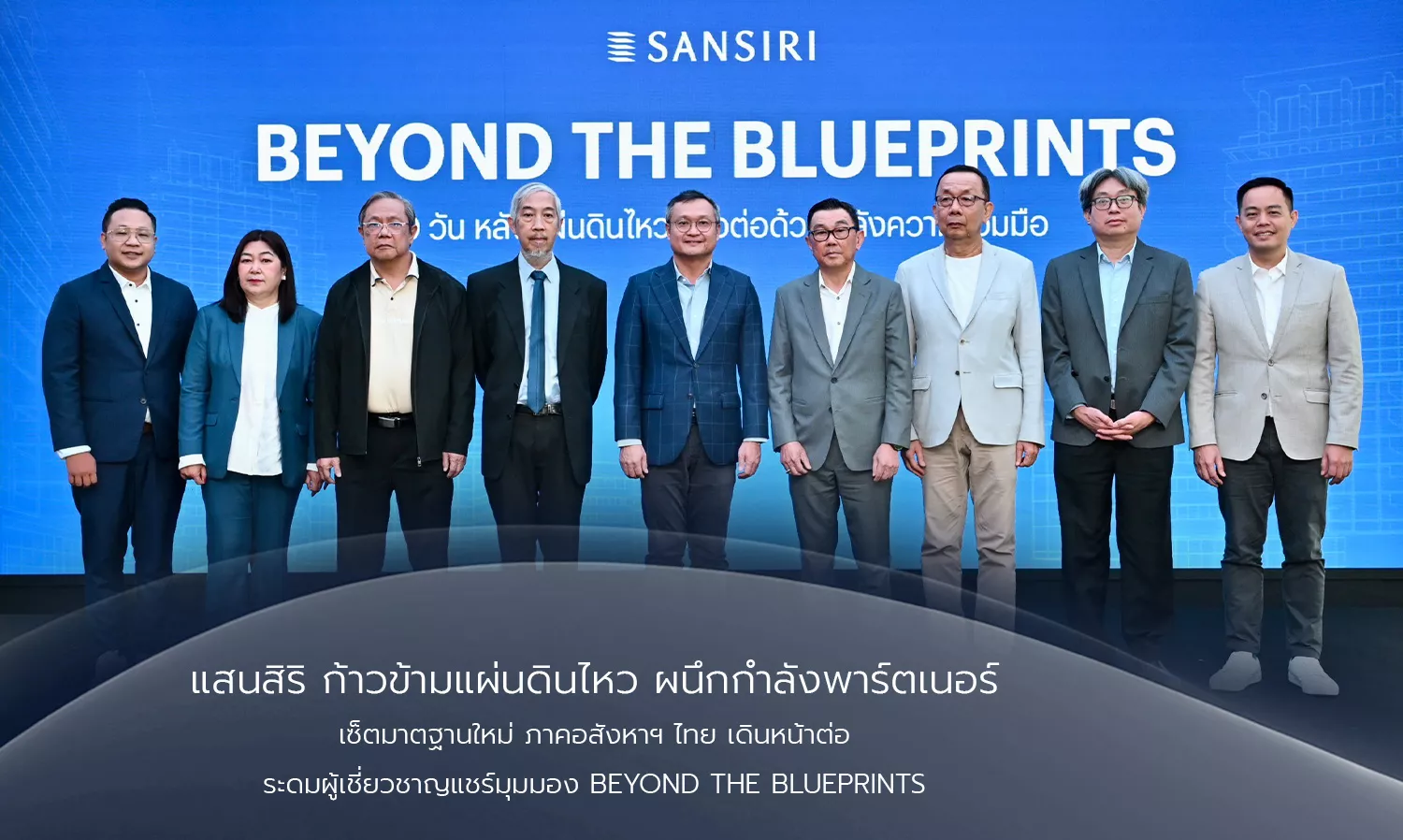
Sansiri Overcomes Earthquake, Partners to Set New Standards for Thai Real Estate Industry, Moving Forward with Experts Sharing Insights BEYOND THE BLUEPRINTS
Professor Dr. Penneung Vanichchai, Department of Structural Engineering, Asian Institute of Technology (AIT), and Director of the National Earthquake Research Center, stated that the Thai real estate sector has made significant progress in design standards for new buildings due to stricter ministerial regulations and earthquake-resistant building design standards. In particular, the 2021 ministerial regulation marks a significant development for the Thai real estate sector. This law mandates that new buildings must meet higher safety standards and accommodate a wider variety of building types. Furthermore, new real estate projects constructed under the 2021 ministerial regulation specify weight-bearing capacity, resistance, durability of buildings, and the ground supporting buildings to withstand seismic vibrations, in accordance with standards M.Y.P. 1301/1302-61, which represent a significant increase in safety standards. Most major operators prioritize and comply with these standards, incorporating modern technology and design methods in recent times. However, despite the stringent building design standards, proper legal design and construction are crucial to ensure that buildings can withstand earthquake vibrations. Looking ahead, we should adopt new innovations widely used in Japan and other countries to help reduce building sway and vibrations in Thailand. These innovations include devices that absorb seismic energy, such as Viscous Dampers or Oil Dampers. Importantly, raising public awareness about earthquake risks and preparedness strategies, as well as developing effective emergency response plans to mitigate the impacts of earthquakes, is essential and should not be overlooked.
The Power of Collaboration: Thai Real Estate Passes the Test
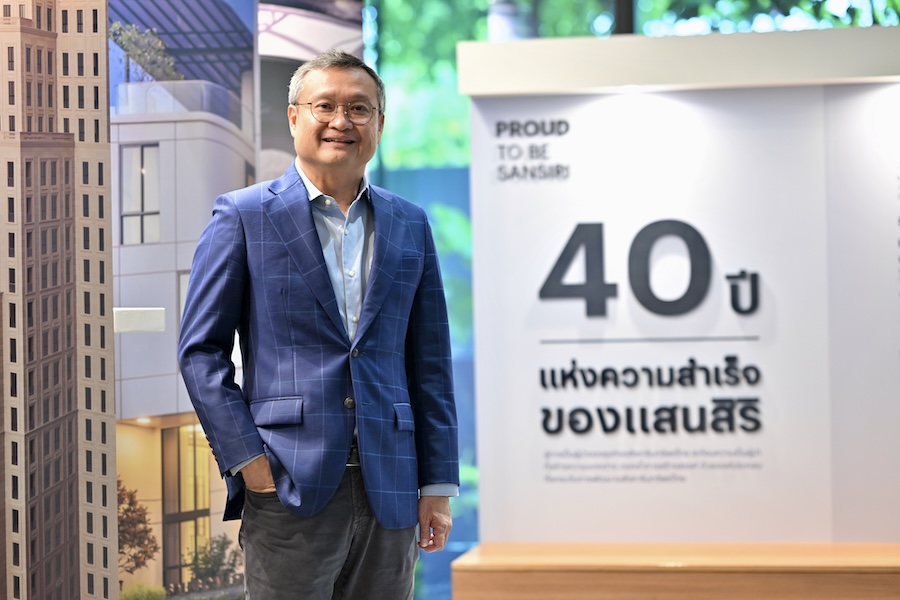
Uthai Uthaisangkhuk, CEO of Sansiri Public Company Limited, stated that today we have proven that our real estate sector is strong and has passed the earthquake event. With over 40 years of experience in condominium development, having completed 225 high-rise projects with over 90,000 units, we see this as a pivotal moment to elevate industry standards. We have demonstrated that living in high-rise projects is indeed safe and secure. What has enabled Sansiri to navigate this crisis is our strong network of partners, including Plus Property, professional management of legal entities, major contractors who rushed to support from day one, expert consultants providing technical advice and on-site assistance, the elevator team, a crucial part of high-rise transportation, and insurance companies standing firmly by our residents.
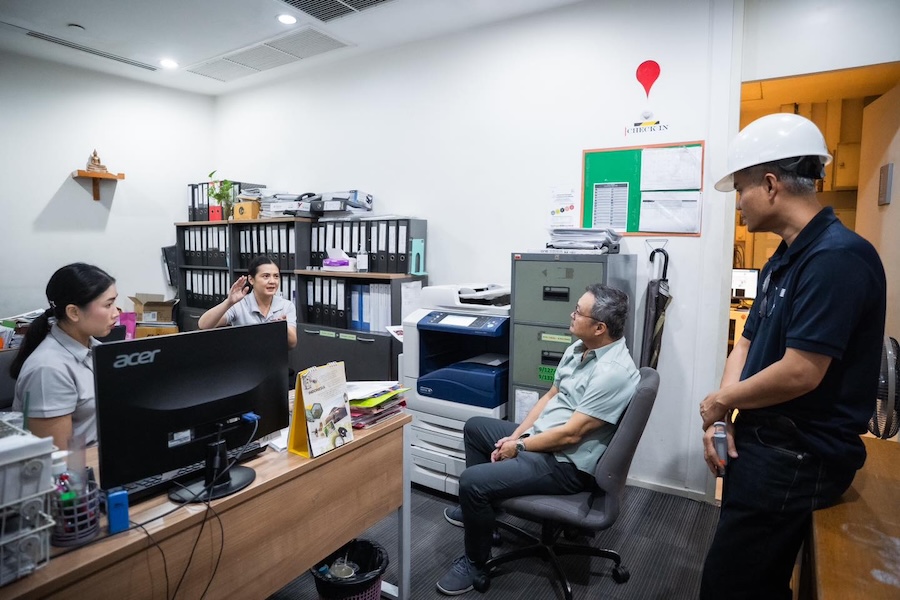
Sansiri looks forward to finding ways to strengthen our operations, such as reviewing real event data to improve construction standard manuals, regularly preparing and practicing emergency plans, and implementing warning systems and inspections to prevent issues before they arise. This is a collective effort across the industry towards a single goal: strong and safe housing.
"We are not just surviving; we must make this industry stronger than before. By organizing the Sansiri Insight Talk 'BEYOND THE BLUEPRINTS' 60 days after the earthquake, we will ignite collaboration among real estate professionals to drive the Thai real estate sector towards strength and sustainable growth, focusing on three core areas: Quality, exceeding standards; Service, continuous support; and Well-being, delivering a better quality of life, aiming for endless care for our residents," Uthai emphasized.
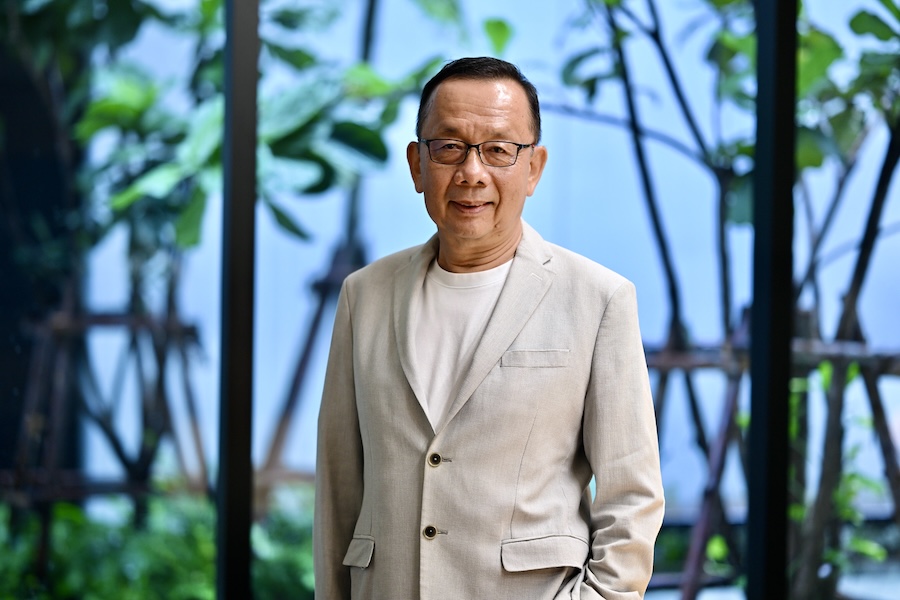
Earthquake Affects Short-term Confidence Boris Kasinpila, CEO of Home Buyer Guide Co., Ltd., and co-founder of The Next Real course, stated that many large real estate companies responded quickly by sending engineering teams to inspect buildings and continuously communicate with residents. This helped reduce panic and build confidence. The Thai real estate sector has weathered every crisis, including major floods and COVID-19, and I believe that the recent earthquake situation in Thailand will only have a short-term impact. Conversely, brands that perform well, with secure projects and quick customer care, will gain trust and word-of-mouth referrals. In the long term, the real estate market will adjust and recover, with changes in regulations and efforts to rebuild consumer confidence. Importantly, collaboration within the ecosystem is essential to overcome every crisis strongly, using lessons learned to develop new quality products, innovative construction technologies, and stricter safety standards in the future. Furthermore, After Sale Service will be a core focus for developers to rapidly respond to the needs of consumers in each segment. Additionally, developers will need to adapt in various dimensions, including strengthening products to meet market demands and increasing the use of technology in marketing and sales, especially in niche markets such as the aging society or those seeking investment properties for rental purposes.
The Safety of Residents is Paramount, Leading to New Standards with Experts
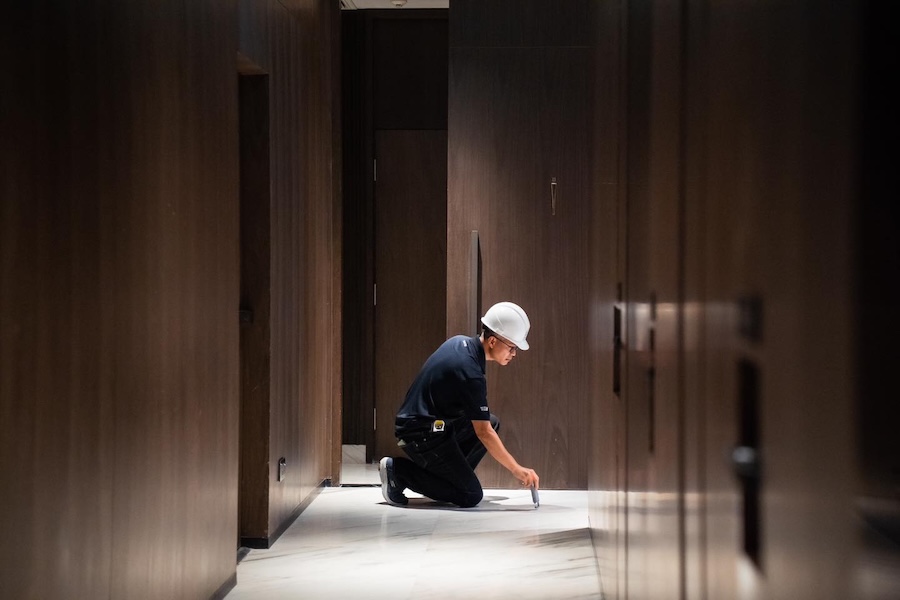
Ongart Suwanakul, Senior Assistant Managing Director of Condominium Project Development at Sansiri Public Company Limited, revealed that we had no time to be reactive; our focus was on managing the chaos that arose, with the ultimate goal being the safety and peace of mind of our residents. We quickly established a War Room, mobilizing all units, temporarily halting sales to dedicate all resources, coordinating with expert partners to create a Key Check List for engineers to conduct immediate and thorough inspections of structures, architecture, elevators, electrical systems, plumbing, and fire protection systems, especially the elevator systems to ensure safety.
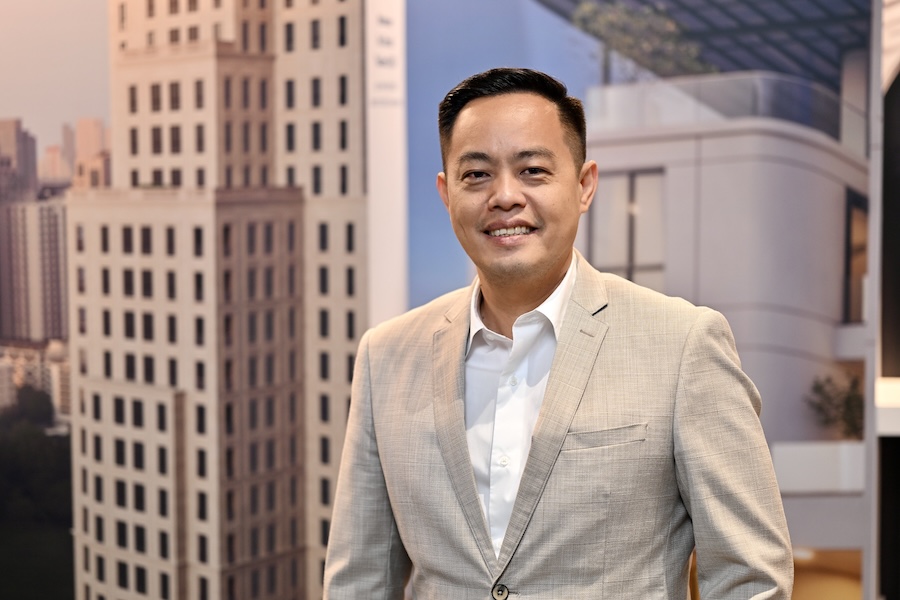
The inspection results covering all Sansiri projects, whether for sale, under construction, or horizontal projects, including common areas, show homes, and homes under construction, confirm that building structures are 100% safe. Additionally, we expedited the facilitation of insurance claims for residents, a process that customers may not be familiar with. Our team closely assisted, including taking photos and gathering information to ensure the process goes as smoothly as possible.
“Sansiri does not focus on what could have been done better in that situation; we dedicated all available resources to fully care for our residents. From this experience, we will utilize data from LIV-24, a 24-hour real-time safety monitoring center, to study and maximize its use for future crisis management. We will also revisit various damage cases to plan anew, such as making ceilings and walls more flexible to withstand earthquakes, and incorporating new innovations, especially in developing structural design practices for high-rise buildings that we have studied since 2017. These will be reviewed and updated in collaboration with academic institutions and partners to align with changing circumstances and reference international standards to provide the highest assurance to residents in all situations,” Ongart stated.
Work Standards Exceed General Requirements
Dr. Weerasak Vanichwat, CEO of Thika Construction Public Company Limited, stated that “This earthquake may not be the last, but we can prevent the next one from becoming a crisis if we systematically enhance our preparedness starting today. For Thika, proper engineering design, using strong and safe quality materials, and ensuring quality and safety in every step of the work process are essential. All work must be inspected, and we must instill a safety consciousness among engineers and construction workers to be aware of potential dangers at all times, leading to more effective construction standards in the future. Additionally, we would like to see more use of prefabricated construction materials in the construction industry, such as lightweight metal-framed walls that are strong and soundproof. These can be repaired more easily than concrete walls when cracks occur, such as from an earthquake. We also hope to see collaboration between the public and private sectors to seriously develop safety innovations.”
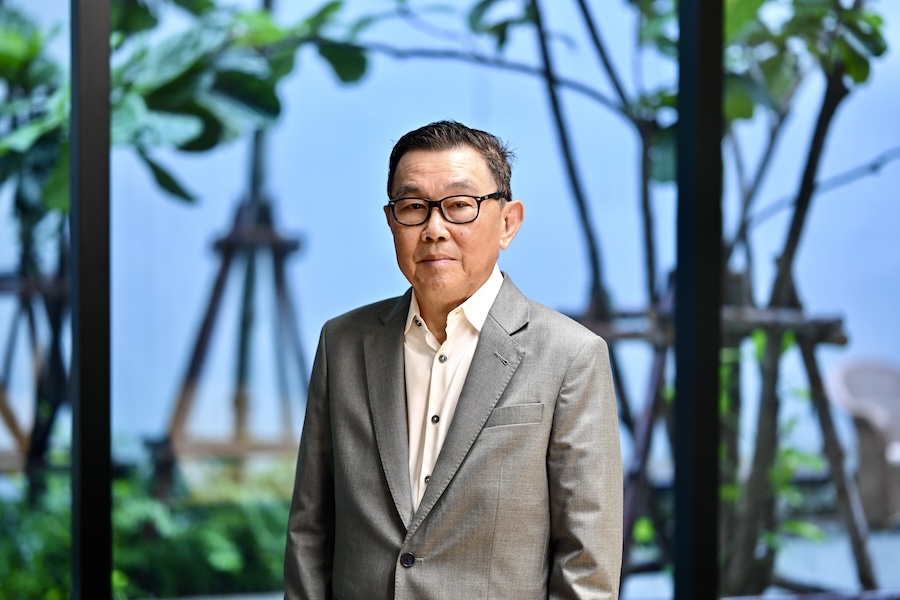
Lessons from Building Collapse – "Bad Conditions" and the Responsibility We Must Have
Kritsada Thaepasathit, Managing Director of Infra Group Co., Ltd., an expert in high-rise buildings and seismic wind, stated that the causes of building collapses in Thailand and abroad stem from various Bad Conditions, such as a single incomplete joint, which, when combined with changes in the building's internal function or changes in groundwater, can lead to unexpected building collapses. Therefore, good design requires competent contractors and, importantly, project owners must understand and support, even if it incurs additional costs. Because the events that occur will prove the work of all parties involved, including operators, designers, and contractors. The key is to respect the profession, take responsibility, and work diligently, as good work reflects the performance of the building. I urge all sectors to maintain quality standards in design and construction, especially in using standard quality materials like steel and concrete, and to propose random quality checks on-site, not just in laboratories.”
Responding Quickly, Communicating in Real-Time, and Always Advancing
Narumol Apornthanakul, Assistant Managing Director of Residential Building Management at Plus Property Co., Ltd., stated that “Plus Property manages over 400 projects, covering more than 100,000 families, so we must think and plan comprehensively and systematically, prioritizing our customers' feelings and safety. We immediately established a War Room to manage the situation, communicating accurate and timely information to build confidence and reduce panic. We also implemented building inspections, damage recovery measures, and facilitated insurance claims and repairs to help customers return to normal life as quickly as possible. Looking to the future, we believe there should be a development of a Data Center to access customer information, especially for vulnerable groups such as the elderly and those needing assistance, particularly in emergencies requiring evacuation, to ensure timely help. Next, technology that enhances safety, like Sansiri and Plus, where we utilize LIV-24 technology in many projects we manage, employing AI for residential safety. The system can process real-time data to identify which systems are operational or affected, such as elevators, electricity, and fire systems, allowing for effective management planning. Continuous training for both employees and customers on how to act during an earthquake, such as staying away from windows and not using elevators, is essential. Evacuating should be done at a distance from the building equal to its height, to ensure preparedness for real events, enabling both staff and residents to respond effectively.”
Earthquakes are a Challenge, Aiming for Adaptation
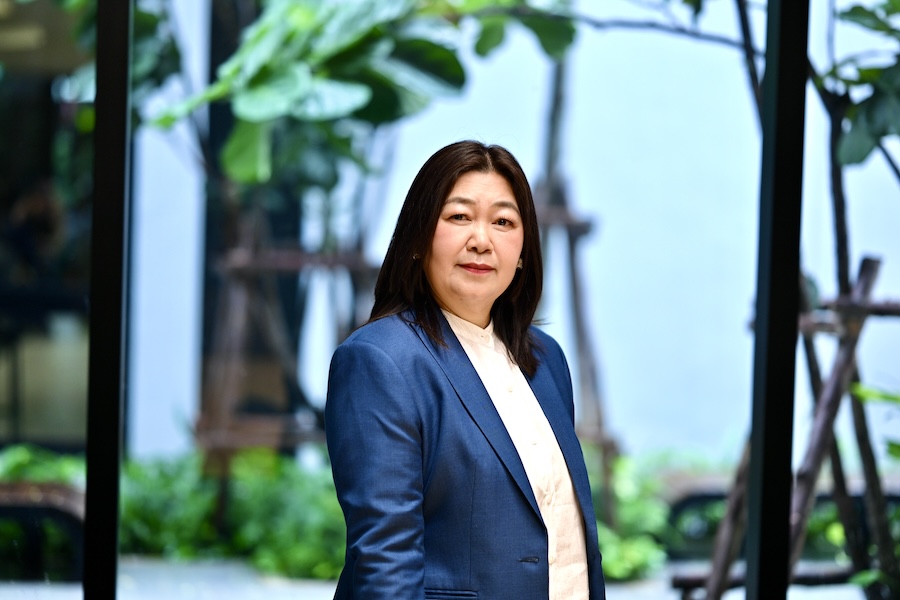
Winyu Angsunith, Assistant Managing Director of Viriyah Insurance Public Company Limited, stated that the challenge in managing the recent earthquake situation was dealing with the high volume of claims, especially from individual customers. We expedited the claims review and payment process, focusing on damage assessment and fair claim approvals. Additionally, we emphasized controlling repair costs by negotiating with contractors to ensure reasonable expenses that benefit customers. We also expanded collaboration with various sectors, including working closely with the Office of Insurance Commission and the Thai General Insurance Association to promote understanding of insurance and natural disaster issues among the public. Importantly, we aim to educate the public on the necessity of having insurance, which can alleviate financial burdens during unforeseen events.”
The next step for the Thai real estate sector is not just to build housing but to create "confidence" and "sustainability" simultaneously. Sansiri is ready to ignite the next collaboration, involving expert engineers and fellow developers, to lay a strong foundation for the future of the Thai real estate sector, ensuring consumer confidence that every home and building is a true space of happiness and safety.