International Tourist Market in Thailand Faces Multiple Negative Factors, Expected to Contract by 2.8% in 2025, First Decline in 3 Years with 34.5 Million Visitors
- Several events have impacted the international tourist market in Thailand, with foreign tourists visiting Thailand numbering 12.9 million from January 1 to May 11, 2025, a decline of 1% (YoY).
- Negative factors persist and may increase for the remainder of this year, including a slowdown in the global economy, decreased competitiveness of Thailand's tourism, changing tourist behaviors and demands, as well as uncontrollable factors like geopolitical issues.
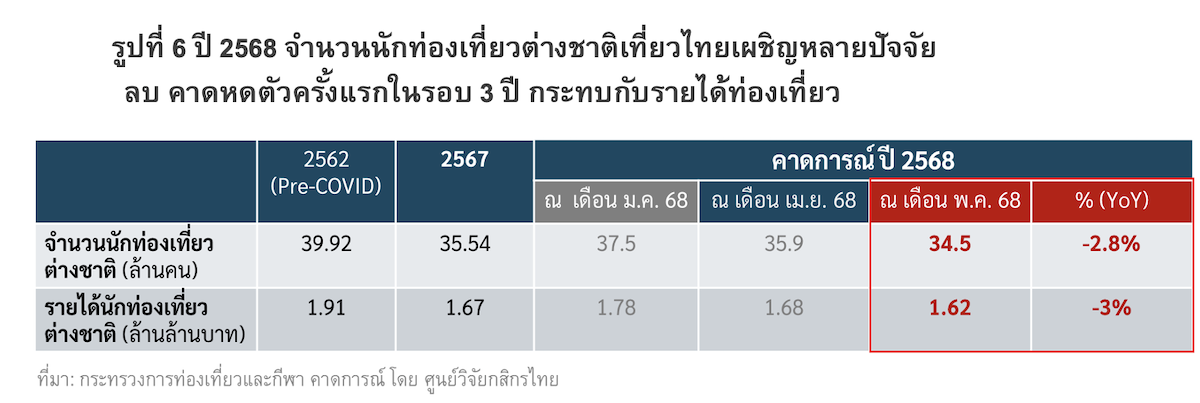
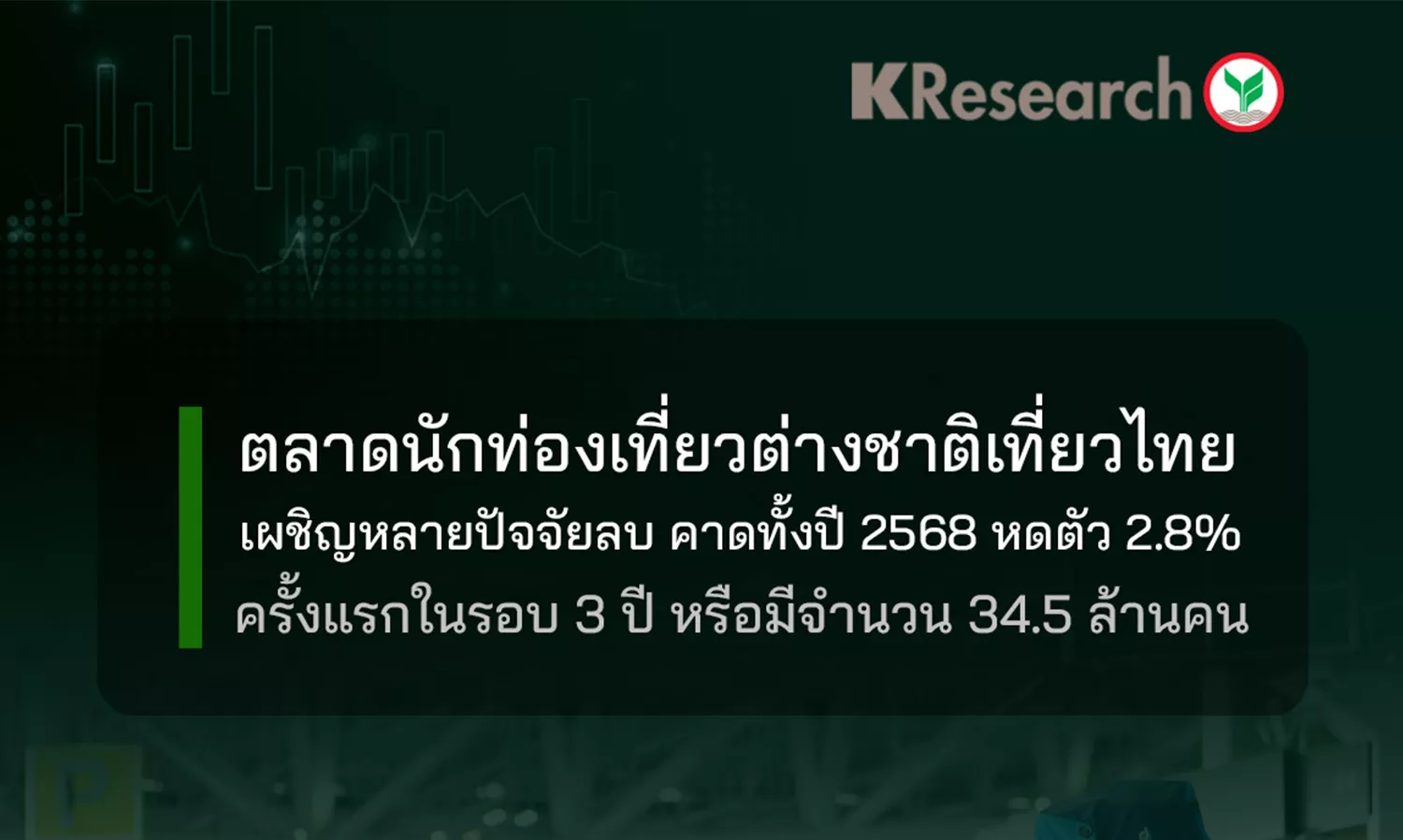
- The Kasikorn Research Center predicts that for the entire year of 2025, the number of international tourists visiting Thailand may contract by 2.8%, totaling 34.5 million, which would lead to a 3% decline in tourism revenue from foreign tourists compared to 2024, amounting to approximately 1.62 trillion baht.
According to data from the Ministry of Tourism and Sports, from January 1 to May 11, 2025, the number of foreign tourists visiting Thailand was 12.9 million, a 1% (YoY) decline, while tourism revenue from international tourists is expected to decrease by 2% (YoY), amounting to around 613.168 billion baht.
Foreign tourist numbers have been continuously declining since February 2025 due to several negative factors, including:
- Concerns about safety following incidents involving a Chinese celebrity.
- Unrest in Thailand's three southern border provinces has prompted the Malaysian government to issue travel warnings for its citizens to avoid southern Thailand.
- Earthquakes in Myanmar and Thailand have caused some tourists to postpone their trips to Thailand.
- The conflict between India and Pakistan in early May directly impacted the tourist market from both countries planning to visit Thailand.
- Economic slowdowns in several countries have affected travel plans.
Key markets for foreign tourists, such as China, Malaysia, and South Korea, have seen declines, along with visitors from Laos, Vietnam, and Hong Kong.
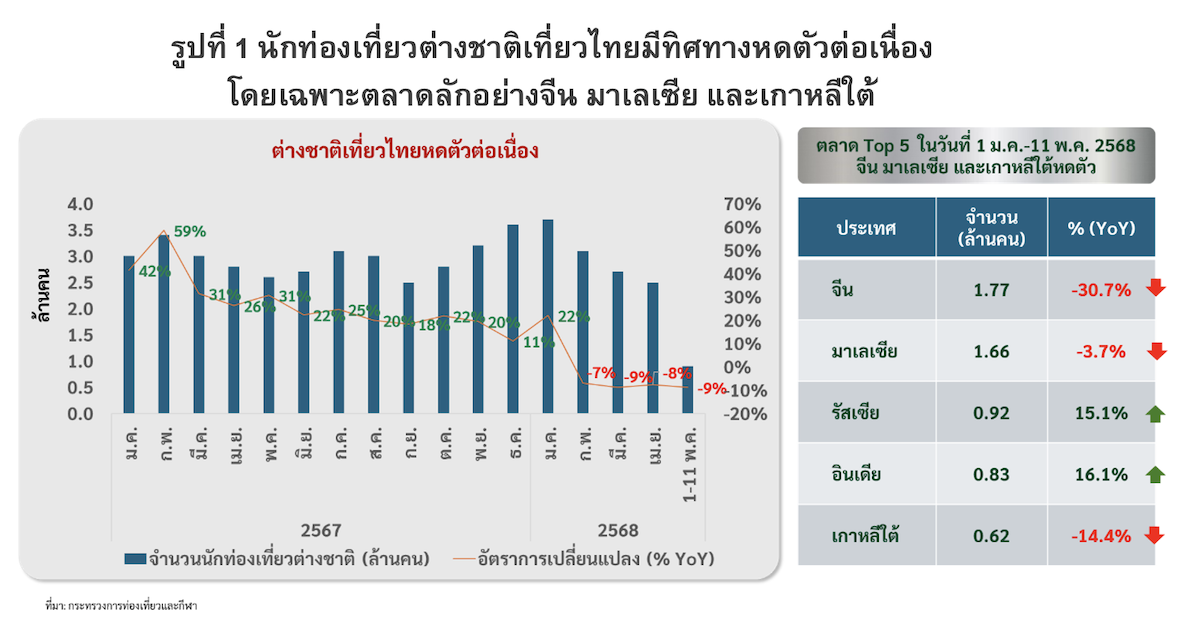
Looking ahead, despite some positive factors from hosting global sports events like the Women's Volleyball World Championship and the SEA Games-ASEAN Para Games, the increasing negative factors suggest that international tourist numbers in Thailand may continue to decline. The four main negative factors include:
- The global economy is slowing down, affecting travel plans and spending. Tourists will seek destinations that align with their budgets and value. The trade war has impacted economies and purchasing power in many countries worldwide. In April 2025, the International Monetary Fund (IMF) projected global economic growth for 2025 at 2.8%, down from an earlier forecast of 3.3% (predicted in January 2025).
- Geopolitical issues affecting travel, especially if airspace closures occur again. Although the situation between India and Pakistan has stabilized and airlines have resumed normal operations, ongoing issues in the Middle East and the Russia-Ukraine war continue to affect confidence and travel plans.
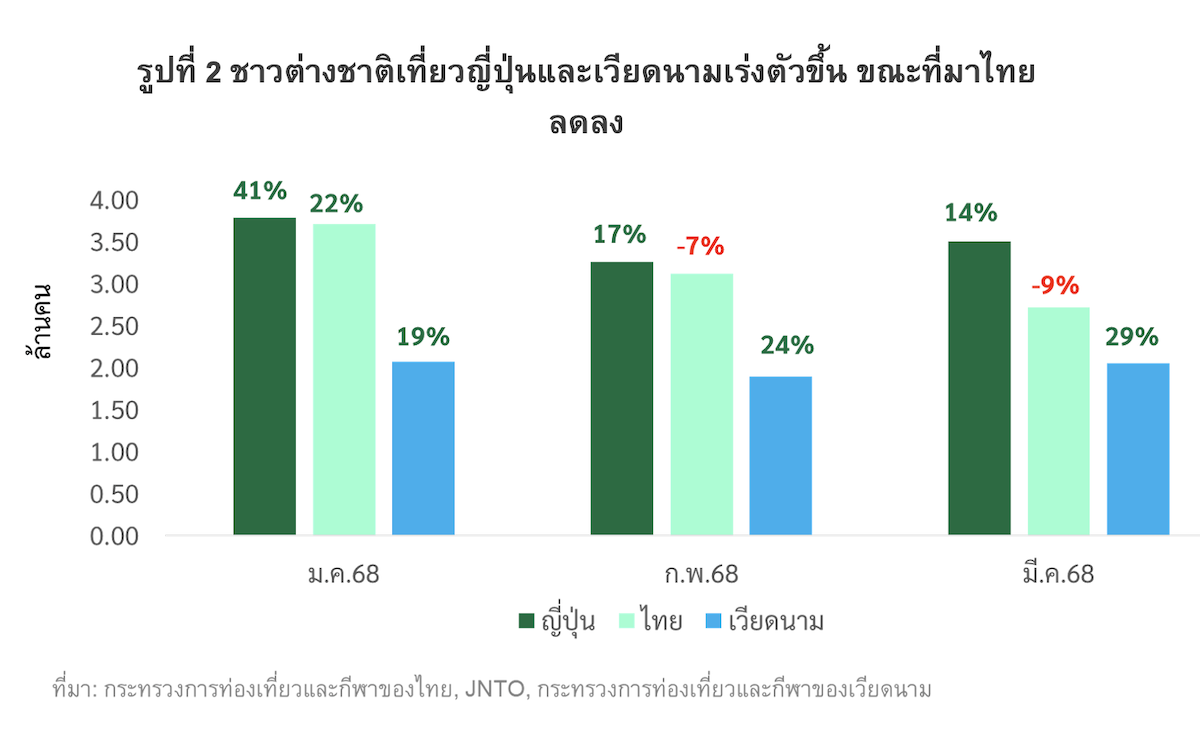
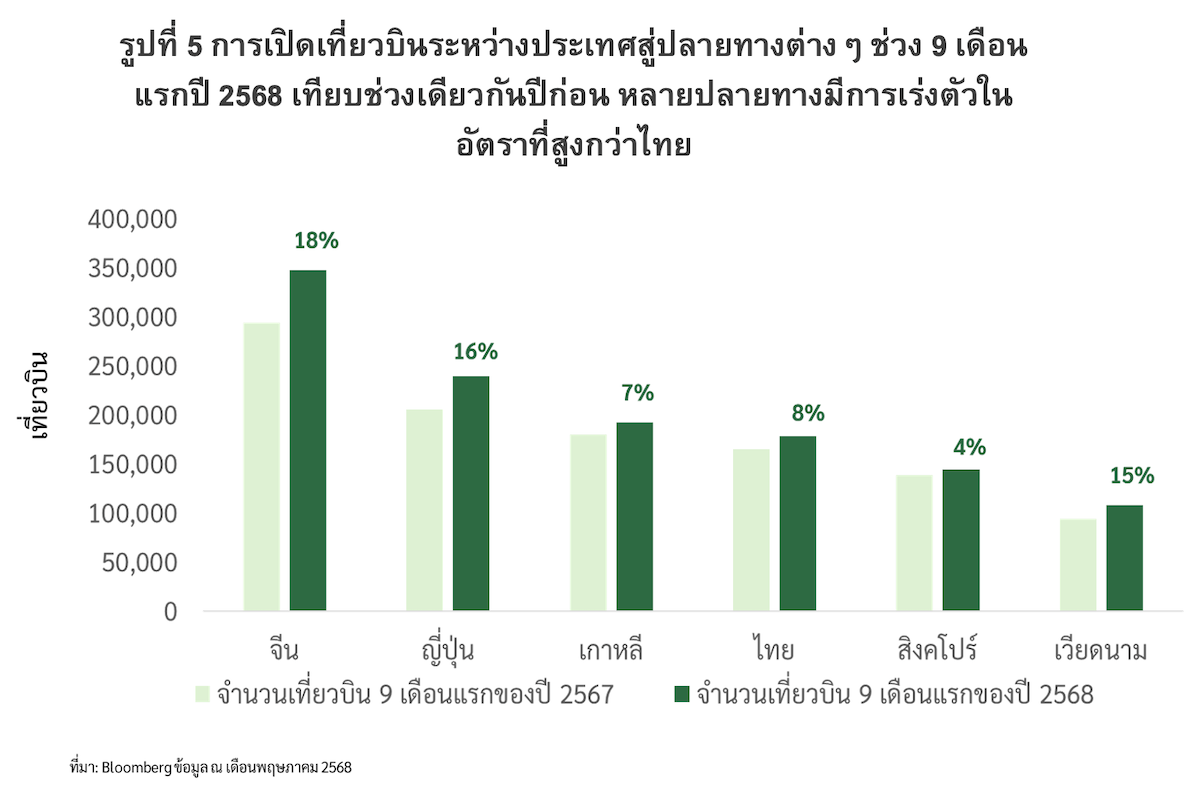
- Thailand's tourism competitiveness has declined, reflected in the continuous drop in foreign tourist numbers, while foreign tourist numbers in Japan and Vietnam are growing rapidly.
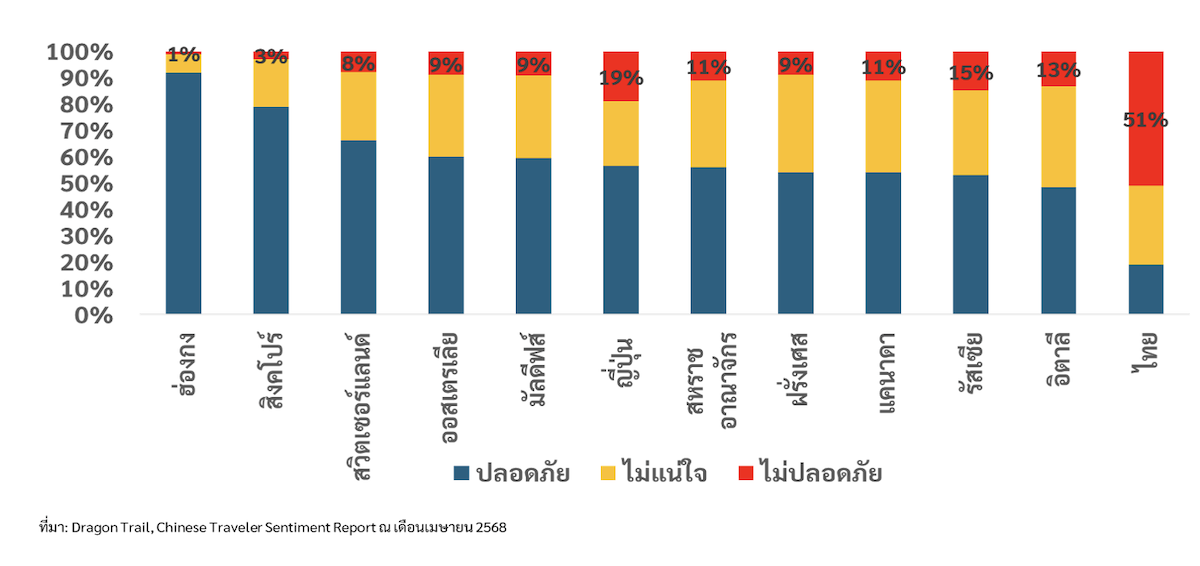
- The perception of safety among certain groups of tourists has decreased. Since the beginning of 2025, several incidents have affected the confidence of foreign tourists visiting Thailand, particularly among Chinese tourists. A survey by Dragon Trail in April 2025 found that only 19% of Chinese tourists felt confident about safety in Thailand, while 51% viewed Thailand as unsafe.
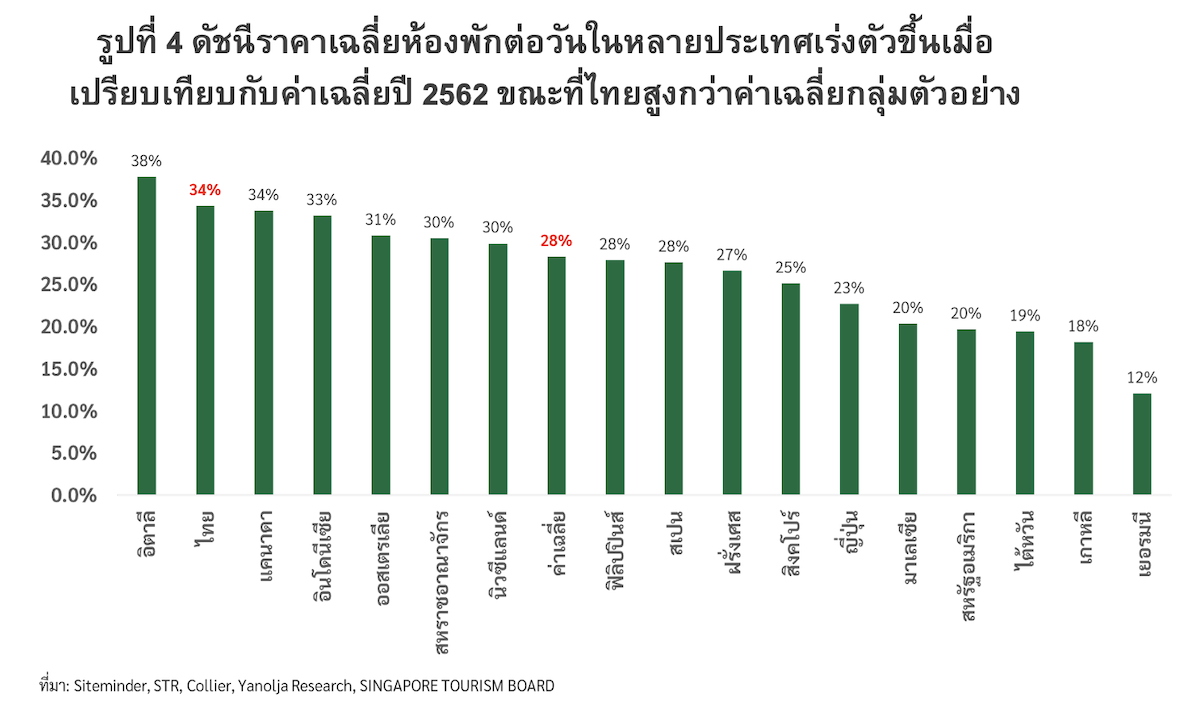
- Prices for tourism services in Thailand have risen compared to many countries. The average daily rate for hotel rooms in Thailand increased by 34% in 2025 compared to 2022, which is higher than the average growth of 28.3% in the sample countries. Additionally, prices for services like dining have also risen due to cost conditions.
After deducting travel, accommodation, and spending on goods and services, most tourists will have limited budgets left for tourism. Considering the average spending per foreign tourist trip in Thailand is around $1,300, which is lower than in several countries, such as Japan at $1,600 and Singapore at $1,700, the value proposition of visiting Thailand is increasingly being questioned compared to competitors.
- International tourism competition is high, with many countries developing tourist attractions and government support to attract foreign tourists. For example, South Korea plans to offer visa-free measures for Chinese tourists traveling with tour companies (Group Tour) during the third quarter of this year, which is peak season for Chinese tourists. This measure is likely to impact the Chinese tourist market in Thailand, while Vietnam is preparing to introduce a long-term 10-year Golden Visa to attract foreigners and stimulate tourism.
At the same time, airlines' plans for future flights reflect a response to tourists' interest in new destinations. The announcement of international flights scheduled through September 2025 indicates that flights to China are growing by 18% (comparing the first nine months of 2025 with the first nine months of 2024), Japan is growing by 16%, while Thailand has only increased by 8%.
The Kasikorn Research Center predicts that for the entire year of 2025, the number of international tourists visiting Thailand may be around 34.5 million, a contraction of 2.8%, marking the first decline in three years, which is lower than the early-year estimate. Key markets experiencing declines include China, Malaysia, and South Korea, while the Indian tourist market may still expand if no further incidents occur between India and Pakistan.
Markets expected to grow mainly come from European tourists, such as those from Russia, Germany, France, and the UK, partly due to European airlines expanding direct flight routes and increasing frequencies to Thailand, as well as tourists from the Middle East, such as Saudi Arabia and the UAE. However, the increase in these markets is unlikely to compensate for the decline in major markets, especially China.
Tourism revenue from foreign tourists is expected to distribute to the tourism and related sectors in 2025 at approximately 1.62 trillion baht, a 3% decrease from 2024. The average spending per person per trip is around 47,000 baht, slightly down by 1.9% compared to 2022 (pre-COVID), as the foreign tourists coming to Thailand are primarily young travelers and middle-income groups, along with more cautious spending behaviors, such as reducing souvenir purchases and opting for local dining options like street food.